

Lost in translation: Doctors’ handwriting and why pharmacists deserve hazard pay
If you have ever received a prescription from a Filipino doctor (I confess: includes myself) that felt like you were staring at the Dead Sea Scrolls —or perhaps a failed ECG tracing—you are not alone.
Patients have squinted. Pharmacists have sighed. Nurses have tilted the paper at various angles, as if waiting for divine revelation.
More than once, a patient has looked up and asked, half-joking and half-concerned:

“Doc, sigurado po ba kayo na gamot ’to at hindi drawing?”
For decades, jokes about doctors’ handwriting have been staples at family dinners, Christmas parties, and hospital corridors.
“Mabuti pa ang manghuhula, kaya sigurong basahin ’to.”
CONTINUE READING BELOW

And yet, behind the laughter lies a serious issue—one that touches on communication, culture, training, and patient safety.
Why is medical handwriting so notoriously illegible? And how, against all odds, have we survived this long?
The evolution of medical hieroglyphics
Contrary to popular belief, doctors were not always cryptic scribblers.

Early physicians wrote long, careful notes—sometimes in Latin, sometimes in beautifully structured prose. Medical charts from the 19th century look more like handwritten novels than clinic notes.
Then reality intervened.
Patient numbers increased. Hospitals got busier. Paperwork multiplied like bacteria in a Petri dish. And speed became king.
In place of flowing sentences came loops, slashes, and abbreviated strokes—an efficient shorthand developed not by conspiracy, but by survival. The modern doctor learned to compress entire paragraphs into three squiggles and a dot.
Add to this:
- Latin abbreviations (o.d., b.i.d., t.i.d., p.r.n.)
- Generic names versus brand names
- Drug dosages that look identical when written in haste
- Individual quirks. “Doc, you write metforminlike mermaid fins,” a patient once observed.
The result?
A page that looks less like a prescription and more like abstract art.
Why it’s worse in the philippines
Doctors’ handwriting is bad worldwide—but in the Philippines, it reaches Olympic levels.
Here’s why:
- Patient load. In a government hospital, a single doctor may see 60 to 100 patients in one clinic day. That leaves only a few minutes per patient. Calligraphy is a luxury.
- Paper charts. Many hospitals still rely on handwritten charts. While the rest of the world debates font size in electronic medical records, we debate whether that word is ‘‘Losartan’’ or ‘‘Loratadine.‘‘
- Language mix. Our prescriptions are proudly multilingual:
“1 tab after meals kung kaya ng tiyan.”
“Bawasan kung nahihilo.”
“Balik after 1 week, ha.”
Taglish meets Latin meets bad penmanship.
- Training culture. Residents learn by imitation. If your consultant writes like a cardiogram during ventricular tachycardia, chances are you will, too. Soon, illegible handwriting becomes a rite of passage.
The pharmacist: unsung hero and codebreaker
If doctors are the scribes of hieroglyphics, Filipino pharmacists are the Rosetta Stone.
They decode:
“Losart” (losartan) from something that looks like “Luzon”
“Amox” (amoxicillin) from what appears to say “Annex”
“Metoprolol” from what could pass as a mountain range
One pharmacist once told me, proudly, “Doc, kaya ko nang basahin kahit nakapikit. Parang UPCAT.”
Pharmacy training in the Philippines is not just about pharmacology—it is also advanced cryptanalysis. Years of exposure to illegible prescriptions develop a sixth sense.
Still, we must acknowledge this: Pharmacists are often the last line of defense between a bad scribble and a dangerous error.
When scribbles turn serious
Most of the time, illegible handwriting leads to laughter. Sometimes, however, it leads to harm.
The World Health Organization has repeatedly identified unclear prescriptions as a contributor to medication errors worldwide—some of them fatal.
In the Philippines, such errors are likely underreported, but they do happen: wrong drugs dispensed, incorrect dosing, or confusion between similarly named medications.
Imagine mistaking mg for mcg—thousand-fold difference.
That’s not comedy. That’s catastrophe.
The irony? The very speed meant to help more patients can endanger them when communication fails.
Modern solutions (and why we’re still adjusting)
The good news is that solutions exist.
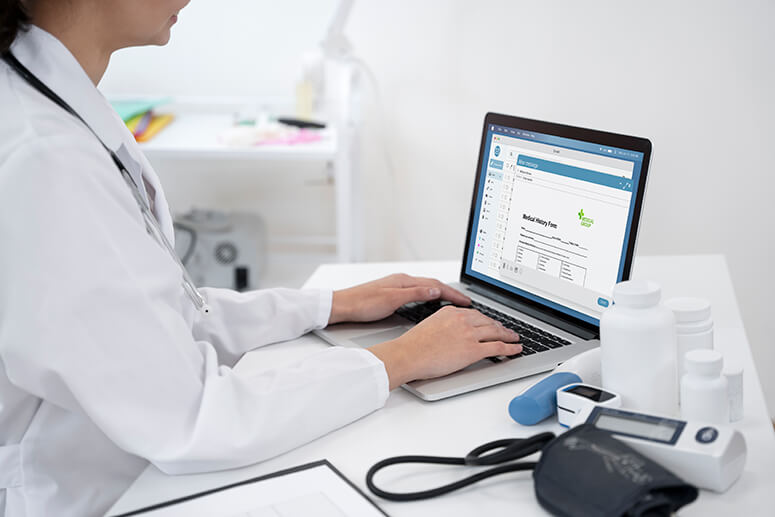
Electronic Medical Records. Slowly but surely, Philippine hospitals are adopting EMRs. Typed orders don’t squiggle—unless the keyboard breaks.
Printed prescriptions. Some clinics now use templates or apps. No mystery. No guessing.
Pharmacist verification. A simple phone call—“Doc, tama po ba ’to?”—has saved countless lives.
Conscious effort. Many doctors (older ones like me included) now pause, breathe, and try—really try—to write legibly, notwithstanding age-related finger tremors. Progress is slow, but it exists.
The stethoscope may be our symbol of healing, but the ballpen is our tool of communication
That said, old habits die hard. When the waiting room is full and the pen is running out of ink, the scribble resurfaces like muscle memory.
Hospital humor: coping through laughter
Hospitals, thankfully, have a sense of humor.
Patients joke about framing prescriptions as modern art.
Residents challenge each other:
“Basahin mo nga ’tong reseta ni Chief.”
One hospital allegedly held a Best Doctor Scribble Contest.
First prize: a ballpen with thicker ink.
I once saw a nurse label a chart:
“Illegible but approved.”
Humor, in healthcare, is often how we survive the pressure.
Why we still cling to the ballpen
Despite technology, many doctors still love their pens. Why?
Convenience: Writing is faster than logging into slow EMR systems.
Cultural inertia: The scribble is tradition.
Human touch: Some patients find handwritten notes reassuring—proof that a real doctor, not a computer, saw them.
One patient told me, sincerely, “Doc, mas tiwala ako kapag sulat-kamay. (I trust it more when it’s handwritten.)”
I didn’t have the heart to ask if he could read it.
The real takeaway: communication is part of healing
The stethoscope may be our symbol of healing, but the ballpen is our tool of communication. And communication, like diagnosis and treatment, is part of patient care.
What we write matters.
How clearly we write matters.
Speed saves time—but clarity saves lives.
So the next time you squint at a prescription and mutter something about ancient scripts, remember: Behind those squiggles is a doctor racing against time, juggling patients, paperwork, and pressure.
But yes—we doctors must admit this too: Maybe it’s time our handwriting stopped looking like an ECG during ventricular fibrillation.
The stethoscope may be mightier than the ballpen—but a clear ballpen stroke can be just as lifesaving.

WATCH: Pixar Summer Fest adventure at Hong Kong Disneyland
August 10, 2026
WATCH: Can you still trust someone who betrayed you? (Generations Ep. 22)
September 23, 2026