

The fight against colon cancer starts with vigilance when it‘s in the family history
March is Colon Cancer Awareness Month—a time when physicians around the world repeat a simple but lifesaving message: Colon cancer is one of the most preventable cancers we know, if we look for it early.
The tragedy is that many people do not.
Colon cancer often develops quietly, without dramatic warning signs. By the time symptoms appear—bleeding, anemia, unexplained weight loss, persistent abdominal discomfort—the disease may already be advanced.
But unlike many other cancers, colon cancer usually gives us a long window of opportunity to stop it before it even begins. That opportunity is called screening.
And for me, this message is not merely medical. It is deeply personal.
Two brothers, one silent disease
My eldest brother Greg, whom we lovingly called Manoy, died of colon cancer in his 50s. He was at the peak of his career as a top-notch lawyer who founded his own law firm, which bears his name to this day. He was always at the top of his class from elementary school through law school at the University of the Philippines, and he topped the bar exams as well.
CONTINUE READING BELOW

Several years later, my elder brother Francis, who opted for early retirement from his job in Canada to spend the rest of his life here, also succumbed to the same disease—again in his 50s.
Two brothers. The same cancer. The same decade of life.
When something like this happens within a family, physicians do not call it a coincidence. We call it family history, and it immediately raises the level of vigilance.
Having two first-degree relatives with colon cancer significantly increases one’s own risk. For me, their illness became a warning—one I could not ignore. In a strange and painful way, my brothers may have saved my life.
Why colon cancer often begins quietly
Most colon cancers begin not as cancer but as polyps—small growths that form on the inner lining of the colon. Many of these polyps are benign at first. But over time—often five to 10 years—some slowly transform into cancer.
This long timeline is exactly why screening works so well. If we detect and remove these polyps early, the cancer never develops.
In medicine, that is the closest thing we have to turning back time.

Because of my family history, I underwent a screening colonoscopy. My gastroenterologist, Dr. Eulenia “Choy” Nolasco of Manila Doctors Hospital, performed the procedure. During the examination, she discovered and removed three polyps.
These were not yet cancer, but they were the type that could have become cancerous in a few years. They were removed before they had the chance.
The procedure itself was painless. I was sedated under the care of anesthesiologist Dr. Gabriel “Ariel” Larosa, whose reassuring presence ensured that the experience was safe and comfortable. But what happened afterward left a deeper impression.
A colonoscopy every few years if polyps are detected is far easier than chemotherapy, surgery, or losing one’s life prematurely.
Still half-sedated from anesthesia, floating somewhere between sleep and wakefulness, I had the distinct sensation of seeing my two brothers smiling. It was not frightening. It was strangely peaceful.
In that moment, I felt as though they were assuring me that I had escaped the fate they endured—that their suffering had served as a warning for the rest of us.
Whether that vision came from anesthesia, emotion, or memory hardly matters. The message was clear. Screening had saved me.
The power of repeated screening
Since that first colonoscopy, I have undergone the procedure four times. During my most recent examination, another polyp was discovered and removed, which means I am due again for another colonoscopy this year.
Some people hear this and ask: “Doc, kailangan ba yung paulit-ulit na colonoscopy? (Doctor, is it necessary to have repeated colonoscopy?)”
My answer is simple: A colonoscopy every few years if polyps are detected is far easier than chemotherapy, surgery, or losing one’s life prematurely.
Screening is not an inconvenience. It is protection.
Current international guidelines recommend that average-risk adults begin colon cancer screening at age 45.
However, screening should start earlier if there is a family history of colon cancer, colon cancer diagnosed in relatives before age 60, inflammatory bowel disease, and certain hereditary conditions. Individuals with a strong family history may need screening as early as age 40 —or even earlier, depending on medical advice.
This is why knowing your family history is critically important.
Although screening aims to detect cancer before symptoms appear, certain warning signs should prompt immediate evaluation:
- Blood in the stool
- Persistent changes in bowel habits
- Unexplained anemia
- Abdominal pain or bloating
- Unexplained weight loss
- Prolonged fatigue
These symptoms do not always mean cancer—but they should never be ignored.
The coronary myth
Many people delay colonoscopy because of fear or embarrassment. Let us clear up a few myths.
Myth #1: Colonoscopy is painful.
It is not. Most patients are comfortably sedated.
Myth #2: The procedure is dangerous.
Serious complications are extremely rare when performed by trained specialists.
Myth #3: It is embarrassing.
Doctors and nurses perform this procedure every day. For them, it is simply another part of caring for patients.
The real danger is avoiding screening.

While screening is powerful, prevention also involves daily choices. Research shows colon cancer risk can be reduced by eating a fiber-rich diet, limiting processed meats, maintaining a healthy body weight, regular physical activity, avoiding smoking, and moderating alcohol intake.
These habits protect not only the colon but also the heart and overall health.
The gift my brothers left behind
When families experience loss, grief often brings reflection. In our case, the deaths of Manoy and Francis transformed into something else—a warning that allowed the rest of us to act earlier.
Because of them, I underwent screening. Because of screening, four precancerous polyps have been removed so far from my colon. Each one represented a cancer that never had the chance to grow. In that sense, my brothers’ legacy is not only loss—it is also life.
Colon cancer does not have to be a silent killer. We have the tools to stop it. We simply need the courage to use them.
- If you are 45 years old or older, speak to your doctor about screening.
- If colon cancer runs in your family, start earlier.
- And if fear or embarrassment is holding you back, remember this: the colonoscopy you postpone today may be the life you lose tomorrow. But the colonoscopy you do today may be the cancer you never develop.
Sometimes the greatest act of courage in medicine is not heroic surgery or complex treatment. Sometimes it is simply showing up for screening—and listening to the warnings that come from those who loved us before us.
Colonoscopy: What really happens during the procedure
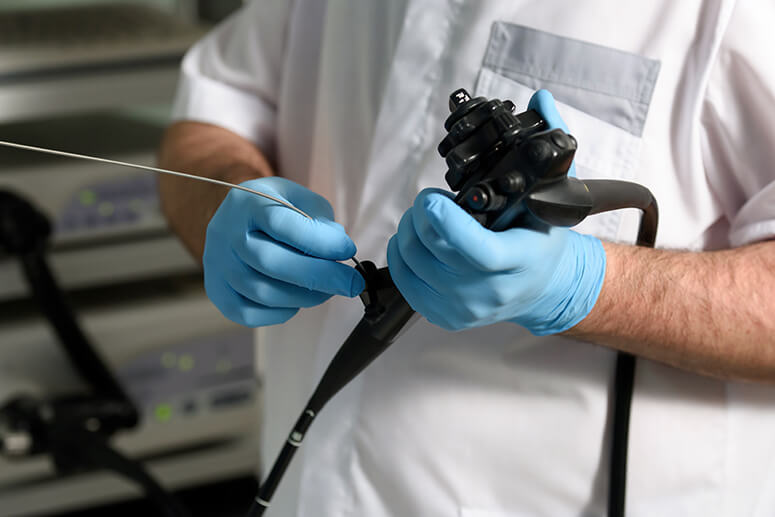
For many people, the word “colonoscopy” triggers anxiety or embarrassment. In reality, the procedure is safe, routine, and often life-saving.
Step 1: Preparation the day before. The most challenging part of colonoscopy is not the procedure—it is the bowel preparation.
Patients are asked to drink a special cleansing solution, follow a clear-liquid diet, and avoid solid food the day before the test. This preparation clears the colon so doctors can see the lining clearly.
Step 2: Sedation and comfort. On the day of the procedure, an anesthesiologist administers sedation. Most patients fall into a comfortable sleep-like state. You will not feel pain during the procedure.
Step 3: The examination. The doctor inserts a thin, flexible tube called a colonoscope through the rectum. This instrument has a tiny camera, a light source, and channels for instruments. The camera allows the physician to examine the entire colon on a video screen. The procedure usually takes 20 to 40 minutes.
Step 4: Removal of polyps. If polyps are found, they can often be removed immediately using tiny instruments passed through the colonoscope. This is the most powerful advantage of colonoscopy: it prevents cancer before it begins. The removed tissue is then sent to a laboratory for analysis (histopathology).
Step 5: Recovery. After the procedure, patients rest for about 30 to 60 minutes while sedation wears off. Mild bloating or gas may occur temporarily. Most patients go home the same day. Because of sedation, someone else should accompany you home.
How often should the colonoscopy be done?
- Every 10 years for average-risk individuals with normal results.
- Every three to five years if polyps are found.
- Earlier or more frequent screening for those with family history. Your doctor will recommend the appropriate schedule.
Colonoscopy is not something to fear. It is one of the few medical procedures that can actually prevent cancer. In many cases, it is the difference between a life-threatening illness and a disease that never develops at all.

WATCH: Pixar Summer Fest adventure at Hong Kong Disneyland
August 10, 2026