

The not-so-modern Filipino pantry
Filipino foodies may not realize it, but there’s a fascinating history of Philippine food culture right in our pantries. Our kitchen shelves tell a story about where we live, the comfort food of our childhood and how these sustain us and those we cook for today. Kitchen staples as ubiquitous as salt and vinegar, sugar and rice spin tales about geography, culture and the individualistic preferences you’ll find over our scattered islands. No two Filipino kitchens are alike, just as no two families are alike, and here begins an interesting tale of ingredients and their providence.
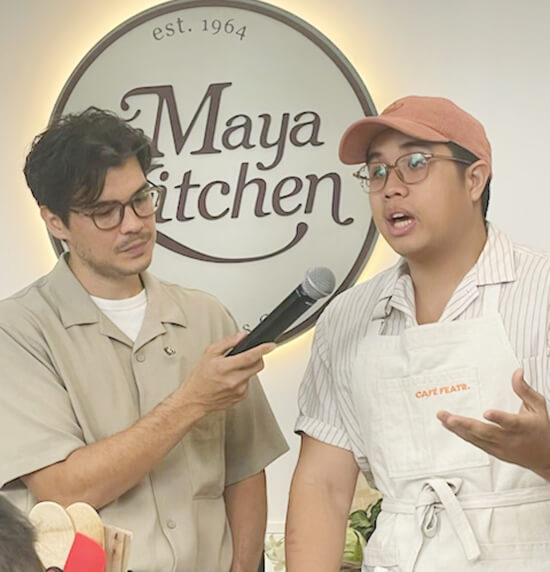
But beyond what each cook deems indispensable, there is the growing acceptance of heirloom, formerly obscure and unfamiliar Filipino ingredients. At a recent Maya Kitchen culinary presentation, Erwan Heussaff and his FEATR team presented heritage Filipino ingredients to an audience of food writers and professionals through videos that detailed the sources of these items, and cooking demos that showed creative and contemporary ways to use them. Afterwards, the dishes were presented in a buffet for lunch so that we could discover just how special these ingredients were, and appreciate the difficulty in procuring them.
We started off with the story of gamet, a rare seaweed found off the coasts of Ilocos Norte and Cagayan de Oro. Harvested during perilous weather conditions when the strong waves wash it up against the rocks, it’s known as black gold, a pricey commodity that sustains the fishermen who risk their lives to obtain it. The gamet was used in an appetizer, flavoring an aioli served atop crisp kiping leaves.
Kiping with Gamet Aioli
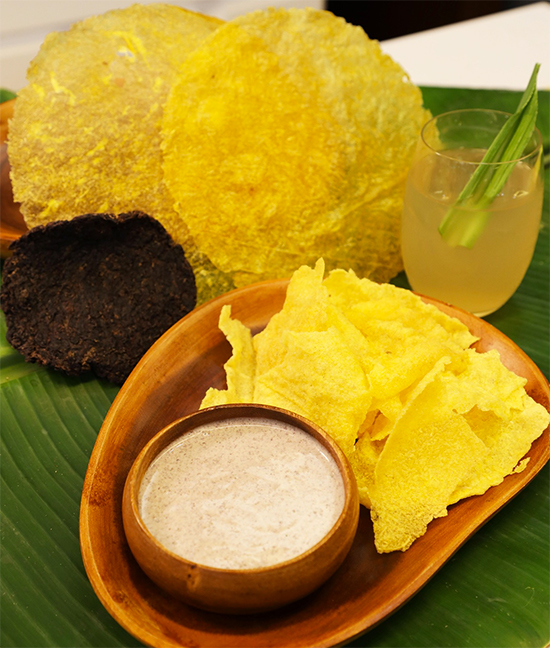
Fry in cooking oil until crisp:
- 10 pieces kiping (rice wafers)
Wash until rehydrated, then dehydrate in a dehydrator and grind to a powder:
- 2 packs gamet
CONTINUE READING BELOW

Whisk together:
- 2 egg yolks
- 2 tbsps. vinegar or lemon juice
- 1/8 tsp. Dijon mustard
- Salt to taste
- Slowly whisk in to form a mayonnaise:
- 1 cup canola oil
Flavor the aioli with the gamet powder and drizzle on the kiping.
The next ingredient featured was podpod, a smoked fish patty that was developed by the community of San Vicente, Eastern Samar, to preserve an overabundance of talakitok. The dried patty can be used in ways similar to the Italian dried fish roe known as botarga. During the
cooking demo, wedges of cabbage were roasted in a sesame dressing and the podpod grated on top. This was an outstanding dish worth recreating at home!
Roasted Cabbage Podpod
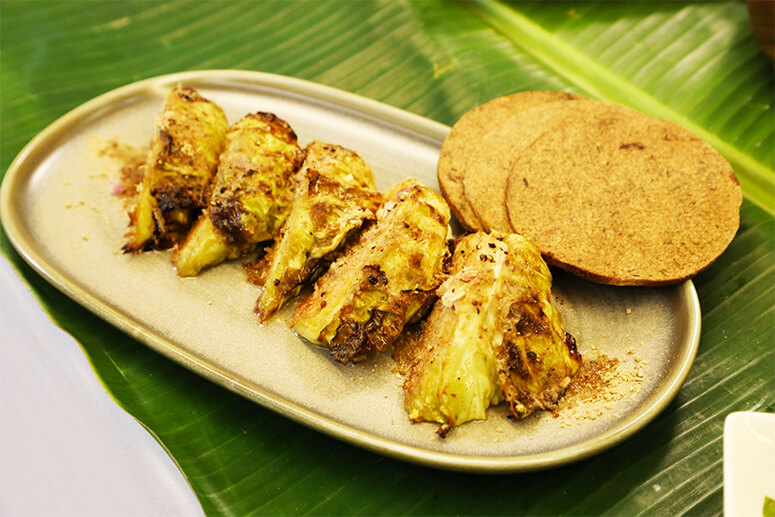
Quarter a cabbage, retaining the core, and place on a baking dish. Spread with a blend of:
- ½ cup softened butter
- ¼ cup roasted sesame dressing
- 2 tbsps. mayonnaise
- Roast at 220C (400F) for 8 – 12 minutes before finishing off in the broiler.
For the vinaigrette, whisk together:
- 2 shallots, minced
- 1 clove garlic, minced
- ½ cup lemon juice
- ½ cup olive oil
Drizzle on the cabbage and top with:
Grated podpod
We sometimes think all vinegars taste alike yet the suka of the Bulacan town of Paombong, to whom it also gave its name, is in a class by itself. Painstakingly made by tapping the sap of the nipa palm, production is threatened by climate change. It makes the most deliciously tangy adobong puti.
Adobong Puti
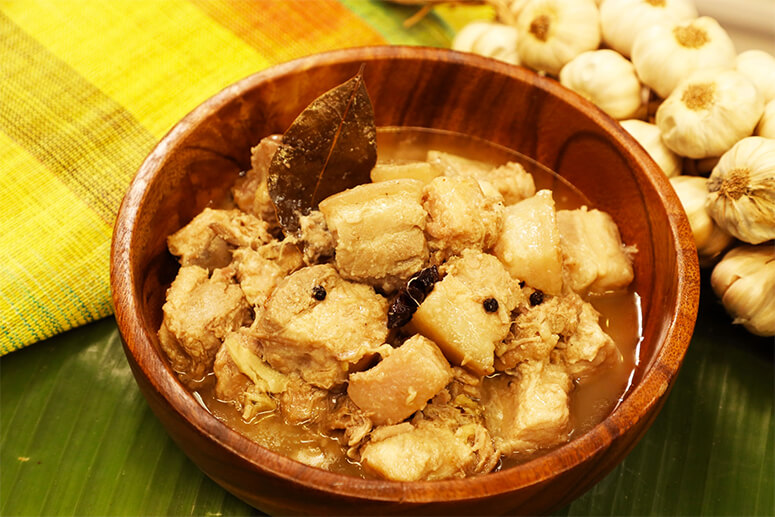
Sauté by starting off in a cold pan, rendering as much fat as you can:
- 2 kilos pork belly, cut into cubes
Add:
- 2 heads garlic, smashed
- 1 tsp. toasted whole peppercorns
- 1 pc. star anise
- 3 pcs. laurel leaves
Cook until aromatic then add:
- 1 liter sukang paombong
Simmer until acidity is cooked out and season with salt.
The ubiquitous salt has heirloom versions in the Philippines that are in danger of dying out if these industries are not preserved. Asin tultul from Guimaras is handmade, the salt water cooked slowly over fire to evaporate the brine. Its survival is threatened by the degradation of our waters from oil spills, debris and pollution.
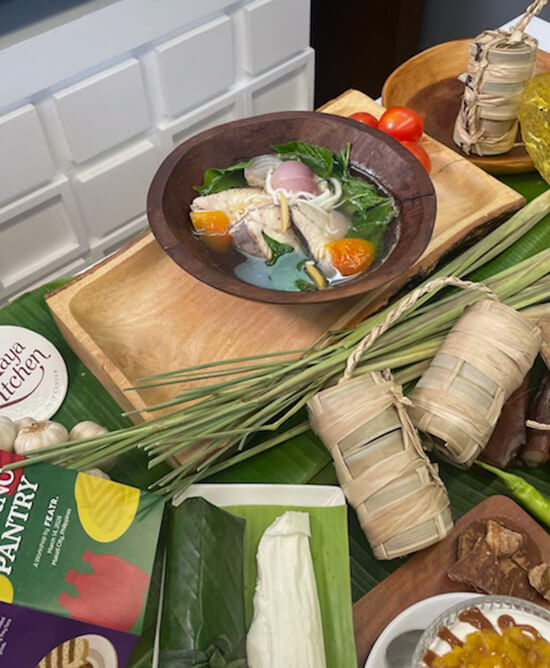
Binakol Na Isda
Sauté until fragrant:
- 1 head garlic, chopped
- 1 knob ginger, sliced
- 3 red onions, quartered
Add:
- 1 stalk tanglad (lemongrass)
- 2 liters buko juice
When simmering add:
- 5 tomatoes, quartered
- 6 tanigue steaks
- 2 cups fresh shredded buko meat
- 1 bundle dahon ng sili
Simmer on low heat six to eight minutes and season with asin tultul to taste.
Pakaskas is a caramelized palm sugar made in the remote island of Isla Verde in Batangas. Here, it is used to make a caramel topping for a kesong puti mousse.
Kesong Puti Mousse Cups
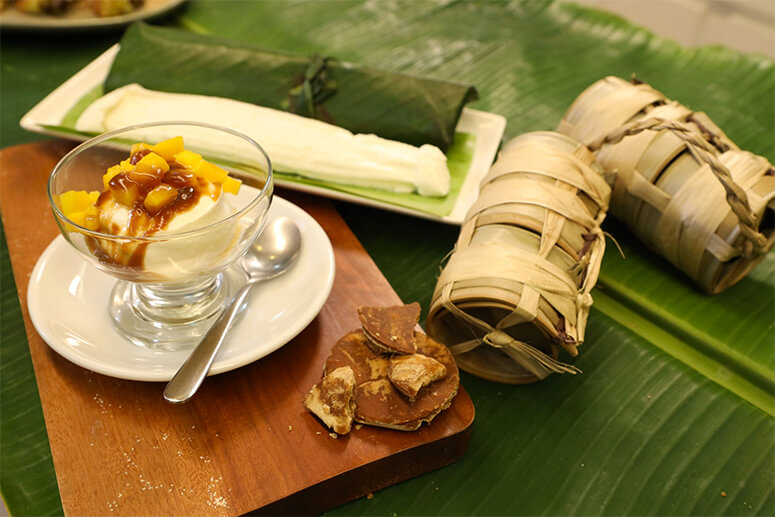
For the base, combine and press into cups:
- 120 grams Sanikulas cookies, ground
- 2 tbsps. melted butter
- Pinch of salt
For the mousse, blend until completely smooth:
- 200 grams kesong puti
- 3 tbsps. powdered sugar
- ½ tsp. Vanilla
- Zest of ½ calamansi (optional)
Fold in:
- 500-ml. all purpose cream, well chilled
- 1 tbsp. gelatin bloomed in ½ cup water and melted
- Spoon the mousse into the cups and chill.
Make a caramel by melting in a saucepan:
- ½ cup pakaskas (or substitute brown sugar)
When fully melted add:
- ½ cup cream
Simmer until slightly thick then add:
- 1 tbsp. butter
- Pinch of salt
Drizzle the caramel on the chilled mouse and top with:
- Diced Guimaras mangoes

WATCH: How to experience Bangkok and Kanchanaburi in one trip
October 21, 2026
WATCH: Is Gen Z too soft? (Generations Ep. 23)
September 30, 2026