

Do we really want our children to be our mirror images?
At a recent children’s party, the celebration was punctuated with prayers and quotations from Scripture. That was because it wasn’t just a birthday party but also happened to be a child dedication, similar to a Catholic baptism. Though I was familiar with the ritual, I discovered something new that afternoon: apparently, the song Amazing Grace is much longer than the excerpt usually heard in films.
Somewhere between the sea of invocations and the obligatory party din, I found myself reflecting on parenthood.
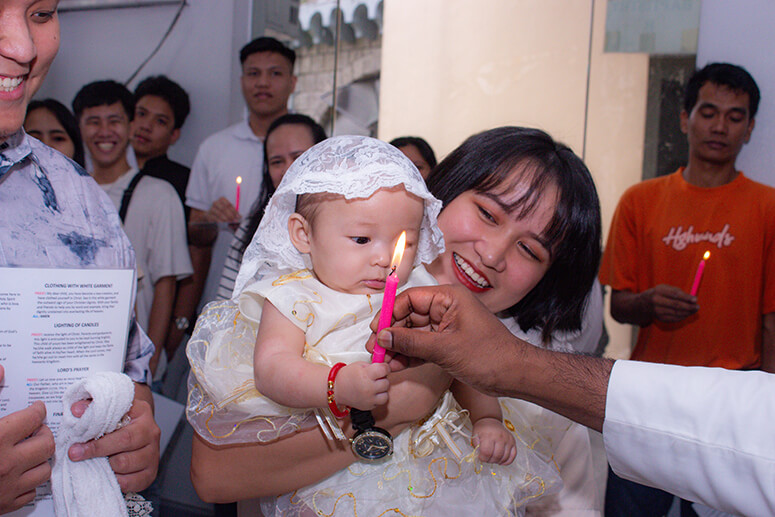
Looking around the room, I realized I was surrounded by young parents. I remember being one of them, convinced that the sleepless nights, diaper bags, drugstore errands and constant worrying would last forever. They did not. Time has a curious way of slipping past unnoticed. One day your child is playing on your lap; before you know it, you’re wondering how the little one you used to carry has become an adult who reminds everyone of... you.
As the ceremony went on, my mind wandered off to an interview I had heard earlier on Doris Bigornia’s radio program, Mutya ng Masa. The guest was an affable and articulate senior citizen called Nanay Rosalie, whose cheerful voice concealed a life that had known more than its fair share of hardship.
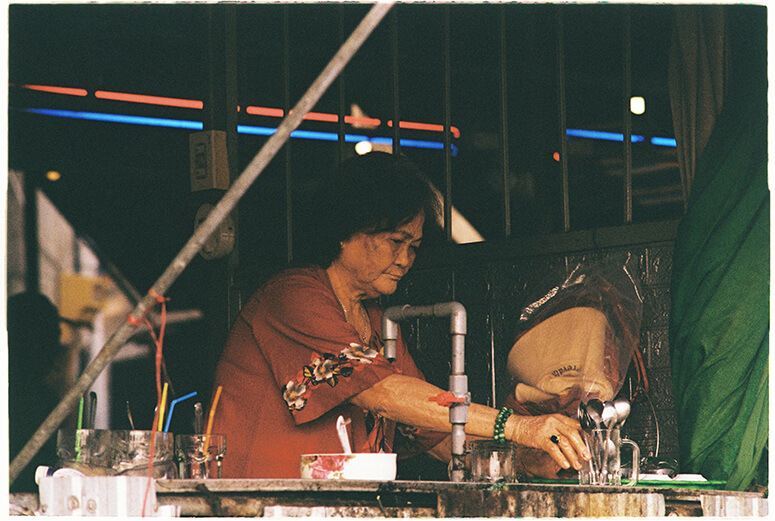
Nanay Rosalie related that for many years, her husband worked as a crane operator. When illness forced him to stop working, the responsibility of providing for the family shifted to her shoulders. Most people her age would have considered retirement a well-earned reward. Not Nanay Rosalie, who simply looked for work. Today, she wears a Jollibee uniform and serves customers alongside co-workers who are young enough to call her by that moniker. She spoke about her job with unmistakable pride, saying that after spending years raising her children, it was now her turn to help support the family financially.
Her story is remarkable, but what stayed with me was what she said about her aspirations. Aside from her husband regaining his health, Nanay Rosalie hoped that her grandchildren, all 19 of them so far, would one day look at her life and see a model of resilience. She wants them to remember that difficult circumstances are not excuses to concede, and that dignity comes from the willingness to do one’s work well and with pride, no matter what it is.
CONTINUE READING BELOW

There was something deeply philosophical about what she said. Do we really want our children to become our mirror image?
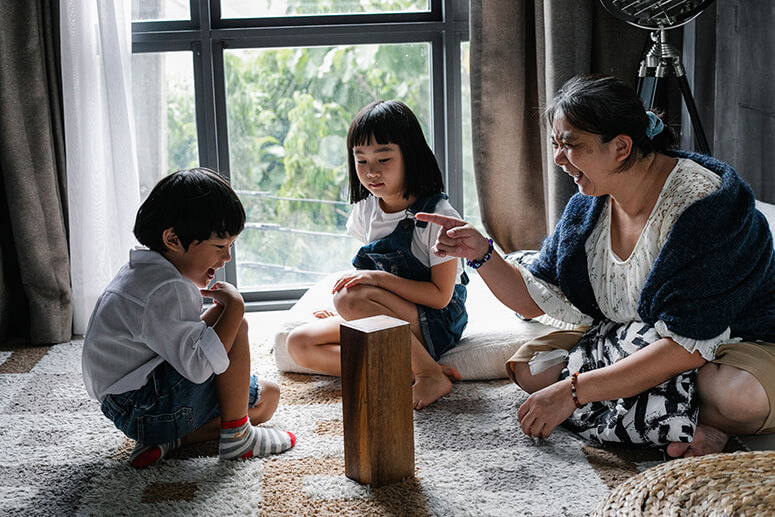
People have been telling me for years that my daughter is my carbon copy, and that my son takes after his mother. Filipinos still use that expression, “carbon copy,” as if younger generations know what it is and how it works whenever a child strongly resembles a parent. Sometimes they are referring to facial features, other times to mannerisms or expressions. Parents usually accept the compliment with a smile, as though successful reproduction is equivalent to creating clones.
While physical resemblance is the easy part, the more important question is whether our children will resemble us in the things that truly matter.
Pop culture has asked this question for generations. Luke Skywalker spent much of the Star Wars saga struggling against the fear that he would become his father. Anakin Skywalker gave him life; “Dad” Vader gave him every reason to question what he might become. The lesson was never that children are destined to repeat their parents’ mistakes; it was that they always have the freedom to become something better.
Even The Lion King is less about a kingdom than about legacy. Simba spends much of the story running away from the expectations left behind by Mufasa, only to discover that honoring his father did not require becoming a copy of him, but embracing the courage, responsibility, wisdom, and compassion that made Mufasa the undisputed king of Pride Rock.
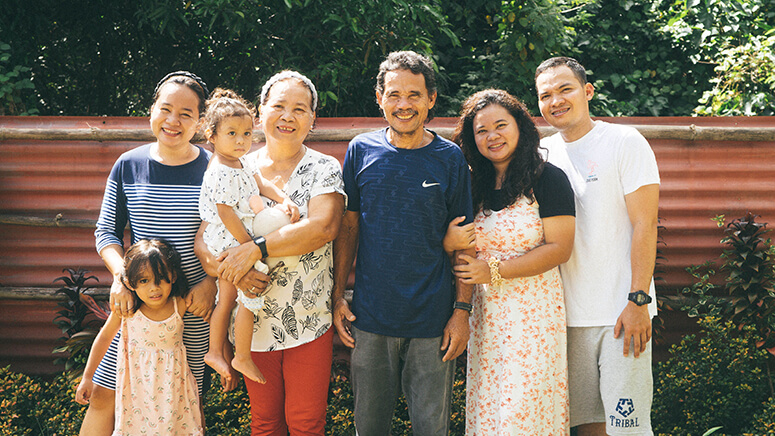
Daughters have their own version of that struggle. In Disney’s Brave, Merida spends much of the story resisting the expectations of Queen Elinor, believing that becoming her mother’s copy would mean surrendering her own identity. By the end, both mother and daughter discover that love does not require imitation, only understanding. After all, the greatest inheritance is not a parent’s personality, but their values.
The Scriptures quoted during the dedication naturally focused on the responsibility of parents to raise their children in the ways of the Lord. Listening to those passages, I pondered if the children in that room would one day embrace the same faith as their parents. Perhaps; perhaps not. Faith cannot simply be passed on like the shape of one’s nose or the color of one’s eyes, or the way one holds a teacup.
In my experience, the better, perhaps even the best, legacy is example.
Children learn far more from watching than from listening. They notice how we treat our spouses, relatives, friends, household help, complete strangers, and even cats and dogs. They remember whether we keep our promises, whether we apologize when we are wrong, whether we remain gracious when life becomes difficult. I sometimes fear I send the wrong signals whenever I am behind the wheel with my kids.
Evidently, our values are not transmitted through lectures or serious talks nearly as much as they are through the daily, ordinary acts that seem insignificant at the time.
That is why I kept returning to Nanay Rosalie during that Saturday dedication.
Long after her grandchildren forget the details of her stories, they will remember that their grandmother refused to surrender when life became difficult, that she boldly donned her Jollibee uniform every morning and worked with quiet dignity and pride even in her golden years. She may never leave them a fortune, but she will leave them something infinitely more valuable.
That should be the real inheritance every parent hopes to pass on, not children who are mere carbon copies, but children who become a mirror image of our best selves.

WATCH: Discovering Vietnam in three days
June 9, 2026
WATCH: Is Gen Z too soft? (Generations Ep. 23)
September 30, 2026
WATCH: Save for retirement or enjoy life now? (Generations Ep. 21)
September 16, 2026