

[OPINION] Duterte impeachment trial Day 5: When lawyers talk too much
Like it or not, the impeachment proceeding is a trial. The engagement of prosecution and defense lawyers, along with a lawyer serving as the presiding officer, underscores that it's a legal proceeding and not just a political exercise.
The impeachment trial is sui generis, a class by itself, not falling into an existing, similar classification. It is both a political and judicial exercise, not just one or the other. Neither less of one, nor more of the other.
It is a judicial exercise as far as the lawyers are concerned—both the prosecution and the defense used court protocol, tried to abide by the court rules to reinforce the cause of their respective principals. Presiding officer Chiz Escudero, another lawyer, completed the legal process.
When the hearing goes technical
That being said, it makes one feel that the hearing was too technical, boring, dragging, and circumscribed by court procedures. This is all unnecessary for the public at large.
Not to mention when the prosecution and the defense would raise objections to cut short the testimony of the witness. By the account of a newsman watching the trial, each has made at least 30 objections each, with prosecution lawyer Amando Virgil Ligutan making more than 30 as of 5 p.m. on Tuesday, July 14.
All throughout, the court—meaning the senator-judges and prosecution and the defense lawyers—talked back and forth about Duterte’s alleged threat against President Ferdinand "Bongbong" Marcos Jr., First Lady Liza Marcos, and former House Speaker Martin Romualdez as captured in the video, her online press conference, Operation Romanov, and the circumstances surrounding all these.

Escudero stopped the two panels short. “This is not a college debate,” he said.
That was what happened on the fifth day, when defense lawyer Atty. Mark Vinluan resumed the cross-examination of NBI official Jeremy Lotoc, who had reported to the impeachment court that the NBI had recommended the filing of three counts of grave threats and one count of inciting to sedition against Duterte based on the agency’s investigation of the video recording of her press conference, where she said she had contracted someone to kill the Marcoses.
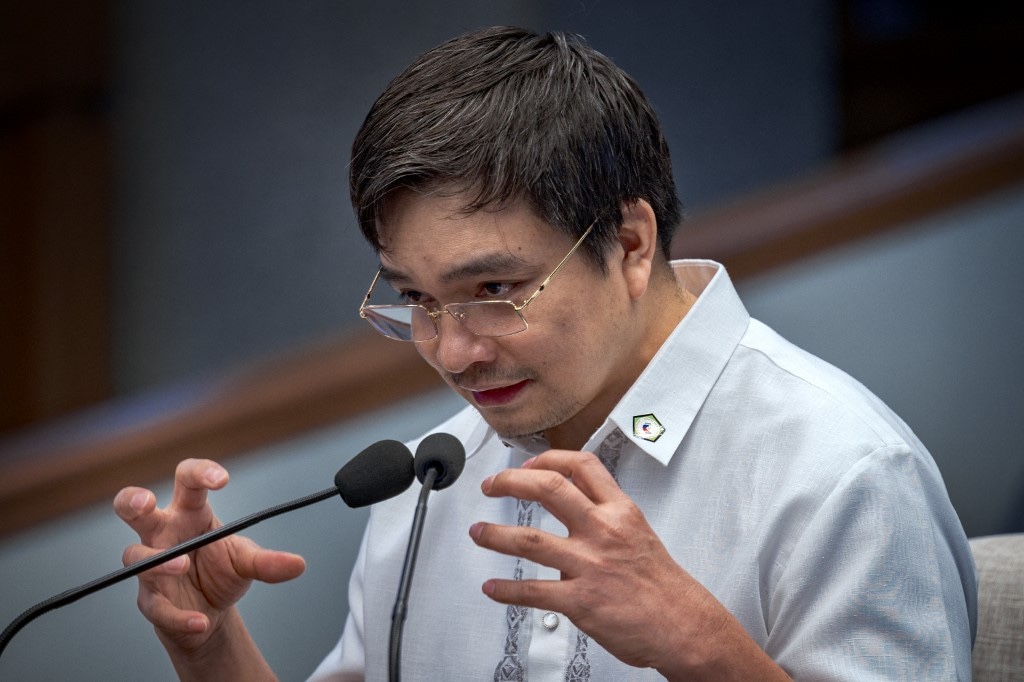
To be fair, cross-examination is a fundamental pillar of the legal system, crucial for exposing inconsistencies, uncovering biases, and testing the credibility of witnesses.
Commenting in a Senate hearing on the importance of many years ago, Sen. Joker Arroyo said if history taught us anything, it was that if liberty could be threatened with extinction, it would be threatened and it would succumb without lawyers to help it.
‘Para sa bayan’
One felt relaxed, sensed it had turned into a political exercise when senator-judges, the non-lawyers most especially, sounded impatient, like the public at large, wishing that the process were not as tight.
One obvious giveaway was when a senator-judge, even if sometimes sounding tentative in asking a question, would invoke “para sa kaalaman ng taong bayan.” But their questions made good sense; their questions were based on common sense.
In our years of covering the courts, a regular judge never said anything similar. A judge usually never considered public information, public knowledge, and public pressure in appreciating the testimonies of the witnesses, unless these were relevant to the case. The judge usually decided based on the facts and the law covering the case.
Be that as it may, on the fifth day, outside the legalese, several senators made good in asking Lotoc about the factual basis of filing three counts of grave threats and one count of inciting to sedition against the VP.
What constitutes a threat?
Senator-judge Tito Sotto said too many legal niceties were confusing. “Naliligaw ang public sa discussion,” he said.
Senator-judge Pia Cayetano asked the witness, the defense, and prosecution lawyers to talk about their own personal appreciation of the word “threats.”
A lawyer, Cayetano asked them to talk in “layman” terms. “Para maintindihan tayo ng ating mga kababayan.”
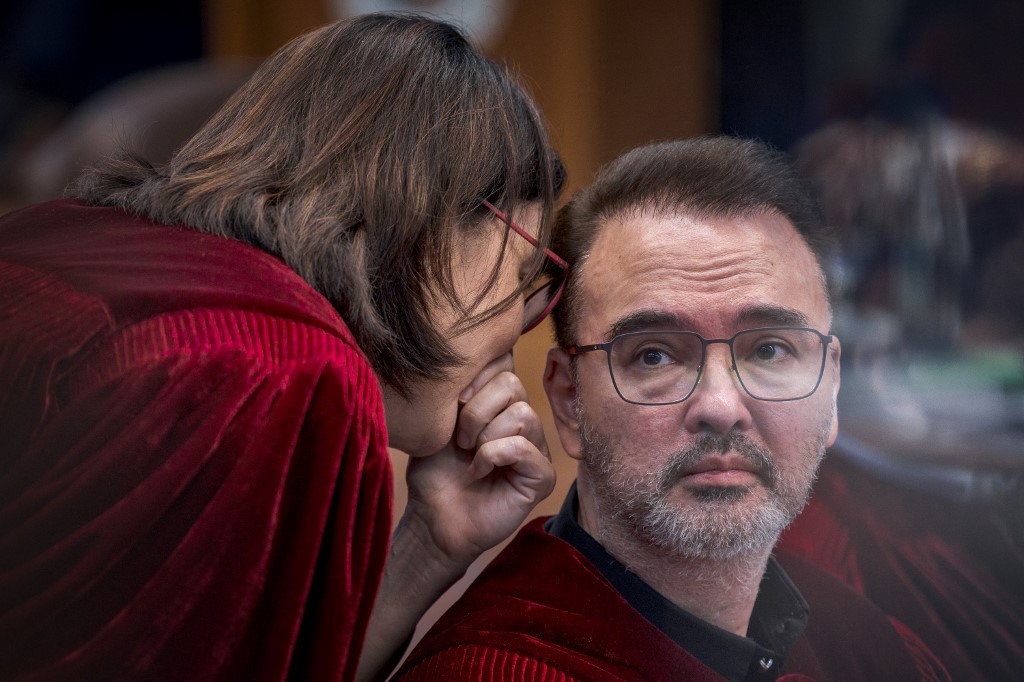
What’s the difference between a warning and a threat? One is “babala”; the other is “banta,” as Escudero explained.
The two words overlap, depending on the context and the circumstances in which the threat was said.
Ligutan exhumed long-time cases decided upon by the Supreme Court to reinforce the prosecution’s case against Duterte. So did Lotoc.
But it was of little help because of the limited details. But Ligutan was clear that the decision recognized that a threat was a threat if a person who was supposed to be threatened didn’t feel it. Or even if the threat didn’t materialize.
Opinion, appreciation vs evidence
Over time, the prosecution talked about Lotoc’s opinion and appreciation of Duterte’s video recording. His opinion, based on the NBI findings, said the NBI had a good case vs Duterte with “certainty of conviction.”
It has been more than a year since the NBI submitted its findings and recommendations to the DOJ.
In a statement sent to the media, the DOJ said it would resolve the NBI recommendations at an “appropriate time,” leaving the viewers wondering what’s keeping the DOJ from acting as soon as possible.
Tulfo said the alleged threats and the incitement to sedition had not actually materialized more than a year later. It doesn’t matter, said Lotoc.
On redirect examination, Ligutan elicited answers from Lotoc that the typographical errors in their documentation did not matter because the errors neither altered the video nor Duterte's alleged threats against the Marcoses.
But the prosecution wasn't able to expound on the threats vis-à-vis the actual crime and Duterte’s capability to execute the threat.
Like father, like daughter?
Lotoc likened Sara to her father, former president Rodrigo Duterte, who is now facing trial at the ICC for his bloody drug war.
Duterte’s threat, according to Vinluan, was a mere response to a question raised by a reporter during the press conference.
Even if found true, Vinluan said the charges against Duterte were a crime that should be tried in a regular court, punishable by six months to six years, if found guilty.
Whether it is an impeachable offense is for the impeachment court to appreciate.
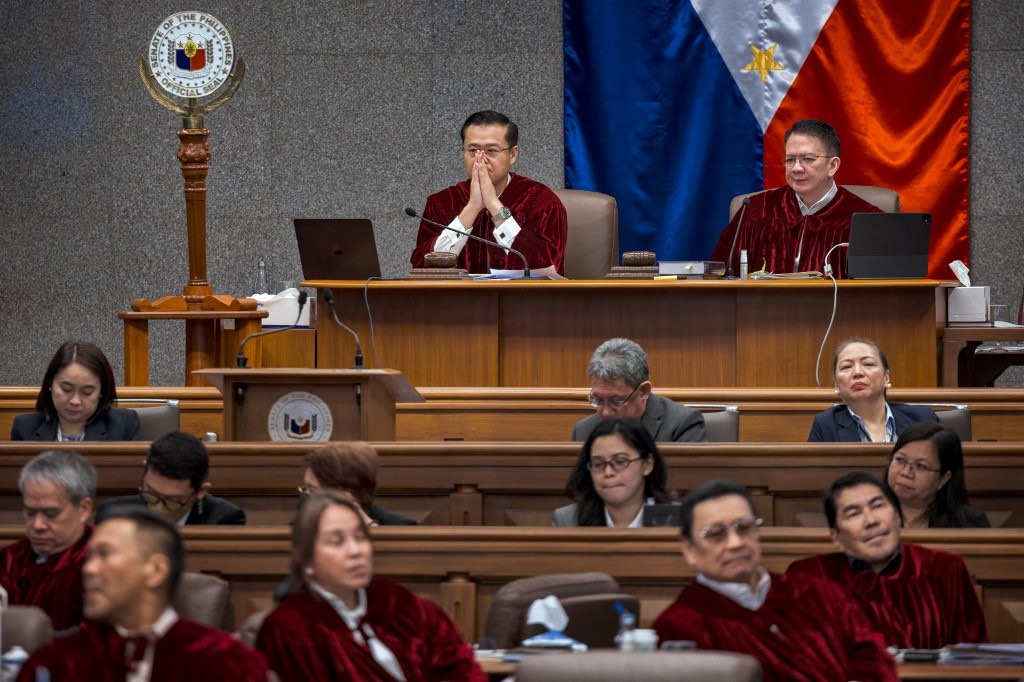
What the witness and the prosecution avoided was that each time they talked about Duterte’s threats, they left out Duterte’s own threats she had allegedly received. Neither did the NBI walk another mile to find out what "Oplan Romanov" was all about, except to say Lotoc heard it first from Duterte’s brother. They avoided suggestions that Duterte was being singled out.
They found it convenient to say that Duterte had not accepted their invitation to cooperate with the investigation. No talking heads, no case? How deep is the NBI’s investigative network?
“If Sara, a lawyer, were to kill, would she announce it in public?” asked senator-judge Alan Cayetano. The "assassin" remains a phantom.
But what was clear so far is that the Marcoses and Dutertes were at war. The conflict had become so bitter, especially when the UniTeam, the coalition that put them together in the May 2022 elections, collapsed in 2023.
Both of them had sent word and signals hitting each other, except that Duterte made her feelings public. Sara is no Boots Anson Roa. She is no Julie Andrews.
Prosecution lawyer Atty. Lorna Kapunan said the trial was taking too long, and gave the court a lecture on criminal law and impeachment proceedings, only to take back the prosecution’s plan to present two of their witnesses, including Duterte’s chief of staff, Atty. Zuleika Lopez.
The trial was still on its fifth day, involving only two witnesses so far, but the viewers have begun looking at it as part performance, part politics, part law, according to another lawyer in a Facebook post.
Boring, dragging, or not, it's best that the public doesn’t blink. It's still a long, long way ahead.
Disclaimer: The views expressed in this article are those of the author and do not reflect the opinions of PhilSTAR L!fe, its parent company and affiliates, or its staff.

WATCH: LGBTQIA+ people with unlikely professions
June 28, 2026