

AI and the future of doctors
A few months ago, I witnessed something that would have seemed like science fiction when I entered medical school nearly 50 years ago.
A consultant-colleague in the hospital was reviewing a difficult clinical case while simultaneously consulting an artificial intelligence (AI) platform. Within seconds, the system produced a differential diagnosis, summarized relevant medical literature, suggested diagnostic tests, and even generated a draft treatment plan.
The entire process took less time than it would have taken many of us to walk to the hospital library.
My first reaction was amazement. My second was discomfort. Not because the technology was inaccurate. Quite the opposite. Much of what it produced was remarkably good.
The uncomfortable question was this: What happens to doctors when machines begin to think?
It is a question increasingly being asked not only by physicians but also by patients, healthcare administrators, medical students, and policymakers around the world.

Will AI replace doctors? The short answer is no. The longer answer is far more interesting.
What AI can do
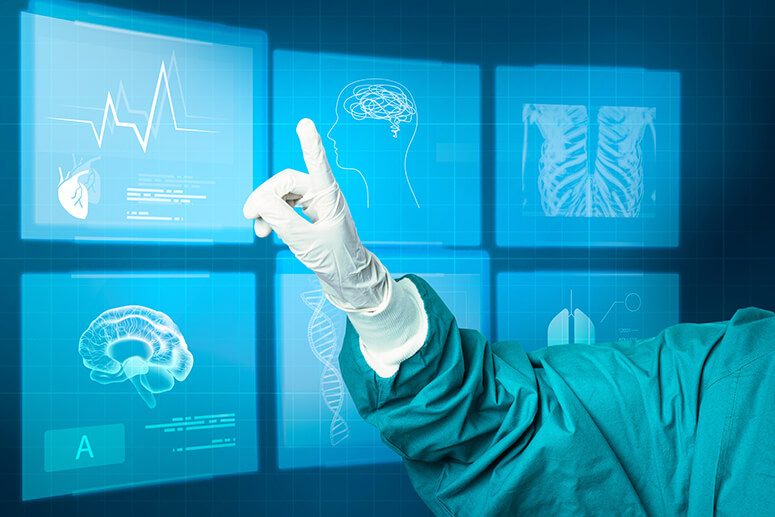
AI is already transforming medicine at breathtaking speed. Algorithms can analyze medical images, detect patterns in laboratory data, predict clinical deterioration, summarize scientific literature, and generate clinical documentation.
Some systems can identify certain abnormalities on X-rays, CT scans, and electrocardiograms with levels of accuracy comparable to specialists.
For physicians drowning in information, AI offers extraordinary assistance.
Every day, thousands of new scientific papers are published. No individual doctor can read them all. No human mind can continuously process the expanding universe of medical knowledge.
AI can.
In many ways, AI is becoming the world’s most tireless medical assistant. It never sleeps. It never forgets. It never complains about paperwork. Yet despite these impressive capabilities, there remains a profound difference between information and wisdom.
The human aspect of medicine

Medicine has never been merely a technical exercise. If it were, computers would have replaced physicians long ago.
When patients enter a clinic, they rarely bring only symptoms. They bring fears, hopes, uncertainties, family conflicts, financial limitations, cultural beliefs, and deeply personal stories.
A patient with chest pain may not simply be experiencing angina. He may be a father worried about supporting his family. A woman newly diagnosed with cancer may be thinking less about her pathology report than about whether she will live long enough to see her grandchildren grow up.
These realities do not appear on laboratory results. They cannot always be quantified by algorithms. They require understanding.
One of the great misconceptions surrounding AI is that medicine consists primarily of diagnosis. Certainly, diagnosis is important. But after nearly five decades in clinical practice, I have learned that diagnosis is often only the beginning of the encounter.
Patients do not merely seek answers. They seek reassurance, guidance, and trust. Sometimes they seek hope.
The physician’s role extends beyond identifying disease. It includes helping human beings navigate illness. And navigation requires more than information. It requires judgment.
Consider two patients with identical medical conditions. Their laboratory values are the same. Their imaging studies are identical. Their diagnoses are identical. Yet their treatment plans may differ significantly.
One patient may be financially constrained. Another may have strong family support. One may prioritize longevity at all costs. Another may prioritize quality of life. One may embrace aggressive treatment. Another may prefer comfort and simplicity.
Good medicine requires understanding these differences.
The challenge is not simply knowing what can be done. The challenge is deciding what should be done.
AI can recommend options. Human physicians must help patients choose among them. This distinction becomes even more important as medicine grows more technologically sophisticated.
Paradoxically, the smarter our machines become, the more valuable human qualities may become.
Empathy. Compassion. Moral judgment. Humility. Wisdom. These are not weaknesses in medicine. They are essential clinical tools.
A machine can recognize a pattern. A physician can recognize suffering.
A machine can calculate risk. A physician can help a patient live with uncertainty.
A machine can generate probabilities. A physician can provide courage.
MD-AI partnership
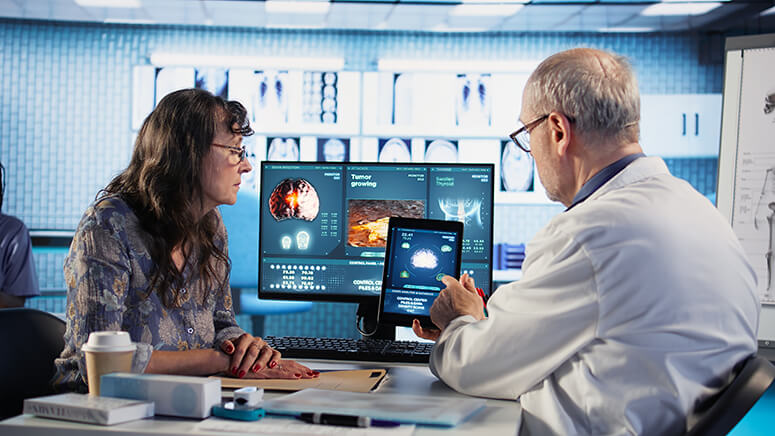
The future of medicine, therefore, is unlikely to be a contest between doctors and AI. It will be a partnership.
Doctors who learn to use AI effectively will likely outperform those who do not. Just as stethoscopes, echocardiograms, CT scanners, and electronic medical records became extensions of clinical practice, AI will become another powerful tool.
The danger lies not in using AI. The danger lies in surrendering judgment to it.
Technology has always tempted humanity to confuse efficiency with wisdom. Medicine must resist that temptation. An AI system may suggest the most statistically optimal treatment. Yet the statistically optimal choice may not always be the most humane choice.
Medicine ultimately involves values as much as data. And values remain profoundly human. Medical education must, therefore, evolve.
Tomorrow’s physicians will need to understand both clinical science and artificial intelligence. They will need to know how algorithms work, where their limitations lie, and how to recognize bias, errors, and hallucinations.
At the same time, medical schools may need to place renewed emphasis on communication, ethics, empathy, and patient-centered care.
Ironically, the rise of artificial intelligence may force medicine to rediscover its humanity. The more machines master technical tasks, the more physicians will be valued for uniquely human capabilities.
In this sense, AI may not diminish doctors. It may clarify what doctors are truly meant to do.
The patient and the doctor
I often think about a lesson learned early in my career.
Patients rarely remember every medication adjustment. They seldom recall the exact laboratory values discussed during a consultation. Years later, many cannot remember the details of the treatment plan. But they often remember something else.
They remember whether the doctor listened. They remember whether the doctor cared. They remember whether the doctor treated them as a disease—or as a person.
AI will undoubtedly become smarter. It will become faster. It will become more accurate. Yet even the most advanced algorithm cannot fully understand what it means for a mother to fear losing her child, for a husband to grieve a diagnosis, or for an elderly patient to wonder how much time remains.
These experiences belong to the human condition. And medicine, at its best, has always been about caring for human beings navigating that condition.
The future physician may carry an AI assistant in every consultation room. But the most important instrument will remain the same as it has always been.
Not the computer. Not the algorithm. Not the machine.
The human heart.

WATCH: Is OPM still as good as it used to be? (Generations Ep. 20)
September 9, 2026