

Why we keep telling stories that matter
Much has been said about the role of journalism in the era of post-truth.
Time and again, when disaster strikes, it is journalists who venture into affected communities to bring timely and verified information to the public. It is the journalists who ask the difficult questions, hold those in power to account, and provide the necessary contexts that would enable people to understand not just what happened, but why it matters.
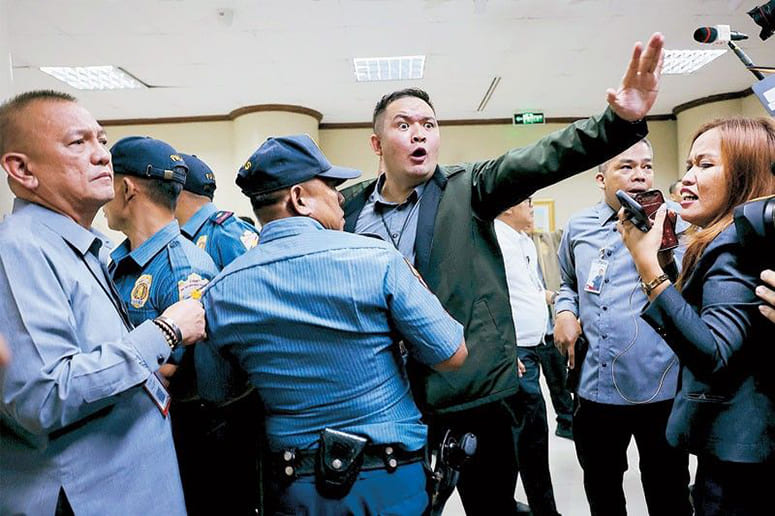
The recent shooting at the Senate reminded us that, when crises erupt, journalists play a critical role in parsing facts from lies and speculation.
Yet, with the rise of social media and artificial intelligence, there is an urgent need to reexamine how we view journalism’s place in society. When anyone can publish information and machines can generate convincing narratives, we ask: Why does journalism matter more than ever?
When I first started teaching in 2019, I was confronted with an existential dilemma: Do I really want my students to venture into a profession that was constantly under attack and undermined? At the outset, it was not my decision to make—if someone wants to be a journalist, who am I to stop them?

But it was a time when truth-tellers were branded as “fake news” peddlers, and those who dared to hold power to account often faced harassment, intimidation, or worse. It was a period when many realized that—behind the privilege of bearing witness to history—telling the truth can come at the highest cost.
My students would often ask me, “What’s the point of being a journalist when no one believes what we report?”
I had only a half-hearted answer—one that, on some days, I struggled to believe myself: Keep telling stories, because one day, someone will listen.
It was a long shot, but it proved to be true. The stories that journalists insisted on telling became the very narratives that continue to fuel the pursuit of justice and accountability. We never let people forget.
***
Every journalist has a story to tell. Sit down with one, and they will probably tell you the same thing: The news cycle moves on, but the stories never leave.
I remember the first article I ever wrote for The STAR. It was my first day on the beat, and I found myself trying to find a spot in a crowded room where authorities were presenting the suspects in the brutal abuse of a household helper.
The rest of the day was a blur: I had to make sense of the information I had, verify the facts, understand the context, and weave them together into a coherent story just in time to beat the deadline. It was a jarring experience—one I have to experience almost every single day of my life.
It would take nearly a decade before a final judgment in the case was made. By then, one of the suspects had died, the survivor had returned to private life, and the public had long since turned its attention to other headlines. But the story never left me.
Journalism, they say, is a profession driven by narratives of day-to-day events. An article—once written and published—is almost certainly eclipsed by the next breaking story. The pace leaves little room for introspection and sentiments. There is always another event to cover, another document to scrutinize, another deadline to beat.
This is not surprising. After all, at its core, journalism exists to provide the public with accurate and timely information to help them make informed decisions. The news never waits, and neither do journalists.
But behind the reports are stories that make a lasting impact. And these are the ones that fuel our desire to continue telling stories that matter.
***
One of the most memorable stories I covered was the visit of the late Pope Francis to Tacloban in 2015. It was a difficult assignment—the Pope’s trip had to be cut short due to bad weather, a section of the stage had collapsed, and the plane carrying some government officials skidded off the runway just after the papal plane left.
From a coverage standpoint, it felt that things were not going the way it was planned. It was the first time I felt that I was not cut out for the job.
But the events that unfolded also reminded me of the value of the stories we tell.
As we waited for the Pope's arrival, a colleague made a poignant observation: The thousands camped outside the airport, huddled in tents amid the gloomy weather, reminded him of the rows of body bags that had occupied the same ground in the wake of Yolanda.
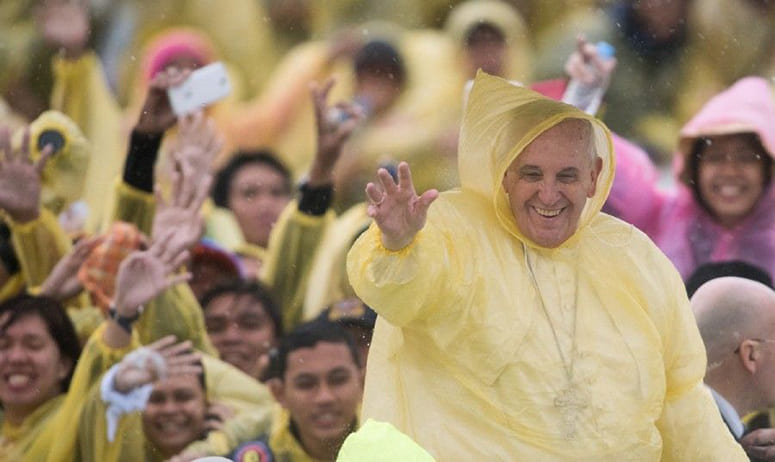
That remark remained at the forefront of my mind as I listened to the Pope deliver his homily. I was not merely reporting about a historic event. I was part of it.
I was telling a story that bound together the past, the present, and the future of a nation recovering from devastation. It was a story of grief and longing, of anger and resignation, but also of resilience, hope, and healing.
Journalists, more than chroniclers of events, are stewards of the stories that shape our collective memory.
***
For the better part of modern history, journalism has occupied a clear place in society. It has been called the Fourth Estate, the watchdog of democracy, and the first draft of history. Its role has always been to hold power to account, amplify the voices of those on the margins, and bear witness to history as it unfolds.
But recent developments make it imperative for journalism—and the public—to reassess these roles.
This year’s Digital News Report of the Reuters Institute showed that trust in news significantly dropped among Filipinos.
Journalists, more than chroniclers of events, are stewards of the stories that shape our collective memory.
Coupled with the continuing threats, the precarity of media work, and the profession's longstanding labor challenges, journalists are being asked to do more with fewer resources while navigating an increasingly hostile and fragmented information landscape.
Yet these challenges only underscore why journalism remains indispensable.
At a time when facts are contested, disinformation spreads at unprecedented speed, and public trust is fragile, journalists remain committed to the very principle that defines the profession: truth.

WATCH: Is OPM still as good as it used to be? (Generations Ep. 20)
September 9, 2026
WATCH: Is Philippine cinema still thriving? (Generations Ep. 19)
September 2, 2026