

How Gen Z got numb
There has never been a generation more well-documented than Gen Z.
From the mainstreaming of the internet in the late 90s to the rise of artificial intelligence now, it’s as if the digital era and Gen Z took their first steps together. However, we are fast approaching a point of dystopia, an arc of advancement that we are beginning to lose control over.
‘Cellphone pa more’
Gen Z is often described as “desensitized.” Whether it’s from news outlets constantly broadcasting gruesome, demoralizing casualties or watching other people’s lives only through a screen, topics of chaos and violence have suddenly lost their depth and impact.
“The digital age has impacted how we think in (terms) of delayed gratification since all things are accessible now,” said Reg Centeno, a registered psychologist and member of Ateneo Bulatao Center, Ateneo de Manila University’s non-profit psychological service and research arm. He continued, “10 (or) 20 years ago, you had to put in so much time and effort to access information (and) people.”
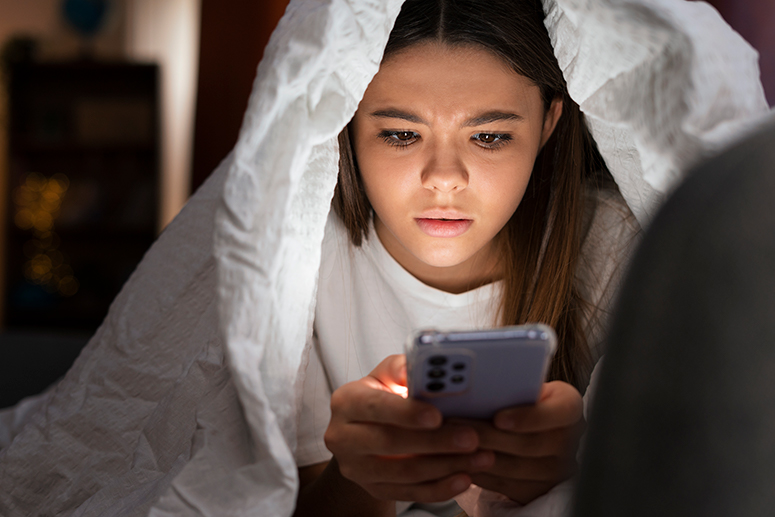
When all the world’s events are documented and shared seconds after happening, it becomes almost impossible to empathize with each person undergoing turmoil and pain. This creates a rapid cycle of overstimulation, numbness, and even humor about devastating tragedy. Memes on social media have become a favorite way to cope. The fast-paced nature of random content acts as a sweet escape from crises like COVID-19, simultaneous international wars, and a depleting global economy.
Bea Morente, a psychometrician and guidance counselor, explained, “Our frequent exposure to emotionally arousing content, typically found in social media posts or online news, actually disrupts how we regulate our own emotions. It increases how reactive we are to things, but at the same time, it decreases how well we recover from them.”
CONTINUE READING BELOW

The tired topics of mental health, AI, and social media beg the question: how much is too much?
Developing a pessimistic outlook on the world becomes the standard, especially given the barrage of negative stimuli. It leaves our brains unprepared to cope. This is why the global mental health movement skyrocketed in popularity. However, ironically enough, its sudden boom led to a detachment from mental wellness.
Desensitization and therapy-speak
Popular trends incentivize users to share traumatic events for entertainment, such as “passing the trauma bowl,” where people dump their trauma while dumping bags of candy in a bowl. Today’s most popular podcasts often profit from oversharing. Even some of our friends “trauma-dump” on their Close Friends story on Instagram.
With the overwhelming, never-ending catastrophic content, be it global or personal, it is no surprise that our generation has grown desensitized to the reality around us. And this desensitization doesn’t just shape how we view ourselves, but how we talk about our experiences.
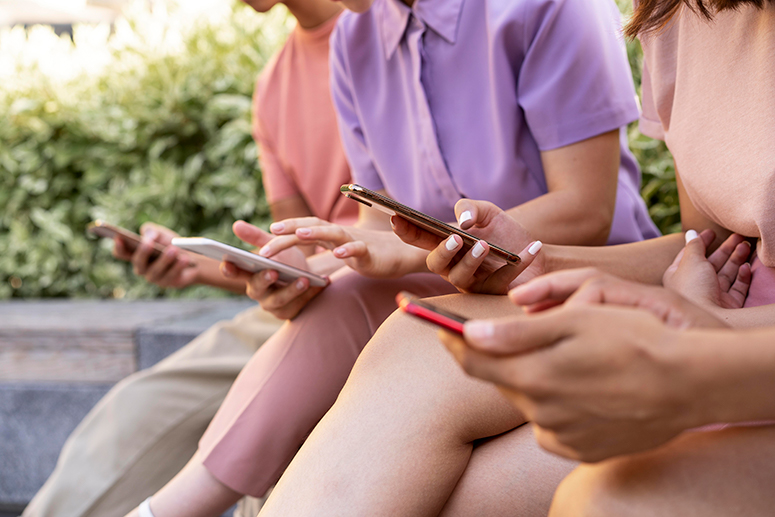
Words like “relapse” or “traumatic” are now casually thrown around in jokes, gossip, and online forums, often without regard for who might encounter them. The fact that these terms, once reserved for clinical or deeply personal contexts, are now being used for entertainment is a product of a social culture hooked on novelty-seeking and shock value.
On one hand, learning these terms allows young people to better verbalize their emotional and mental state. But the risk is that overusing such language trivializes real struggles, whether it’s relapsing from addiction or living through deeply traumatic events. Lean “Lee” Rosendo, a former Ateneo de Manila University Sanggunian President, expounded: “Simply, this phenomenon seems to be a double-edged sword and (an individual has) to own up to their responsibility not only to be aware, but also to speak with genuineness and sincerity.”
To those who ask, “Why not just block this kind of content?” It’s not that simple. Social media algorithms and corporate advertising thrive on pushing content that is entertaining or relatable, with little to no regulation over who gets exposed to it.
Combined with the fact that young people, still in the process of shaping their identities, make up the bulk of online users, the result is a digital environment that can subtly but powerfully erode healthy development. Psychologist Centeno warned the youth of this as well: “When (they) say ‘I'm depressed’ or ‘I'm anxious’ in the lenses of clinical use, we have to take it seriously at face value. But when it's being thrown around carelessly to label one's conversation and experiences, it kind of increases the misunderstanding of it.”
Limbo of awareness and re-traumatization
The mental health movement advocated for and enriched the ways we cope and heal, especially from the abrupt advancement of digital spaces. However, the normalization of desensitized behaviors, seen in the overuse of therapy-speak, steers away from the movement’s initial goals.
Raphael Hari-Ong, former De La Salle University USG president, shared, “With how Gen Zs talk to other Gen Zs regarding trauma… I think there's always a risk (of being overwhelmed) since not everyone knows how to deal with certain stories, especially when [the listener needs] an open mind and heart to it.”
So what now? On a structural level, there are some pending programs by local government units and academic centers to provide mental health services, but the movement’s efforts remain slow in progress, especially in its involvement in digital spaces.
To young people, seeking help for one’s mental health is not only expensive, but overwhelming—as opposed to the free “therapy advice” from ChatGPT and Reddit forums. However, to those seeking individual improvement and accessible aid, hope is never lost.
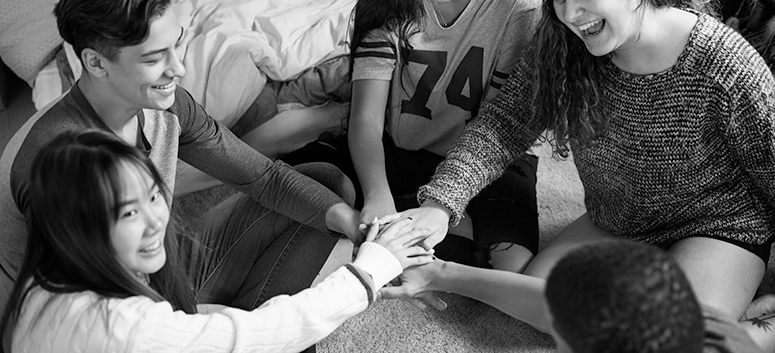
One of the most convenient ways to learn to help oneself and others is by training for mental health first aid. Like physical first aid, this is a life-saving form of intervention for those experiencing an immediate mental health concern. There are also free mental health modules online, such as the Katatagan Resilience Program, a psychoeducational program that teaches productive coping skills in the face of daily struggles such as stress, adversity, and emotional dysregulation.
As digital natives, we are forced to juggle political unrest, broadcasts of destruction, and our personas on and offline. The result is a reality that feels imaginary and dystopian. Yet, like every civilization before us, we carry the responsibility to chart a path forward. The challenge now is to resist numbness, confront fatigue, and reimagine what stability looks like amidst a world of overstimulation. All so that the generations after us inherit not only our world of technology, but the hope to which we cling tightly.

WATCH: How to experience Bangkok and Kanchanaburi in one trip
October 21, 2026
WATCH: Pixar Summer Fest adventure at Hong Kong Disneyland
August 10, 2026