

[ANALYSIS] Duterte impeachment trial Day 12: Misuse of confidential funds? Who is your lawyer?
As expected, the proceedings have become a battle of lawyers over their interpretations of the laws governing the liquidation of confidential funds.
Day 12 turned into a battle of legal research on which of the prosecution or the defense would spring a surprise by coming out with other laws and regulations followed long ago that could challenge even the fundamental basis followed by the Commission on Audit in determining compliance of public officials, including even Vice President Sara Duterte, in the use of confidential funds.
On the Aug. 4 hearing, the counsels of the prosecution and the defense—Atty. Lorna Kapunan and Atty. Michael Poa, respectively—framed the use or misuse of Duterte's confidential funds: P500 million for the OVP and P112.5 million for the DepEd (when Duterte was still its chief) based on the laws they believed should govern the allegation.
By and large, the trial left the public neither here nor there, with the prosecution and the defense sticking to their respective positions. So did their supporters and their critics, as seen on social media.
The court is expected to enlighten the public at the resumption of the trial on Wednesday, Aug. 5, where the senator-judges would start raising their own concerns.
“Confidential funds are public funds,” said Kapunan, commenting on the cross-examination of former COA state auditor Roderick Wamil by Poa, who brought to the court certain provisions of the General Appropriations Act and the COA circular of 1992.
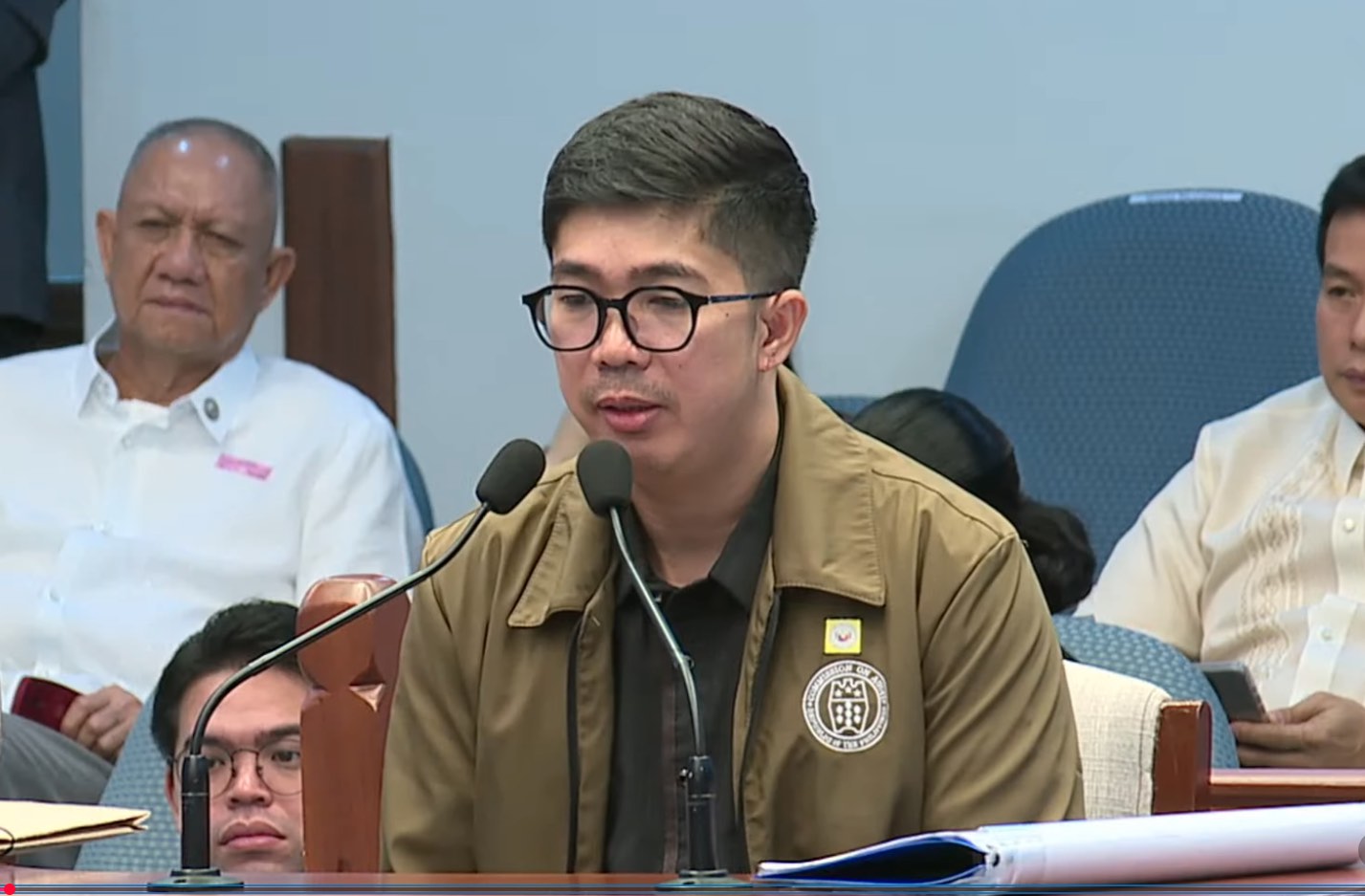

Kapunan and Wamil stood firm by their positions that the joint circular of 2015 forged by the COA, the Department of Budget, Department of Interior and Local Government, and the Department of National Defense, among others, governed the use of confidential funds, including those of the Vice President.
Confidential funds, according to Wamil, are defined, limited, and subject to compliance under the 2015 joint circular.
Based on this circular, Wamil said the COA has called the attention of the OVP and DepEd in three stages: the issuance of the Audit Observation Memorandum, Notice of Disallowance, and Notice of Suspension.
The AOM and ND flagged millions of pesos in Duterte's confidential funds, or part of the total P612.5 million, for failure to comply with “documentary evidence requirements”—ranging from stating the financial plan for a confidential operation. Since payment of the rewards was made, presumably the operation was successful, the OVP must have but failed to explain a success or accomplishment report, and the lack of proof of surveillance of information gathering.
The COA also flagged the release of some P50 million in confidential funds for items spent for medicines and food items. These items are excluded by the circular on the use of confidential funds.
In his time, Wamil said the COA issued an ND ordering the return of P73.28 million out of the OVP's P125 million confidential funds in the last 11 days of December 2022 due to insufficient documentation and regulatory violations.
The COA findings sought the return of the amounts, said Kapunan. “There is presumption that the funds were used for (Duterte’s) personal benefit” under Paragraph 8.3 of the joint circular.
Wamil also questioned the DepEd when it sent its liquidation papers, saying it submitted documents detailing that it had spent for maintenance and other operating expenses which, he added, were not covered by confidential funds as these were part of the department’s regular budget.
Sometime before Wamil was assigned to another COA office, Duterte's chief of staff, lawyer Zuleika Lopez, and Poa, then part of the Education department, sought a meeting with him and COA assistant commissioner and Intelligence and Confidential Funds Audit Office head Nilda Plaras to inquire about the mechanics of the joint circular and other state audit rules.
There was nothing unusual, according to Wamil, about government officials inquiring about COA rules, as other government agencies have done the same thing in the past.
But Lopez and Poa sought to be given an “audit query,” not AOM, while the OVP and the DepEd were in the process of complying with COA requirements. COA proceeded just the same with the issuance of the audit memorandum.
Still, how powerful is the 2015 joint circular in defining and limiting the use of confidential funds? Does it have the force and effect of a law?
Joint circulars issued by government agencies are binding, unless challenged and nullified by a competent court. Circulars serve as guidelines but do not have the same standing as statutes or acts. So far, the circular remains unchallenged.
On cross-examination, Poa brought out a portion of the GAA saying that confidential funds covered MOOE. But MOOE, according to Wamil, was so vast, it covered many other things.
He also showed a 1992 COA circular allowing government agencies to exercise flexibility in dispensing confidential funds because, by the nature of where these are earmarked, these cover confidential activities.
He then presented a document that showed that the OVP received confidential funds in 2014, when Duterte was not yet the country's second-highest official.
Unfortunately, the impeachment court is a trier of facts, not of laws. It will settle facts and decide based on available information as established by the prosecution and as challenged by the defense. It would not or could not settle questions of law.
Kapunan questioned the introduction of the documents, as these were neither verified nor authenticated. The 2015 circular, she believed, had superseded the 1992 circular.
While the testimony of the witness during the direct and cross-examination established facts involving the amount of Duterte’s confidential funds in OVP and DepEd, and the back-and-forth memorandum and reply between her offices and the COA in compliance with established COA rules and processes, the Vice President had some explaining to do, and her offices had been cooperative in complying with COA notices.
Poa elicited a reply from Wamil that until his transfer to his new assignment, the OVP and the DepEd had been replying to their correspondence—proof that the two agencies were not shirking from their duty to comply with the COA processes.
Overall, the trial was overwhelming not just because of the exchange between the prosecution and defense lawyers and the witness, who is both a CPA and a lawyer, but because of the amounts involved, the staggering amounts granted to the OVP and DepEd, and why the budget makers had given so much to the two offices, not primarily tasked to handle security and defense matters against crime, terrorism, and insurgency.
Kapunan said that the OVP and DepEd failed to identify areas that needed the funds to address these security issues.
Poa managed to mouth information that the COA started running after Duterte’s confidential funds after she and the House leaders turned adversarial during the budget season. Duterte and House leaders started dickering over public funds when she called then Speaker Martin Romualdez “tambaloslos,” a pejorative Visayan term, though it remained unclear what led her to say so.
Not to be outdone, the more senior Kapunan managed to get away with some snide remarks several times, though these elicited smiles rather than contempt.

Twice, she described, for instance, a “pro forma” compliance report to mean “cut and paste,” as the OVP and DepEd gave identical answers to the forms.
When Poa called her attention, Kapunan replied: “I am withdrawing, Your Honor; I just couldn’t resist.”
Poa said many times he was lenient with the opposing counsel.
Again, misuse of confidential funds? Who is your lawyer? The public would have to watch the trial set on Wednesday and probably until next week for clearer answers.
Disclaimer: The views expressed in this article are those of the author and do not reflect the opinions of PhilSTAR L!fe, its parent company and affiliates, or its staff.
