

My family tree needs a legend
I was rewatching Harry Potter and the Order of the Phoenix when the family tree of Sirius Black caught my attention yet again. Being a fan of maps and genealogy, I appreciated J.K. Rowling’s efforts to actually draw a version of the tree herself, even while the film prop was created by someone else.
But how much do we really know about our bloodlines?
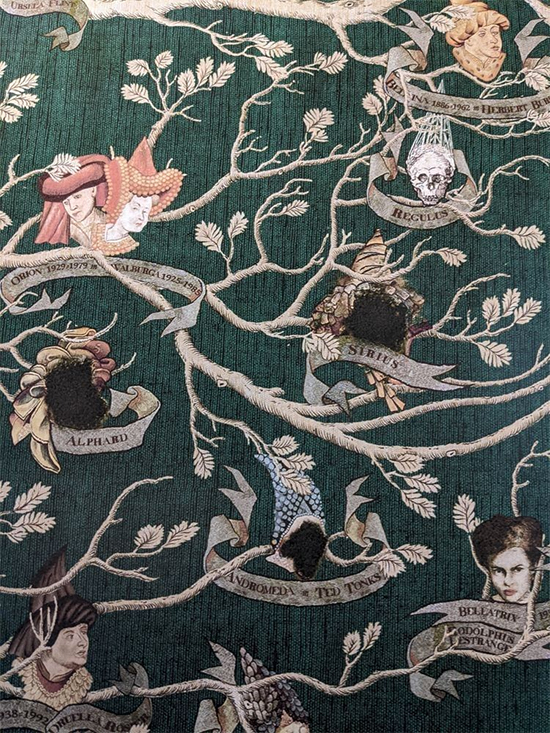
We like to imagine family trees as orderly things, with neat branches spread out through time, like an organizational chart. Sadly, they are more akin to tangled, low-hanging Meralco power lines. Despite this, we use heritage to define belonging, to claim famous people as our own, and sometimes, more disturbingly, to decide who is supposedly superior to whom.
Popular culture has been having fun with this obsession for decades. Rowling gave us a social hierarchy made up of pure-bloods, half-bloods and Muggle-borns. George R.R. Martin introduced us to the dark world of Game of Thrones, where the Targaryens, in particular, practiced incest as a way of preserving their bloodline and political power. In the film Gattaca, a person’s DNA served as a rigid, legally enforced caste system that dictated career options, social status, and entire life potential from the moment of birth.
Fiction, of course, was inspired by true stories from the past. Ancient Egyptian royal dynasties practiced close-kin marriage, like Cleopatra VII, who married two of her brothers in succession. Centuries later, the European Habsburgs employed their own extensive system of consanguineous marriage, including uncle-niece and first-cousin unions. Yet, due to an inherent biological vulnerability, their families did not last forever. After all, human nature cannot be sealed in sanitized bottles; it needs to breathe in an untidy mixing bowl.
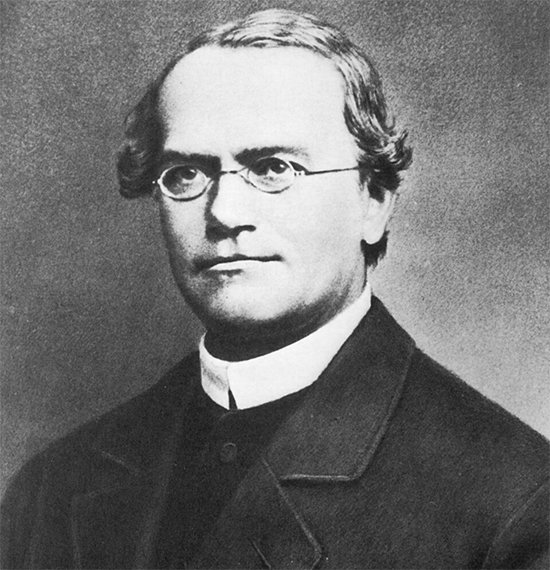

Austrian biologist Gregor Mendel proved this when he demonstrated that inherited traits do not dissolve into a vague parental soup but pass down as discrete hereditary factors in predictable patterns. This breakthrough established that inheritance is real, but it does not provide a scientific stamp of racial purity. Modern genetics instead shows that inbreeding can increase the likelihood that harmful recessive variants are inherited in pairs, while genetic diversity can reduce that risk. Ultimately, genes do not carry tags like “Austrian,” “English,” “Spanish,” “Kenyan,” “Filipino” or “Chinese.”

Our genomes are mosaics—intricate records of DNA shaped by generations of resettlement and intermarriage, and even encounters with other human species, including Neanderthals. This constant mingling means we carry pieces of the entire human story within us. And every now and then, those interconnected branches produce a surprise.
Take Korean actor Lee Dong-wook. In 2020, during an episode of his talk show Wook Talk, a televised DNA test revealed a rare mitochondrial link to Siberian tribes. Because such DNA is inherited through the maternal line, the result offered a clue about one branch of his ancestry, rather than an explanation for his appearance. It served as a reminder that human populations have never been as isolated, neatly wrapped, or genetically orderly as the labels we give them suggest.
My own lineage is a combination of Filipino, Chinese and a sprinkling of Spanish, which is not so unusual in the Philippines. For many Filipinos, tracing a straight-line family tree can be difficult because our history has been shaped by migration, war, trade, colonization and intermarriage. The existence of generations of Filipinos of mixed descent reflects the many different kinds of relationships and encounters that have shaped Philippine society.
In fact, Filipinos take a charmingly inclusive approach to our origins. Give us a famous person with a drop of Filipino blood, and we proudly claim them as kabayan. Musicians like Bruno Mars, Nicole Scherzinger and Olivia Rodrigo are ours. Hollywood stars like Lou Diamond Phillips, Vanessa Hudgens and Hailee Steinfeld are also ours. This extends to athletes, which may be the reason why Filipino-Canadian Leylah Fernandez has been adopted by Alex Eala’s Filipino tennis fans.
Still, ancestry cannot be determined solely by one’s appearance. Every person’s DNA tells deep family stories that do not necessarily manifest physically, while facial features may hint at histories that DNA alone cannot easily reconstruct.
Charles Darwin understood the importance of variation. He showed that variation within populations, combined with natural selection, helps drive evolutionary change. It does not preserve a bloodline out of aristocratic loyalty, but favors heritable traits that increase an organism’s chances of surviving and reproducing in a particular environment. Mendel’s later work helped explain how inherited traits are passed down through generations, filling an important gap in Darwin’s theory.
Curiously, the instinct to keep things “all in the family” survives in Philippine law. We inherited the Spanish-rooted concept of reserva troncal (Article 891 of the Civil Code), which, under specific circumstances, requires certain inherited property to be preserved for relatives within the same bloodline. It is not about genetic purity, but the logic is familiar: aristocrats wanted to keep estates, royal families wanted to keep crowns, and the law wants to keep family property in the family. Meanwhile, biology merrily ignores the rulebook, jumbling everyone’s genes anyway. Nature, it seems, never consulted the lawyers.
And somewhere in every family tree, someone crossed a boundary, married the outsider, or simply refused to fit the approved template. Sometimes, that inconvenient ancestor may be the reason the family line continued at all, and may be part of the reason the rest of us are here.
As Dr. Ian Malcolm put it in Jurassic Park: “Life finds a way.”

WATCH: Save for retirement or enjoy life now? (Generations Ep. 21)
September 16, 2026