

‘Mana kanino?’: Rewriting fatherlessness in the Filipino family script
The only place I see my mom and dad together is in the mirror.
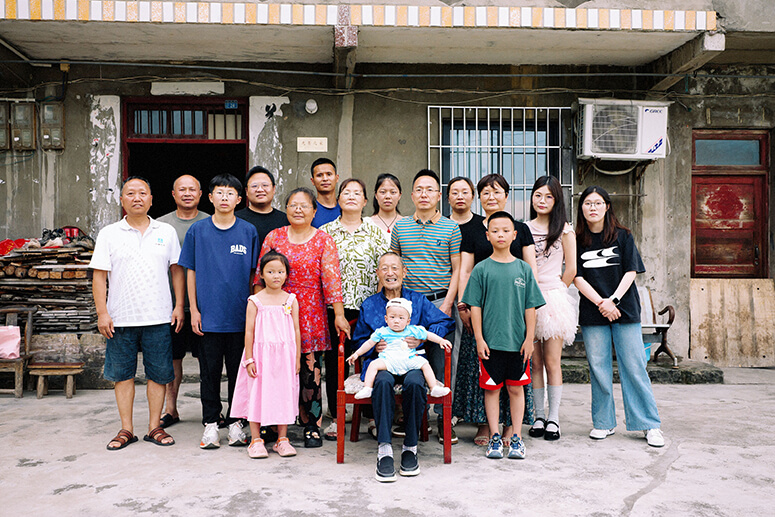
My dad died a few months after I was born, but he and my mom were never really “together.” They had been college sweethearts, but when my mom got pregnant with me, they refused my grandparents’ offer to marry. My mom had a new family by the time I was 12. I was fortunate enough to be taken under the care of my grandparents and my aunt, which is not such a weird set-up in the 20th century; somewhere along the way, it even became a new norm.
For 18 years, it almost never occurred to me that I was a bastard. I was spared the trouble of early existentialism and the shame that people expected me to inherit from the title. I grew up believing my family was simply mine, without the burden of labels.
While most people had one, I had three mothers.
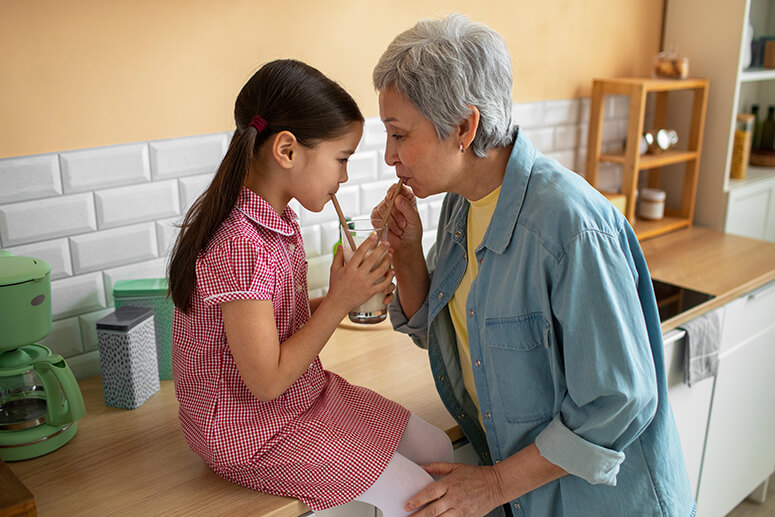
My lola taught me everything I know, supporting every adventure, indulging each wild and pragmatic idea, and nurturing the dreams and ambitions of my young mind. My tita was there for every school event, every birthday, and every audition, driving me everywhere and believing in me through everything. She is the voice that steadies me when I doubt myself, and the hand that lifts me when I fall. And my mom has never left the other side of the line, whether in victory or in despair. We are two different people, yet she loves me all the same.
I never felt the absence of my father, because I never had a chance to know his presence. I visited his grave once and never again. All I had of him growing up was a letter and a picture, both now gone, with his face erased twice over, once in death and the other in memory.

As a kid, I seldom asked about him, but when I did, it was more to outmatch my mother’s silence than to unfurl it. There wasn’t a void, just an empty line on a family tree. But as I grew up I started to wonder who I would’ve been if I had both of them here. How much of who we are really comes from us, and how much do we take from them?
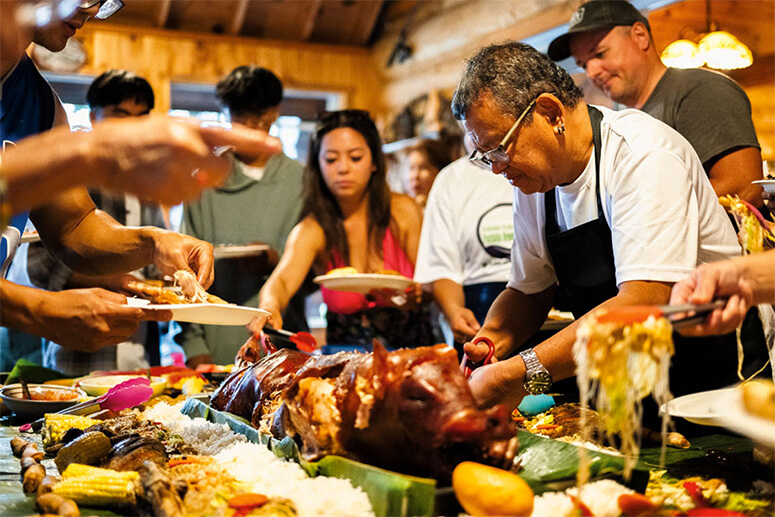
In Filipino culture, the question “Kanino ka nagmana?” is almost second nature. It’s asked at every family gathering, at baptisms, graduations, in mistakes, and at milestones. It’s how we trace resemblance, how we connect children back to their roots. In this way, inheritance for Filipinos is more than just land, properties, or genetics. To ask this question is to insist that nothing about us is entirely ours, that every strength and every flaw can be traced back to those who came before us.
I hum when I yawn like my lola, my hands cover my face when I’m thinking as my lolo, and my laugh fills the room like my mother’s. In many ways, I am made up of the people I love, woven with their habits, echoes, and unfinished sentences; I am a patchwork of inheritances. But when it comes to my father, the thread runs short. There is no habit to mimic, no story to recall, and no face to turn to. His absence is not a scar, but a blank page.
This party question, “Kanino ka nagmana?” always felt peculiar to me. It was an easier game to trace back to two parents, but when you only have one it never landed the same. My father was the missing link. His absence made the question linger differently, making these three words carry more weight than curiosity.
Millions of children in the Philippines grow up outside the bounds of conventional family units, not by choice but by circumstance, yet our lives are no less whole.
I live in a culture where fatherlessness is often framed as a deficiency, as if a missing parent dictates an incomplete self. In this way, the child becomes an object of pity, a cautionary tale, and a reminder of what’s lacking. I grew up with that gaze, that subtle suggestion that I was incomplete, less than whole, because of one line on the family tree that was left blank. As a child, I was oblivious to these snares; they passed over me without weight. But now looking back, I see them clearly for what they were. Not truths, but leftovers from the stories we were fed.
Filipino media has milked the bastarda arc for years on end, always in the orphan, the long-lost child, or in the dramatic revelation. It’s a formula that these telenovelas have thrived on for decades, turning fatherlessness into a spectacle for entertainment, and cementing the harmful stereotype that a child without a father is somehow less. These stories may be fiction, but they seep into reality; they shape how relatives whisper about children like me, how teachers hesitate when forms are left with “father” blank, and how pity clings like a second skin.
According to a 2021 study by the UP Population Institute, only two-thirds of Filipino youth were raised by both parents: around 18% grew up with their mother only, and 7% were raised by grandparents and other relatives instead. That means millions of children share the same form of fatherlessness, whether because a father died, left, was never known, or some children were orphaned entirely. To frame all of these lives into a single melodramatic lens is not only inaccurate; it chips away at a child’s “wholeness.” It erases the everyday strength and ordinariness of families that don’t fit the nuclear script, and, in doing so, teaches children to doubt the completeness of the lives they already have.
In the 21st century, families should no longer be bound to a single script. Millions of children in the Philippines grow up outside the bounds of conventional family units, not by choice but by circumstance, yet our lives are no less whole. To insist otherwise is to mistake absence for deficiency, and to saddle children with a shame that never belonged to them, but to the prejudices of our society. We are not defined by the empty spaces on the family tree or the vacant chairs in our dining room. No matter how much or how little we inherit from our parents, it is we who choose what to do with what we are given, and who we become beyond it.
I am not the sum of what’s missing, but the fullness of all that is here.

WATCH: Discovering Vietnam in three days
June 9, 2026
WATCH: Is Gen Z too soft? (Generations Ep. 23)
September 30, 2026