

Rediscovering Chanel—and Lesage—in Shanghai
A beautiful Chanel creation is never just a dress. Behind its intricate embroidery, delicate fabrics and exquisite detailing are countless hours of craftsmanship, much of it accomplished by hand. It is this artistry that transforms haute couture into works of art.
I was reminded of this when I visited “la Galerie du 19M Shanghai,” an exhibition at the Museum of Art Pudong showcasing the exceptional craftsmanship behind Chanel's creations. While different specialist ateliers were featured, what particularly caught my attention was Lesage, the legendary French embroidery house celebrating its centenary. Its exhibition, ”Lesage: 100 Years of Fashion and Decoration,” brought together haute couture creations, archival pieces and decorative textiles that demonstrated the extraordinary skills of its craftsmen.
Established by Chanel in Paris in 2021, le19M brings together 11 specialist maisons d'art, representing nearly 700 artisans and experts. Among them are Lesage, renowned for embroidery and textiles; Lemarié, celebrated for feathers and flowers; Maison Michel, known for millinery; and Massaro, specializing in shoemaking. The Shanghai exhibition, held from Sept. 25 to Nov. 15, featured three chapters: “Les Maisons,” “A Sense of Touch,” and “Lesage: 100 Years of Fashion and Decoration.”
The history of Lesage
Lesage was established in Paris in 1924 when Albert and Marie-Louise Lesage acquired the embroidery workshop of Michonet. Their son, François Lesage, took over in 1949 and transformed it into one of the world's most celebrated embroidery ateliers. His son, Jean-François Lesage, continued the family's artistic legacy, establishing workshops in Chennai, India, in 1993.
CONTINUE READING BELOW

In 2002, Chanel acquired Lesage to help preserve the traditional métiers d'art, or specialist artistic crafts, essential to haute couture. Today, the atelier is based at le19M in Paris, where its craftsmen continue creating exquisite embroidery and textiles while passing their skills to younger generations.
From Vionnet to Chanel
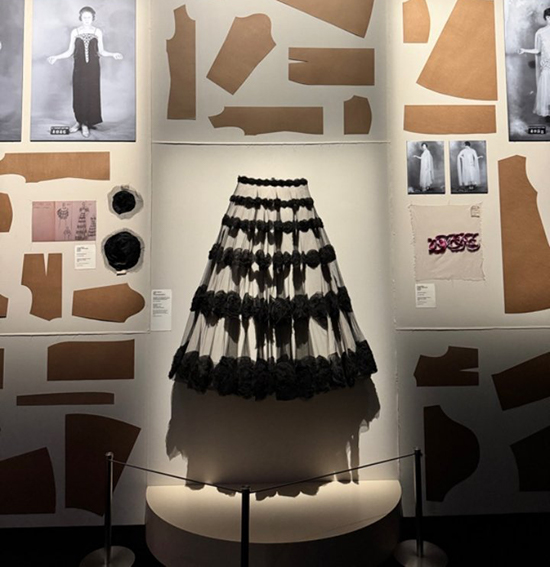
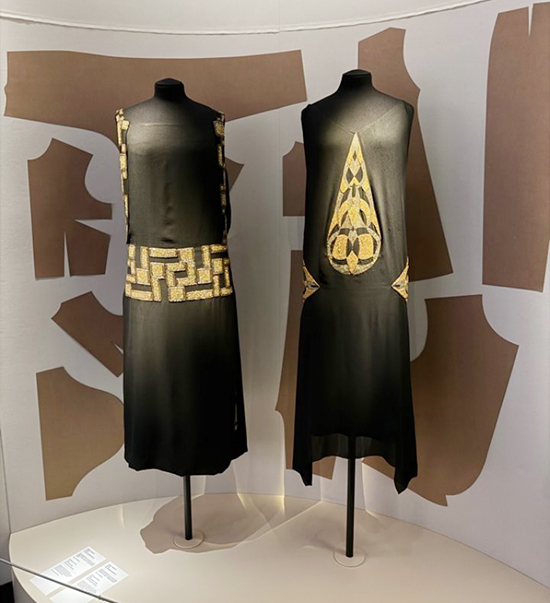
Among the earliest pieces displayed was a black silk tulle overskirt from Madeleine Vionnet's fall-winter 1936 haute couture collection, embroidered with delicate black organza flowers. Nearby were two black dresses with gold geometric embellishments and an archival Lesage embroidery sample created for Vionnet in 1924.
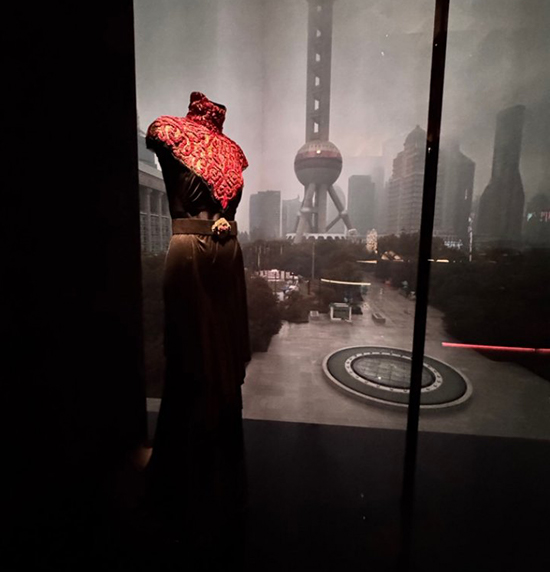
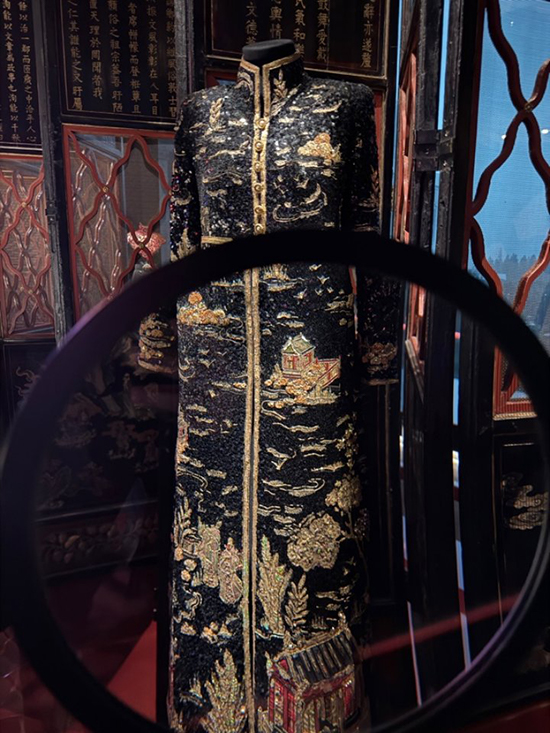
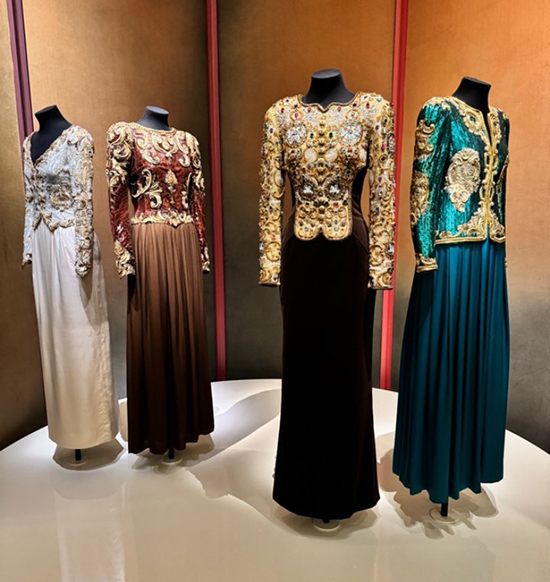
Lesage's collaboration with Chanel flourished under Karl Lagerfeld, who became artistic director in 1983. One spectacular creation was a black coat from the fall-winter 1996/’97 haute couture collection, intricately embroidered with golden motifs depicting an Oriental landscape. A giant magnifying glass positioned in front of the coat allowed visitors to appreciate its elaborate embroidery, sequins and glass beads. Another striking black ensemble featured rich red embellishment, dramatically displayed against Shanghai's skyline.
Tweed, botanical motifs and constellations
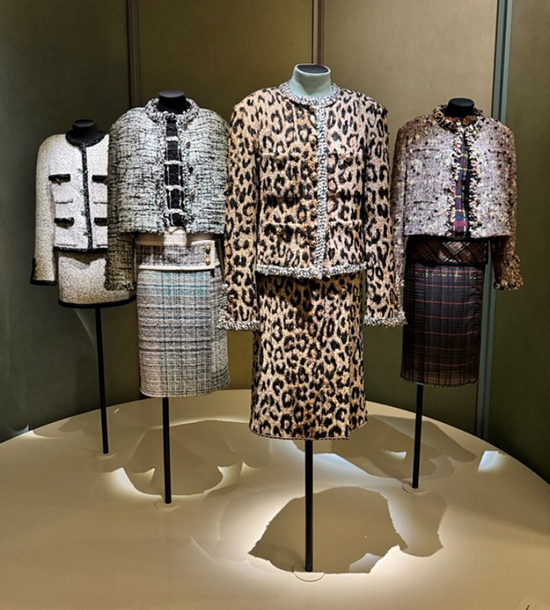
Lesage's artistry extends beyond embroidery to Chanel's iconic tweed, combining different yarns, colors and textures to create extraordinary fabrics. Four ensembles illustrated its versatility, from classic cream and gray suits to leopard-pattern and multicolored designs.
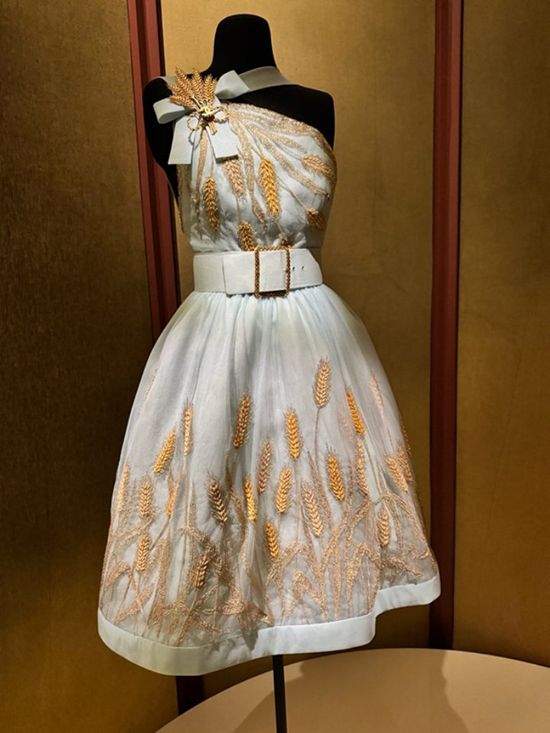
One particularly lovely creation was an ivory dress embroidered with golden stalks of wheat, a symbol of abundance and good fortune for Gabrielle Chanel. Created for Matthieu Blazy's first Chanel runway collection, it demonstrated how Lesage transforms botanical motifs into exquisite embroidery. Another gown displayed constellations and celestial patterns, while highlighting the atelier's craftsmanship in costumes for the Paris Opera.
Jewels and optical illusions
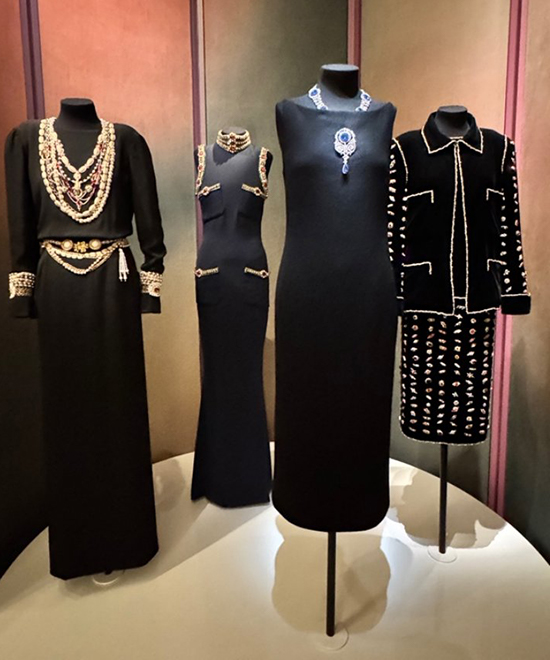
Karl Lagerfeld's playful use of trompe l'oeil, or optical illusion, was illustrated through four black Chanel ensembles featuring elaborate jewelry-like embellishments. One appeared adorned with multiple gold necklaces, while another featured striking blue-and-silver ornamentation. These creations reflected Gabrielle Chanel's fascination with imitation jewelry, interpreted through Lagerfeld's imagination and Lesage's craftsmanship.
Couture and art
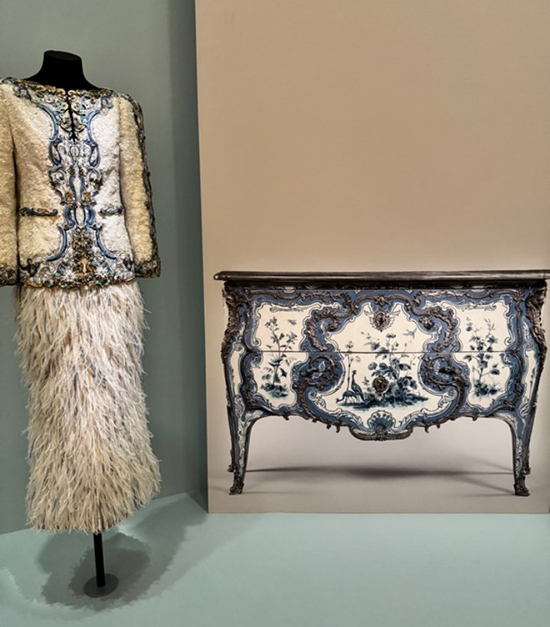
My favorite was the installation “Blueprints: From Ceramics to Textiles,” which explored Lagerfeld's fascination with traditional Chinese blue-and-white porcelain. A beautiful strapless gown featured intricate blue floral embroidery resembling patterns on antique Chinese vases, while an embroidered jacket with a feathered skirt was displayed beside an ornate blue-and-white cabinet. Stunning!
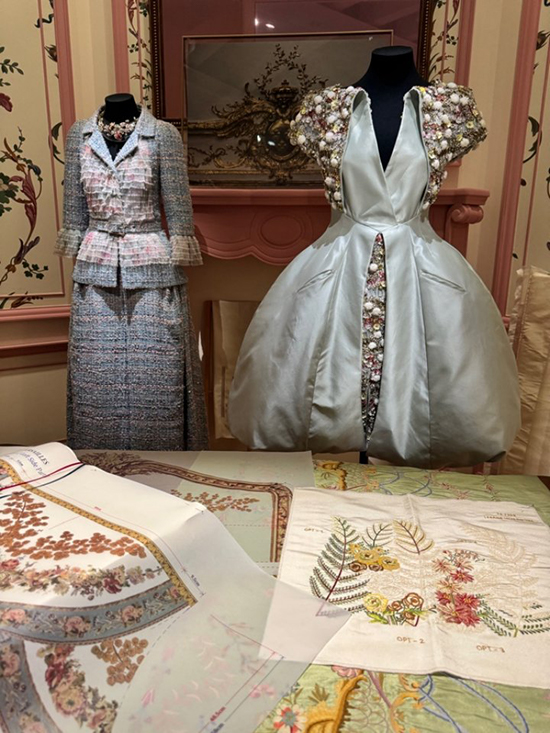
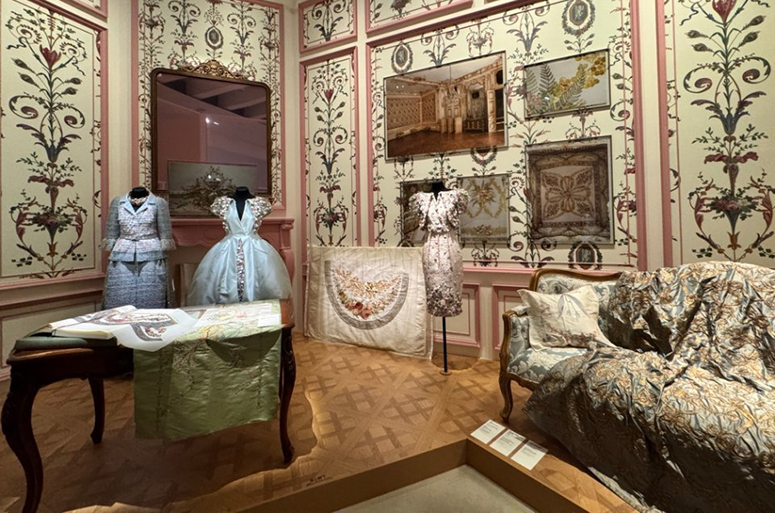
Another installation, “Royal Interiors: 18th Century Couture,” recreated an elegant French salon with embroidered walls, upholstered furniture and exquisite Chanel creations, including a pale blue-gray suit and a voluminous ivory dress with the most beautiful flowers. It highlighted the artistry of Lesage Intérieurs, whose craftsmanship extends to historical textiles and restoration projects associated with the Palace of Versailles.
100 years of craftsmanship
From Madeleine Vionnet's designs to Lagerfeld's spectacular couture and Matthieu Blazy's contemporary interpretations, Lesage has continued to evolve while preserving its traditional techniques. What made the Shanghai exhibition memorable was the opportunity to appreciate these extraordinary creations up close, revealing intricate and beautiful workmanship from generations of skilled artisans who transform fabric, thread, beads, and sequins into something truly exceptional. It truly is breathtaking.

WATCH: Is OPM still as good as it used to be? (Generations Ep. 20)
September 9, 2026
WATCH: Can we talk about death and grief? (Generations Ep. 25)
October 14, 2026
WATCH: Good parent ka ba? (Generations Ep. 28)
November 4, 2026