

The Burden of the Bar
Inside the Philippine Arena in Bulacan, thousands of aspiring lawyers stand at once. Robes pressed. Oaths memorized. Families fill the seats, phones raised, waiting for the moment when relief finally enters the record.
It is one of the largest oath-taking and roll-signing ceremonies the Philippine Bar has seen in years—grand, emotional, cinematic. The law, for a day, borrows the language of spectacle.
A few weeks earlier, the mood was just as intense, but less choreographed.
The Bar results arrived the way they now always do: live, televised, ranked. Law schools set up viewing screens. Families hosted watch parties that grew louder as the list unfurled. Social media pulsed with prayer emojis, countdowns, and congratulations drafted in advance, ready to be filed the instant a name appeared.
It felt like a season finale. A reveal.
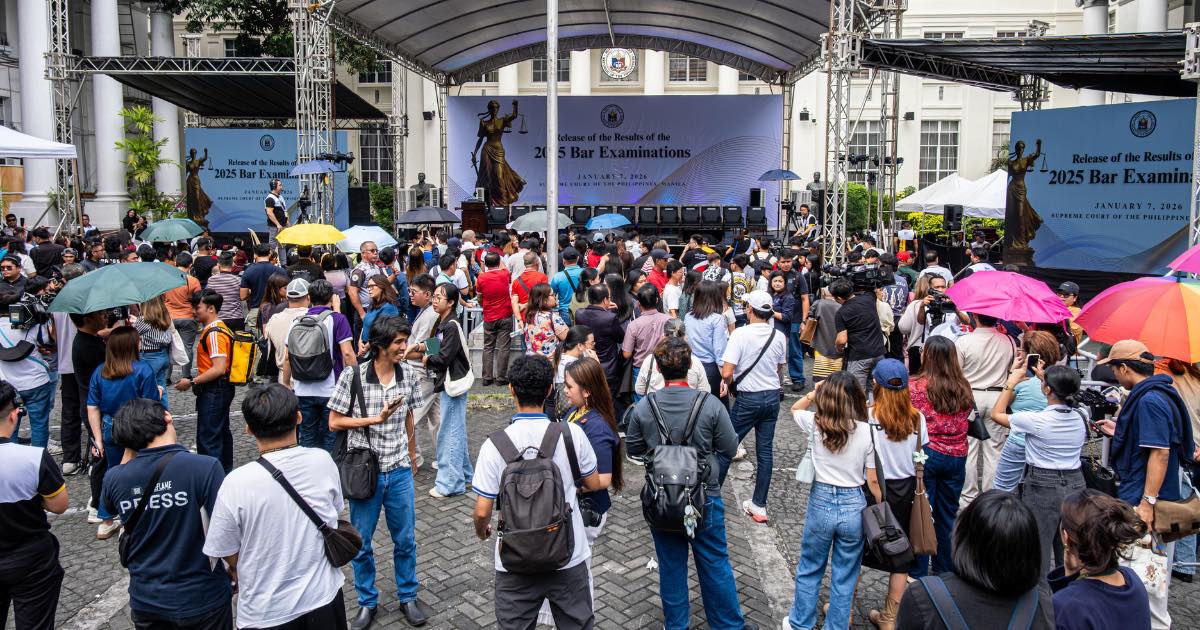
That reaction isn’t shallow. The Bar is punishing by design. Preparation takes years. It rearranges daily life, empties weekends, quietly amends family budgets. For many households, a passing name is not merely a credential—it is an accounting entry, proof that sacrifice was not misallocated. The joy is earned. So is the relief.
And yet the scale of celebration asks the Bar to carry a meaning it was never meant to bear.
At heart, the Bar exam is a licensing mechanism. It certifies readiness to enter the profession. But the pageantry surrounding it—rankings, school tallies, public rollout—suggests something broader: a judgment not just of preparedness, but of destiny.
That distinction matters.
Written exams are good at spotting speed and recall. They are less adept at measuring judgment, empathy, or the ability to sit with ambiguity—skills that, inconveniently, cannot be reduced to a few timed questions. The Bar does one thing reasonably well. It does not do everything. Like most good tools, it is precise about its limits—though we are less honest about them.
History reinforces the point. Philippine Bar passing rates have swung wildly across decades: generous in some eras, punishing in others, rising and falling with shifts in exam philosophy more than with shifts in collective intelligence. And yet the hierarchies produced by the results are treated as fixed—as if carved in stone rather than scored in bluebook margins.
None of this diminishes excellence. Early standouts deserve recognition, and many go on to distinguished careers. But the law has a long memory, and it is not particularly enamored by first impressions. Some of its finest judges, advocates, teachers, and public servants barely passed—or did not pass the first time. Law is cumulative. It reveals itself slowly, like doctrine refined through invocation and time.
The Bar measured what the new lawyers know. The Oath and the Roll mark what the country may now ask of them.
Occasionally, our fixation leaks into the justice system itself. In one disciplinary case, the Supreme Court reprimanded a judge who told a lawyer in open court that, not being from “UP,” he could not “equate” himself with the bench—forcing the Court to restate the obvious: Competence is measured by conduct and performance, not pedigree. In a culture that treats Bar results like a televised leaderboard, and even justices themselves rib one another over their school performance, such slippages become less surprising.
Other jurisdictions seem to understand this. In the United States, Bar authorities release names without rankings. The United Kingdom communicates results privately, publishing only aggregate statistics. Canada and Australia emphasize supervised practice after the written exam. Japan, South Korea, and Singapore announce passers without hierarchies. The Philippine approach—public, comparative, theatrical—sits at the expressive end of the spectrum.
That expressiveness has consequences. When schools are judged by passing rates and topnotcher counts, teaching bends toward the test. Curricula narrow. Students learn how to anticipate questions rather than how to sit with uncertainty; how to perform under artificial constraints rather than how to exercise judgment in real time. The syllabus becomes a wager, not a map.
And yet, even as the spectacle swells, the Bar supplies its own rebuttal.
This year, after the final names were read, a television interview went fishing for a parable from the topnotcher. None came. He said he simply wanted to become a lawyer. He learned of the results while riding a jeepney, having deliberately logged off to keep his balance. He described his achievement as almost incidental.
It was a disarming answer—an objection sustained by humility. A reminder that much of the celebration belongs to us: to our hopes, our sacrifices, our appetite for numbers. The law itself remains unmoved.
That sensibility matters today.
Because despite the grandeur—the screens, the speeches, the applause—this ceremony is not a coronation. It is a threshold.
The Lawyer’s Oath does not congratulate. It charges. It speaks of fidelity to the Constitution, truth, justice, equality, peace—even love. It asks for integrity and civility in a profession that does not always reward either, and often tests both without notice.

Then comes the quieter moment. Names are called to sign the Roll of Attorneys. No rankings. No schools. Just a name—signed, entered—into a public record that carries both privilege and commitment. The law, having made its noise, lowers its voice.
What follows unfolds far from any arena: in offices lit long after dusk; in trial courts where patience matters more than speed; in mediation rooms where no one keeps score; in public service and private counsel, where mistakes have costs often borne by others; in advocacy spaces where the work is unseen but the stakes are human.
There, the profession’s real virtues—honor, merit, duty—are tested. They do not trend. They do not photograph well. They rarely announce themselves.
The Bar measured what these new lawyers know.
The Oath and the Roll mark what the country may now ask of them.