

The gray area of coming out, in full color
We usually see coming out go one of two ways: stories of acceptance or being shunned. But what if coming out to your family is met with silence, as if you never said a thing?
This is what happens to Kevin, the Filipino high school student at the center of Brooklyn-based comic artist Richard Mercado's graphic novel debut, Coming Out Perfect. After his family dismisses his coming out, Kevin asks the help of the popular gay kid at school, Raymond, to become the “perfect” gay person. The book then follows Kevin as he tries to juggle who he is and how he wants to be seen.
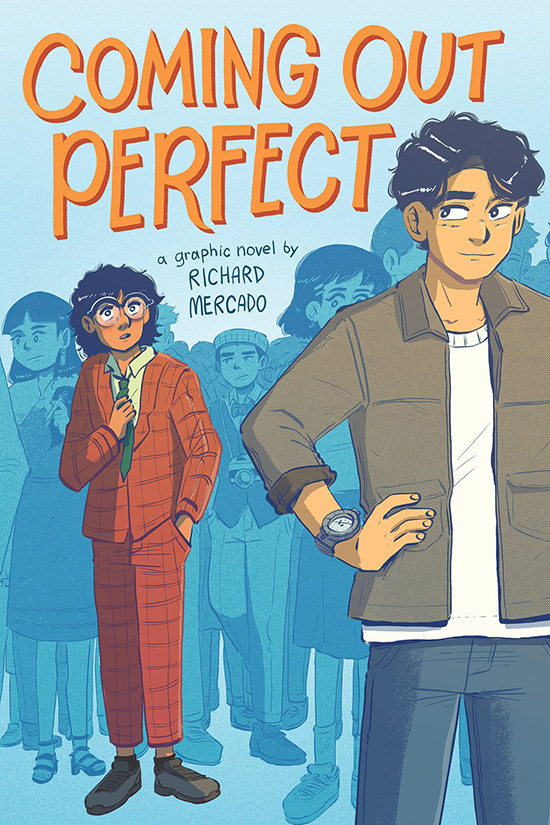
Young STAR chatted with Mercado about the importance of discussing Filipinos’ coming-out experiences and what comes with tackling these issues in a graphic novel.
Filipino artist Richard Mercado shines a light on the Filipino gay high school experience with his debut graphic novel ‘Coming Out Perfect.’
YOUNG STAR: What urged you to create a story that centers on accepting one’s sexuality and identity?
RICHARD MERCADO: I’m originally from the Philippines, and I used to make little comics in college na parang joke-joke lang. My friend and I wrote a comic (about a) bisexual guy, and at first, we were just making it for fun, then people were really into it. It unlocked something in my brain: “Oh, people are interested in this, and I’m interested in writing about it.”


The more I did it, the more I felt like I discovered more about myself, and the more I felt like I could make a whole graphic novel out of it. That’s how Coming Out Perfect came to be; I wanted to write about teenagers, but also an aspect of coming out that’s not necessarily specific to my experience, but hasn’t been talked about (as much).
Especially in Western media, (coming out) is always portrayed in two ways: Everyone is just so accepting of the person, saying, “Yay, Kumbaya!” or it’s the other way around where it’s like, “Get out of the house.” In the experience of a lot of Filipinos I know, it’s not like that all the time. There’s that gray area sometimes, and that’s what I wanted to focus on.
Were there ever instances in your life that inspired some of the more vulnerable scenes about trying to fit in and be accepted?
Kevin struggles with wanting people to love him, from his family to his classmates. (He also feels) jealousy towards people around him, like Raymond or his sister. Specifically with Kevin’s character, it might feel real because it was real for me; I was experiencing it.
With Raymond also, I wanted to write something specific to my experience where sometimes being gay, especially in high school, can feel performative in a sense. There are a lot of gay people in the Philippines and it is a very accepting or tolerant country, but it seems like you have to act a certain way to be palatable.
Being the “ideal” child seems to be a universal experience for Filipino children, especially members of the LGBTQ+ community. Why do you think it’s important to shed light on how familial pressure can shape our relationship with identity?
It’s a very Filipino thing, or a very Asian thing, because you’re with family all the time, and at least for me, there were all these expectations (of who you’re supposed to be). And when you’re queer, you’ve already made this mistake of not fitting into this thing they’ve been thinking for you. Because you’ve already “failed” in that aspect, you would have to compensate. “If I’m gonna be gay, at least I’m gonna be perfect,” you know?
Coming Out Perfect also touches on the SOGIE Bill and the use of preferred pronouns and uniforms in schools. Why do you think it’s important to campaign for these things through art and media?
I started writing this in 2022, and the process of writing the book went on until maybe last year. I was thinking, “Will the SOGIE Bill finally be passed once this is out?” But it still hasn’t been passed.
I really wanted to include them to inform people, especially Western audiences, that this is a specific Filipino setting, and this is what Filipinos go through. Like uniforms are very Filipino. What does that entail for queerness, having a binary male and female uniform and the strictness that comes with it?
What would you tell people who want to fit in and be accepted for their sexuality and identity?
There is no way to come out perfect. There is no way to be a perfect gay person. Rather than worrying about fitting in, worry about being yourself. Try to be more yourself, acknowledge who you are rather than forcing yourself to pretend to be who you aren’t.
***
Coming Out Perfect is available at Scholastic Philippines and for pre-order at Fully Booked. Follow Richard Mercado at @richardmercz on Instagram and @richard_mercz on X for more comics that explore identity and relationships among queer individuals.

WATCH: Is Gen Z too soft? (Generations Ep. 23)
September 30, 2026
WATCH: Is Philippine cinema still thriving? (Generations Ep. 19)
September 2, 2026