

The case for hope
In an era where algorithms form the bedrock of national elections, independent media, functioning free from being profit centers and mouthpieces of power, may be the last line of defense to bolster the crumbling fourth pillar of democracy.
In the Philippines, the youngest soldiers on this frontline are campus journalists.
Beginning in elementary, budding writers are called to participate in their school publications, often with the goal of competing in the National Schools Press Conference (NSPC). Students are encouraged to think critically, be socially aware, and exercise the freedom of the press from a young age. Safe to say, the Philippines’ robust culture of campus journalism is uniquely characterized by a history of activism and watchdog functions.
In fact, campus journalism was among the so-called independent ‘mosquito press’ during the Martial Law years—pesky, can do some damage, but overall small enough to be exterminated. And yet, school papers like The Philippine Collegian stung just enough to put an end to the dictatorship. Like mosquitoes, what tiny bites a state may obtain from truth-telling can lead to its untimely demise.
More than the sword, the pen has proven to do a whole lot of damage to a crooked system. This, I would soon find out, is why the sword is so often wielded against those who write.
***
CONTINUE READING BELOW

I first joined The Manila Collegian, UP Manila’s campus publication, as a wide-eyed freshman. Coming from conservative Catholic schools my whole life, stumbling upon a stray paper on campus caught my eye. Serious editorial commentary, witty political criticism, and cheeky satires were splashed all over their pages. I started writing my application essay immediately.
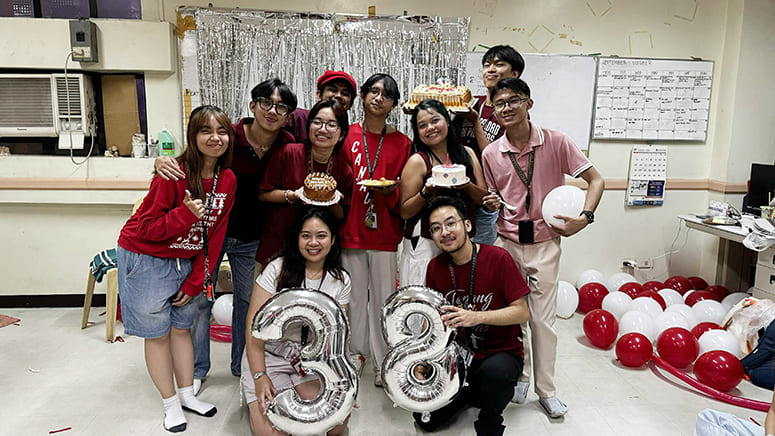
While researching, I came across an article reporting that one of their staffers was arrested for covering a protest. For a beat, I thought, was I going headstrong into something too complicated, something beyond my capabilities and, frankly, valor? At that point, coming from a suburban family, I had never even seen a rally in real life.
But then again, serious journalism was my childhood dream. I was seven years old watching channels like Vice and Al Jazeera, and looking up to local female icons like Jessica Soho and Kara David getting their boots dirty in disaster-stricken areas and war zones, just to get the stories that mattered. I figured I could get a taste of that dream.
I closed my eyes and clicked “Submit.”
But over the years, I realized that we wouldn’t get to fly around the country like Jessica or cover the nation’s most harrowing stories like Kara. Instead, we focused our reportage on the margins of Manila: the patients in line for the Philippine General Hospital, the shoemakers across Padre Faura, the Red Light District entertainers of Malate.
I learned that a nation’s most valuable stories are witnessed by the eyes that see its true state the most, yet are recognized the least. Sanitized reports of climate change metrics coming from a politician who summers in Amanpulo are nonsense compared to the story of a farmer whose crops are destroyed after a monsoon or an informal settler after a big grease fire leaves them unhoused. The truth is never less than the facts, but it is often more.
***
By my senior year, I had worked my way up to being a part of the publication’s editorial board. At that point, I was able to marry my interests in journalism with my studies in the behavioral sciences.
I would notice that facts seemed to matter less and less in reporting, at least for audiences. In behavioral sciences, we learn that confirmation bias and cognitive dissonance go hand-in-hand. When people are presented with evidence against a strongly held belief, they go to great lengths to poke holes and ignore blatant facts. Dealing with the repercussions of a shattered worldview, such lengths may manifest into aggression and hostility towards the newsbearer.
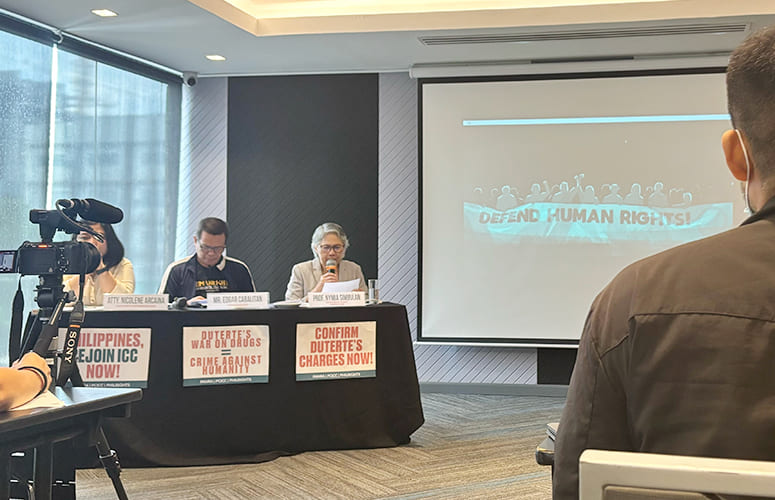
I’ve known from my readings that the Philippines remains one of the riskiest countries for journalists. I just never thought I would see this statement in action as a campus journalist.
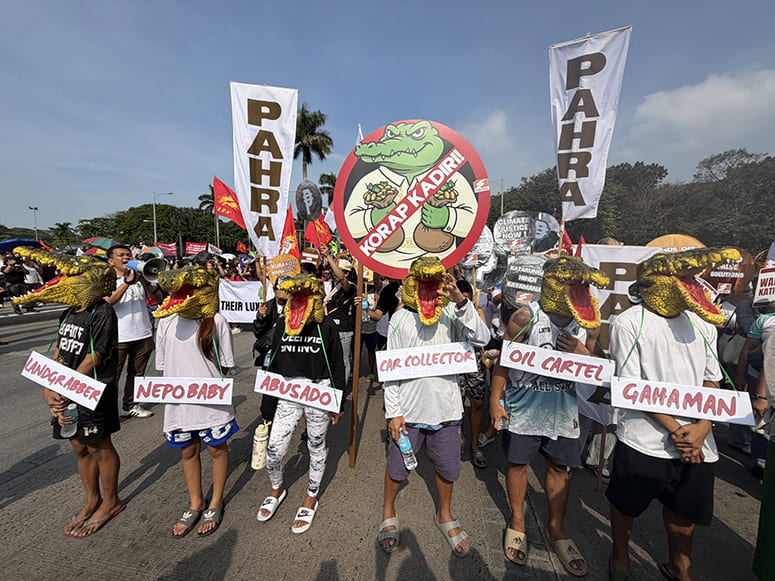
With every post, netizens left hundreds of comments on our page, as well as direct messages condemning and cursing us, especially after viral reports about political events. Colleagues, as well as peers from other campus publications, even experienced physical harassment and legal threats of subpoenas, particularly during the September 21 protests in Luneta and Mendiola.
My first thought was I shouldn’t have been so naive. If laws protecting professional journalists were barely upheld in their defense, what did I expect from the still feeble laws protecting campus journalism?
Needless to say, most of us felt tired and wrung out, even left questioning what good it was to put so much effort into a hopeless case against orchestrated disinformation. What would probing a little more do? Would we actually change people’s minds? Or would we join the statistics of journalists whose lives have been put in jeopardy by a country that rewards impunity?
This exhaustion couldn’t have been mine alone to carry. For my undergraduate thesis, I researched the behavioral beliefs of UP campus journalists, specifically those that either encourage or dissuade intentions to correct online mis- and disinformation.
To no one’s surprise, the biggest discouragement came from perceived external threats: red-tagging, online harassment, and even the possibility of igniting conflict with family members who disagree with their political views.
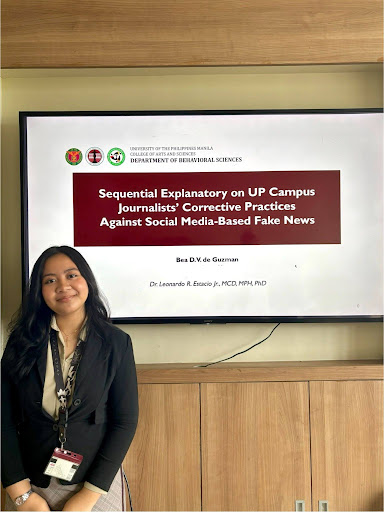
A quite dispiriting result at the moment was that most of the journalists believed that fake news, as we know it, will only get worse with social media and generative AI use, discouraging people from pursuing a career that might be completely disregarded in the future.
And yet, our hope remains. Across my interviewees, a sense of conviction underscores why they still write: not money, nor prestige, but for their hope that while fake news may never be eradicated, recording the truth means that future generations can have some reference of veracity in the face of digital historical revisionism.
For young truth-tellers, the job of a journalist is not merely reporting, but ensuring that the truth is protected and introduced to any citizen before they make decisions.
I won’t deny that journalism still is an unpopular field. Many cite economic reasons, as it is one of those careers where you need to trust that your passion alone will get you through the grunt work. Most of my colleagues, myself included, admit that they don’t plan on working as journalists. Yet, this does not negate the foundation that campus journalism has honed us in.
For young truth-tellers, the job of a journalist is not merely reporting, but ensuring that the truth is protected and introduced to any citizen before they make decisions.
What is truly important in our country’s culture of campus journalism is not only that it produces journalists, but that it trains young Filipinos to uphold the truth in various avenues. Campus journalists could grow to be doctors looking to correct health misinformation, or researchers and professors passing on their verification skills as though by tradition.
No matter what field we end up in, the future that campus journalists look forward to is one where the truth no longer has to be debated. This is our case for hope.
They say journalism in the Philippines is a dwindling flame. But look inside any campus newsroom, and you will see that the fire is very much alive. Our hope is constantly forged in late-night deadlines, rigorous fact-checks, and the sheer audacity to speak truth to power. If campus journalists shall light the dim future of democracy, then the case for hope is clear: despite everything, our ink has not run dry, and we will not let the truth go gently into the dark.
Magna est veritas et praevalebit. The truth is mighty and shall prevail.

WATCH: Discovering Vietnam in three days
June 9, 2026
WATCH: Why is it so hard to make friends? (Generations Ep. 26)
October 21, 2026
WATCH: Is OPM still as good as it used to be? (Generations Ep. 20)
September 9, 2026
WATCH: Can you still trust someone who betrayed you? (Generations Ep. 22)
September 23, 2026