

The lost art of wandering
I have been fortunate enough to travel around the country and, farther afield, around the world.
The ancient Filipino is actually a seafarer by nature and from what I can tell from some history, Filipinos in general are travelers. So I’m always going to say that I come from a long line of travelers. So talking about wandering and moseying around is not that far-fetched here. I myself have moved way beyond the chaotic comfort zone of Manila to Mindanao, and throughout my life have had circumstances that gave me the ability to live elsewhere. Every journey has been a blessing and brought about its many, many, many lessons with it, and learning how to meander—and get lost—was always near the top of the list.
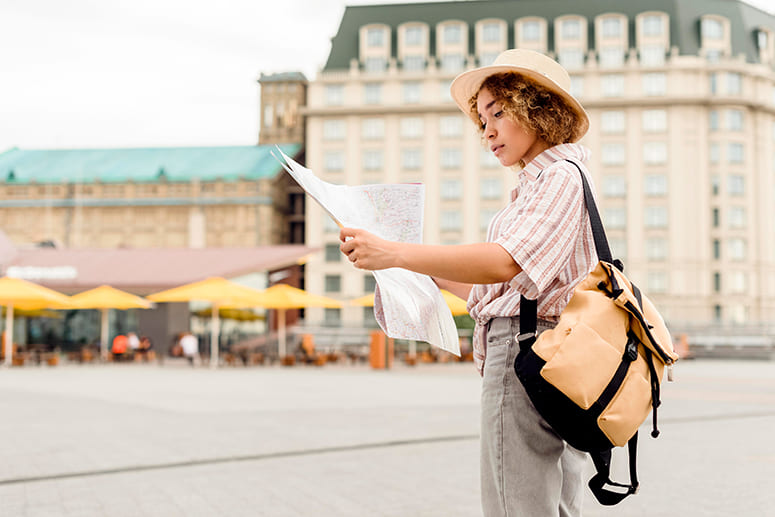
It is almost inevitable, especially when you’re in a place that you are new to and at times, you cannot communicate with anyone. That remedial Spanish, French, or whatever language class you were supposed to take is now rearing its ugly head bringing along regret and screaming “I told you to study” in its own lyrical cadence.
And thus this is the beginning of your being completely lost. One street to another seems like the same one you just came from, and if you don’t know the language, well, even worse. Or is it? I remember the first time I truly got lost. Please keep in mind that GPS was not yet a thing back then. The A-Z pocket version was my bible. It was when I had just moved to London for my postgraduate degree. Still wonderfully convinced that I was smart enough for the city, I decided that instead of taking the route I already knew home, I would take what I was absolutely certain was a clever little shortcut. Reader, it was not. There I was, carrying groceries in both arms, watching the unmistakable gray skies of London gathering themselves for one of those rains that seem to arrive with all the subtlety of an unpaid electricity bill. Every street looked vaguely familiar, which somehow made it worse. I knew I had seen these buildings before. I just had absolutely no idea in what order.

As the first drops began to fall, I ducked beneath the nearest awning. Then I smelled rice. I had wandered into a tiny Indian shop. I stepped inside partly to escape the rain and partly because the aroma of spices was infinitely more inviting than standing outside pretending I knew where I was. The gentleman behind the counter took one look at me, my grocery bags, and what I can only imagine was the unmistakable expression of someone questioning every life decision that had brought her to this particular street.
"You look lost," he observed, and really, there was no point pretending otherwise. After listening patiently to my heroic but completely inaccurate explanation of where I thought I was, he laughed and informed me that I was not only walking in the wrong direction, but that I was actually only a couple of blocks away from my flat. I ordered a warm cup of chai, and he told me to wait until the rain passed.
CONTINUE READING BELOW

Wandering was never about finding where we were going. It was about allowing a place the opportunity to introduce itself.
Then, loudly explaining they just made too much, added a few of samosas because he glanced at the mess that was microwave dinners I had just bought from the grocery. Oops. I had entered looking for directions, and I left with directions, a warm drink, dinner, and one of my favorite memories of living in London. Had I taken the route I had carefully planned, none of that would have happened, and I would have been going further away than where I was going.
I have noticed that there is something deeply unfashionable about getting lost these days. Not metaphorically, I mean that quite literally. We travel armed with satellite maps, restaurant rankings, meticulously saved Instagram reels, color-coded itineraries, and enough screenshots to survive three countries without ever speaking to another human being. Before we even arrive somewhere, we already know where the "hidden gems" are, which rather defeats the purpose of them being hidden in the first place.
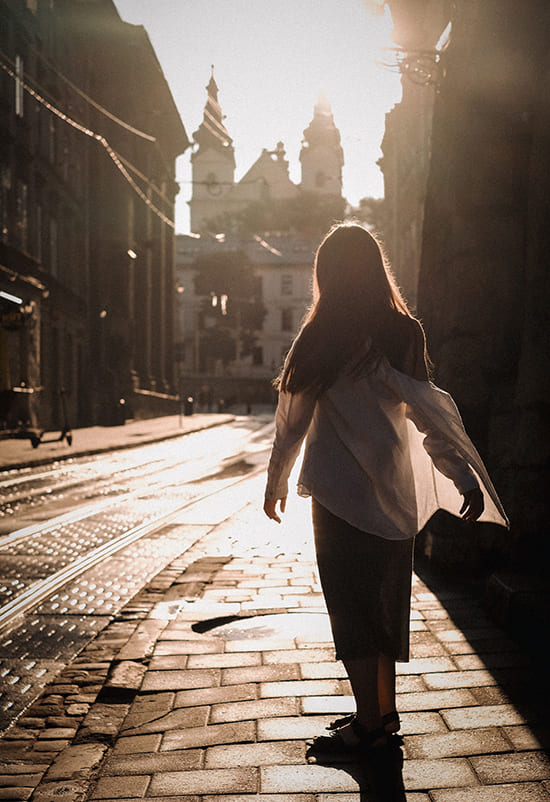
We have become remarkably efficient travelers. We are also, I suspect, considerably less adventurous ones. I sometimes wonder whether we have accidentally optimized away one of the greatest pleasures of travel: the chance encounter. The tiny café you found only because your feet hurt and you sat down on the nearest chair. The bookstore hidden down an alley no travel guide bothered to mention. The grandmother who insisted, through an elaborate game of charades, that you absolutely had to try whatever was bubbling away in her pot. The street musician whose song became forever attached to that city in your memory. None of these moments were planned, they happened because you wandered and maybe you took the wrong turn. Or because you missed the bus. Because you allowed yourself to be gloriously, inconveniently lost. And yes, the first few minutes are panic-filled rather than romantic, especially if your phone battery suddenly drops to 14%. You become painfully aware that every street sign appears to contain approximately seventeen consonants in a row. You begin bargaining with the Universe, promising that if you ever find your hotel again, you will never again complain about paying for airport transfers. Then something rather lovely happens. You stop trying to control every second. You begin looking up instead of looking down at your phone’s map. You notice the smell of fresh bread drifting from somewhere. A tiny antique shop. A doorway covered in flowers. Children kicking a football through a square. An elderly gentleman reading the newspaper exactly as he has done every morning for the last 40 years. The city slowly stops feeling like a checklist and starts feeling like a place and perhaps wandering was never about finding where we were going. Instead, it was always about allowing a place the opportunity to introduce itself. The plans that changed us most were rarely the ones we spent months perfecting. They were the unexpected phone calls, which maybe lead us to the jobs and careers we never intended to have. The friendships that began with complete strangers, and the detours that looked suspiciously like mistakes until enough years had passed for us to recognize them as blessings wearing very convincing disguises.

Maybe that is why I have developed such affection for wandering, meandering even. It asks us to trust that not every worthwhile destination appears on a map. Sometimes the very best stories begin with five wonderfully inconvenient words. There is another curious thing that happens when you wander long enough. You become observant again. You are looking for details closer, landmarks, and things that seem familiar. Not tourist-observant, where every monument requires photographic evidence that you were indeed standing in front of it. I mean genuinely observant. You begin noticing the rhythm of a place rather than merely its attractions. For a brief moment, you stop being someone consuming a destination and become someone participating in it. I have friends who return from holidays triumphant because they managed to squeeze 16 landmarks, three museums, two castles, and four "must-try" restaurants into 48 hours. They deserve a medal. Or perhaps a nap. I, on the other hand, will do the “necessary city tour,” but will make the time to spend an entire afternoon sitting in a square doing absolutely nothing productive. Watching pigeons behave with unreasonable confidence, eavesdropping on conversations that I do not understand a word of, ordering another coffee simply because I wasn't quite ready to leave. It sounds dreadfully inefficient and it also happens to be where I remember a city most clearly. Years later, I may forget the exact opening hours of a museum or how much the entrance ticket cost, but I will remember the smell of rain on old stone streets. I will remember the tiny bookstore where I bought a novel I could not pronounce. I will remember laughing with complete strangers despite none of us sharing more than five words of the same language. Travel, I have slowly come to realize, is not measured in the number of places we visit. It is measured by the number of moments that quietly become part of who we are. And those moments rarely announce themselves in advance. They arrive disguised as delays, wrong turns, missed trains, unexpected conversations and there’s that afternoon you accidentally wandered into the better story, which becomes now your story; then you realize that of course the great Tolkien was right in writing, “Not all who wander are lost.” Perhaps that is the real art of wandering: not simply getting lost, but remembering to look up long enough to truly see where you are.

WATCH: Do you still believe in marriage? (Generations Ep. 17)
August 19, 2026
WATCH: How to experience Bangkok and Kanchanaburi in one trip
October 21, 2026