

To be Filipino is to yearn
Perhaps it is embedded in the DNA of us Filipinos to yearn for things, both profound and simple. From the stories of those before us who longed for independence, to those today who braved seven years of secretly loving their best friend, yearning is an heirloom that seemingly allowed Filipinos to persevere.
Cambridge Dictionary defines yearning as “a strong feeling of wishing for something, especially something that you cannot have or get easily.” Dictionary definitions, however, are far too neat for an intensity that spills over in so many directions of individual experience.
Our yearning may be as silent as stifled tears at 2 a.m. so our dormmates won’t hear, yet it is also as loud as the protests of thousands demanding accountability and transparency.
In my case, I heard yearning in the prayers I grew up chanting alongside the lay faithful, the repetitive Hail Marys in the rosary for at least one answered prayer. I saw it ricochet in the looks across our high school classrooms whenever a classmate tried to secretly catch a glimpse of their crush’s laughter. It was in the face of my friends when we were hopeful about college and the epiphanies that come with it, in leaving and growing up.

In Filipino, yearning translates to different words depending on intensity and context: pananabik, pangungulila, pangangarap, and paghahangad. Pananabik is the intense anticipation for someone to come back. I hear it in my father as he sings Sana Ngayong Pasko every Sept. 1 with so much wistfulness that one may think he’s severed from his lover despite singing it with Mama. Whenever I hear him trying to hit the notes, what I hear is someone who longs for a version of Christmas that once felt fuller, back when the karaoke queue was packed with songs reserved by almost every member of our extended family.
Pangugulila, the pining for and missing someone, is embodied in my Nanay as she sings her go-to karaoke song, Remember Me by Renz Verano—her greatest love letter to my Lolo in remembrance of more than 50 years of love only halted by an inevitable death. “To have and to hold from this day forward,” as their marriage vow went, but more than that, it is also to lose, to remember, and to long for the rest of their lives.
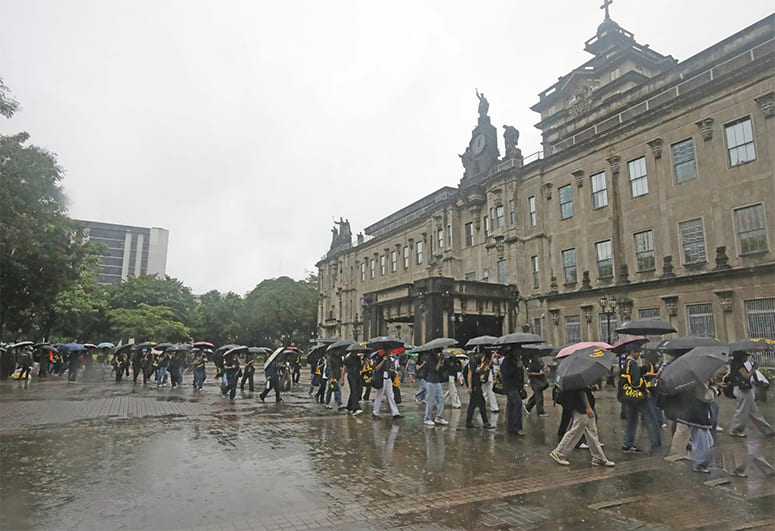

Pangangarap and paghahangad are in the faces of my sisters as we dream of making an award-winning film despite not being in film school. The four of us were made to pursue “practical” college degrees, but deep inside still rests what our hearts really desire. Maybe one day we’ll stop yearning and finally be fueled by courage.
Beyond these four translations, I learned that yearning is also grief. It is my pagdadalamhati. I still grieve the death of my closest Tita, because how does one live with such permanent absence? I grieve for my carefree high school friend group and the childhood friends I don’t know how to reconnect with anymore.
But yearning is also everything I know about love. It is my pagmamahal—this inexhaustible capacity to give as much as I receive. I just have so much love in my heart that it seeks places where it can run home. That no matter what translation is used, all of it is too short a word to capture the depth of everything I love and yearn for.
Admittedly, the closest I had to romantic love was a failed high school crush. Nevertheless, I understood the yearning hummed through songs, books, and films. After major exams, my college friends and I would come alive inside a karaoke room as we sang at the top of our lungs the lyrics to Migraine by Moonstar88 and Sundo by Imago. Somehow, no matter how different the states of our hearts are—whether mended, shattered, or full—the songs translated our separate yearnings into the same ache finally shared out loud. It no longer matters whose story the song belongs to, because we sing them as if we already lived them.
Seeing ourselves in film characters, such as Carson in I’m Drunk, I Love You and Fidel in 100 Tula Para Kay Stella, who go through the joys and hardships of love and life, allows us to make sense of what we feel and find pieces of ourselves reflected with clarity and compassion. Having these films speak about feelings that taste unspeakable on our tongues is a way to cope with the hurt that comes with yearning to love and be loved.
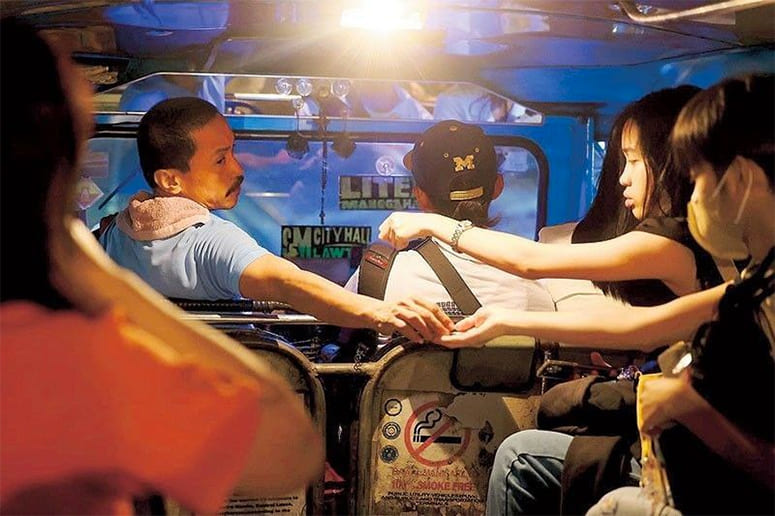
Beyond romance, my yearning metamorphoses. It lurks in the shadows of a girl commuting in a city she did not grow up in, but whose streets she tries to befriend. During long jeepney rides in the unforgiving heat, a P20 bill clutched tightly in hand and a backpack that has carried my dreams since high school, I know I still have a long way to go.
I crave to make it out alive from a neoliberal education in a state university and be of service to Filipinos who yearn for healthcare to be what it constitutionally is: a basic right. I yearn to give back to the taxpayers who sent me to school, regardless of whether I felt failed by everyone else when corrupt officials were voted into power while I was still too young to vote. I yearn for a job that earns enough so my parents do not have to worry about the future. I yearn for a softer life, where my small joys are not weighed against survival.
Yearning is not a mere emotional response but a natural part of how Filipinos love, remember and make sense of their lives. It is, however, not without the yearning driven on behalf of the community. Yearning is in the face of the personal becoming political. Because wanting a soft life in a place that makes survival hard is already political. Dreaming of ease is to ache for a world that has chosen care over neglect.
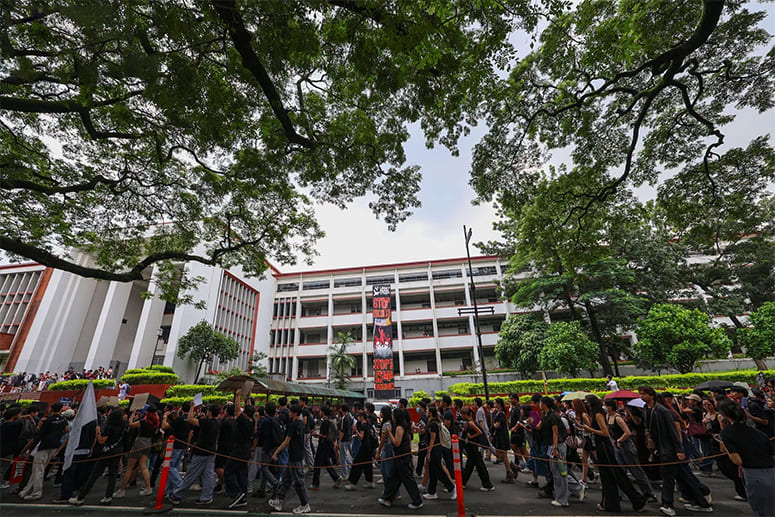
All my yearnings resonate with those echoed by the masses across the streets and snake rallies in school halls. It is whispered in conversations I overhear in long lines for government services. It is in how one performer during this year’s “UP Fair: Quests” said something like, “Hindi ba’t mas madaling magmahal ‘pag mura ang lahat ng bilihin?” It is in frustrated rants and memes shared across social media that are funny until they’re not. It is in how I yearn for better governance. And for a much more humane world.
To be Filipino is to carry these layered longings all at once. Yearning has allowed Filipinos to endure and even to resist. Our yearning may be as silent as stifled tears at 2 a.m. so our dormmates won’t hear, yet it is also as loud as the protests of thousands demanding accountability and transparency. It only reveals how unsettling it is that our yearnings have become familiar; how frustrating it is to first learn desire for the very things we should have simply been allowed. Because our yearning is not “okay” when the things we yearn for are ones we should really not beg for in the first place.
Yet despite all the ache that comes with it, what is yearning if not hope rekindling itself against all odds? We shall share in society the burden of this yearning so that it remains bearable for the soul. And as long as selfless hearts can ache and tend to the parts of the greater whole that have bled so much, as long as the body can pinpoint the bones the system broke, the yearners shall persevere.

WATCH: Is OPM still as good as it used to be? (Generations Ep. 20)
September 9, 2026
WATCH: Can you still trust someone who betrayed you? (Generations Ep. 22)
September 23, 2026