

How chef Chele Gonzalez taught me to cook pulpo at Enye
It was the tail end of summer in Cebu and Chele Gonzalez, the chef who has Michelin-starred restaurants in the Philippines, was unselfishly sharing with me his simple recipe for pulpo a la Gallega. The octopus dish was a hit among guests enjoying their buffet lunch at Enye by Chele Gonzalez, the Spanish restaurant at Crimson Resort and Spa Mactan where the chef is also the curator. Ten-year-old Enye is a “Michelin-Selected” restaurant.
“First, you need to freeze the pulpo for one week. You just can’t cook it after buying it fresh. This is to break the fiber that makes the octopus flesh hard and rubbery,” chef Chele began.
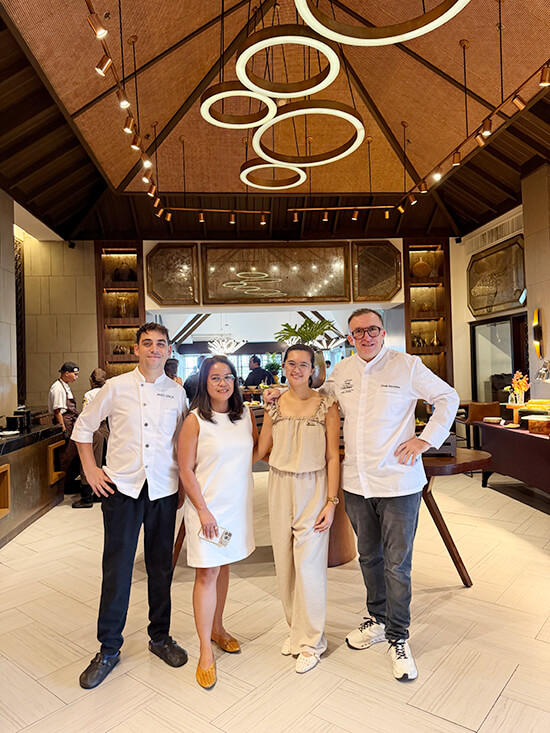
We were standing in front of the station where pulpo a la Gallega was served in small plates. I had one on my left hand. My right hand was armed with a little fork. The Spanish chef watched me as I downed one small serving after another of the dish with gusto. It was really good. I was transported back to the Galician region of Spain where I first enjoyed pulpo. And I thought I was having it better at Enye. I intimated this to chef Chele and he just smiled and clasped his palms together, as if in salutation to the divine who gave him the talent.
“Second…you need to know this second step. There are three steps,” he told me, sensing that my attention was momentarily interrupted by the sight of a new batch of pulpo on the countertop. “You need to boil the frozen pulpo for one hour with cloves, garlic, onion, salt, and orange peel. You would know that it is already soft when you cut the shoulder, the upper portion of a tentacle. If it is still not soft, boil it for 30 minutes more.”
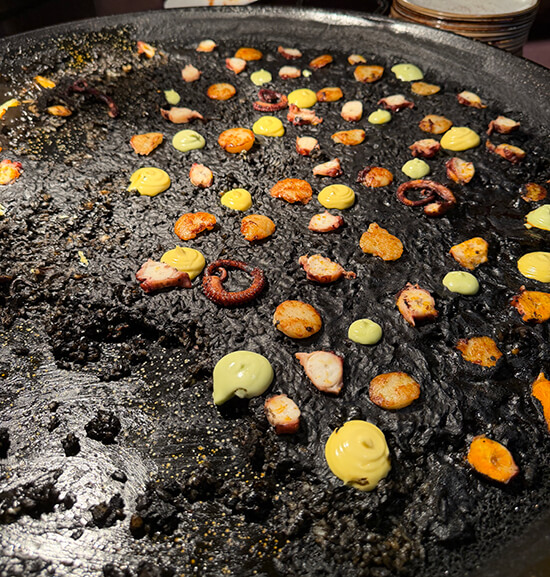
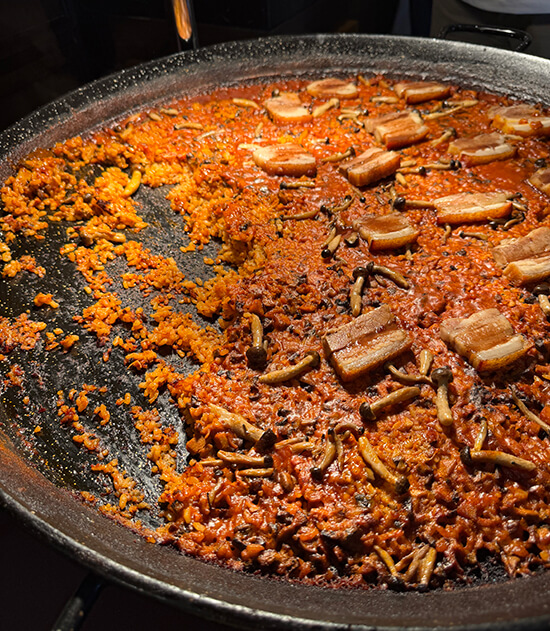
From time to time, our conversation would be disrupted by appreciative guests who helped themselves to second or third or fourth servings of the octopus delight. If their hands were not filled with plates of pulpo, they were lining up for a hefty serving of chef Chele’s paella negra or paella de trufa, setas y cerdo (paella with truffle, mushrooms and braised pork belly) or the churros con chocolate. Judging from their faces, they were happy, content diners. They were mostly the same guests I saw the night before at the launch of this year’s Cebu Food and Wine Festival held at Crimson Mactan. The festival will end on June 27.
Mia Singson-Leon, GM of Crimson Resort and Spa Mactan, said the resort is doing four events as part of the Cebu Food and Wine Festival. One is “From tree to treats,” a chocolate masterclass with Rose Hudson of Bohol Chocolate Farm and rum pairing with Sagada Cellar Door.
CONTINUE READING BELOW

The second event was dubbed “Signature Flavors by Crimson,” where other establishments joined the grand tasting event of the food and wine festival.
“The Cebu Food and Wine Festival puts Cebu on the map as a serious culinary destination. It brings together chefs, winemakers, farmers, and food lovers—local and international. For Cebu, it means tourism, jobs, and pride. For our industry, it means collaboration over competition. It proves we don’t have to fly to Manila or abroad for world-class food and wine. It’s here,” said Mia.
The third event is called “Summer Fresh Dinner at Aka” with sake pairing. Aka, according to Mia Sy, Cebu Mactan’s brand marketing director, “is the resort’s contemporary Japanese restaurant centered on authentic Japanese cuisine with a traditional and modern menu as well as omakase service set in an elegant space.” Omakase is a culinary concept where the guests leave it all up to the chef to create a highly personalized meal.
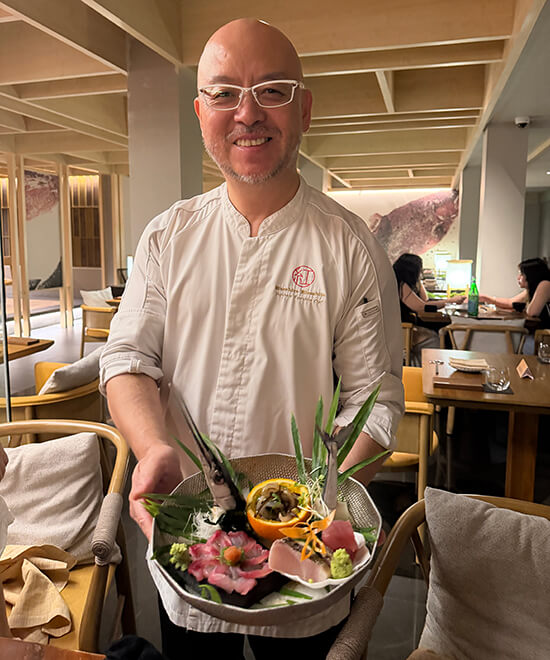
You need to experience how Masahiro Kinoshita, the executive chef of Aka, prepares his smoky beef short ribs, yakitori (skewered chicken), butabara miso (pork belly), and Sakana takikomi (a rice dish with fish). All these and more are fares that define gustatory nirvana.
“Chele’s Brunch at Enye” is the fourth event offering of the resort during the Cebu Food and Wine Festival.
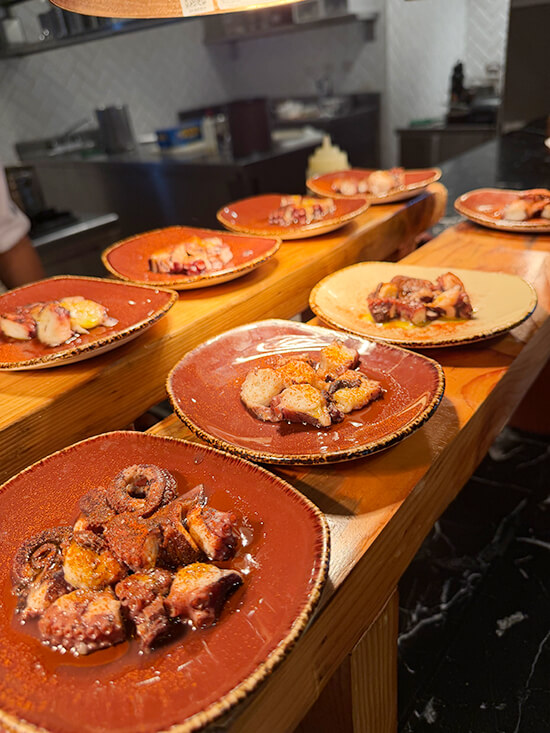
I indulged myself at the brunch—plus free kitchen tips from chef Chele on how to cook pulpo a la Gallega.
“The third step to cook pulpo is by cutting it into bite sizes. Then put extra virgin oil and paprika,” chef Chele ended his one-on-one tutorial. “That’s it. Plain and simple. Enjoy.”
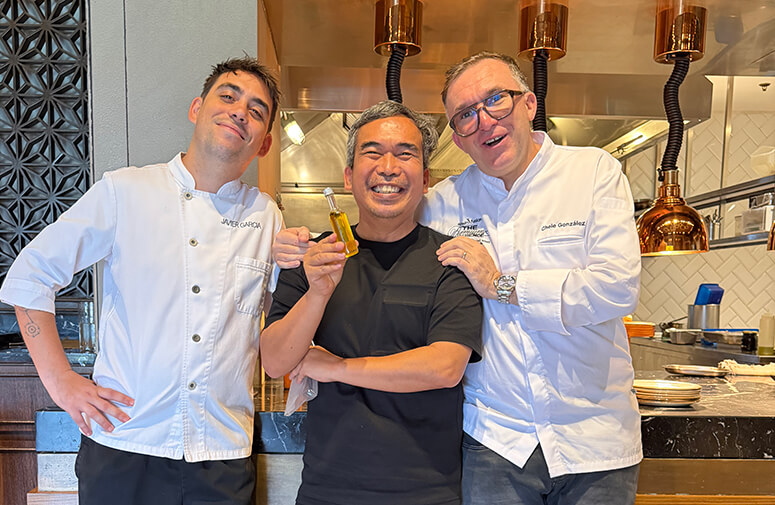
When I finished my sumptuous Spanish lunch, the restaurant’s chef de cuisine Javier Garcia Amador gave me a small bottle of Spanish extra virgin olive oil. While on my way out, I got a glimpse again of chef Chele Gonzalez, who was already busy in the kitchen. He winked at me.
I left the restaurant replaying in my mind the three steps to cook my pulpo. I know I will not disappoint the chef.

WATCH: Is OPM still as good as it used to be? (Generations Ep. 20)
September 9, 2026