

Why I miss seeing people be bad at art
I remember when artsy Facebook groups were everywhere. GUHIT Pinas, for example, was a popular group that got both applause and ridicule for its many templated Catriona Gray and Liza Soberano hyper-realistic drawings. Someone would post a wildly off and disproportionate portrait of Xian Lim; some would laugh at it, while others would offer constructive advice. It would still get passed around, mostly because it somehow ended up looking like a different celebrity altogether.
Back then, Facebook felt like a messier place for art, but it was also more forgiving and honest. You’d scroll past everything from amateur sketches to professional drawings, and you would see little kids’ first tries at anime, a Disney princess, or Pewdiepie fan art. In every new upload, you’d see improvement and a style being developed. You’d see progress. But before that, you witnessed a beginner who was bad at something.
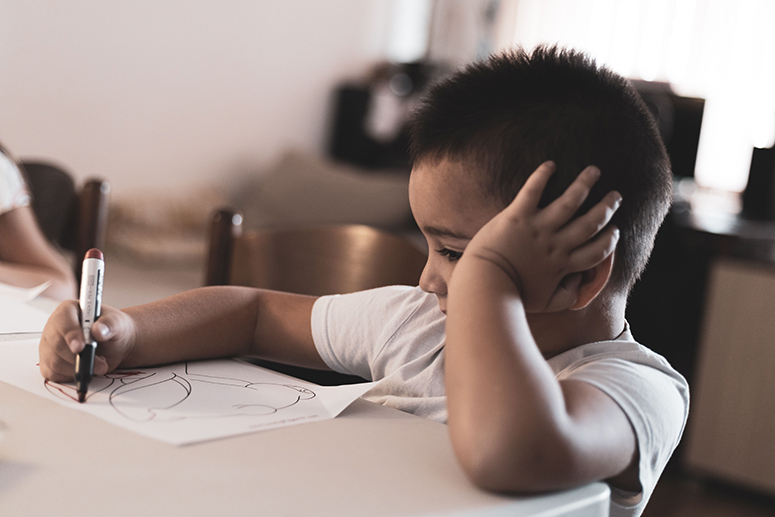
People were bad at art in public. I miss that.
Growing up online meant watching people try in public. Before the era of Dubsmash, people would be on YouTube making impressions and parodies of their favorite celebrities, not because they sound identical and want to profit off them, but because they find joy in the entertainment it brings. Someone may exaggerate a voice or skip a note, while others take it seriously and post covers of songs their favorite artists never performed live. The comments were never just praise or hate: “Pwede na,” “May potential,” “Ulit, Ulit.” It felt communal. Messy. Alive. The design is very human!
Now, AI songs just appear, made out of stolen voices. Maybe that’s why, in all its comedic glory, there is something about Aljur Abrenica’s song covers that just feels… human. When he went viral in the last quarter of 2025, singing covers of She Will Be Loved by Maroon 5, netizens were quick to point out his funny and “OA” facial expressions. Instead of feeling offended, Aljur said that he finds the comments funny, and that even if off-key, everyone is free to sing. His singing refuses to be limited by the standards of good and bad. Instead, it is an expression. That’s kind of the point.
What is fun about Aljur’s covers is that it isn’t necessarily about music talent. It is about watching a real person still trying. You can't generate the certain joy of a comment section that knows exactly how bad something is, but still chooses to stay. And maybe that's what's missing now. Not talent, not skill, but the courage to be yourself and see yourself fail, and the strange, little communities that form around that failure.
CONTINUE READING BELOW

When a person’s artwork is ugly, you can still see where they stand. You can see what they’re noticing, what they’re reaching for, what they haven’t yet been able to express. The work is not just a thing; it’s the trace of someone trying to place themselves in the world. Even an ugly drawing carries that; especially an ugly drawing.
But machine-made art doesn’t come from looking. It comes from organizing. It doesn’t observe; it just predicts. It doesn’t matter what something is—what matters is what usually comes next. It can sound plausible without meaning anything. It doesn’t respond to the world. It just arranges the echoes of what we’ve already said about it.
Now there are AI graphic design competitions parading stolen art as innovation. That is why prompt engineering gets framed as talent because, without that framing, all you could give credit to is instrumental manipulation of a system whose logic is opaque and statistical. There is nothing left to celebrate—there is no craft, no struggle, no learning curve; just optimization detached from reality. Being bad at art is literally more productive because something real is happening. Time is being spent, taste is being formed, and someone is learning how to see. Even failure from something carries greater weight than AI work because it came from labor.
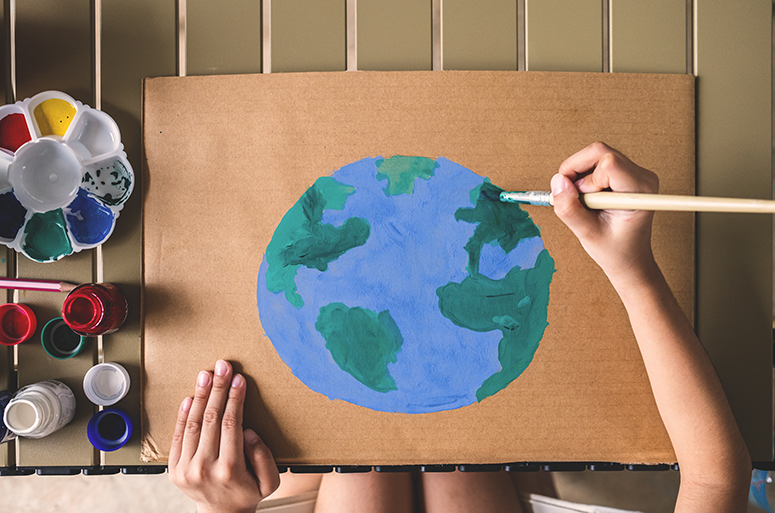
I miss when, instead of AI competitions, we had poster-making contests with the classic globe, a huge pair of hands beneath it, and stick figures dancing around. I am also at the point of missing the Lang Leav-sounding poems, social media captions, and greetings—unapologetically corny and cheesy messages that you know came from the heart. Now we see growing data of illiterate children at the same time as Facebook captions that sound like they were written by someone with a book deal. You don’t see a lot of 13-year-olds whose skills were honed by writing embarrassing fanfiction on Wattpad. Instead, we see speeches and letters optimized and curated by AI. When a machine can generate something acceptable in seconds, being visibly bad starts to feel like a waste of time; a personal failure.
Maybe some people started using generative AI because they were mocked for being bad at art online, or were worried about failing and making something not aesthetically pleasing. But before generative AI existed, people drew regardless of whether they were bad at it. They still made things, and they still showed up. Even the most ridiculous GUHIT Pinas drawing carried more risk, more presence, more humanity than any AI output ever could. This is because generative AI isn’t really about creating new value. It often just fixes what already exists, then charges rent for access. It takes human work, mixes it up, and returns it as efficiency. That’s why it’s smooth. It doesn’t struggle because it doesn’t have to struggle. It doesn’t fail the public because it doesn’t gamble anything.
I don’t want art that is just pretty. I want art that shows someone who is learning, trying, failing, and improving—the very tenets of a human being. I miss seeing people’s ugly art because it means you’re still learning to look, and you still have the courage to show it.

WATCH: LGBTQIA+ people with unlikely professions
June 28, 2026
WATCH: Is Gen Z too soft? (Generations Ep. 23)
September 30, 2026