

The inside scoop on Carmen’s Best
The inside scoop on Carmen’s Best Ice Cream, first churned in the kitchen of entrepreneur Paco Delgado Magsaysay in 2011, is that it was sweetened by adversity—not by success.
Not even when its only machine broke down on the brand’s first anniversary (Paco bought two new machines that same hour), when a reseller accidentally unplugged a freezer filled with unsold ice cream (Paco replaced every single pint even though it was not his fault), when he was diagnosed with cancer in 2013 (he was given three years to live) or when the pandemic hit, did Carmen’s Best’s reputation or “shelf life” melt.
The only thing that melted away through the years was Paco’s cancer—he has been in remission from leukemia since 2015.
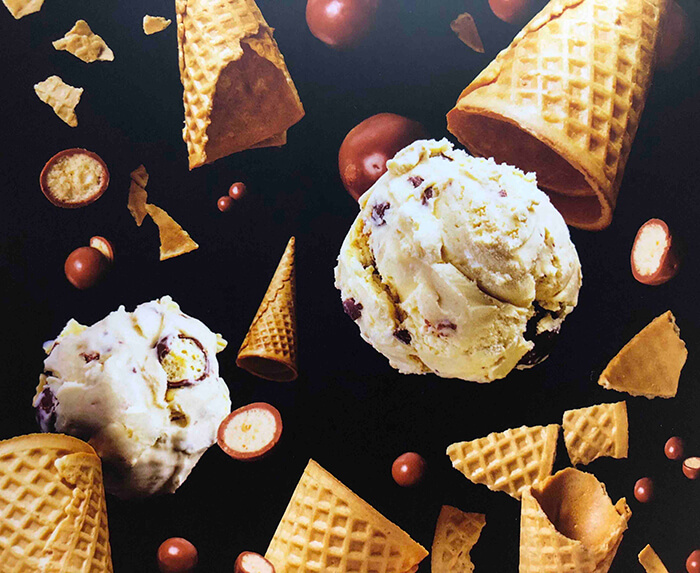
The brand’s sterling reputation is frozen not just in the freezers of happy resellers, but also in an article article on aleteia.org, which recalled how the late Pope Francis confessed to enjoying Carmen’s Best on the Philippine Airlines flight that flew him home after his Philippine visit in 2015. The pope was served two flavors: Malted Milk and Brown Butter Almond Brittle.
“When your motivation goes deeper than just making money, everything changes. You work differently. You push harder. You fight for something bigger than numbers on a spreadsheet.”

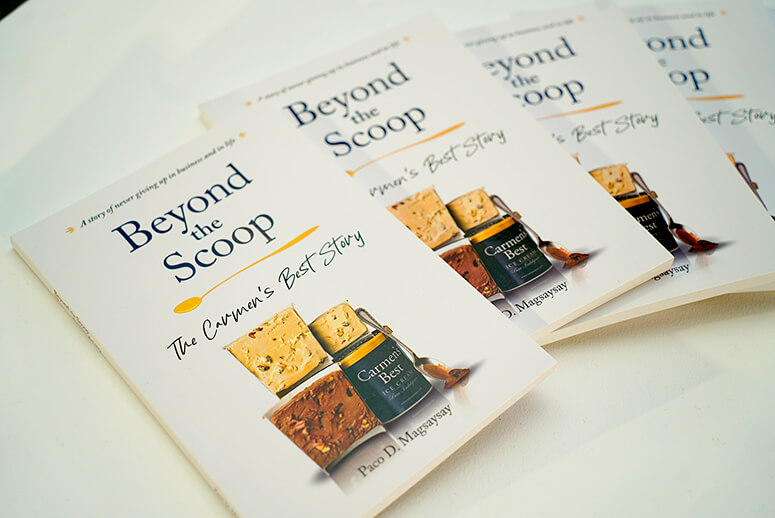
“For me, I had something to prove. I wanted to show that you could build a proudly Filipino premium ice cream brand from scratch—no big investors, no fancy marketing—just grit, honesty, and good ice cream,” Paco writes in his newly-released book, Beyond the Scoop, now available in Fully Booked.
“There were days I was physically exhausted or emotionally down. Days I felt overwhelmed, where quitting seemed easier. But I would remind myself: I have something to prove. That was enough to get me out of bed and back to work.”
He was proud of his surname but never took advantage of it.
Carmen’s Best was on the brink of closure after the pandemic when Paco got an offer from the Metro Agro Ventures Group, the agriculture-focused subsidiary of the Metro Pacific Group. He sold 51 percent of the business and saved it.
“From the brink of closure to a partnership with one of the country’s biggest corporations—the journey reminded me that even in our darkest moments, we might be standing just a step away from our greatest opportunities,” Paco writes.

In his foreword for the book,Manny V. Pangilinan or MVP, chairman, president and chief executive officer of Metro Pacific Investments Corp., observes, “As a writer, Paco doesn’t try too hard. He will not try to impress you with management jargon. He speaks simply about the times he got it wrong, and when he was in over his head. That kind of candor is rare in our world, where most people only want to present their highlight reels…”
“Paco writes about the wrong nut ending up in a batch, the freezer door left open, the machine that chose the worst day to break. These are small disasters, but anyone who has built something from scratch will recognize them immediately. This book will remind you that the fate of a company can hinge on the tiniest things.”
***
Encouraged by executive coach Anda del Rosario, Paco decided to share more than a scoop of the lessons he learned from business and from life in his book—from the time he started Carmen’s Best in 2011, to this day, even when he no longer is involved in the day-to-day management of the premium ice cream brand.

“For me, it’s like if for whatever reason I don’t wake up tomorrow, that’s me in the book. My kids can see it there, their children can see it there,” he tells me.
Paco started Carmen’s Best in his kitchen simply because he loved ice cream, and his father, former Sen. Ramon Magsaysay Jr., had a dairy farm. He named it after his only daughter Carmen, who was named after her grandmother Carmen Delgado. His sons thankfully didn’t mind having a business venture named after their only sister. Naming his ice cream business after his daughter had a sweet ring to it: Paco give the brand his best. For Carmen, it can only be her father Paco’s best.
Paco also decided from the get-go that it was going to be a premium brand, therefore, more expensive.
“We decided to target what we called the ‘A’ market, people looking for a premium product made with real ingredients. No shortcuts. That meant fresh cow’s milk and cream from our own dairy farm, no pumped air, no base mixes, just honest-to-goodness ice cream made from scratch. We only chose ingredients based on taste, not on cost. We kept a high butterfat content for extra creaminess, even if it was more expensive to produce,” he reveals.
***
I savored every chapter of the book, and dog-eared almost every other page. You can finish the book in one sitting, despite its depth and chunky lessons—as chunky as the pecan in Butter Pecan. It is as hard to put down when you’ve started—like Salted Caramel ice cream.
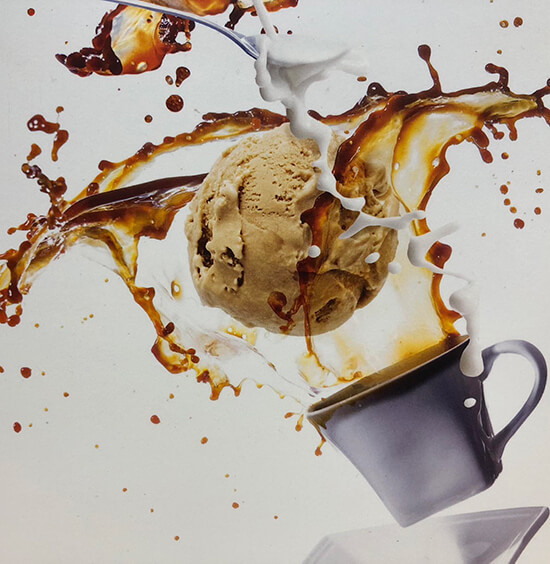
The book is also meant to linger in your thoughts—just like irresistible Brazilian Coffee. There are reflection questions at the end of every brief chapter.
Ice cream is a great metaphor for business endeavors.
As MVP writes in the foreword, “Ice cream might seem like a funny thing to write about, but if you really think about it, it is a worthy metaphor for business. Like ice cream, companies are perishable. You cannot freeze it in one form and expect it to last forever. Both are dynamic either you keep making it fresh or it spoils.”
Selling the majority stake of the brand he grew from scratch was fulfilling for Paco. “It validated everything we tried so hard to build.”
He feels like a proud father.
“The closest way I can describe it is this: it felt like watching your child leave home for college. You’re proud. You’re excited for what’s ahead. But at the same time, you know things will never quite be the same again. The routines change, the closeness evolves, and you have to learn to take a step back,” Paco writes.
“Sometimes, growth requires holding on tightly. Other times, it requires letting go. And both are equally important parts of the journey.

WATCH: Is Philippine cinema still thriving? (Generations Ep. 19)
September 2, 2026