

Ronaldo S. Vivo Jr. and the power of rage-baiting fiction
Ronaldo S. Vivo Jr. wishes for his books to lose their relevance. With his current momentum and success, this feels ironic, but when you write about crime-ridden worlds, you’d hope for your works to no longer feel like a mirror of reality.
Initiated even before the time of former president Rodrigo Duterte, one of his most successful works, Dreamland Trilogy, explores the dense, claustrophobic dystopian world of Dreamland—a place where, together with its characters, readers are shoved into the mire, gasping for air with no respite. Descending into its maze may first smell like detergent because of a nearby soap factory, but its shanties reek of crime, systemic corruption, and state terrorism. It's a world where the line between oppressors and the oppressed is blurred by moral filth.
Published in 2019, after years of rejection from countless publications, Ang Kapangyarihang Higit sa Ating Lahat was given wider commercial distribution by Psicom Literati. Although first drafted as a stand-alone in 2013, a time before the war on drugs, and without the intention to be, the novel was branded as a subversive critique of the state-sponsored crackdown. The succeeding books, Ang Bangin sa Ilalim ng Ating mga Paa (2021) and Ang Suklam sa Ating Naagnas na Balat (2024), were then published by 19th Avenida Publishing House, where Dreamland continues to implode into its brutal network of violence.
Aside from its plot, the trilogy’s most striking element is Vivo’s excellent command of the looban vernacular, from its slang to its mannerisms, stutters, and even pauses—nuances that he and his collective, UngazPress, noticed to be missing in media exploring the same narrative. In an online interview with The Philippine STAR, he tells us that this is largely because of living for almost three decades in a real-life dreamland. “‘Yon ang mayroon ako growing up,” he says.
His experience and immersion in political journals as a political science graduate, blended with his deep love for Asian movies, such as Chow Yun-Fat’s heroic bloodshed era and classic Filipino films by Lino Brocka, Ishmael Bernal, and Mike de Leon, shaped his narratives. These are the bricks that make up his world-building, where no characters are purely good or evil. It’s a world where the protagonists’ truths do not offer any salvation. They are rather measured by their motivations and resolve to survive. Vivo recognizes that, if seen through society’s standards, his anti-heroes are morally and ethically questionable. But if the law is twisted against you, what will you do?

Despite his growing resume, however, he never enjoys writing and refuses to romanticize it. He almost never writes out of inspiration. “Mahirap humanap ng inspirasyon sa bansang ito.” He writes with intention.
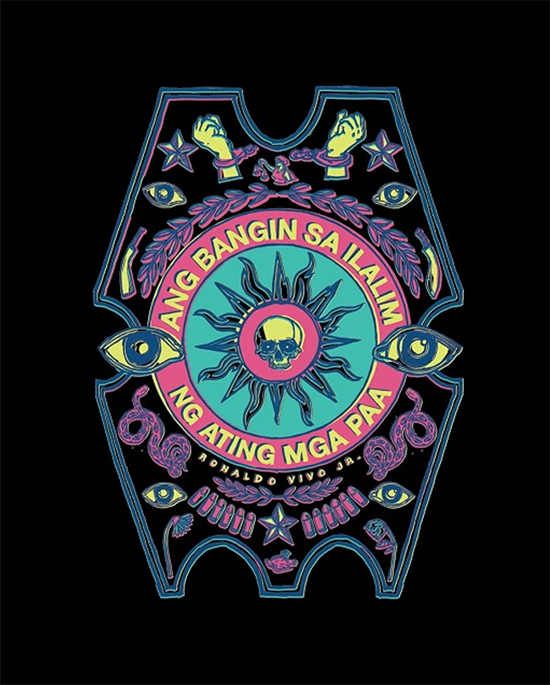
With a seven-year gap from the first book, Vivo wrote Bangin as a new father during extreme state repression and the pandemic. Through its main character Rey Ventura, a desperate father searching for his missing daughter, Vivo confronts realities that he refuses to accept. Bangin is his documentation of its time and what happens when we’re desensitized to systemic violence. “Ang nobela ang nakikita kong paraan upang makita nating muli ang realidad na unti-unting binubura ng rebisyunismo,” he says. “Ang fiction, ibinabalik nito sa mambabasa ang sensibilidad na mali ang kabastusan, pandadahas, at pang-aabuso.”
Vivo writes for his readers to be angry.
Underneath the suffocating gore and violence, he writes to remind us of our humanity. He wants his readers to feel indignation at injustices. If we feel disgust for fictional corrupt politicians or rage at fictional evil statesmen, then we should feel the same way in real life. “Rage-baiting with a good purpose,” he quips. “Nais kong maibalik nating muli ang pambansang katinuan mula sa pambansang kahibangan.” According to Vivo, what drives him to continue writing is his utter frustration at people in power who are deliberately deceiving the masses.
He writes to humanize people who, because of years of disinformation and systemic violence, have been reduced to names and statistics. For Vivo, fiction is his way to remind us that state depravity is not normal.
Ibinabalik (ng fiction) sa mambabasa ang sensibilidad na mali ang kabastusan, pandadahas, at pang-aabuso.
For a country that has survived centuries of violent history from colonialism to state-sponsored repressions, one would think that discernment of what’s morally repugnant should come easily for us. With all the evidence of corruption and staggering numbers of lives lost in the name of bogus progress, it’s unnerving to see how many people still believe in the families and state agents responsible for this degradation. There are some of us who would reject fictional characters who treat human lives as disposable currency but would not bat an eye at extrajudicial violence under the guise of law and order. Like the name of the setting of his first trilogy, Dreamland, it’s ironic that the truth is hidden in the glare of fiction.
“Ang requirement lang dapat supposedly ng katotohanan ay dapat backed ng evidence, factual research, at science,” Vivo points out. Even though people in power would happily capitalize on people’s confusion, the truth should not require a number of believers or a large machinery for it to be true. Like his protagonists, Vivo does not have a grand mission of saving the world. He writes for readers to finish his books and contemplate, to examine the truths that they are made to believe.
Before our conversation ended, maybe in my own attempt at respite, I asked Vivo if Dreamland would ever know justice. He answered: “I hope.” Dreamland mirrors the smothering entrails of our society and its institutionalized rot. When Vivo said he’s looking forward to when his trilogy would no longer resonate with its readers, it made sense. The day his books finally lose their relevance is the day we’ve finally taken back our collective sanity.
***
Vivo’s books are available at Avenida Books.

WATCH: Discovering Vietnam in three days
June 9, 2026
WATCH: Save for retirement or enjoy life now? (Generations Ep. 21)
September 16, 2026