

I am homesick for a corrupt-free Philippines
I had always known that I carry a Filipino soul within me. I’ve long recognized this sense of identity, even after being brought up to equate success with a life abroad. I was always told by the adults around me to aspire for more, to never settle for less. I have come to understand that what they considered “better” was really just “farther away.”
I’ve had friends staying in the US, Titos and Titas who have given up their careers for an off-track yet higher-income job outside the country, and my own OFW father, whose voice I grew up hearing through long-distance calls and yearly visits.
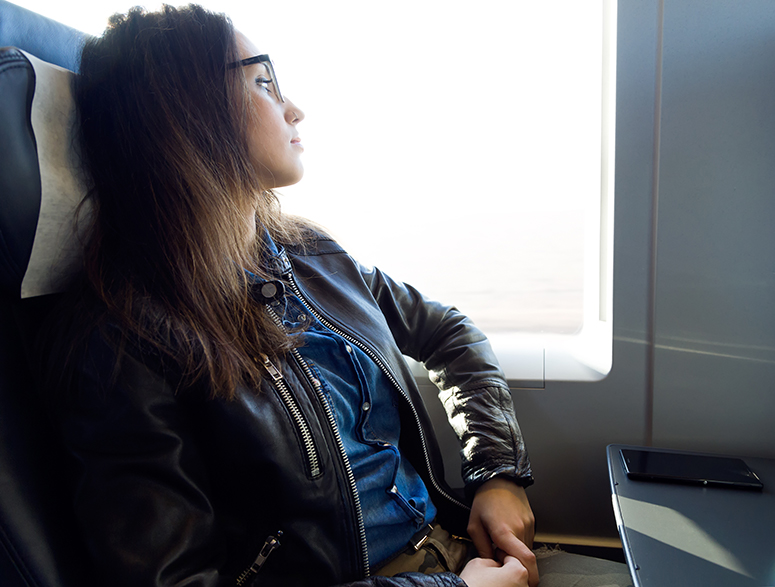
In fifth grade, I, too, had a brief exposure to studying abroad. I thought then that I would finally get to experience that “better life.” I suppose life did feel lighter. Although it wasn’t much of the grandeur that fascinated me, it was the order, the way everything just worked systematically.
Amidst the orderliness, I found myself longing for the ruckus. The other kids weren’t running around outside or chasing the Manong selling ice candies. The neighbors weren’t prattling about next door. I would sit at the balcony of our new apartment and find that late afternoons no longer hummed with dialogue from radio dramas. The balikbayan boxes I once awaited back home became pasalubongs from home itself. When my Filipino friends returned from vacations in the Philippines, they would bring along bags of snacks—Boy Bawang, chicharon, banana chips—for all to share. Those goodies were some of my rare glimpses of home.
It is a bitter pill to swallow that while I chart these barrios that have grown to become part of me, the system in this country repels me, for as long as it rots in its own decay.
One day, the strange joy of returning to the Philippines finally atoned for all the yearning. As we drove past familiar streets from the airport, the passenger windows opened onto the same places I would pass so frequently as a kid. In my head, I named the buildings and landmarks that I’ve notably recognized from those earlier years, hoping to reawaken the connection I once had with them. They hadn’t quite changed; they only felt different because, perhaps, it was me who changed.
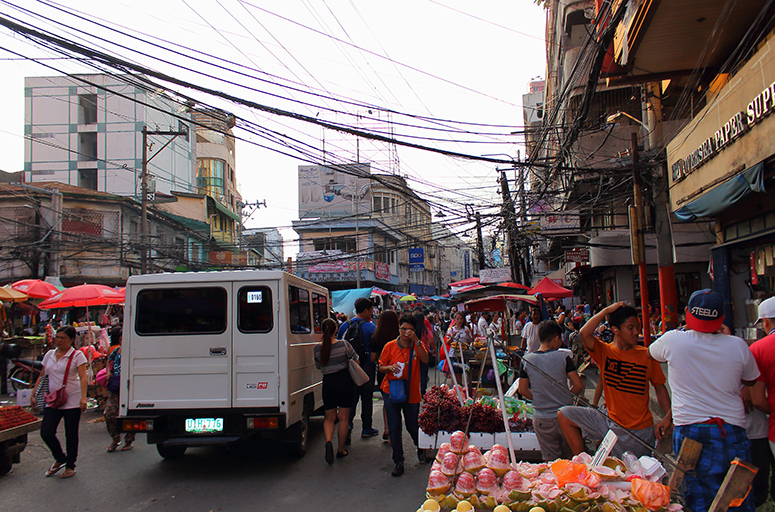
Those three years of being away definitely made me see things differently. I could no longer easily let my joy cloud over what I was seeing. The roads were bumpy, road junctions became small landfills, houses were clustered along polluted riverbanks, and a web of electric wires loomed over them. I saw then why I was urged to leave in the first place.
CONTINUE READING BELOW

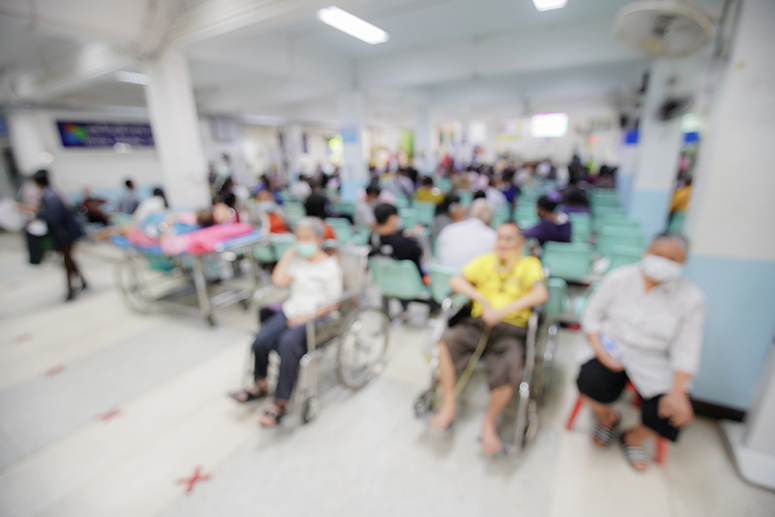
I was glad to have resumed the rest of my childhood in the Philippines. However, the more I reassimilated myself, the more I felt the disparity. When I got myself vaccinated for the flu at the local hospital, I saw how some families had to sit for hours because the ratio of doctors and nurses was not proportionate to that of the patients. Not all patients were accommodated with the same level of urgency they needed. It was especially unsettling to find that many elders had no insurance plans, because these were either too costly or too complex to process.
I realized I’d had it easier when I was abroad, but also that not everybody is familiar with the possibility of such improved conditions. While all this makes me wish we had a version of the Philippines that doesn’t limit our circumstances, it makes sense that not everybody could feel as homesick as I do now. All some people have known is to beg for the efficiency that is normal in other countries.
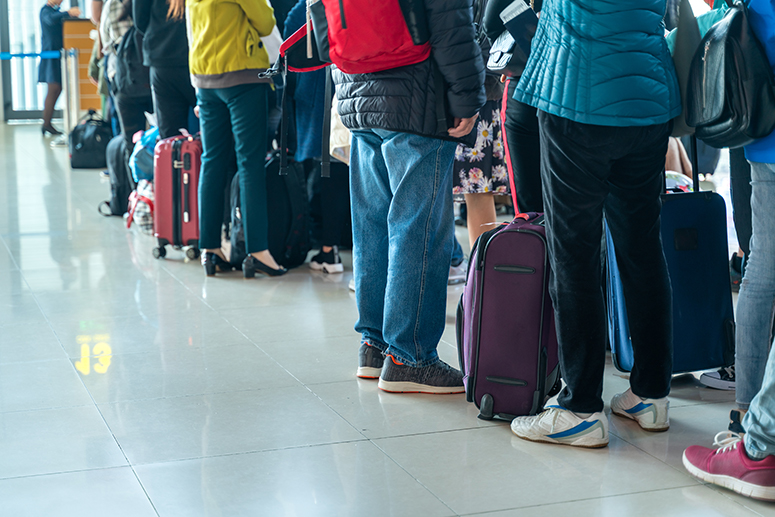
Many of my peers now are already setting their sights abroad. I had thought about going that direction myself. It’s long been instilled in our generation that mere necessity is a dream. Because of this, we focus on projecting our futures anywhere but this country. At this point, migration is not too uncommon an option for graduating students in the Philippines. This shows how our government has done little to support the competence of our best talents—our nurses and teachers, our artists and engineers.
An average, non-agriculture Filipino worker earns about P695 a day—if they are lucky enough to live in Metro Manila. I try to imagine what this sum feels like after a full shift: the hours consumed by commuting and working, only for it to barely stretch to the cost of bills and expenses needed to get through the week. For most households, there is no way that a single job could suffice; they would have to take on extra work on the side.
Those who have master’s degrees and extensive backgrounds in their respective fields often start at P30,000 to P60,000 a month, which does not come close to the credentials or amount of effort they exert. A large part of these salaries disappears into taxes. Nonetheless, I keep being reminded of how little of that portion returns to us. Roads remain bumpy, public institutions make do with the low funds given to them, and the transport system continues to be a daily struggle.
If a functional society passes as a Filipino dream now, it is only because of the debt that our politicians will forever owe us after all the wealth they have siphoned off from our public funds. Every ounce of labor the people have committed, the corrupt have flushed it all down the drain. Greed always finds its way into politics; it is what kills the faith of many.
Still, the decades of corruption have slowly set back our nationalistic values so much that the present-day Filipinos are reoriented to regard Western or other foreign lifestyles as better than our own. They adopt these lifestyles and, eventually, go to great lengths to live them.
I cannot entirely blame this growing number of Filipinos who are considering moving overseas. In their defense, some have simply burned out to the point of believing that this is all there is to expect from our country, that the hardship is inherent to our culture. But while more people are realizing the standard of living they deserve, I know that the choice to leave comes with its own kind of grief. I’ve watched too many of my loved ones’ expressions start to cloud over whenever they speak of home—how much they miss the family and crave home-cooked meals, and how they’d keep track of reruns of their favorite noontime show from their studio flats abroad.
I must say, seeing how other countries operate has set my standards high, too. There were times when I wished I lived in any of those countries instead. And yet, when we once settled into life out there, the distance had a way of bringing me closer to home. I may never be the same after all the sights I’ve seen and the places I’ve been, but no matter how well-traveled I become, no matter how much sushi and Southeast Asian spices my palate will warm up to, the Filipino in me lives on. I will always seek the taho coated in tofu and golden-brown arnibal melting out of the vendor’s bucket, the ginanggang my high school classmates and I would try to catch at the campus carinderia before they sold out, and of course, the life that surrounds it—Sunday mornings with the family, the outings accompanied by classic OPM hits, our eccentric yet uniquely Filipino humor, the banter, karaoke nights, drunk uncles, and, most of all, the sense of belonging.
So far, the comfort of fitting in right where you are comes with a cost. Because our own homeland weeps for its resources, too. It is a harsh irony that a community bursting with so much passion must flee to sustain itself. That we must navigate ourselves in foreign lands to feel secure, when all we ever hoped for was to find that security at home.
Tragically, for us, passion, as fiery as it may be, is not enough to feed a family here. And the homesickness, as warmly as it is remembered, cannot pay the bills. And so, we find ourselves loosening our grip on our cultural identity. Survival leaves us little choice—our once-strong perception as a Filipino wavers in these most trying times.
Ideally speaking, the adults had a point. Life abroad is more advanced, comfortable, and disciplined. I’d like to think I’ve grown sensible enough to wrap my head around the practicality behind it, but even as I acknowledge their reasons and the realities we live in, I still cannot deny who I am or where I come from.
I am Filipino, and I am homesick for a corrupt-free Philippines, a country that is unbound from this cycle of decay. We have yet to see our homeland in such a state, but the Filipino soul in me believes it can still exist.

WATCH: Is Philippine cinema still thriving? (Generations Ep. 19)
September 2, 2026