

Beyond singular truths: The many images of Philippine cinema
Lives emerge from bodies of water. The world's first civilization, Mesopotamia, translates to "lands between the rivers"—as they say, people can live longer without food than without water. In parallel, Manila, the Philippine capital, became vital to world trade because of the Pasig River, which cuts through Luzon Island before reaching Manila Bay. It was here that the Spanish colonizers established their capital, building the walled city of Intramuros beside that strategic body of water where the Pasig River ends.
The same can be said of the nation's early cinema, with Escolta—a place beside the river—becoming the birthplace of cinema when the first movies were screened at the Salon de Pertierra in 1897. Since then, the so-called "industry" has been concentrated in Manila, with historic standalone cinemas built along Recto Avenue and Quezon Boulevard, before they even transformed into sites of cruising by queer people and storage for the city's wholesale stores.
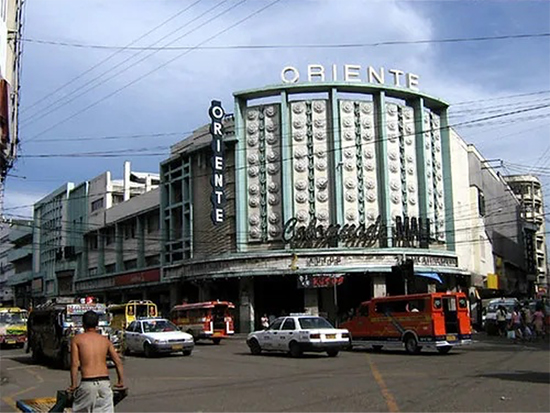
Yet if bodies of water are key to life, or to the creation of a center, that also means the Philippines, as an archipelagic country, holds the potential for many centers. Cinemas were also born outside Manila, with Cebu producing its first film in 1939—the now-lost Bertoldo ug Balodoy (1939). Major cinemas were built in downtown Cebu City along Colon, among them Oriente Cinema, now a mall, and Vision Theatre, now a mosque owned by a Chinese businessman who rents out small rooms on the upper floors. Along Ilustre Street in Davao City stood Galaxy, Garmon, and Golden—standalone cinemas that thrived before the arrival of mall-based theaters.
In recent years, this emphasis on films made outside Manila has grown stronger, ever since Teddy Co's seminal essay "In Search of a Philippine Regional Cinema" in 1987, which eventually led to the founding of Cinema Rehiyon in 2009, where filmmakers from different regions gather. Last year's edition was held in Butuan City, Mindanao. A short film, Asa ang mga salida sa Leyte (2025)—"Where Are the Films in Leyte?"—by Linus Masandag and Lebron Ponce, has been making the rounds in the local festival circuit and eventually gave birth to Saliduwa, a grassroots film festival.
Almost 40 years since Teddy Co's inquiry, and since the first EDSA Revolution, rethinking the concept of regional cinema is surely overdue. Why is there a specific award for Best Regional Entry at Gawad Alternatibo, the longest-running film festival in the Philippines? What constitutes a regional cinema? Isn't Manila a region? Does the existence of peripheries not imply the existence of a center? Is Manila's dominance—the capital having been chosen by Spanish colonizers—a horror brought on by postcolonialism? These and other endless questions were put to three filmmakers and critics from Cebu City, Davao City, and Ormoc City.
Mariya Lim, Cebu City
CONTINUE READING BELOW

Mariya Lim shuttles between making films and writing about them. Her most recent work, Kiang (2023), premiered at the Sine Kabataan Film Festival, and in 2015, she co-wrote Kenneth Dagatan's short Sanctissima. She has written film reviews for various publications and post-festival notes for BINISAYA 2025 and Cinemalaya.

When asked about the true image of Philippine cinema, she anchors her answer in the word independence. "Where we're at right now, situated along the sidelines, we might never be mainstream. I do feel we are owed a place in the national conversation. But until then or even when we get that, I hope we will always have freedom to do our own thing and have control over our narratives, how we choose to make them, and when we want to share them."
Lim's 2017 film Leonora Kilat chronicles a dying cinema in Cebu City. Given that none of the city's standalone cinemas survived into the present, her film proved almost clairvoyant—not only about the death of cinema, but about its many rebirths in various spaces. These changing spaces are also evident in Cebu City on a wider scale, amid urbanization projects such as the Cebu–Cordova Link Expressway and the privatization of Carbon Market—the latter opposed by the vendor community.
She then mentions Cebuano films that deal heavily with development aggression, such as Dangpanan (2024) by Stephen Kelly Mahusay, Sunog sa Sugbo (2025) by Owen Lepiten, and Huwebes Huwebes (2019) by Januar Yap, Kris Villarino, and Don Frasco. She says, "I believe a lot of films coming out of Cebu lately are for the underdog… I don't know if the filmmakers intended their works to be a response to all this development and displacement."
"It's probably not my place to impose upon my fellow filmmakers on what they ought to do, whether they want to overtly operate within social realism. The ones who want to will. I think calling for a plurality in perspectives in our cinema isn't just about ensuring every language is represented. It's also about resisting the urge to content-police," she adds.
"Nostalgia is baggage," Lim says when asked how regional cinema should imagine its future. "So many festival opening nights and council meetings are all Cebuano golden age this, Cebuano New Wave that. It's enough to acknowledge the past. Perhaps it's time to move on?" She thinks active filmmakers in Cebu right now are not anyone's second coming. "I feel the best sets are like multi-generational homes. There has to be continuity in our community."
Support for mid-career artists is something she emphasizes. She adds that face-to-face requirements can automatically isolate filmmakers with day jobs, whose leaves are limited. This reality is fairly common, especially when filmmakers begin working for the mainstream, eventually losing time for watching films as cinema becomes a source of livelihood.
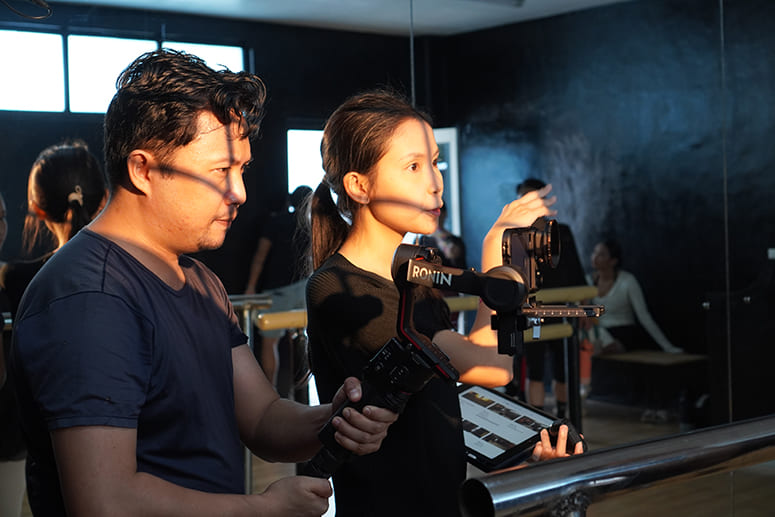
She underscores the importance of regional film festivals. "Because the regional filmmaker cannot get by on grant money alone, especially when it comes in tranches that are reimbursed and not disbursed. The regional filmmaker has already rationed their leave credits for shoots and the premiere."
She adds, "I think it's neat that almost every region has its own festival. It's fulfilling for the filmmaker, but it's just as enriching for the ones watching the films and those running the fest. If film workers and film critics receive mentorship and training, film festival directors should too. We are all trying our best to be better at what we do."
Lebron Ponce, Ormoc City
Lebron Ponce, a filmmaker and film critic, co-directed Asa ang mga salida sa Leyte, a documentary based on his co-director's article in Sinegang, "Asa Ang Mga Salida sa Leyte (Where Are All the Films in Leyte?)," which honestly reads like a future landmark essay retracing the history of cinema in Leyte. Ponce recently bagged the Alexis Tioseco and Nika Bohinc Award at the QCinema Critics Lab 2025, and writes critical essays on cinema on Medium—pieces that go beyond film reviews to zoom out to the larger scale of what's happening to the nation.

Ponce thinks there is no single true image of regional cinema. "I do not think regional cinema has a single 'true image.' The very idea of a singular image is already limiting, because regional cinema is not one style, one subject matter, or one unified identity. It is made up of many local realities, languages, histories, labor conditions, and political struggles. Its truth lies in that plurality."
One of the defining historical events in Leyte is Typhoon Yolanda in 2013, which claimed the lives of thousands of Filipinos and became the source material for Carlo Francisco Manatad's Whether the Weather is Fine (2021), which premiered at the Locarno Film Festival. With art often fragmented in the wake of tragedy and war, Ponce sees a danger in how Leyte and Samar have become "legible" through their image of disaster—suddenly written into the history books.
With the aftermath of Yolanda still visible almost 13 years on, Ponce thinks Yolanda is not just a historic event but proof of systemic neglect in disaster management. When asked about the future, he adds, "Cinema from Leyte should not feel obligated to explain itself to Manila or to international festivals through spectacle, misery, or 'resilience porn.' It should have the freedom to be intimate, angry, experimental, mundane, political, funny, or contradictory."
Ponce sees the problem in the constant essentializing of the term "regional," and thinks the concept goes beyond the geographic aspect of cinema toward something more relational—"Who is speaking, from where, for whom, and under what material conditions," he says. He then points to the power imbalance embedded in the existence of a periphery: "'Regional' and 'periphery' are not just descriptive terms; they reflect a historical power relation in Philippine cinema, where Manila is often treated as the default center of value, production, and visibility. The problem is not only that this hierarchy exists, but that it becomes naturalized—as if cinema made outside the center is always secondary, local, or somehow less complete."
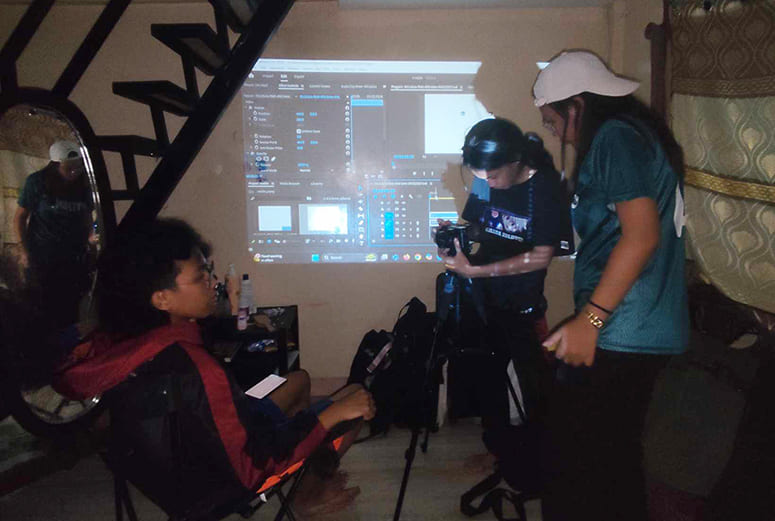
Jay Rosas, Davao City
A writer and programmer, Jay Rosas made his documentary short in 2019, titled Budots, tracing the history of Budots music through DJ Love. At that time, former president Rodrigo Duterte—now in The Hague—was three years into his presidency, and three years into his bloody war on drugs.
Rosas thinks it is reductive and prescriptive to find a single image of regional cinema—impossible, even, as he adds. "One then has to contend with the question of 'what is the true image of a national cinema?' If applied in the context of the Philippines, I would dare say that our national cinema is regional, but then not to speak of any image," he shares.
He then suggests that maybe the question should be, "What is the essence of regional cinema?" This impulse to visualize regional cinema, to water it down to an image, has been problematic—that image is so often expected to be rural, the antithesis of the concrete jungle in Manila films.
A recent short film he recalls is Hindi Nawawala sa Pagkawala ang mga Alaala by Emmanuel Pamaylaon, a student from the University of the Philippines Mindanao. "It presents the land as a site of struggle, of the fragility of peace, which is a prevalent theme in previous Mindanao films of the last decade. The verdant green of the land retains its beauty and mystery, something that we need to conquer or escape to… but it is also rife with a history of violence and oppression."
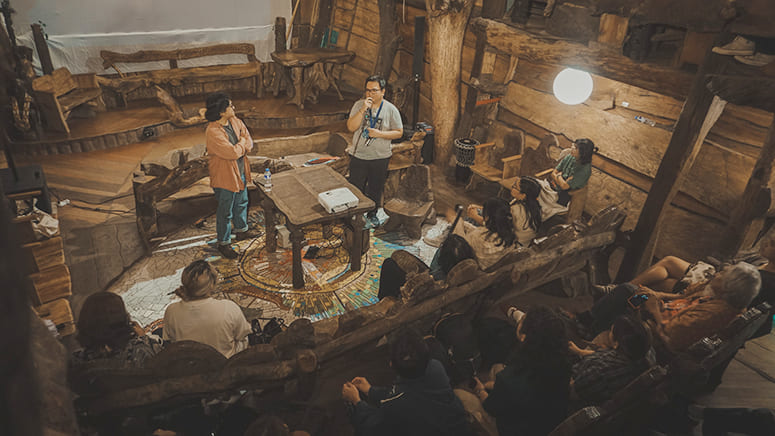
Aside from being a filmmaker, Rosas also writes and programs for Ngilngig Fantastic Film Festival, a genre film festival. "But it's interesting that you drew this connection between fantasy or the fantastical with regional," he says. "Other than rurality, the image of the region as another is also always connected to the fantastical, the unknown, or mystery," he adds.
As he notes, the image of the mysterious rural has long been a fixture of the Shake, Rattle, and Roll franchise, especially the segments by Peque Gallaga, a homegrown Negros filmmaker. But what he finds interesting in fantastical regional films is "how we portray ghosts not solely as malevolent creatures but co-inhabitors of space. They are not just harbingers of doom but also crucial to our identities. So I guess that is where the connection lies."
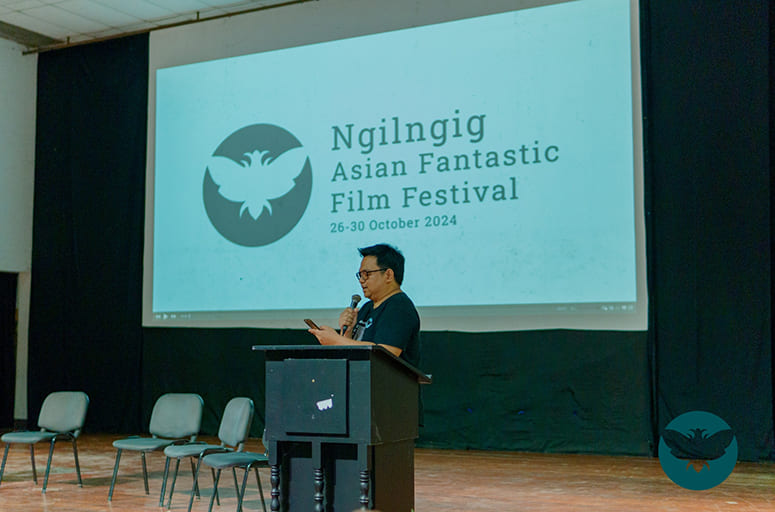
Rosas, in his talks, has quoted Teddy Co's article. When asked about the article's relevance and whether it needs updating, he says, "This impulse to rethink, to reimagine, as an act of de-centering is an important aspect of Sir Teddy's seminal essay, in itself an act of re-searching, re-positioning." This followed his invocation of Nick Deocampo's idea of archipelagic cinema. For him, it is important to hold on to that desire to rethink national cinema as something other than a homogenous entity. "Regionalization as an act of decentering and empowering. Representation should translate to actual policies that empower and not just tokenism."
The problem is not only that this hierarchy exists, but that it becomes naturalized—as if cinema made outside the center is always secondary, local, or somehow less complete.
When asked about the future, Rosas says it is difficult to imagine one when the present needs so much rethinking. He then raises important questions: How can the regional cinematheques be made more useful to filmmakers in their own regions? How is this actually translated into the kind of programming the FDCP does? Is the representation of regional people in NCCA committees enough to ensure a certain equity? His thoughts extend beyond filmmaking and production into the acts of programming and how this becomes a form of archiving, of memory work.
"So the whole of regional cinema is to account for all these alternative responses and initiatives, and not just the films, both of which were driven by a genuine act to rebel, to rethink, to reimagine, to decenter," Rosas closes.

WATCH: Is Philippine cinema still thriving? (Generations Ep. 19)
September 2, 2026
WATCH: Is OPM still as good as it used to be? (Generations Ep. 20)
September 9, 2026