

The analog revolt: How the EDSA People Power Revolution went viral offline
The EDSA People Power Revolution was remarkable not just because it demonstrated to Filipinos and the rest of the world the unbridled potential of bayanihan. The revolt, which toppled a dictator and reinstituted democracy in the Philippines, was phenomenal because the whole thing was coordinated without social media, smartphones, or even email.
Communication was key in carrying out the peaceful revolution. However, it happened in 1986—a little over a decade before mobile cellphones would become common in the Philippines, and over 30 years before TikTok would activate Pinoy keyboard warriors.
Main players in the People Power Revolution conveyed messages the old-school way: by sending nationwide appeals on AM radio, calling on the landline, and speaking to crowds in person using loudspeakers.
Radyo Veritas and the power of word of mouth
According to Amnesty International Philippines, in the early hours of Feb. 22, 1986, a Saturday, then defense minister Juan Ponce Enrile was making final preparations for his plan to defect from the Marcos administration and put up a ruling junta, with him as head. Later that day, Enrile called Fidel Ramos, then vice chief of staff of the Armed Forces of the Philippines, to ask him for his support.
The two men met up at Camp Aquinaldo, where they called a press conference to officially announce their defection.
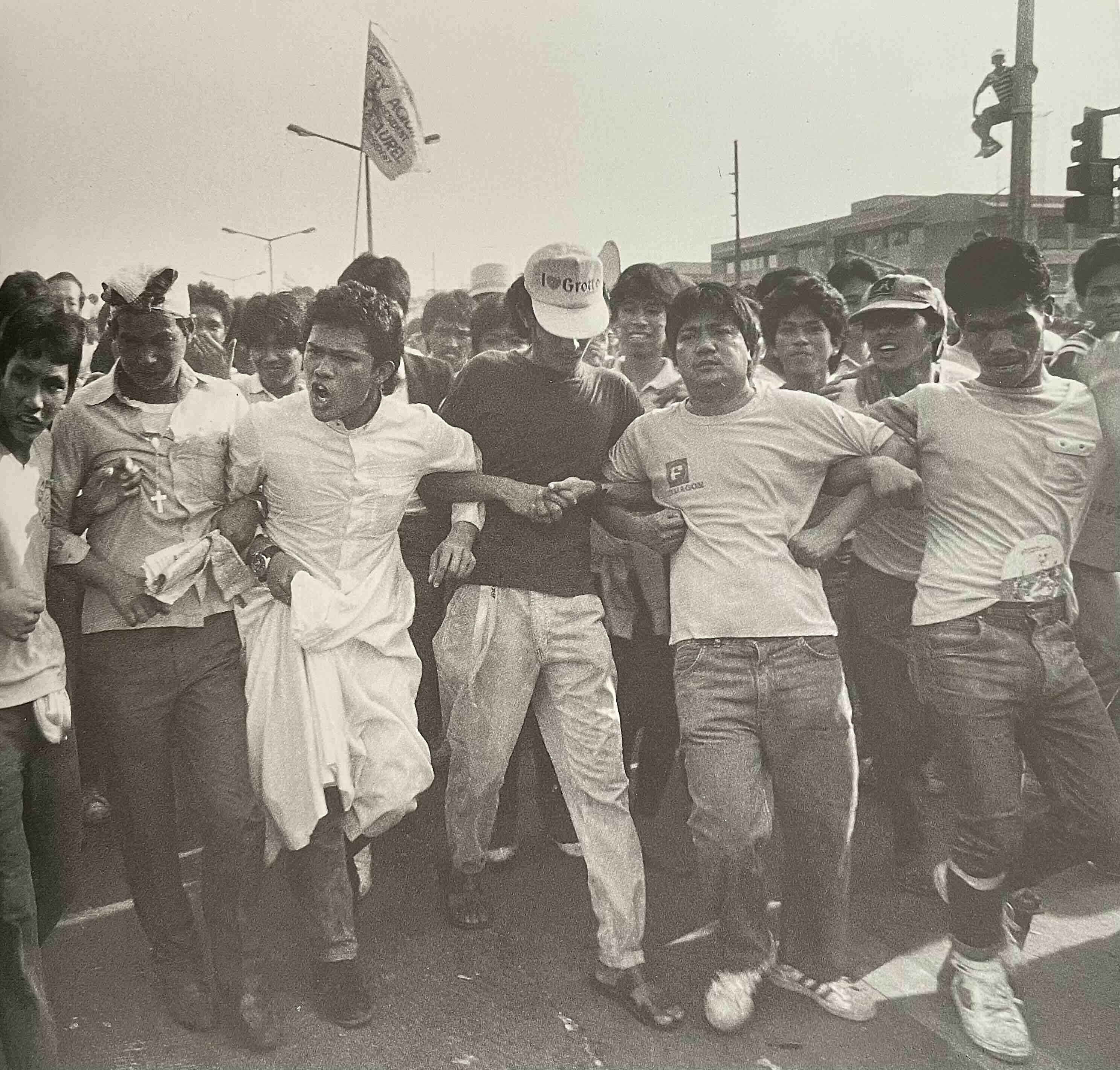

Around 9 p.m., then Manila Archbishop Jaime Cardinal Sin got on the air at Radyo Veritas, a radio station owned and operated by the Archdiocese of Manila.
"My dear people, I wish you to pray because it's only through prayer that we may solve this problem. This is Cardinal Sin speaking to the people, especially in Metro Manila," Sin began his message, whose transcription was preserved by Radio Veritas Asia.
"I am indeed concerned about the situation of Minister Enrile and General Ramos. I am calling our people to support our two good friends at the camp. If any of you could be around at Camp Aguinaldo to show your solidarity and your support in this very crucial period, when our two good friends have shown their idealism, I would be very happy if you could support them now," he continued.
Later that night, to clarify his call, Sin went back on the air to say, "Leave your homes now. I ask you to support Mr. Enrile and General Ramos. Give them food if you like; they are our friends."
Sin made his appeal after dinner, when not many people were tuned in to their radios for the news. The response the next morning was lackluster. However, some did hear Sin's message. They told their friends, who called other people in their circles to spread the news.
Early the next day, as reported by DZRV 846, Radyo Veritas' current frequency, armed men in military uniforms destroyed the station's transmitters in Malolos, Bulacan. The day after that, an armored personnel carrier returned and used machine guns to effectively destroy the facility, raining bullets on the building.
The government had shut down all other opposition television and radio stations as People Power began.
Quietly, an underground radio operation, Radyo Bandido, picked up where Radyo Veritas had left off, and it finished the job.
By Amnesty International Philippines' count, 10,000 people had converged in Cubao at midnight on Feb. 23 to march to EDSA. When they reached Camp Aguinaldo, their number had ballooned to 20,000. At the height of the movement, nearly a million Filipinos had flocked to EDSA, as reported by the Philippine Center for Investigative Journalism.
Rebel radio
The sole unifying voice of the opposition for the rest of the EDSA Revolution came from a shuttered building in Sta. Mesa, where Radyo Bandido commandeered the DZRJ station to take up the fight.
Actress and broadcast journalist June Kiethley, who was also with Radyo Veritas, and Batibot producer Lyca Benitez Brown gathered their friends to help them run the clandestine radio station. Brown relayed to PhilSTAR L!fe how Radyo Bandido came to be.
Among the 16 who answered the call were Brown's Batibot colleagues, directors Peque Gallaga and Kokoy Jimenez, actor Jaime Fabregas, activist Mario Taguiwalo, and Jesuit priest Fr. James Reuter, SJ. Thirteen-year-old Gabe Mercado and his brother Paulo, 15, also helped work the phones, as seen in the coffee table book People Power: An Eyewitness History.
The team continued what Radyo Veritas began: reporting on the revolution, boosting morale, and, as the station had someone with a "live" telephone line to Ramos at Camp Aguinaldo, relaying information. But Ramos and the staff members on the field weren't the only sources of news.
"June gave out our telephone number to our listeners and asked them to tell us what was going on," Brown told L!fe. "We had the public calling in with updates."
For security, Brown called her mother to ask for help. Her mother then called Cardinal Sin, who reached out to the nuns of the Assumption Convent. The nuns arrived armed with rosaries and nothing else. They sat on the steps leading up to the radio tower of the Jacinto-Tanco building and protected the people in Radyo Bandido with their prayers until democracy was won.
"The government was looking for us, but they never found us," Brown said. "We were lucky."
On the ground
Professor Dr. Joey Lapeña arrived at EDSA on the evening of Feb. 22 with the rest of the La Salle contingent, bringing with them one-fourth of a sack of rice and assorted dried food and canned goods for the troops holed up in Camp Aguinaldo, in response to Cardinal Sin's call.
"Radyo Veritas, later Radyo Bandido, was crucial. We heard Cardinal Sin's appeal on the radio," Lapeña told L!fe.
He was a volunteer for the National Citizens' Movement for Free Elections during the snap elections on Feb. 7, 1986, and one of the leaders of the La Salle community during the EDSA Revolution.
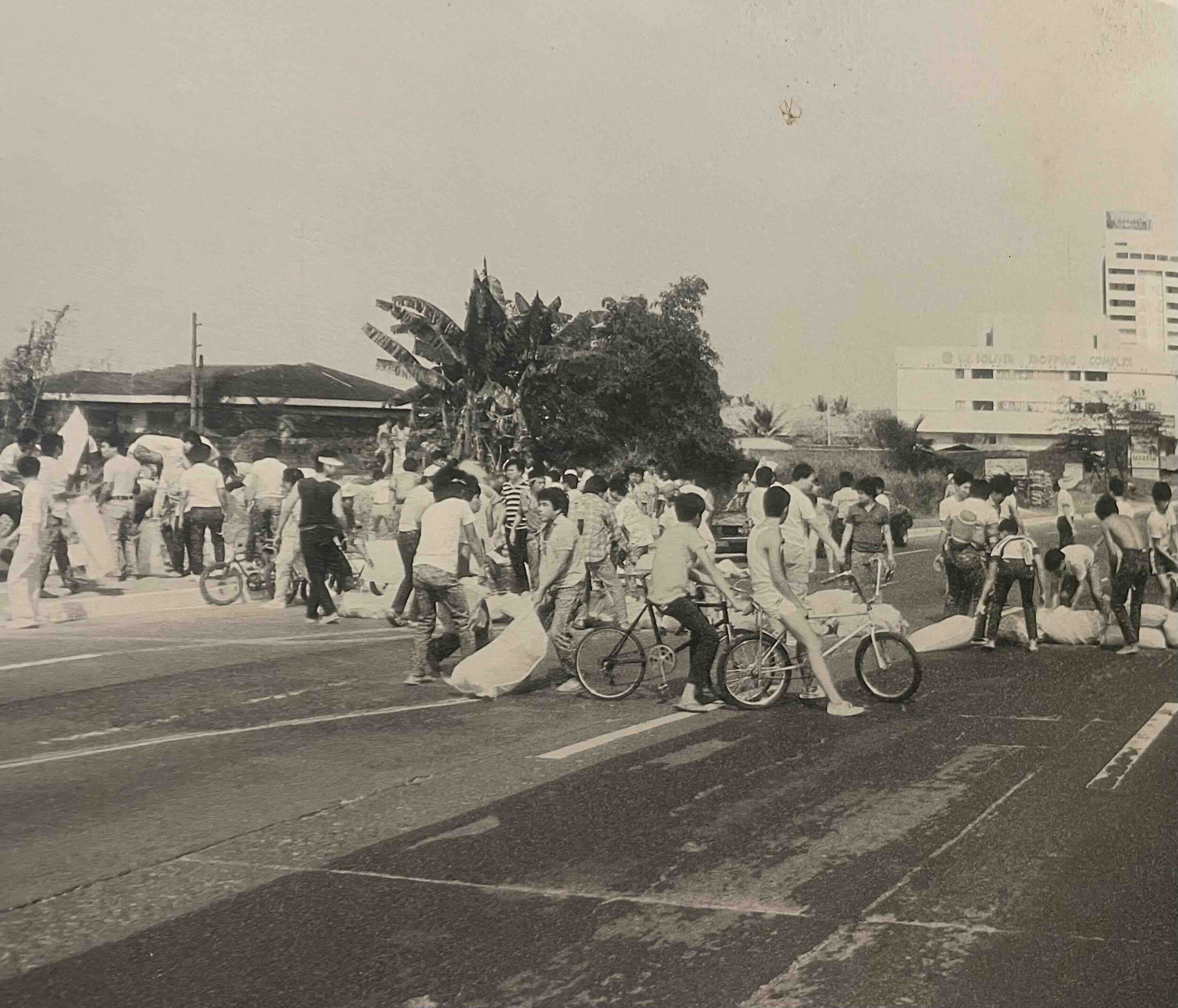
"I was asked to bring people to block the White Plains - Santolan intersection against troops marching up from Libis," Lapeña said. At dawn on Feb. 23, he and his companions organized the sit-in to stop Engineering Battalion troops from possibly approaching Camp Aguinaldo from Libis.
"I was later hit in the chest by a rifle butt as they broke through our ranks," Lapeña said.
Without access to real-time news, however, Lapeña and his contingent had to be ingenious. Instructions were relayed to the crowds through megaphones. The rallyists listened to transistor radios, used walkie-talkies and two-way radios. Loudspeakers were placed along EDSA so the crowds could hear messages from Ramos, Enrile, and other key players.
Still, rumors repeatedly spread through the crowds at EDSA that the Marcos family had fled.
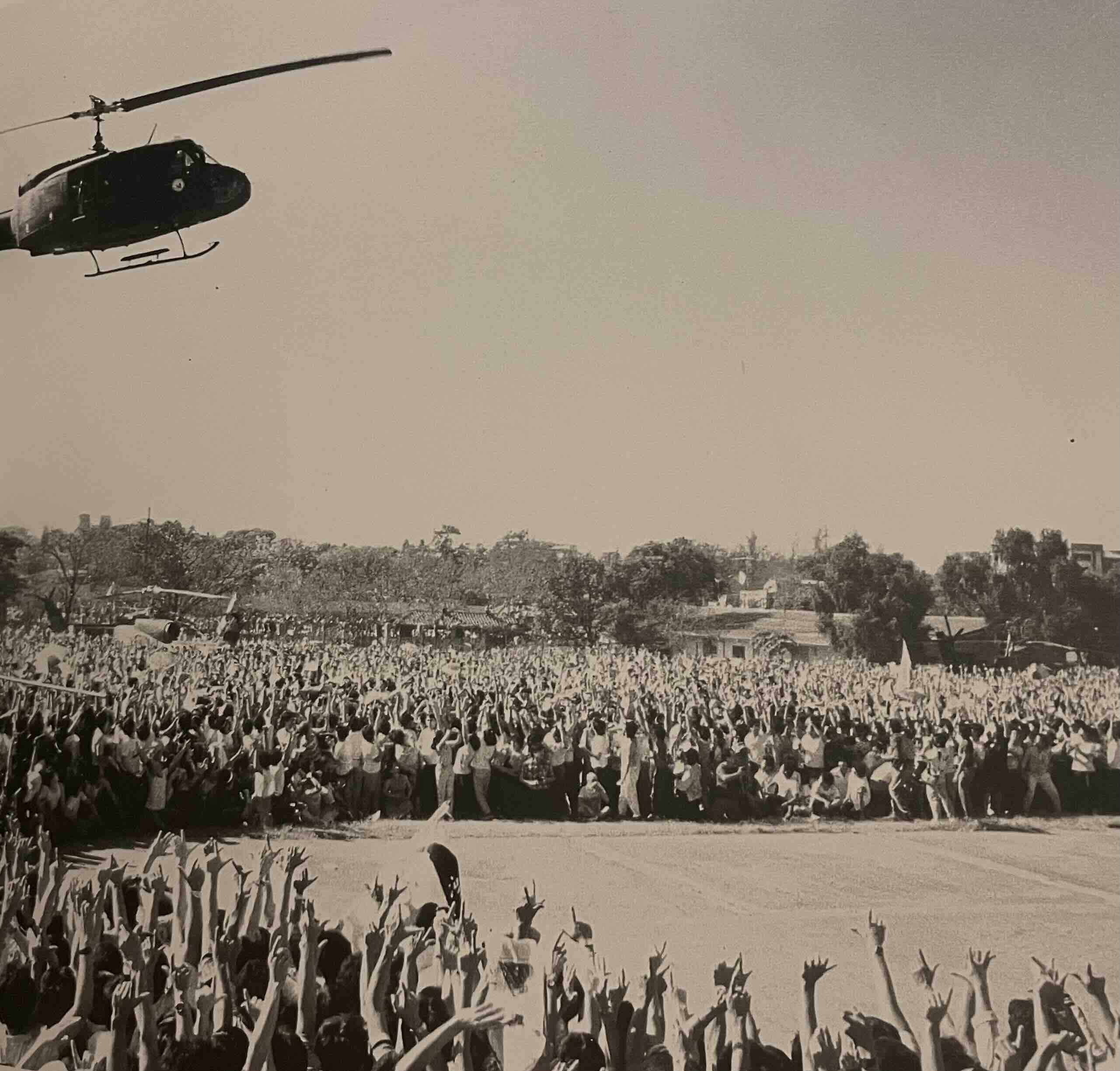
"This was on the 24th, as we watched helicopters that defected land in Crame. [Then] I saw Gen. Ramos jump for joy on the 25th. That was confirmation enough for me [that the Marcoses had fled]," Lapeña told L!fe.
The 1986 EDSA People Power Revolution ran on radio waves, telephone lines, and word of mouth—no social media, no internet. Yet Filipinos were empowered enough to oust a dictator. Today, in this digital age where messages can circle the globe online in seconds, it's crucial to remember how strong Pinoys can be when we use our voice to shout the truth.

WATCH: Can you still trust someone who betrayed you? (Generations Ep. 22)
September 23, 2026
WATCH: Pixar Summer Fest adventure at Hong Kong Disneyland
August 10, 2026