

LIST: Revolutions in other countries known to have been inspired by EDSA People Power
In February 1986, nearly two million Filipinos gathered along EDSA in a peaceful show of defiance that would change the course of the nation’s history.
The People Power Revolution ended the two-decade rule of former president and dictator Ferdinand Marcos Sr.; however, it did more than restore democracy in the Philippines.
The four-day uprising proved that a dictator could be toppled not by armed struggle, but by collective civilian action, prayer, and unity. Because of this, it sent a powerful message across the globe: that ordinary citizens, when mobilized peacefully, can challenge even the most entrenched authoritarian regimes.
In the years that followed, many other countries followed Filipinos' footsteps and held their own waves of non-violent protests in an effort to make a change in their country. Here are some of the revolutions and democratic movements that were known to have been inspired, in part, by the legacy of EDSA:
Dismantling of the Berlin Wall (1989, three years after EDSA)

One of the movements said to have been inspired by the EDSA Revolution was the fall of the Berlin Wall, which was a heavily guarded concrete barrier that divided the city of Berlin from 1961 to 1989 during the Cold War.
It was built by the government of East Germany to prevent its citizens from fleeing to West Germany, stretching about 155 kilometers and included guard towers, barbed wire, and a so-called “death strip” to stop escape attempts.
On Nov. 9, 1989, after weeks of protests, East German authorities announced that citizens could cross the border freely. Crowds peacefully gathered, checkpoints opened, and the wall was eventually torn down.
Due to the role of the People Power Revolution in inspiring the movement, the Berlin Senate Chancellery donated a segment of the Berlin Wall to the Philippines as a symbol of unity and freedom, arranged through the Department of Foreign Affairs and the Philippine Embassy.
The section is on display at the National Museum of the Philippines.
Ouster of South Korean dictator Chun Doo-hwan (1987, a year after EDSA)
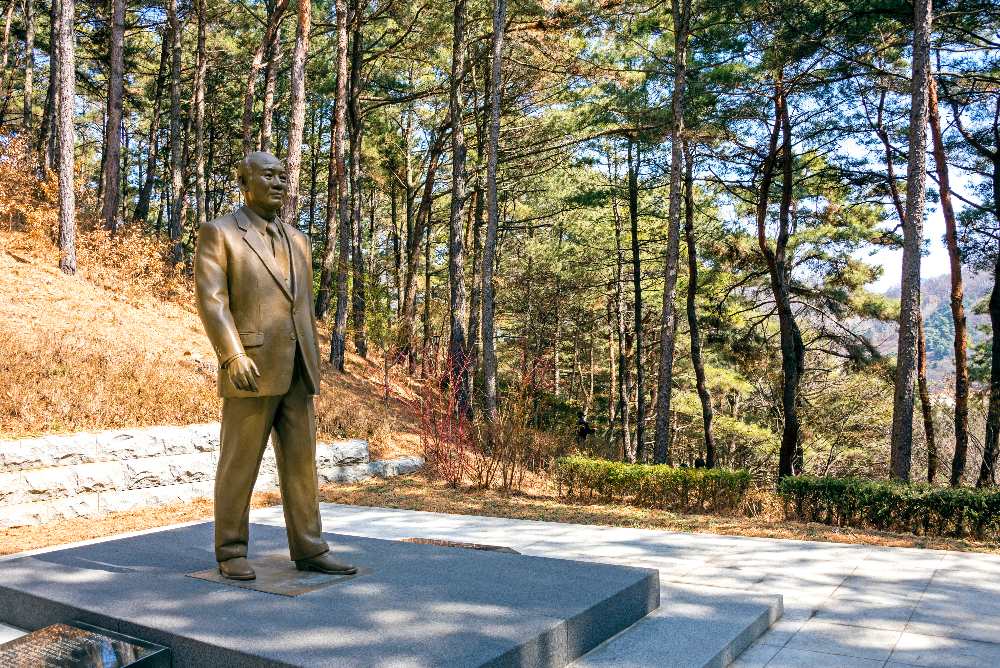
Similar to the Philippines, South Korea was also ruled by a brutal authoritarian regime under its former president Chun Doo-hwan.
Doo-hwan was a South Korean army general who served as the fifth president of South Korea from 1980 to 1988. His rule was marked by strict military control that led to the arrest of opposition leaders, suppression of the press, and the massacre of protesters.
Public anger against authoritarian rule continued to grow throughout the 1980s, eventually culminating in the June Democratic Uprising in 1987—a series of nationwide protests calling for constitutional reforms and direct presidential elections.
Doo-hwan eventually conceded and allowed the December 1987 presidential election to be free and open.
Lawyer Michael Yusingco of the Ateneo School of Government stated in his article that the EDSA Revolution was the "watershed event that inspired South Koreans to remove their own despotic leader."
Overthrow of Chilean dictator Augusto Pinochet (1988, two years after EDSA)
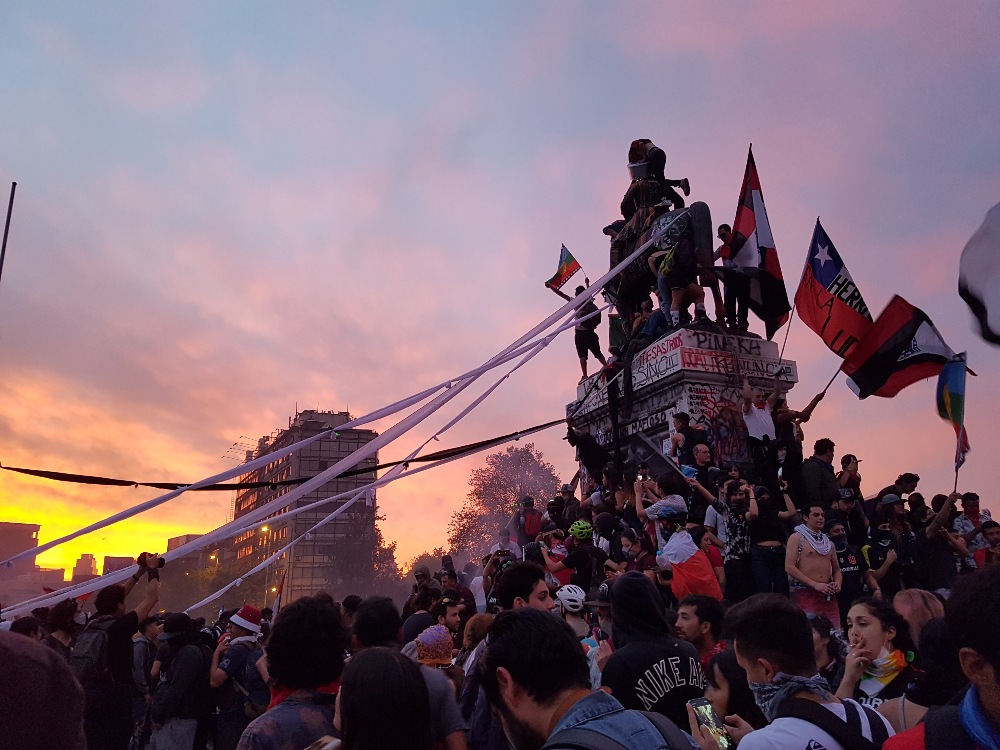
Augusto Pinochet, who became president of Chile in 1974, was another dictator who was ousted from his position thanks to peaceful demonstrations.
The regime of Pinochet was marked by widespread human rights violations, including enforced disappearances, torture, and the suppression of political opposition.
After years of authoritarian rule, mounting public pressure and international scrutiny led to a historic plebiscite in 1988. In the national referendum, Chileans were asked to vote “Yes” or “No” on whether Pinochet should remain in power for another eight years.
In a largely peaceful exercise, the “No” campaign prevailed, effectively ending Pinochet’s 15-year rule. The vote paved the way for democratic elections in 1989 and Chile’s transition back to civilian governance.
The 8888 Uprising (1988, two years after EDSA)
Myanmar—then known as Burma—was also grappling with decades of totalitarian rule under the Burma Socialist Programme Party, headed by General Ne Win.
Because of the party's focus on economic isolation and the strengthening of the military, Burma became one of the world's most impoverished countries. Eventually, the public had had enough, and on Aug. 8, 1988—hence the name “8888”—thousands took to the streets in a nationwide protest calling for democratic reforms and an end to military dictatorship.
However, the otherwise peaceful protest ended in bloodshed as troops opened fire on demonstrators, resulting in thousands of deaths.
While the 8888 Uprising did not immediately topple the military regime, it became a powerful symbol of resistance. Research database EBSCO noted how the political events in Burma were "following the trajectory of the People Power movement in the Philippines."
Wild Lily student movement (1990, four years after EDSA)
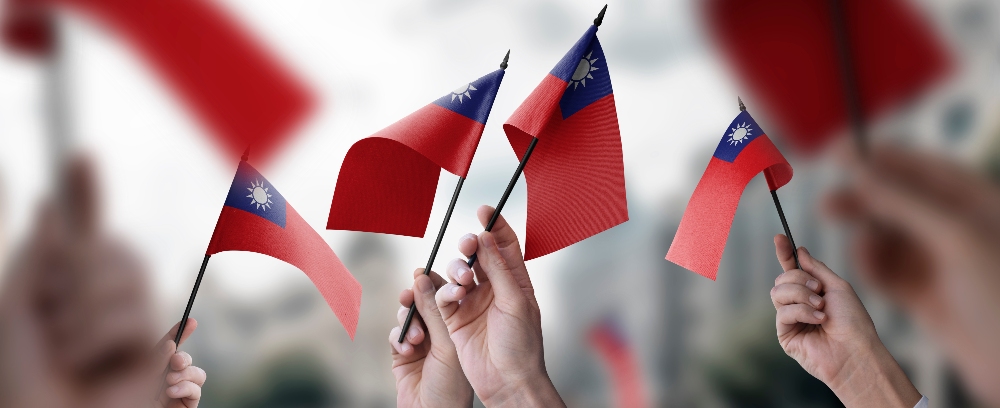
Another peaceful protest that took place after the EDSA Revolution is the Wild Lily student movement in Taiwan.
This is a large-scale protest that lasted for six days in 1990 and was organized primarily by students from different universities, involving more than 20,000 participants.
It was made to challenge the continued dominance of the old National Assembly, which had been in power since the 1940s, and called for the direct election of the country's president and vice president. Protesters adopted the white wild lily as a symbol of purity and strength.
When the National Assembly prepared to elect the president in 1990, thousands of university students gathered at Chiang Kai-shek Memorial Square in Taipei to demand democratic reforms.
Then-president Lee Teng-hui met with student leaders and later initiated political reforms.

WATCH: Discovering Vietnam in three days
June 9, 2026