

The lie detector
I would tell people planning to watch You Can See Everything to maybe watch the HBO series meta-series, The Rehearsal, first, to get an idea of the Nathan Fielder method. In that, filmmaker Fielder has a theory about why commercial planes crash, and he goes to great, exhaustive, obsessive lengths to gather data. Often in The Rehearsal, you see him peering at the reenactments—plane crashes, role-playing, singing contests—from a corner of the shot, laptop strapped to his chest, with a dour look on his face.
That unnerving off-camera gaze is back in You Can See Everything, and it’s partly why the A24 meta-documentary about Elizabeth Holmes often reads like a horror movie (another reason is the layered, disorienting score by Ari Balouzian; yet another reason is that most of it is shot in a gloomy, underlit beach house rented by Holmes and her partner, Billy Evans, that feels like the setting of a slasher movie most of the time).
As we enter the three-hour You Can See Everything, Holmes is 34 days away from going to prison for her part in defrauding investors of billions for a biotech company called Theranos, which promised a game-changing home blood-testing device that turned out to be defective.
Holmes proposes that Fielder take his camera crew into her home and film “everything,” offering “radical transparency” into her honest intentions about Theranos and her own character.
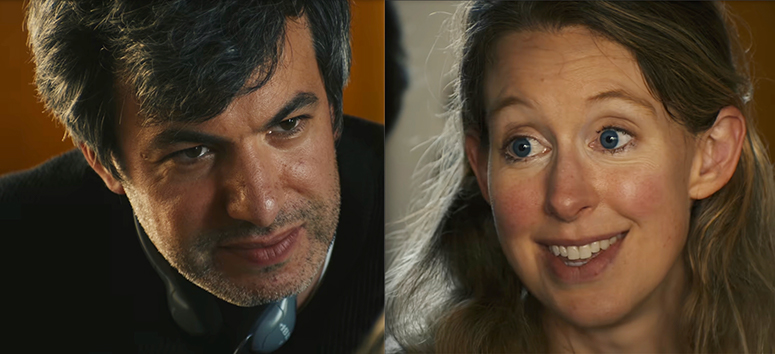
Fielder plays out that now-famous movie trailer bit where he peers closely into Holmes’ wide-eyed visage, trying to decide if he’s being lied to. He’s a human lie detector, and Holmes may be the most skilled subject at beating the machine.
Or not. We don’t know, and even by the end of three hours of You Can See Everything, we have all come to our own conclusions about Holmes and her relationship to the controlling boyfriend, or we’ve decided we just don’t understand human nature at all and nobody knows the truth, and what is truth and reality, really, anyway?
CONTINUE READING BELOW

It’s a black hole carved out by Fielder through his relentless inquiries that leads to another dimension, perhaps, of uncertainty and relativity. Maybe it’s our reality, post-truth.
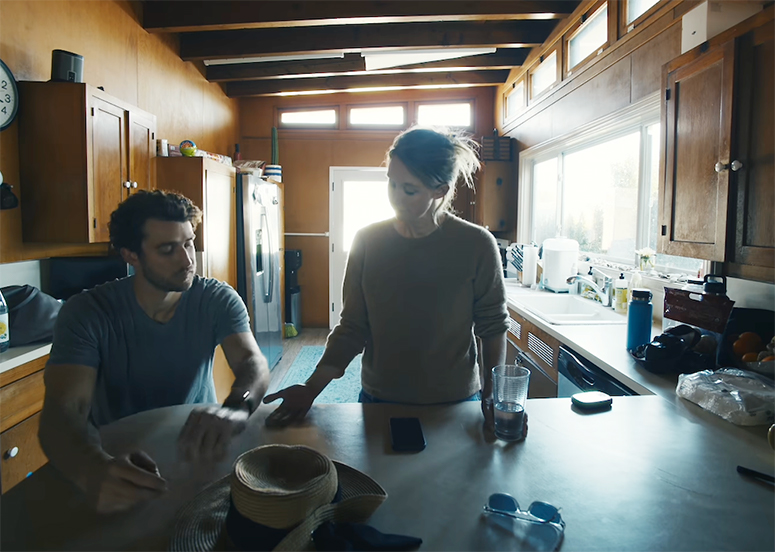
It’s also quite funny, in some moments, in a kind of nervous-chuckle way, as when Fielder interrogates Elizabeth and Billy in yet another dark living room about the claims about Theranos to investors. He notes she phrased it to investors as “what Theranos can do,” rather than “what Theranos could do,” in some potential future of perfectly functioning technology. Fielder ends up dialing up an old Abbott and Costello routine, “Who’s on First?” on YouTube to demonstrate the semantic dissonance, the absurdity of what people’s words say and what they mean on some other level. Holmes has never seen or heard of the routine before; he asks her if she finds it funny. She says she does, but admits she doesn’t understand it. Fielder stares at Holmes. Holmes stares back. Neurodivergence hangs in the air.
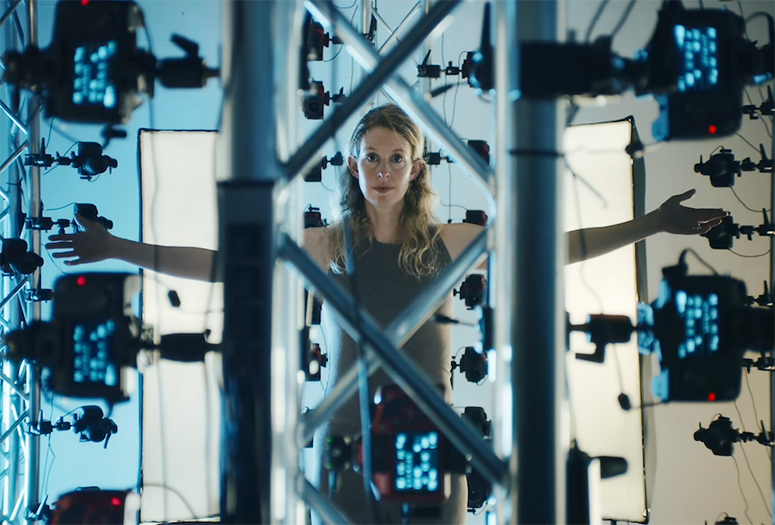
The documentary takes another Fielder turn when Holmes heads to prison after the 34 days are up and Fielder decides to continue seeking answers, this time focusing on Billy and his part in the post-Theranos story. It seems he’s busy working on “Theranos 2.0,” and we see Holmes filming herself with 3D-scan cameras for a future AI version of herself. There are disturbing shots of Billy staring at a large-screen simulated Elizabeth Holmes, which answers simulated questions. What is up with this Billy guy?
Enter Amanda Seyfried, the actress who portrayed Holmes in a miniseries, The Dropout, and has her own suspicions about the whole setup. That’s when You Can See Everything enters a whole other meta-level, with Seyfried asked by Fielder to act out recalled dialogue with Holmes from a phone call to prison that he was not allowed to record.
People walk away from You Can See Everything, directed by Fielder and Oppenheim, buzzing with questions because it is essentially a detective story that offers no solution to the crime, and has us wondering if there ever even was a crime. Few movies can leave us so glued to a story that cost little to make ($7 million, earning $94 million at the box office), simply by planting Nathan Fielder in a corner and letting his mind whir and ask questions.

WATCH: Boomers: Hirap mag-adjust o ayaw lang? (Generations Ep. 27)
October 28, 2026