

For Gallery of Prints, preserving the past protects our future
Every item is an imprint of the past. Yet, with the accelerating digitization of media, tactility teeters on the brink of obsolescence.
No one understands this more than Gallery of Prints. It is, as the name implies, the country’s first and only gallery devoted to original maps, books, and cartographic paraphernalia from before 1900.
Nestled in Parañaque, the main showroom contains centuries’ worth of Philippine history. Key Filipiniana pieces from the 16th and 17th centuries occupy the ground floor, while the upper level houses 18th- and 19th-century artifacts like floor globes and rare archival journals. The stairwell is curated too, lined with posters and vintage imagery of the 20th century.
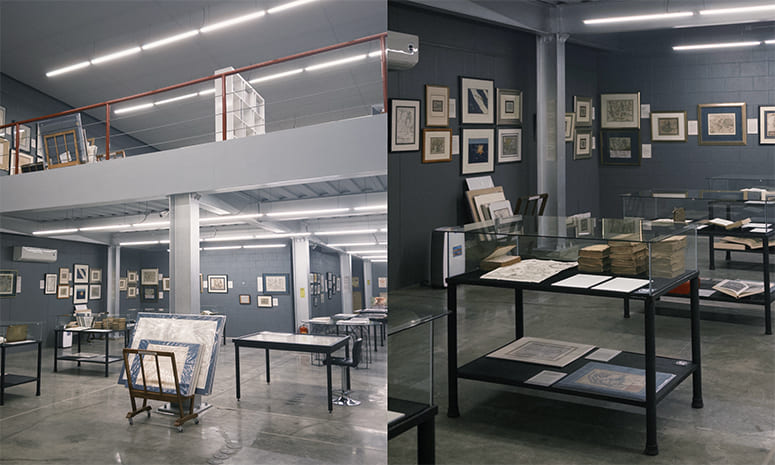
The private facility offers an overview of GOP, but the full picture requires getting to know the founder: Rudolf J. H. Lietz. At the age of five, a sketch his father drew of the Rhine River kindled a lifelong obsession. “That was my first encounter with a handmade map, and it fascinated me (to) no end,” the 85-year-old German recalled.
Rudolf believed his fascination with maps was “in his DNA,” though his fixation on islands emerged during his adolescence. In high school, he specialized in Southeast Asia, and by his twenties, he was eager to explore the places he had studied on paper. A rejection for a Japanese working visa ultimately redirected him towards the Philippines in 1967, where he started Rudolf Lietz, Inc.
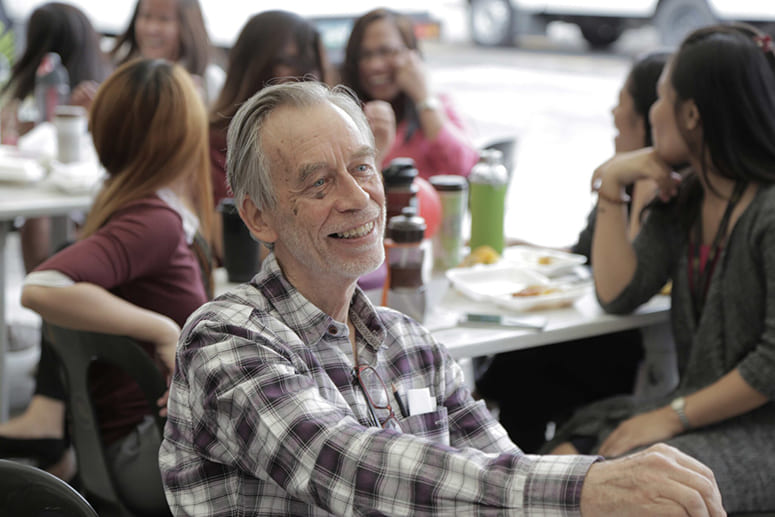
With business booming, Rudolf amassed an extensive collection. Much of it was acquired through auctions he frequented. “(I’d) have three, four, five of the same (thing). You only need one or two out of that bundle. What will you do with the others?” Faced with that conundrum, he eventually opened his own gallery. “I cannot resist. I'm a fanatical, addictive collector,” he self-diagnosed with a smile.
CONTINUE READING BELOW

Sheer excess wasn’t the only factor behind GOP’s inception. “People know very little about their own country,” he observed. “I found out that geography is not a separate subject in the curriculum, including university. That is a gap in education.”
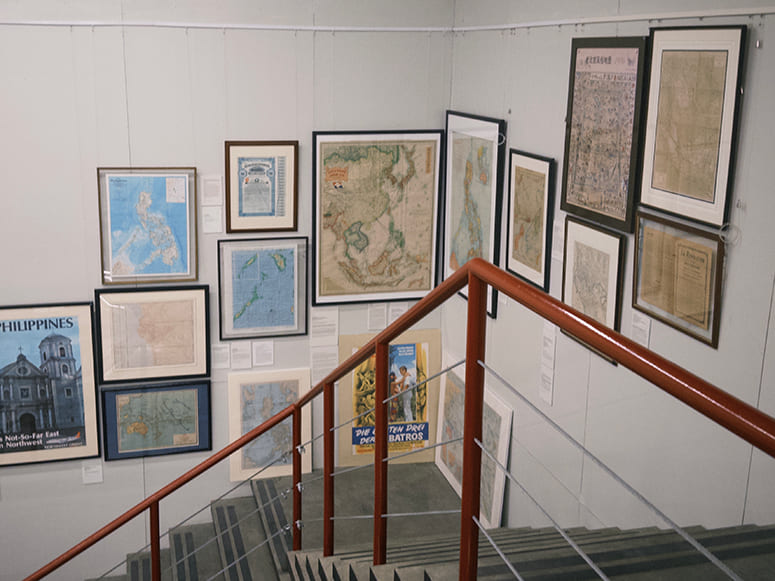
Times have changed since GOP’s launch in 1995, most notably in the accessibility of maps. “Prints are in demand,” shared Rudolf. “Of all the antiques, it's the most inexpensive investment.” The gallery wants to reframe how one engages with history, selling prints as low as P200. “We are like a museum. The difference is, here, you can buy what is on the wall or the rack. And they are originals.”
That ethos informs how the GOP staff, specifically Eima “Amber” Imai, helps guests interact with the space. “Academia is often gatekept,” the gallery supervisor addressed. “It's not fair if we want our country or any young generation to progress. We don't want it (to) seem like a big scary subject.”
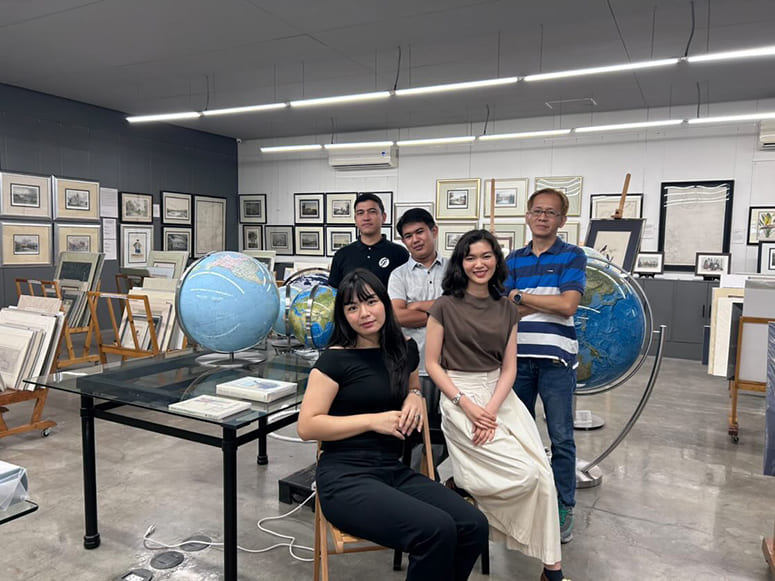
The exhibition can appear intimidating at first, but Amber insists on “holding your hand through it.” “I'll give you a good tour and make sure you understand history in the way that you understand things.”
She adapts that same approach online. “I (film) short-form clips for people who are bored of history. I try to make it funny (and) approachable, but at the same time, with cool, little fun facts that could help you in trivia night. Or help you digest Bridgerton (better).”
A handful of GOP’s Instagram reels have since gained traction. Amber’s educational content stems directly from handling the materials daily. “You don't have to be skeptical with me,” she assured. “My coworker (Alexi Paglinawan, GOP Gallery Officer and Researcher) and I talk about history often. If she's got a question, we have an open conversation about it. We delve into the subject. Whatever I post online is something that we've (discussed) as a team.”
What once made Amber question the breadth of GOP’s curation now leaves her in awe. “This is a phenomenal collection across the Philippines. I will never ever see something so well kept (and) cared for with (the) utmost passion.”
History is documented by people. Maps are, contrary to popular belief, products of subjectivity. “It can serve a purpose to divert your attention,” Rudolf stated. He cited false mockups to mislead enemies, silk prints for easy disposal, and miniature versions meant to be read with a magnifying glass as evidence. “Therefore, maps tell histories, (among) many things.”
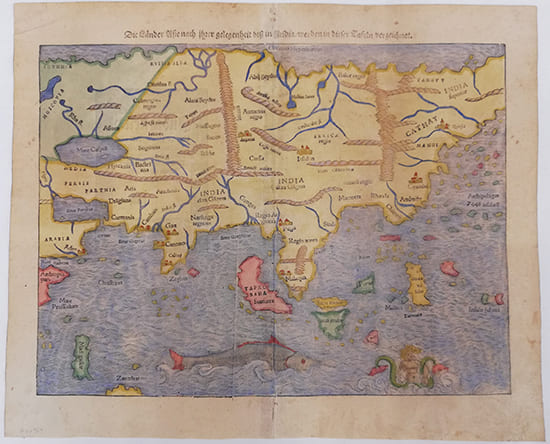
Misinformation has long served as a tool for disruption and coercion. In the olden days, fallacies operated through maps. Today, it circulates through online propaganda and the increasing misuse of AI. That makes historical preservation all the more urgent.
“How are you ever gonna know the future if you don't know your past?” Amber implored. From military tactics to modern competitive gaming, she notices an inextricable pattern across humanity. “That reflects how habitual we are as people.”
Rudolf agrees. “Mankind is dependent on its past. History pursues us and we pursue history. It is, therefore, our obligation to preserve today's history for our descendants.” He posits that paper may cease to exist in the generations to come, yet remains resolute in safeguarding them anyway. The reason lies in his hope that future inheritors will appreciate the care invested in each item.
But securing that future means being critical of the present. “Study your opponent's past,” Amber advised. “We've made so many well-documented mistakes.”
She also regards the past as a crucial guide to empathy. “The more you learn, the better equipped you are (with) emotional intelligence. Without humanities or social studies, you're not making (fully) informed decisions.”
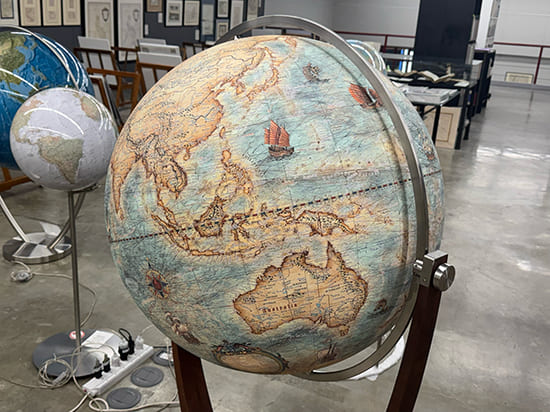
For the owner, however, the concern reaches far beyond GOP. It is the survival of truth itself. He worries that the relentless onslaught of technology is eroding the habit of reading and the very ability to craft coherent sentences.
“That is the challenge of mankind,” Rudolf said. “To learn from the past, adapt and not lose what we have.”
***
Gallery of Prints’ flagship branch in Parañaque is open from 9:00 a.m. to 6:00 p.m. To book their guided tour, contact them through their website or message them on social media via @galleryofprints.

WATCH: Discovering Vietnam in three days
June 9, 2026
WATCH: How to experience Bangkok and Kanchanaburi in one trip
October 21, 2026
WATCH: Pixar Summer Fest adventure at Hong Kong Disneyland
August 10, 2026