

Jeff Cadayong of Maison de Rivoli: ‘Fine things deserve a place in life’
Paris-based art connoisseur Jeffrey Cadayong has a third eye for unnoticed treasures, especially paintings by Southeast Asian masters who once lived in Europe. His highly-trained eye zooms in on them in auctions, galleries, and even in flea markets.
Take for instance his discovery of an Alfonso Ossorio in a flea market in Paris. Ossorio was a Filipino-American abstract expressionist artist.
“Alfonso Ossorio is my favorite Filipino artist. I think he’s one of the most impeccable Filipino artists and I studied his works. What’s good about Ossorio is sometimes you can’t decipher his signature. There was an auction in a flea market in Paris, it was Lot No. 1. I remember the auctioneer didn’t describe it, but I knew it was an Ossorio and I got it for 100 euros, which was P5,000 at the time. After two months, I called Christie’s Hong Kong. They sold it for P13 million!”
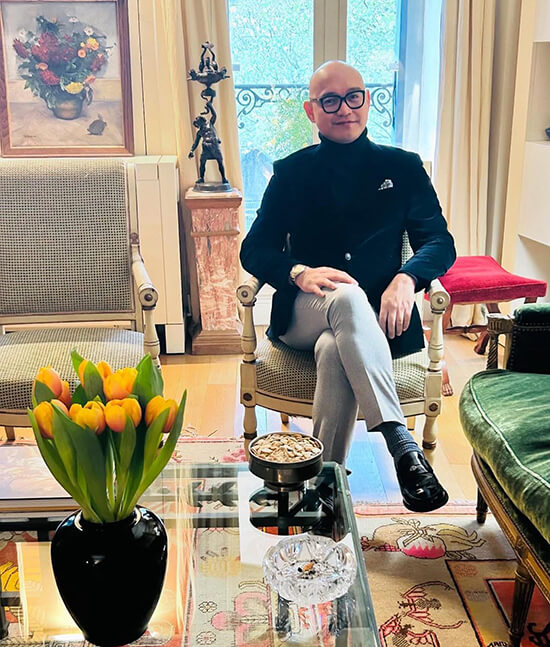
Jeff established in 2018 Rivoli Fine Art in Paris, dedicated to various ecoles de Paris painters (the French and émigré artists who worked in Paris in the first half of the 20th century, including Picasso.) He named it “Rivoli” for his first Parisian address, Rue de Rivoli.
“That’s where all the dreams about becoming a cultural bridge between France and the Philippines were born,” he says.
His eye for the exquisite made Jeff acquire one of extremely rare and valuable volumes of 19th-century Flora de Filipinas, Augustinian priest Francisco Manuel Blanco’s book on the botanical heritage of the Philippines.
CONTINUE READING BELOW

Collectors have framed real pages and reproductions of the featured Philippine fruits and flowers in the book.
Jeff thought of something just as eye-catching and novel as having the botanicals on the wall. Why not on one’s plate?
Thus was born Flora de Filipinas by Maison de Rivoli, a luxury porcelain collection that celebrates the botanical richness and cultural heritage of the Philippines.
“Produced in collaboration with Royal Limoges in France, the oldest existing porcelain manufacturer in Limoges (est. 1797), each piece reflects the meeting of two worlds: the timeless savoir-faire of French porcelain craftsmanship and the vibrant inspiration of Filipino heritage,” says Jeff.
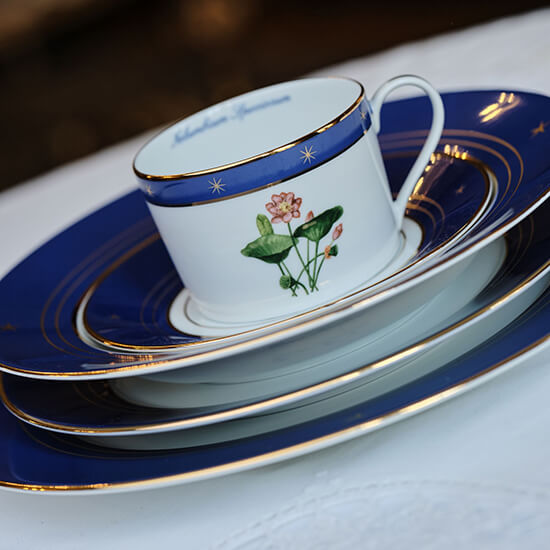
With limited editions, meticulous detailing, and elegant finishes, Flora de Filipinas embodies Maison de Rivoli’s vision of bringing Philippine beauty to the global stage through the highest expression of art de table.
Each design is produced in a limited edition of 200 pieces, individually numbered, making every porcelain piece an exclusive collector’s item.
Every piece is finished with 24k-gold detailing, highlighting the elegance and precision of traditional Limoges porcelain, has the same maker as Hermes porcelain. The plates feature on their rim a golden sun with eight rays, representing the first eight provinces that revolted against Spain, and three stars to represent Luzon, Visayas and Mindanao—for that added Philippine dimension.
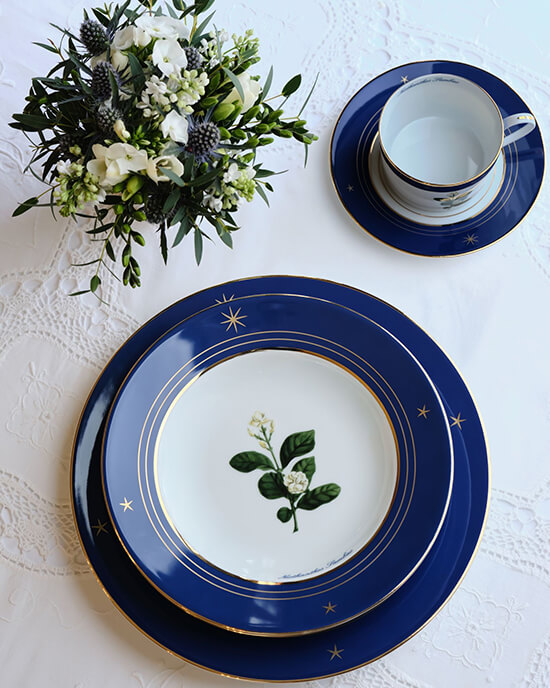
The Flora de Filipinas collection includes Mangifera rostrate (mango), Coco nucifera (coconut), Nichantes sambac (sampaguita), Musa troglodytarum (banana), even the Mimosa asperata (makahiya), among others.
“We indeed reproduced as faithfully as possible the original prints made for the book by the best Filipino painters of the time, like Felix Resurreccion Hidalgo and Leon Maria Guerrero,” he reveals. (The book, published in 1877, is nowadays in public domain).
***
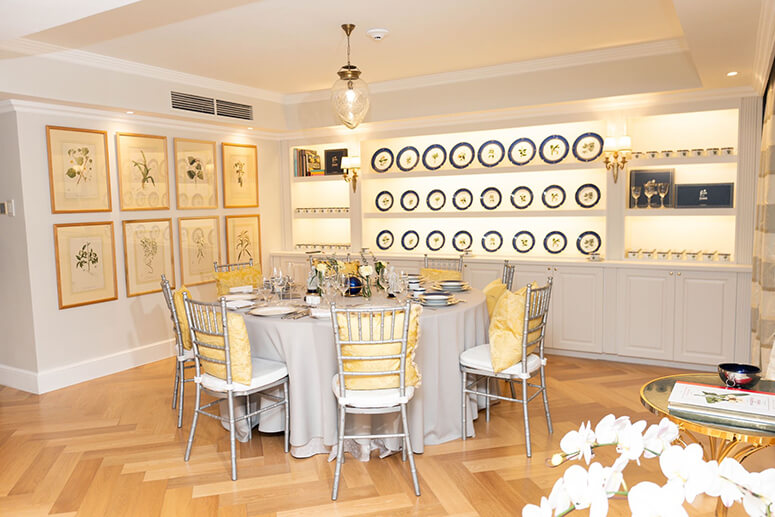
We (Metro Pacific’s chief finance and sustainability officer Chaye Cabal-Revilla, “concert queen” Pops Fernandez, Ayala Corp. managing director Mark Uy, Jeff and myself) had an exquisite dinner served on Flora de Filipinas porcelain, naturellement, at the Maison de Rivoli on Room 262 of The Peninsula Manila on the night shots rang out in the Senate. So, I asked Jeff, what role does fine art have during times of chaos? (Whether fortunately or unfortunately, the country has arguably moved on from the trauma of that terrible, if not controversial, night.)
“Fine things remind us that beauty still deserves a place in life, even amid chaos,” says Jeff, who, though a permanent resident of Paris, says, “The Philippines will always feel like home to me.”
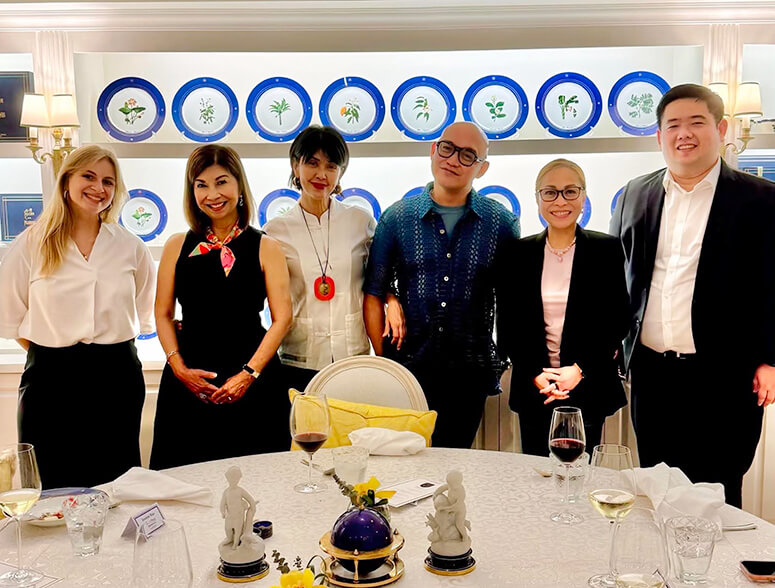
“I always think about how I can represent the Philippines in the best possible way: through culture, creativity, and the things we often overlook as Filipinos ourselves,” he adds.
“Porcelain reminds us of the craftsmanship and the savoir-faire of the makers in France and the rich natural beauty of the Philippines,” says Jeff. He later shared with us a video of Princess Milena of Liechtenstein appreciating a vide-poche from Maison de Rivoli, sent to her by Jeff through a mutual friend.
“She said it was incredibly splendid,” shares Jeff, who traces his roots to Leyte.
The Flora de Filipinas plates, and cups and saucers, may be bought individually, or as a set.
Is fine porcelain like jewelry and art, which appreciates over time?
“Absolutely!” says Jeff. “Especially pieces from historic makers like Meissen, Sevres, Limoges or rare Chinese porcelain.”
“Like art, value depends on rarity, provenance, craftsmanship, condition and historical importance. Limited production pieces and hand-crafted porcelain from renowned houses tend to appreciate over time, particularly when they become collectible.”
Take it from the expert.

WATCH: Is OPM still as good as it used to be? (Generations Ep. 20)
September 9, 2026
WATCH: Do you still believe in marriage? (Generations Ep. 17)
August 19, 2026