

Designing for the pluriverse
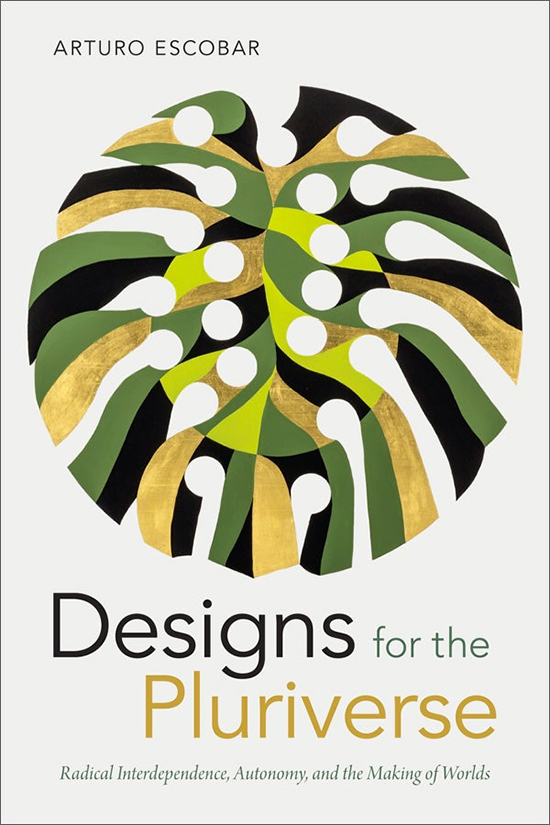
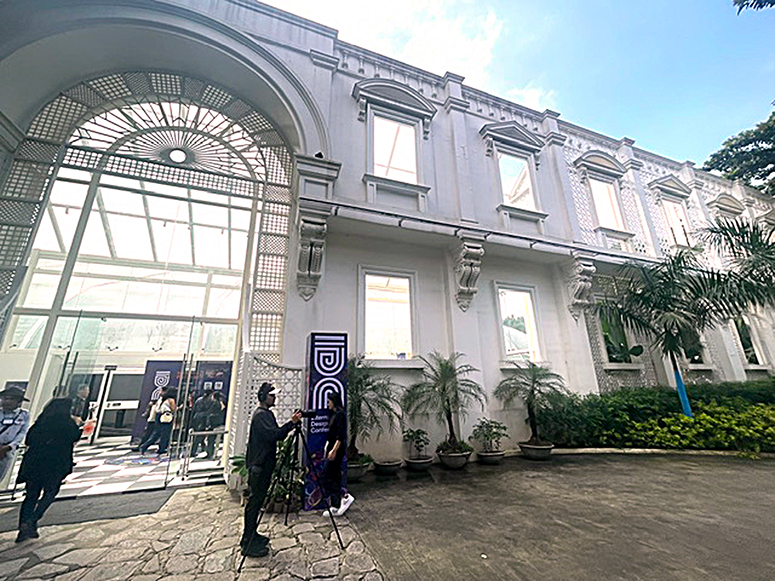
In 2018, Colombian anthropologist Arturo Escobar released his book, Designs for the Pluriverse, in which he put forth his provocative theories on how design should be used to make a better world. That book started many conversations between creatives and is the basis of the recent International Design Conference (IDC) held at the Foro de Intramuros. Attended by members of the creative industry, artists, cultural workers, students and media in the beautifully repurposed former Ateneo campus, it was a day of eye-opening talks and presentations. The theme of belonging to an archipelago was key.
After welcome remarks by DTI Secretary Maria Cristina Roque, the session “Disrupt” began with a short talk by Dr. Pamela Cajilig. When one thinks of design, what usually comes to mind is art, architecture, industrial design, fashion and the like. Yet it became clear that for design to make a better world, it has to apply to every aspect of life such as governance, transport systems, urban development and so on.
Dr. Pamela spoke about a weaver, Safia, of the Sama-Badjao, the main ethnic group of Tawi-Tawi. Seafarers who have also been called “Sea Gypsies,” they often have no fixed or permanent address and can have great difficulties obtaining IDs, health care and other government services.
“Her community wasn’t sailing with the system,” said Dr. Pamela. “The system had been designed around a different way of living. One address, one birthplace, one way of proving who you are and we might call that efficiency, we might call that standardization — but still, there’s always carries the question: whose world are we sailing?

“The Philippines is an archipelago and perhaps that offers us more than a metaphor, it offers us a way of thinking. What if you can belong to a whole without being identical with one another? What if our systems could connect different ways to living and knowing without making them the template for all others?”
It would be world-changing.
“So, if our health system had been designed differently from the start, designed around people who move with the tides and seasons, as well as those who stay in one address, imagine a registrar who travels by boat to indigenous communities instead of requiring them to travel to the registrar; imagine a government that assumes from the onset that citizenship should not require fixed address to prove that you exist,” she says. “These are not impossible ideas. Instead of asking how can we make different people fit into the system, we ask what would the system look like if we began with the many worlds already here.”
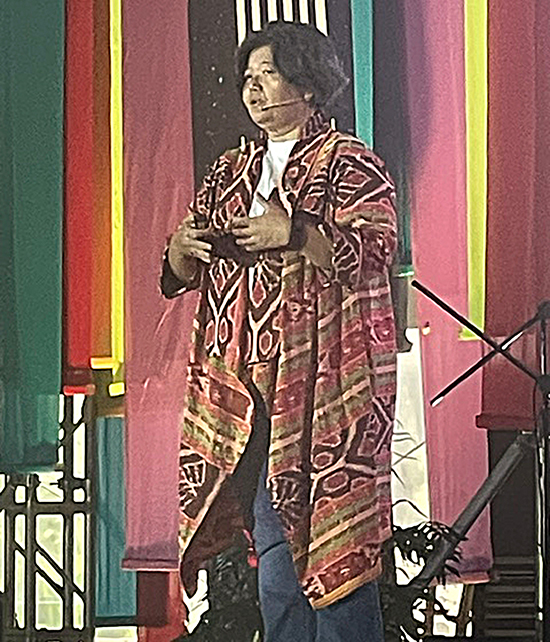
Tita Larasati, an educator and product designer from Indonesia picked up on this theme. “Indonesia is an archipelago which means we rely on what is around. With 17,508 islands, the main issue is disparity.”
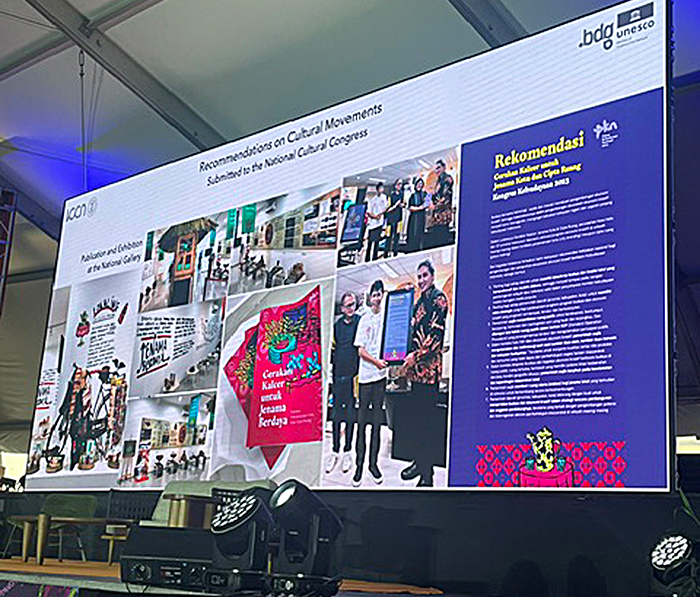
She noted that “design is a way of thinking. Not focusing on how the world was, but how it can be better. Design has to be relevant or else you cannot influence people.”
Her slide presentation illustrated how design is part of everyday life in Indonesia. Urban spaces become venues for public art, river cinema and bike-sharing systems, colorfully painted mini buses, forest walks and creative kampung (villages). They make landmarks out of colorfully painted walls, facades and clusters of roofs.
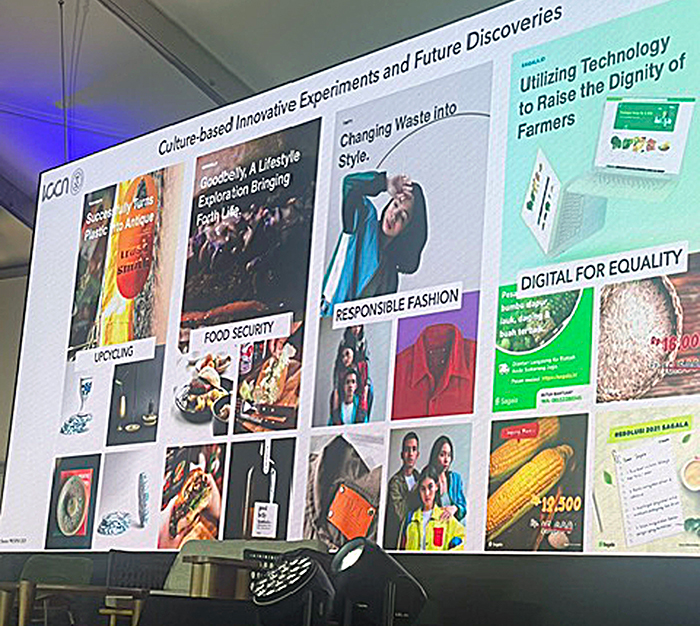
She showed how design thinking for government includes improved city bus transport, free school buses, tourist buses, zebra and other unique designs for pedestrian crossings. Culture-based innovative experiments include upcycling, food security, responsible fashion and digital equality. Sustainable products are developed like vegan leather, betel palm plates and containers, even bamboo prosthetics. These are only a fraction of the creative output.

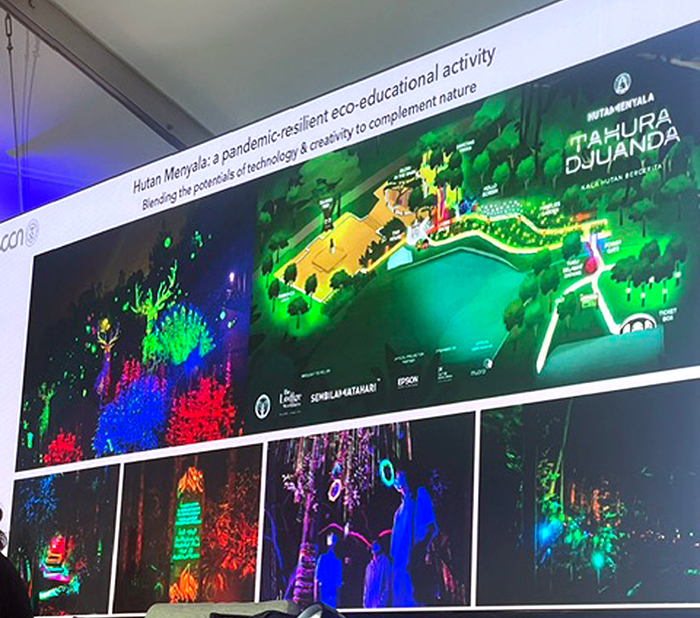
The Indonesia Living Museums have networks in Cengkeh Afo, Ternate, Nusa Tenggara; Samsara, Karangasem, Bali and Rumah Atsiri, Tawangmangu, Central Java. There is Hutan Menyala, a pandemic resilient eco-educational activity blends the potentials of technology and creativity to complement nature, such as along beaches. Titik Kumpul is a program that reintroduces indigenous wisdom through story-telling and narratives.
Tita Larasati adds: “We are trained to look at who your users will be; you cannot make one solution for everyone. There is nothing right or wrong in design, it depends on where you apply your solution and it may work well. But when you move it to another context it can be wrong.”
She believes “diversity should not be used as a means to sell more stuff. We should not have so many products just to have diversity — a lot of it will end up in the trash! Look for users that are not represented. even plants and animals which have no voice. Designers should widen their empathy.”
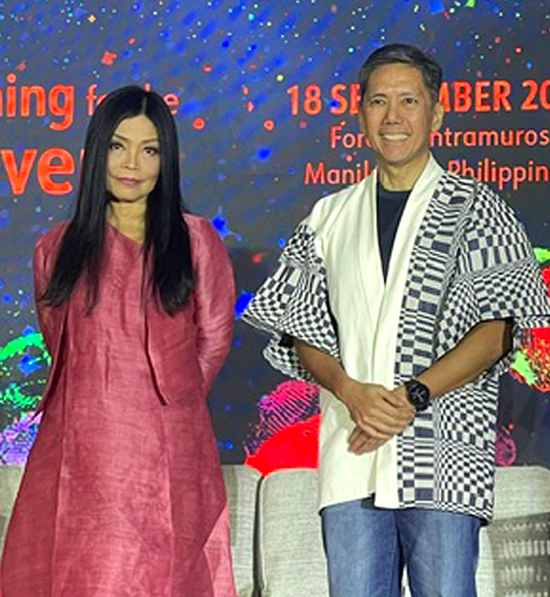
Filipino singer and cultural worker Dr. Grace Nono continued with lessons from the archipelago. She doesn’t see herself as a designer but found out Arturo Escobar, author of Designs for the Pluriverse, is not a designer, either.
She started off with oral chanting, singing Pangulawit as taught by Datu Migkat, a Talaandig chieftain. The song, which was composed by his father Datu Kinulintang Anastacio Saway, is about the elders longing for a time when the people were united despite their differences.
“The process of learning these oral traditions can take years and decades. The culture bearers want to be sure the learners are authentic. But the IPO does not recognize these intangible forms, does not acknowledge the labor behind it.”
She credits the School of Living Traditions, established in 1995 by the NCCA, in helping to preserve these indigenous cultures. “How can our indigenous cultures be taught directly?” she asks, “They do not meet requirements despite their vast knowledge.”
Grace cites the TAO Foundation of Culture and the Arts. “Himig, tula at galaw ng ninuno” is the theme of a webinar series taught since 2021 to share indigenous practices without creating a carbon footprint.
She also sang Dosayan, taught by Arnel Banasan, a Kalinga singer, and ended her performance with Oyman, taught by Minan Dulit, Gloria Emang, a healer from Tagbanua.
“Art bypasses the things that divide us,” says Grace. “Learn from the culture bearers, not the DepEd teachers!”
When asked how the creative industry works in Indonesia, Tita explained, “Government learns how creatives speak and think, and creatives learn what government think and how they operate. Conversation happens and policy is built by both sides.”
Fireside Chat moderator Paolo Mercado pointed out, “Not only in Southeast Asia but the entire world, Indonesia has the most progressive model for the creative economy. In the Philippines the creative economy is a secretariat function two levels down from the Department of Trade secretary with a budget of less than $1 million. In Indonesia it is a Ministry of Creative Economy that also integrates cultural policy.
“From a global standpoint, Indonesia led the initiative for the first-ever Conference on Creative Economy. They proposed to the UN to declare 2021 the Year of the Global Creative Economy. It’s incredible: the UK may have started the conversation in the Tony Blair era, but it was Indonesia that really put it on the word stage where it continues to spark conversations on creative industry. Governance has to be an inclusive, sustainable framework for development, so we have a lot to learn from Indonesia!”
Indonesia has double the number of islands compared to the Philippines, yet having seen how their cultural industry thrives, with the many programs, initiatives and projects to improve their way of life from the ground up, it’s worth paying attention to this fellow archipelago.

WATCH: Is OPM still as good as it used to be? (Generations Ep. 20)
September 9, 2026