

An American musical gets a new life with Filipino artistry and heart
The Notebook: The Musical that opened Theatre Group Asia’s new season has a 1996 book by Nicholas Sparks, a 2004 film, and a 2024 Broadway show ahead of it that had some critics dismissing it as pure schmaltz, which it could easily become with the wrong treatment.
Fortunately, this production, under the direction of Nicholas Polonio, avoids all the pitfalls to create a sophisticated, highly polished production with clear storytelling and heightened emotions without the sentimentality. To achieve this, he has some of Philippine theater’s finest actors and creatives to collaborate with.
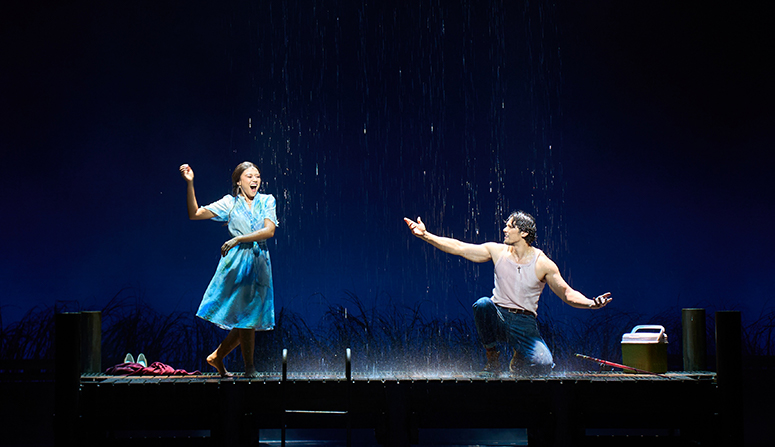
Set in North Carolina, the play follows the 60-year relationship of Noah and Allie, who are from opposite sides of the class divide. They face disapproval from the girl’s parents, have a 10-year separation when he fights in the Vietnam war, she goes to college, gets engaged to a public defender, and struggles with her identity. They reunite, but instead of a happily ever after, they face the ultimate challenge of their lives when Allie is diagnosed with Alzheimer’s.
In translating to the stage what could potentially be just another conventional tearjerker, playwright Bekah Brunstetter does something more interesting by creating three sets of the couple from their younger to older versions, all interacting and overlapping on stage. Allowing all of them to exist simultaneously, the past constantly haunts the present as Older Noah tries to reach Older Allie by reading their love story from her notebook while her memory is fading. There is a conversational intimacy to the dialogue of Brunstetter which is complemented by Ingrid Michaelson’s relatable folk-pop music with lyrics reflecting the characters’ thoughts and emotions. Farley Asuncion’s musical direction, in the same spirit, makes sure that the orchestration never overwhelms, staying sensitive to the idiosyncrasies of each character and dramatic moment.
CONTINUE READING BELOW

All this is staged brilliantly by Polonio, who references midcentury Broadway musicals which prove appropriate for the material. In lieu of realistic backdrops or LED projections, he opts for scrims that are lit by Cha See to create wondrous painterly images evoking Allie’s artworks. This places the focus on the actors, while reflecting their psyche or emotional states. The scrims also divide Miguel Urbino’s layers of sets, modular components that are suggestive more than realistic. It’s like a coloring book where you fill in the blanks, making you use your imagination more. The layering of sets also works well with the brisk pacing of Polonio—scenes change quickly as stories and timelines overlap, making the beautifully composed stage pictures appear like sudden sparks of memory in Older Allie’s mind.
If the settings are suggestive, the singing and acting, on the other hand, are grounded in reality. Feeding off one another’s other versions of themselves, the actors have acquired an uncanny depth to their characters. Benedix Ramos and Sheena Belarmino as Younger Noah and Allie have all the giddiness of young love. Ramos has a natural charm and earnestness while Belarmino conveys the emotional volatility of a romantic rebel. They are so at home with one another that their being in love is utterly moving in their duets Carry You Home and Sadness and Joy.

With Middle Noah (Laurence Mossman) and Allie (Morissette), it becomes more intense. Mossman gives the role more maturity and worldliness while not losing the romantic idealism. Morissette channels the conflicted nature of the woman caught between the life she has chosen and the life she still wants. Their chemistry is electric, you can almost see sparks enough to electrocute in the famous rain scene. They both have showstopping solos, Mossman’s Leave the Light On, sung with a longing that is so infectious; and Morissette’s My Days, which is already becoming legendary with her video alone. But be prepared to see her onstage singing it with a specially conceived “reveal” because it will sweep you off your feet. We actually heard audible gasps, and there were many jaws that dropped.
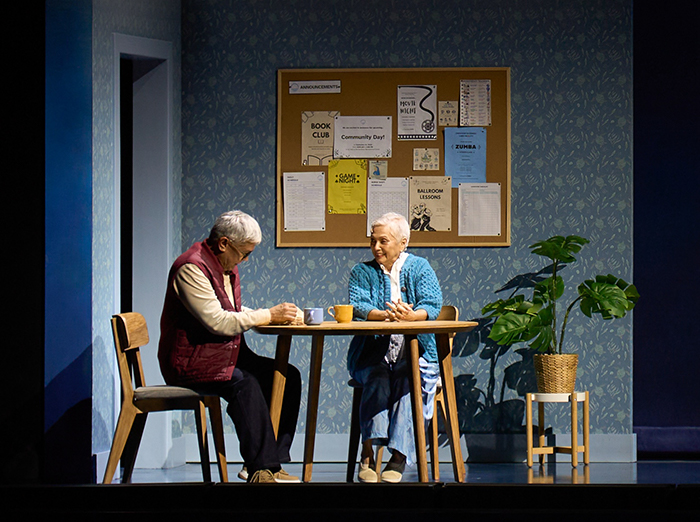
If you do bring tissues as warned, it will be for the Older Noah and Allie segments of Rody Vera and Celeste Legaspi. Vera imbues his character with such nuance, a patience and devotion that reflects the weight of accumulated history. It is fitting that he opens the musical, acting like an emotional guide through the story, and his Iron in the Fridge is so heartbreaking. Legaspi is just as complex, essaying disorientation and fragility while still having sparks of her younger self, including the scene when Vera reads a sexy passage that gets her titillated, eliciting kilig laughter from the audience.
They have such a lived-in chemistry, showing the intimacy of a couple who share so much and have a love that endures through decades of struggle. This makes them the emotional center of the play, which is bookended by Vera’s Time in the opening and by Legaspi’s I Know, her own 11 o’clock number in the second act. Coda is a fitting, breathtaking finale, a tribute to their great love sung by the whole ensemble with such poignancy, encapsulating the story’s bittersweet core, balancing the tragedy of memory loss and death with the triumph of a lifelong bond.
* * *
The Notebook: The Musical runs until Sept. 20 at Samsung Performing Arts Theater.

WATCH: Is Philippine cinema still thriving? (Generations Ep. 19)
September 2, 2026
WATCH: Do you still believe in marriage? (Generations Ep. 17)
August 19, 2026