

The ABCs of SEA art
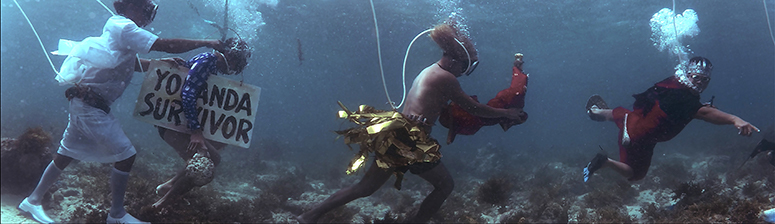
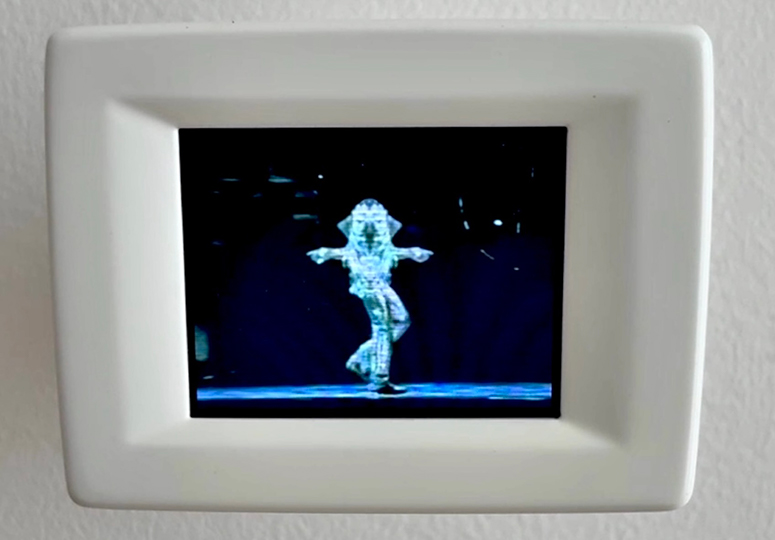
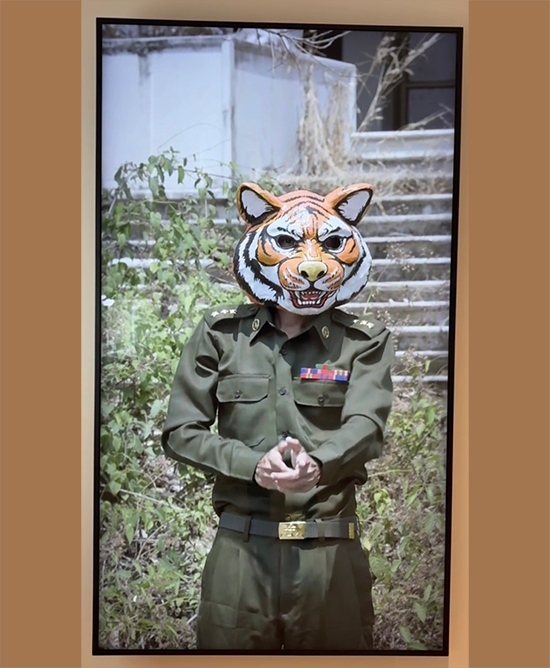
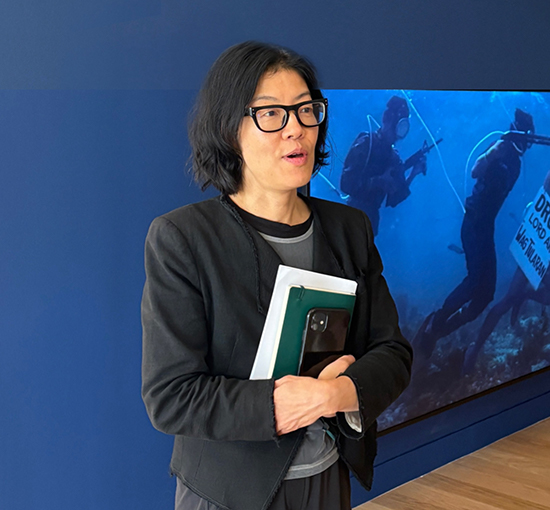
It begins with “A” for “archipelago,” with Martha Atienza’s Ati-Atihan festival-goers parading in colorful garb underwater in “Our Islands: 11°16’58.4 N 123°45’07.0 E,” and ends with the eerie, mirrored, headless moonwalking form of Michael Jackson, representing “Z” (for zoomorphism) in Paul Pfieffer’s looped video “Live Evil (Kuala Lumpur).”
In between, you are free to explore “A–Z of Southeast Asian Art: A Critical Dictionary”—the opening exhibit curated by Lydia Yee and Zhen Fang Ang at Kuala Lumpur’s brand-new Muara Arts Gallery—however you wish: jump between its three floors, go backwards or crisscross rooms and alphabetical themes. You’ll encounter contemporary works by more than 40 Southeast Asian artists that are at times coincidentally overlapping, from floor to floor, sometimes holding several meanings at once.
Such is the nature of an exhibit that grew from a Singapore artist’s attempt to make a “film” cataloguing Southeast Asia’s artistic sprawl, and led to training an algorithm to categorize that sprawl.
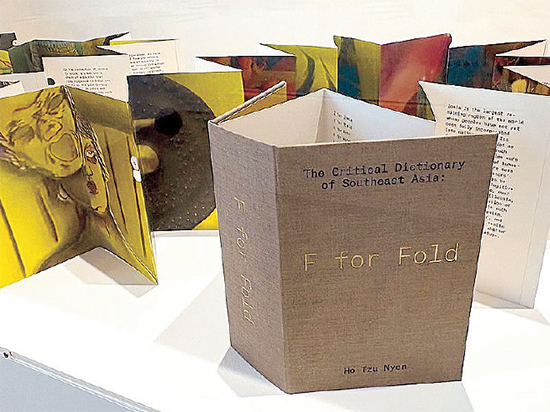
Inspired by Ho Tzu Nyen’s ongoing project, “The Critical Dictionary of Southeast Asia (2017–ongoing),” Yee and Ang have done their own curation (sans AI), with artists drawn from Brunei, Cambodia, Indonesia, Laos, Malaysia, Myanmar, the Philippines, Singapore, Thailand, Timor-Leste, and Vietnam.
CONTINUE READING BELOW

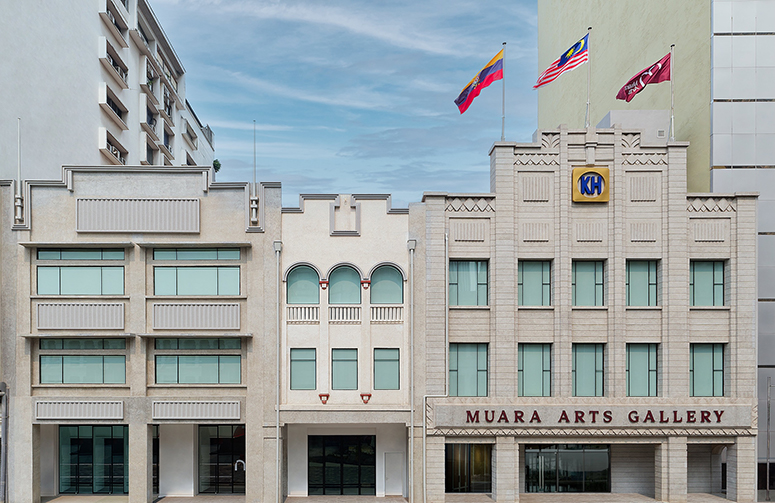
We open at the historic riverside Medan Pasar precinct, a row of shophouses and Art Deco-era banks facing the river Klang that is now being transformed by Brahmal Vasudevan and Shanthi Kandiah, heading the Creador Foundation and Medan Pasar Realty, into an arts and culture hub. They discovered the spot on a bicycle ride through KL’s Old Market Square, and began envisioning and buying up properties.
“Our goal was essentially three things,” says Vasudevan at the Muara Arts launch. “One, restore the buildings from a physical standpoint. Second, how do we make sure we put enough content in that would attract people, whether it was Malaysians or tourists to come and spend time here? So activation is very important. And thirdly, how do we activate tourists and Malaysians to come back?” Aside from the gallery and offices at No. 2 Medan Pasar, there are plans to build a 350-seat Muara Arts Theatre on this block. National Gallery Singapore’s Chris Lee was just announced to oversee this growth as CEO of Muara Arts and Medan Pasar Realty.
For Yee, the A-Z layout of the exhibit, on until April 4 next year, offered a “serendipitous” approach. “One of the beauties of the show is that you don’t have to follow the dictionary A to Z. We didn’t have to make choices about this work is going to look great next to that work.” Just as Tzu Nyen’s algorithms allowed a certain fluidity to its interpretations and expansion, the gallery show offers you to pick your own path.
You could even begin with Y for “Yielding.”
“The theme ‘Yielding,’ for example, is a term often connected to colonial ideas, like you’re yielding to the colonizer,” says Yee. “But some of the artists saw that as the reverse. They found it as a way to preserve their own traditions. If they accepted something from the colonizer, they could also evade the control of the colonizer by bringing their own tradition into Catholicism, for example.”
In the beginning was the word, and the word became strategy—not only for classifying art, but for protecting, defying, signaling to other kindred spirits.
If you didn’t get to see Atienza’s enveloping video installation “Our Islands” last year at Silverlens Manila—or its striking display of bridal mermaid Filipino swimmers in all manner of crowns, gowns and propaganda unfurling live on Times Square’s LED displays—then its mini-version in Muara Arts is the next best thing.
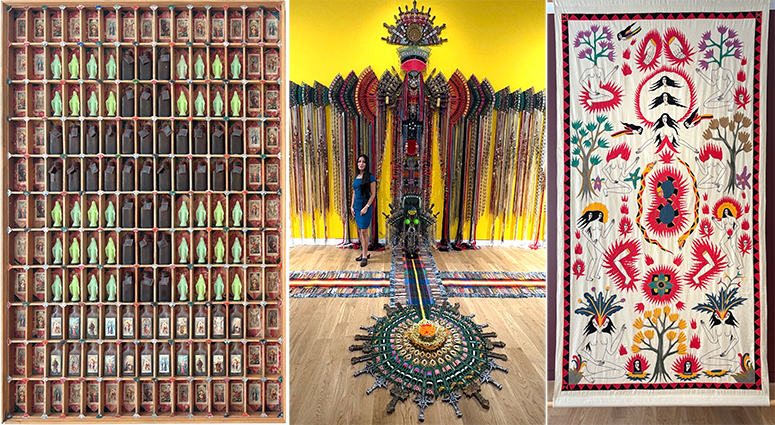
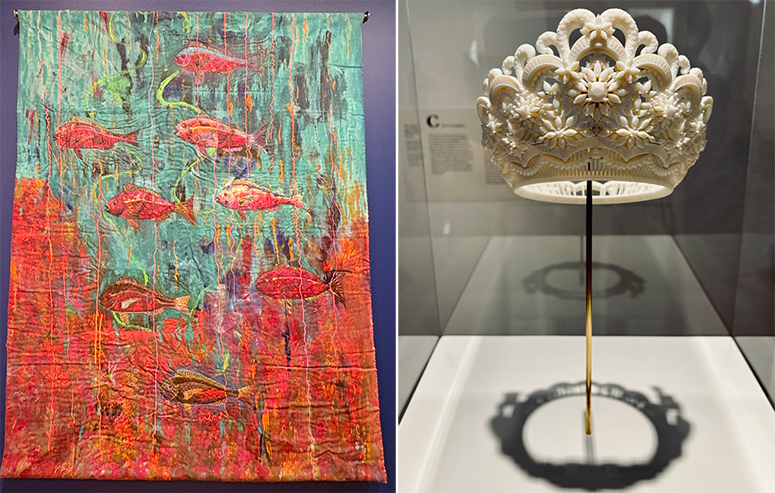
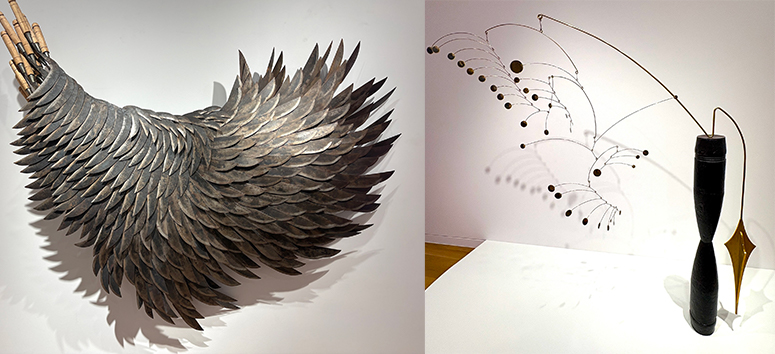
Besides Atienza’s underwater pilgrimage, there’s Pio Abad and jeweler Frances Wadsworth Jones’ “The Construction of Eight Single-Story Classrooms for Public Elementary Schools,” which catalogues how much theft under the first Marcos era directly stole from public projects, (under the category of C for “Corruption”); there’s Ciyan Dayrit’s subversive map-making strategies (under H for “Humidity”) next to Izat Tarif’s “Taman Kenangan (Full Suite),” in which the Malaysian artist posed as a real estate developer to sell a sketchy patch of mud-sliding land pitched as a new condo unit (under the category “Fiction”). We see Nicole Sison’s monochromatic x-ray visions of plastic crates from the Philippines representing a matrix of migration and empty consumption in her untitled 2025 work under L for “Legibility.” The much-beloved Pacita Abad makes an appearance with a colorful woven tapestry titled “The Far Side of Apo Island,” highlighting the theme of nomadic Southeastern Asian artists under O for “Ocean.” Under P for “Paddy,” we see the juxtaposition of Alfredo and Isabel Aquilizan’s repurposed metal farming blades forming a wall-hanging “Left Wing Project,” across the floor from Vietnam’s Tuàn Andrew Nguyen’s “Balancing on the Weight of the Unresolved,” its Vietnam War shrapnel and shell casings recovered from planting fields making up a Calder mobile that, in its materials and positioning, seems to echo the Aquilizan piece. Late Fil-Am artist Carlos Villa’s “The Requiem Was Sung Without Words” employs organic human materials—blood, semen, hair, bones, fingernails—in its cryptic entry under R for “Ritual.” And Norberto (“Peewee”) Roldan’s almost iconic assemblage “Faith in Sorcery, Sorcery in Faith” (2014) closes the Y for “Yielding” entry with his diptych of medicine cabinet shelves lined with tiny Mother Mary figurines and herbal medicine bottles, along with small portraits of saints, outlining a pair of looming, mirroring crosses.
* * *
“A–Z of Southeast Asian Art: A Critical Dictionary” is open at Muara Arts Gallery, Medan Pasar, Kuala Lumpur, Malaysia until April 4, 2027. Thanks to the Creador Foundation for the invitation.
Curator Lydia Yee on Muara Arts and the ‘A-to-Z’
For a show as far-flung and wide-catching as “A–Z of Southeast Asian Art: A Critical Dictionary,” there are overlapping themes—resonances that seep beyond the descriptive A-Z signifiers. Home is a strong motif; but so is travel, apartness, oceans separating people from that home. Natural disasters depicted in some works point to the underlying roots of such calamities: corruption, illegal trade, political folly. There are side quests built into this exhibit, part of Tzu Nyen’s original algorithmic construction in designing a dictionary (he’s since taken a pause in adding to it, but the possibility of outbuilding continues). Curator Lydia Yee elaborates.
Explain how Ho Tzu Nyen’s original project inspired this exhibit.
LYDIA YEE: Tzu Nyen’s ideas about the region were very important to our early thinking. He asked, “What constitutes the unity of Southeast Asia?” It’s a region that isn’t unified by language, by religion, or political power. So what brings us all together?
I’m wondering about the audacity of having an “A to Z.” I mean, as curator, was it difficult to select, or to say, “This is it”?
No, it was actually quite flexible in structure. I mean, initially I thought some of the words we might have trouble with, like Z for “zoomorphism,” for example.
Some of the themes in this exhibition, when you think about it, there are very common kinds of connections between artists from very different places. Because maybe some of those myths and traditions have been handed down over many, many years—
Even across archipelagos?
And also archipelagos, the notion of people traveling from place to place and cultures spreading.
I noted quite a few Filipino artists represented here. Did you sort of have a personal affection for some of these works?
I think the Philippines has a very strong art scene that’s, you know, over many generations; it’s not just very contemporary work. It goes back decades, and you can’t manufacture an art scene out of nothing; it’s got to develop over time and…
And from the ground up?
Yes, exactly. I think also the Philippines has had an important diaspora. So artists have gone around the world and are well known…
Like Pacita Abad…
…and are very tough, yeah.
How do you see this new space, Muara Arts, fitting into the whole art ecosystem of KL and SEA?
I want very much to connect with local artists and be a platform for local artists to connect with artists from across the region. So a lot of local artists tell me they haven’t had that many opportunities to travel and be a part of an international show, for example. We’re hoping that these are opportunities for them to build contacts and forge relationships with each other and maybe some of them will be invited to a show in the Philippines next time.
In interweaving so many cultures, the feeling of the show is almost playful, celebratory.
Definitely, there’s that element. There is also criticality. Some of the work and artists are raising difficult cultural, social and political questions. But ultimately, I think it is a great reflection of how Southeast Asia—you know artists who might have been looking outside of the region are now looking back to their home countries and to countries across the region as a platform for future opportunities.

WATCH: LGBTQIA+ people with unlikely professions
June 28, 2026