

Just a haircut
Every Sunday morning, our family driver, Lito Salvador—may he rest in peace—would fetch our barber, Juan (I can’t for the life of me remember his last name), from his little shop near the San Juan Market.
Juan would simply close his barber shop for a few hours and come to our house on Ortega in San Juan. I suppose Dad made it worth his while. Dad always went first, followed by my brothers and me. Before the morning was over, several of the Casa Mercedes workers had also found their way to the lanai for their trim.
For a few hours every Sunday, our lanai became Juan’s branch office.
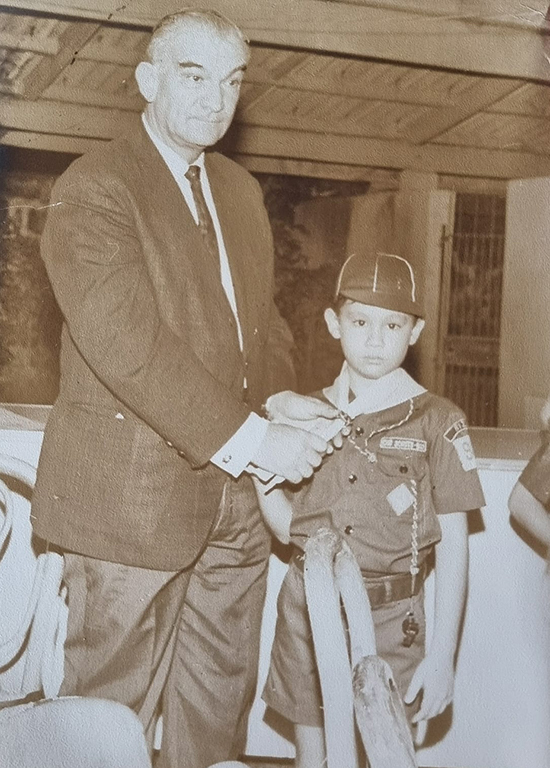
Right before lunch, Juan had a waiting room.
Looking back, I suspect Dad wasn’t merely paying for haircuts. He was supporting a man whose hands had quietly become part of our family’s weekly ritual. We never thought of it that way then. To us, Juan was simply Juan.
I grew up in San Juan, an enclave of gracious post-war homes where many of Manila’s old families settled after the war. My grandmother, Lola Nong Diokno with moms youngest sister Baby Diokno Velez, lived up the hill on Jacinto Asiñas. My aunt and my mother’s business partner, Tita Nora Diokno Casas, ran San Juan Hospital on M. Paterno, where generations of Manila babies first opened their eyes.

Before I was born, we lived on E. Fernandez near the old M.Y. San biscuit factory. When the fire that gutted our fan factory forced us to move, we settled on Ortega Street.
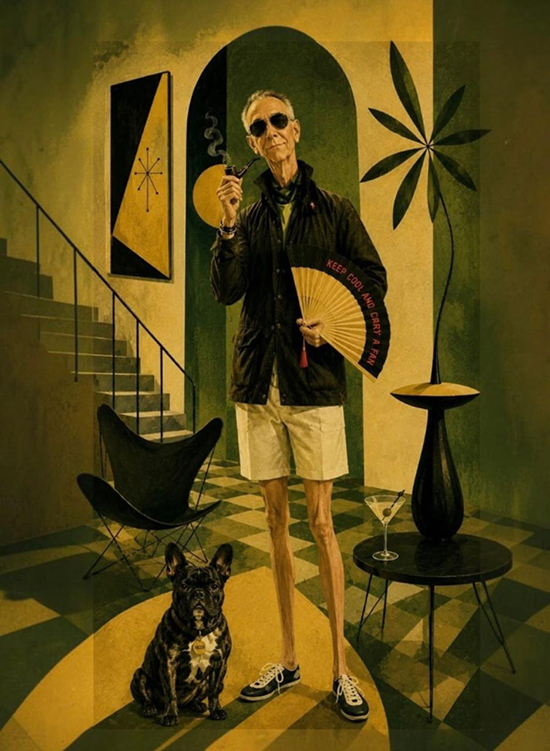
Ortega was a quiet street. We knew our neighbors, The Marcoses were down the street and the Fernandez’ were at the corner. A short walk to the neighborhood sari-sari store was enough to buy a few pieces of candy or a packet of champoy. Those little pleasures were enough.
And every Sunday, Juan arrived.
To a young boy, Juan never seemed to change. He was reed thin, with slicked-back hair held firmly in place by enough pomade to survive the hottest Manila afternoon. He wore a crisply pressed striped shirt tucked neatly into perfectly creased gabardine trousers, fastened with a Hickok belt. His polished black lace-up shoes always seemed freshly shined. Under one arm was his weathered barber’s case.
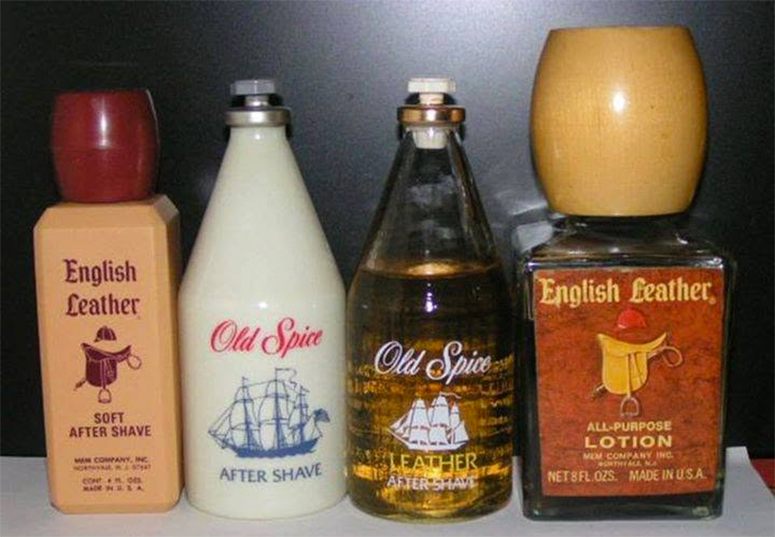
And then there was the unmistakable scent of English Leather or Old Spice.
That was how I grew up believing haircuts were done.
Juan never asked what style I wanted because he already knew. The most complicated instruction Dad ever gave was simply, “Este, Juan... no tan corto.” Juan smiled, nodded and got on with it.
That was the entire consultation.
Today, those four words would probably trigger a 15-minute discussion about texture, layers and fades, complete with three reference photos on a cellphone.
Juan gently placed one hand on the back of your head and, without thinking, you obeyed. A few careful snips, the steady hum of the clippers, a splash of Old Spice around the neck, a generous dusting of talcum powder, one quick look in the hand mirror and it was over.
Fifteen minutes. Just a haircut. Or so I thought.
I don’t remember exactly when Juan passed away. What I do remember is that he remained our barber long enough to give Dad one last haircut before what would become his final journey. Mom, Nong, my sister and I were with Dad when he passed away in San Francisco on our way to Madrid.
Looking back, there’s something quietly comforting in knowing that Juan had sent him off looking exactly as he always had—well groomed, dignified, and unmistakably himself.
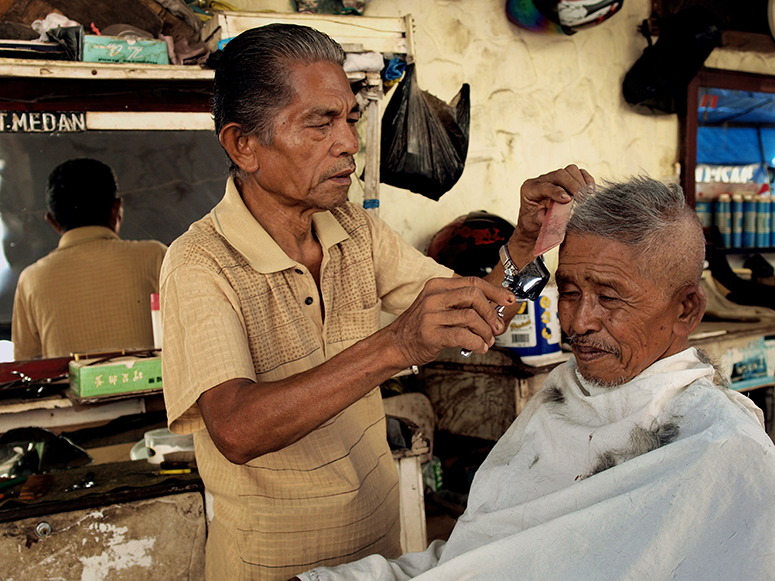
At the time, I thought every Filipino man grew up this way.
I would eventually discover that the world of men’s grooming had changed rather dramatically.
I first crossed that bridge sometime during my teenage years. Relatives began talking about this new place at the Mandarin called Rever. It wasn’t simply another place to have your hair cut. It represented the leap from the neighborhood barbería and the old beauty parlor to the modern salon.
Walking into Rever felt like entering another world. Everything was different—the welcome, the shampoo, the styling chairs, the mirrors and even the language. People no longer said they were getting a haircut. They were going to Rene (Huelgas). Or David (Charlton). Or Patty (Supangan). Or Teng (Roma). From my teenage years through college, Rever became my regular stop. Looking back now, I realize it wasn’t just my hairstyle that was changing.
The modern Filipino man is every bit as vain. Possibly more.
Manila was changing.
Somewhere between Juan’s little barber shop near the San Juan Market and Rever at the Mandarin, the barber quietly became the stylist.
Years later, I gained an even deeper appreciation for that world through my wife Margie. Long before she helped open Emphasis, she had been with Philippine Airlines, where gracious service wasn’t simply taught—it was lived. She brought that philosophy into the salon business, and watching from the sidelines I realized that the best salons were never really about hair. Hair was simply the excuse. The real craft was making people feel remembered: remembering your name, where you liked to sit, how you liked your hair, and whether you wanted to chat or simply enjoy the quiet. The scissors mattered, of course, but the relationship mattered even more.
Then it dawned on me.
Juan had been doing exactly the same thing all along.
He simply never called it customer service.
It was somewhere between Juan’s barber chair and today’s salons that I arrived at a rather inconvenient conclusion. For years we’ve teased women about the amount of time they spend in salons. Perhaps we owe them an apology.
The modern Filipino man is every bit as vain.
Possibly more.
The difference is that women happily admit they’re going to the salon. Men prefer to treat it like a covert operation. We tell everyone we’re “just getting a haircut.” Three hours later we’ve negotiated with the gray, had a facial because “the skin’s been a little dry,” enjoyed a manicure, a pedicure, a relaxing foot massage and somehow found ourselves agreeing to eyebrow threading.
Strictly as a side quest, of course.
The truth is, men don’t just go for the haircut anymore. We go for the works. Hair color, perms, facials, scalp treatments, mani-pedis, and foot massages—whatever helps us look a little fresher when we walk out the door. We simply prefer not to advertise it.
Over the years I’ve also come to appreciate that a barber shop and a salon speak different languages. Walk into Felipe and Sons and you’ll probably be offered a cold beer. Walk into a salon and you’ll likely be handed a glass of iced tea. A barber asks, “How short?” A stylist asks, “What are we trying to achieve?” Neither is better. They’re simply different expressions of the same profession. One preserves tradition. The other embraces transformation. Most of us, if we’re being completely honest, eventually discover we enjoy both.
Of course, every generation has had its own hair rebellion. In my day, growing your hair a little longer was enough to worry your parents. Today, teenagers happily spend hours in salons getting Korean-inspired perms while their parents quietly pray they emerge looking like young gentlemen rather than alpacas that have wandered out of a petting zoo.
The teenagers call it texture. Their parents simply say, “Ano ba ‘yan?”
And we haven’t even started talking about visits to Aivee for a little... ahem… body work. But that’s a column for another day.
Spend enough time in a barber shop or salon and you begin to notice that Filipino men, for all our claims of being low maintenance, are remarkably predictable.
There’s the “Konti Lang” Gentleman. He begins every consultation with two innocent words: “Konti lang.” Those two words are immediately followed by a 15-minute dissertation on exactly how much to take off. By the time he’s finished explaining, Juan would already have completed two haircuts.
Then there’s the Forensic Inspector. The haircut may be finished, but the investigation has only just begun. He studies the front, the left, the right and finally the back through two mirrors before asking, “Pwede bang konting bawas dito?” The stylist removes approximately four hairs. Balance is restored to the universe.
Next comes the Secret Color Client. He quietly disappears into a secret room for a couple of hours. The gray mysteriously vanishes. When someone remarks that he looks 10 years younger, he simply shrugs and replies, “Nagpagupit lang.”
My personal favorite is the Loyalist. He isn’t loyal to a salon. He’s loyal to one stylist. If that stylist transfers from Makati to Alabang, he’ll happily sit through two hours of traffic to follow. EDSA eventually clears. A bad haircut takes a month.
Finally, there’s the Side Quest. He arrives intending to do nothing more than have a haircut. Then he catches his reflection and casually says, “Habang nandito na rin ako...” Ten minutes later, his eyebrows have been quietly brought back under government control. Those two adventurous brows that had been inching steadily toward each other are gently persuaded to observe proper social distancing. Nothing dramatic. Just enough to prevent them from shaking hands. He goes home looking inexplicably fresher but, if anyone notices, the answer is always the same.
“Nagpagupit lang.”
Looking back now, I sometimes wonder what Juan would make of today’s world.
He’d probably smile.
He’d quietly unpack his barber’s case, look around a modern salon with its rows of products, color charts and treatment menus, and wonder why what used to take 15 minutes now takes the better part of an afternoon. Then again, knowing Juan, he’d simply get on with his work.
The truth is, Juan, Rever, Bruno’s, Felipe and Sons, Emphasis, and every good barber or stylist I’ve known have always been in exactly the same business.
Not the hair business. The people business. Hair grows back. Relationships are what keep us coming back.
We’re not simply looking for someone to cut our hair. We’re looking for someone who knows us. Someone who remembers exactly how we like it. Someone who notices we’ve had a difficult week. Someone who remembers where we like to sit. Someone who greets us not as the next appointment on the day’s schedule, but as an old friend.
Juan understood that instinctively.
The best stylists still do.
Whenever I catch the faint scent of English Leather (a rare occurrence in a myriad of designer scents), I’m no longer in a modern salon.
I’m back on the lanai of our house on Ortega.
Lito has just dropped Juan off.
Perhaps that’s why, after all these years, I remember so little about the haircuts themselves and so much about the man who gave them. The tools have changed. The hairstyles have changed. Even we have changed.
But trust never goes out of style.
Maybe that’s why men return to the same barber or stylist year after year. We tell ourselves it’s because they give a good haircut. The truth is, we’re returning to someone who knows us, someone who has quietly become part of the rhythm of our lives.
After all the color treatments, facials, side quests and negotiations with gray hair, every Filipino gentleman eventually walks through the front door, looks his partner straight in the eye and says exactly the same thing.
“Nagpagupit lang.”

WATCH: Is Gen Z too soft? (Generations Ep. 23)
September 30, 2026
WATCH: Is OPM still as good as it used to be? (Generations Ep. 20)
September 9, 2026