

The trouble with John Galliano
Fashion has a remarkable capacity for amnesia. I have watched it happen for years, long enough to see people adored one season, condemned the next, and then, given enough talent and enough time, finding themselves back before everyone has quite decided what happened. It may have something to do with the nature of fashion itself. It is always looking ahead, already bored with last season, already asking what comes next. The people who make it can be just as restless, and reputations can move almost as quickly as hemlines.
John Galliano has had a career that seems almost designed to test the limits of this phenomenon.
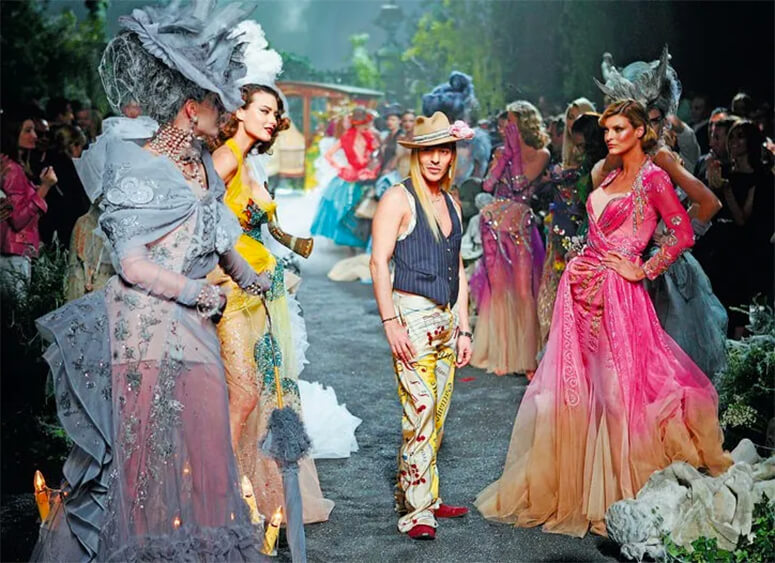
He was the great romantic fabulist of fashion, a designer who could turn a runway into a theater, and a collection into an entire world. His shows for Dior became legendary for their extravagance, their historical references, their characters, and their visual delirium. He understood that fashion could be fantasy on a grand scale, and he had the technical ability to make that fantasy wearable. Even people who had no particular interest in haute couture knew his name.
Then, in 2011, came the video. Galliano was filmed in a Paris bar making antisemitic and racist remarks, declaring his love for Hitler. The fallout was immediate. Dior fired him, a French court convicted him of hate speech, and his career effectively collapsed. What followed was a long period of public rehabilitation, with Galliano staying sober, speaking about addiction, meeting Jewish leaders, and confronting the consequences of what he had said.
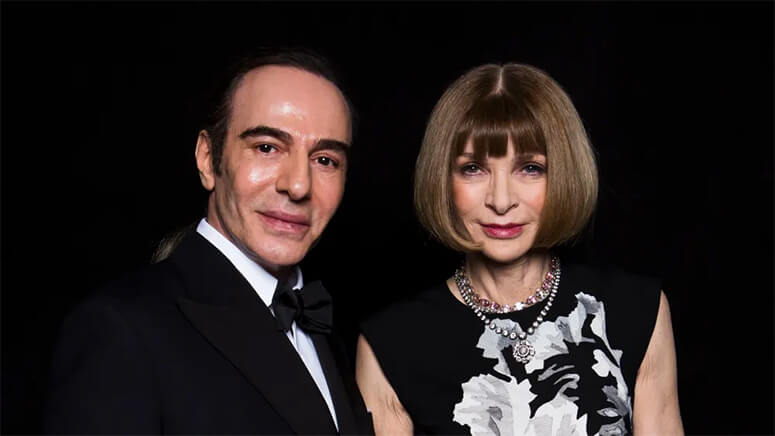
The fashion industry eventually began making room for him again. Anna Wintour played an important role in that return, supporting his appointment as creative director of Maison Margiela in 2014 after helping him secure a stint with Oscar de la Renta the year before. I remember how strange that comeback seemed at the time, although strange is probably the wrong word for fashion. Fashion always makes room for ideas, trends, and people it still wants.
CONTINUE READING BELOW

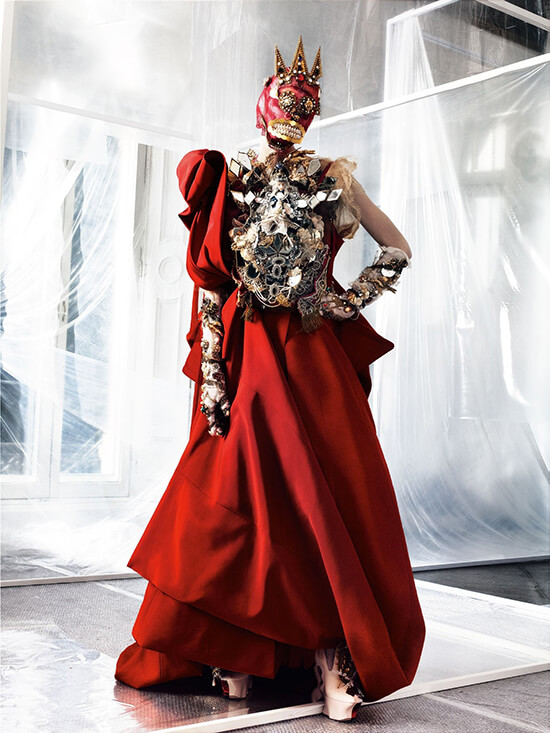
The clothes made Galliano’s return harder to argue with. His work at Margiela was frequently brilliant, demonstrating the same extraordinary understanding of construction, history, and silhouette that had made his earlier career so formidable. Critics celebrated it, designers admired it, and a younger generation began studying a body of work that had already become part of fashion history.
That is where the story becomes uncomfortable, because there is no convenient way to dismiss the talent. Had Galliano been mediocre, the story might have ended in 2011. Instead, he came back and reminded the fashion world why it had fallen in love with him in the first place.
By 2026, his rehabilitation had reached a point that would have seemed inconceivable in the aftermath of the scandal. The Metropolitan Museum of Art announced that its Costume Institute would devote its spring 2027 exhibition to him. “John Galliano: Horizons” was to span four decades of his work, with the museum explicitly presenting the exhibition as an inquiry into “how aesthetic achievement, ethical accountability, and institutional recognition intersect.” The Met knew exactly whose history it was putting on display.
Before the announcement, Wintour, curator Andrew Bolton, and Galliano met with Jewish leaders. Some came away convinced of his remorse, while others remained deeply uncomfortable with giving his work the platform of a major museum exhibition. The controversy intensified when people noticed that the exhibition opening was scheduled for May 3, Holocaust Remembrance Day. Local politicians objected, civic leaders spoke out, and prominent donors threatened to reconsider future gifts to the Met.
That last part is what caught my attention. The Costume Institute depends on the Met Gala to fund its activities, which makes the gala much more than the glittering party that appears on Instagram the morning after. Diana Vreeland helped establish fashion as a serious subject at the Met through exhibitions of extraordinary theatricality, including her landmark 1983 Yves Saint Laurent retrospective. Under Wintour, that cultural ambition grew alongside a fundraising machine of astonishing scale. The Met Gala became a global event, a social currency, and the financial engine behind the Costume Institute’s work.
This is where the Galliano story becomes bigger than Galliano. The Met had made its intellectual case for showing his work, believing his ethical failures could be examined as part of his history. Once patrons threatened their financial support, the question acquired an economic dimension that no curatorial statement could resolve. Galliano and the Met eventually decided together that the exhibition should not proceed, with Wintour calling his withdrawal “courageous.”
I find the whole affair more revealing than the exhausted argument over cancel culture because Galliano had already survived cancellation. He had been fired, disgraced, rehabilitated, rehired, and celebrated. The Met did not discover his past when the criticism began. It knew his past when it invited him in. What changed was the pressure surrounding the invitation, and money made that pressure impossible for the institution to ignore.
There is something familiar about this to anyone who has spent enough time around fashion, media, society, or politics. We are constantly participating in the making and remaking of reputations. We interview people, photograph them, publish them, invite them to dinner, sit beside them at parties, and sometimes watch yesterday’s scandal become tomorrow’s comeback. The machinery is so ordinary that we rarely stop to look closely at it.
In the Philippines, disgrace can be easy to outlive, particularly when the person involved has something that other people need. The clowns return, the corrupt return, and even the convicted can return to politics with campaign posters, motorcades, allies, and speeches about public service. We call it forgiveness because that sounds generous, when it is often simply the practical decision to keep doing business with someone whose past has become inconvenient.
The story presents a harder question than a debate about whether one designer deserves to be forgiven. His talent is beyond serious dispute, and his work toward redemption appears genuine. A museum operates on another level. It decides what deserves to be preserved, studied, and presented to the public as cultural history. Galliano’s contribution to fashion is too significant to erase, but an exhibition of this scale would also have given the Met’s authority to his rehabilitation.
His place in fashion history is secure. His clothes will remain in archives and museums, and designers will continue to study them. What the cancellation exposed was the point at which cultural judgment, institutional authority, and financial dependence became impossible to separate.
For me, that is the real trouble with John Galliano. Fashion has already remembered him. The harder question is what happens when an institution decides to remember someone publicly, with all the prestige and money that decision carries, and discovers that the people who sustain the institution have their own memory too.

WATCH: Discovering Vietnam in three days
June 9, 2026
WATCH: Can we talk about death and grief? (Generations Ep. 25)
October 14, 2026
WATCH: Is OPM still as good as it used to be? (Generations Ep. 20)
September 9, 2026