

Michelline Syjuco and the strange afterlives of things
To call objects lifeless is to strip away the stories they carry. A key remembers what it has opened. A bullet recalls the rush of its brief, furious flight. A chandelier crystal once caught light in somebody else’s house. Even rust, that great vandalizer of metal, is a kind of biography. Marcel Proust once wrote about the past being hidden somewhere in some material object we hardly suspect.
Michelline Syjuco—artist, jewelry-maker, and finder of lost things—knows this. Her studio is populated by things that have already lived at least once: religious fragments, discarded iron, cabinet knobs, chains, bones, bullet casings, bits of machinery. She takes them apart and gives them new existences. Angels are relieved of their wings, which reappear on brass cockroaches. Scrap metal becomes a cross, and debris becomes ornament. The beautiful and the repellent suddenly find themselves admitted to the same stylishly motley crew.
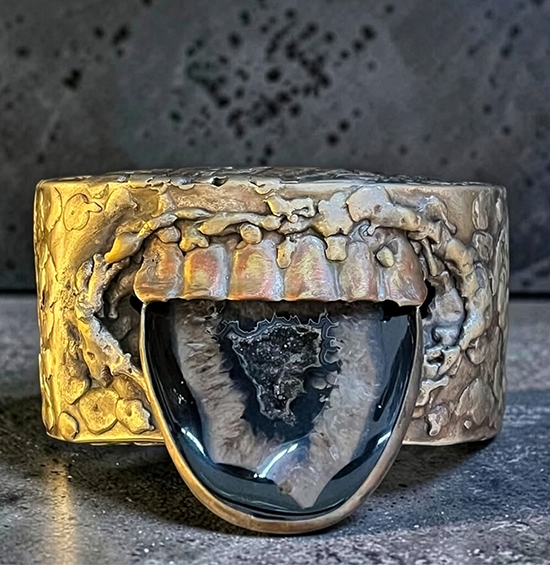
Michelline talks about the origins of her latest exhibition, “Return of the Savant-Garde,” on view starting Sept. 12 at Aphro, The Alley at Karrivin Plaza. Here, she elaborates further on her shapeshifting aesthetic, drawing on the logic of the agimat and anting-anting: those wonderfully unruly Philippine objects in which Catholic saints, indigenous cosmologies, folk magic and personal faith can occupy the same space, each carrying the mass of belief.
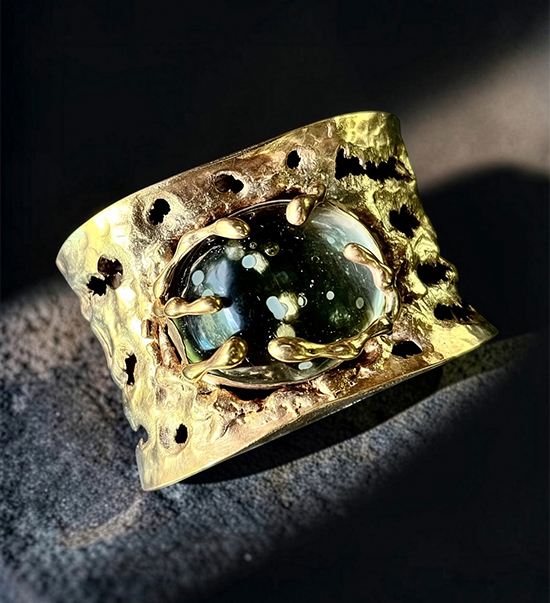
The Manananggal, Bungisngis and Naga stalk Syjuco’s work alongside crucifixes and industrial remains.
CONTINUE READING BELOW

“I’ve always been drawn to fantastical worlds, creatures and mythical beings—to stories passed on from one generation to the next. I believe it speaks to our history as a people as well as shared values and way of life. It’s not just the imagery that speaks to me, but rather its origins.”
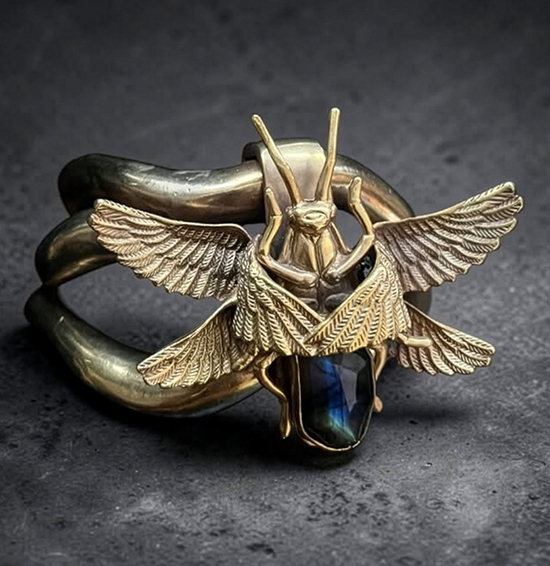
As evidenced by Syjuco’s wearable assemblage, nothing stays in its assigned lane for long. Meaning, like matter, is something that can be cut up, welded together and made weirdly wonderful. That could be her slogan: make artifacts strange again.
“Ever since I was a child, I would find myself dissecting objects in my mind,” Syjuco says. “Instead of seeing what it is, I like to imagine what it could be.”
That sentence could serve as her manifesto of sorts. Most of us are trained to identify things correctly. Chair. Spoon. Camera. TV. Saint. Cockroach. The artist seems more interested in the moment after identification, when the mind starts asking the more seductive question: What else could it become?
Her search for materials accordingly takes place wherever objects have fallen out of function. Junkyards, scrap yards, flea markets; trips to Paete, Pampanga and Bulacan; as well as online sellers in the provinces offering animal bones, remnants of demolished houses and inherited oddities. Their monetary value may be negligible, but their strangeness is priceless. “I’m a collector of things that carry history,” she says. “I have tons of old keys, chains, antique chandelier crystals, cabinet knobs, metal fixtures, bullet casings.” (She must have a cabinet of oddities in a lab somewhere.)
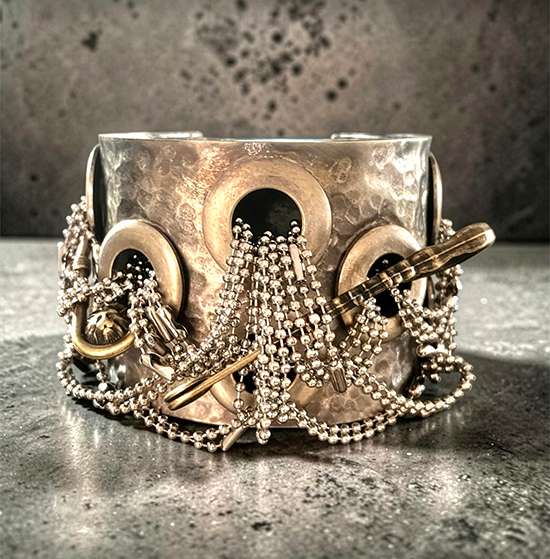
Once, she discovered piles of antique railway tracks made from Narra, Ipil, Molave and Kamagong. They became the basis of an entire collection. The material mattered, but so did the knowledge that these pieces of wood had already carried weight, distance and time.
“The fact that they had so much history,” she says, “made the whole body of work all the more meaningful.”
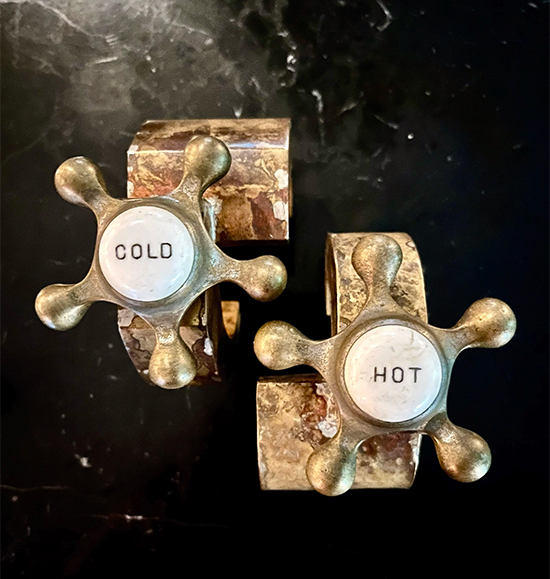
Another object found her during a nightly walk: a large rusted metal sheet, hand-hammered with elaborate designs, abandoned in an empty lot. Somebody had presumably looked at the rust and seen a dead end; Syjuco saw its inner light. The following day, she borrowed a pickup truck, hauled the sheet home and sprayed it with acid “to corrode it even further and enhance the rusty finish.”
Instead of reversing decay, she intensified it. What might ordinarily diminish an object’s value becomes precisely what gives it visual and conceptual force. It would later be featured in her “Manton De Manila” exhibition at the Yuchengco Museum and form part of work nominated for an Ateneo Art Award.
Here lies the central contradiction of Syjuco’s practice: enhancement by way of deterioration. How detail blooms from damage. How the discarded can become desirable precisely because it has already been discarded. To call it “recycling” or “upcycling” is just seeing half of the enchilada.
“I cannibalize and reconstruct found materials,” she says, “welding disparate elements together to produce new forms.”
“Cannibalize” is apt. These objects survive by, uh, entering other objects. Rather than disappearing or fragmenting away, a fragment joins a totally new anatomy. Like alchemy but with a delicate, skillful hand wielding a welder’s gun. Syjuco insists that their earlier histories remain present, just mixed and matched with other histories. “They are merely being assimilated into a bigger body of work that perhaps now has a collective meaning.”
This is why the transformations work best when recognition is never completely lost. We must still know the angel wing is an angel wing when we find it attached to the cockroach. Otherwise there is no shock, no little crisis of classification. The eye recognizes one thing while the mind is being forced to negotiate another.
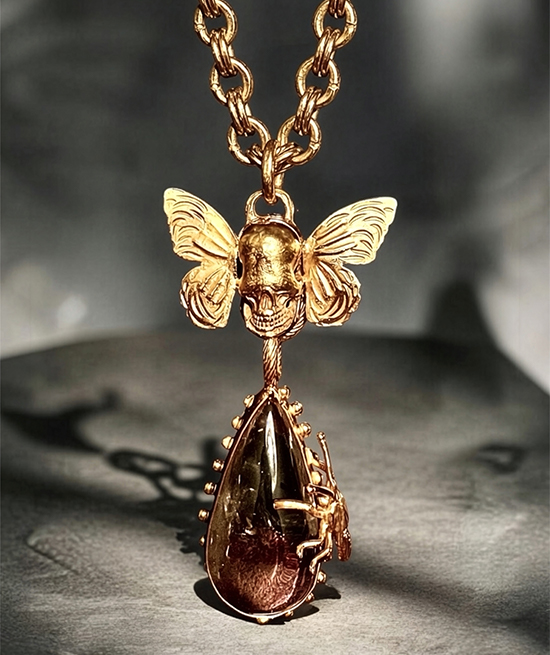
You then wear it as a necklace and the context totally mutates—dramatically.
Syjuco wants viewers to move beyond what she calls “pre-programmed imagery and meanings” and interpret the work through “their own memories, background and histories.” The resulting objects become intellectual triggers. Tabula rasa crafted from found objects. And they are wearable, absolutely.
She hopes that those who will view her latest collection at Aphro “take away a newfound appreciation for human creativity.” She reiterates, “(There is) the power to transform one thing into something else entirely. The power to assign meanings to different things. The idea that nothing is permanent. We are programmed to see things a certain way, but there are infinite possibilities if only we choose to question our reality. Transformation is a never-ending process, and every stage is beautiful in itself.”
Talismanic words, I must say. And then there are the talismans themselves.
“I am fascinated by the fact that they carry so many disparate ideologies, and yet all of these things co-exist in a singular object. If we believe they have power, they do. And that’s all that matters.”
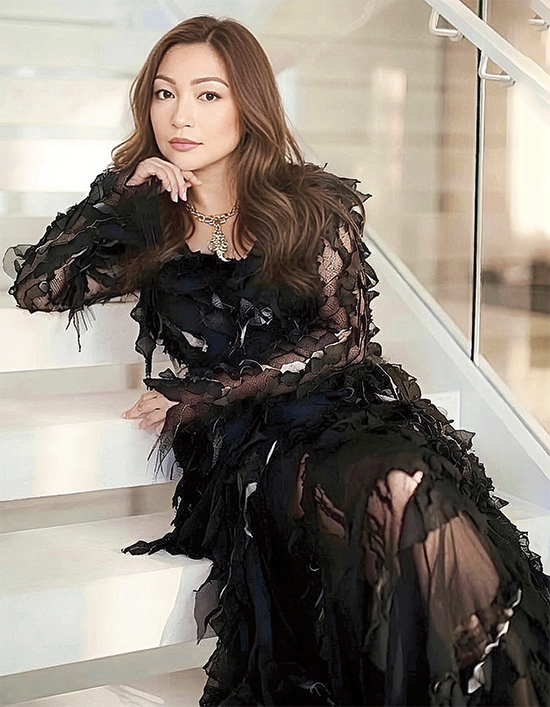
“Ever since I was a child, I would find myself dissecting objects in my mind,” Michelline Syjuco says. “Instead of seeing what it is, I like to imagine what it could be.” Photos by Elian Adrada & Ivan Ishii of The Arc & Fin Collective
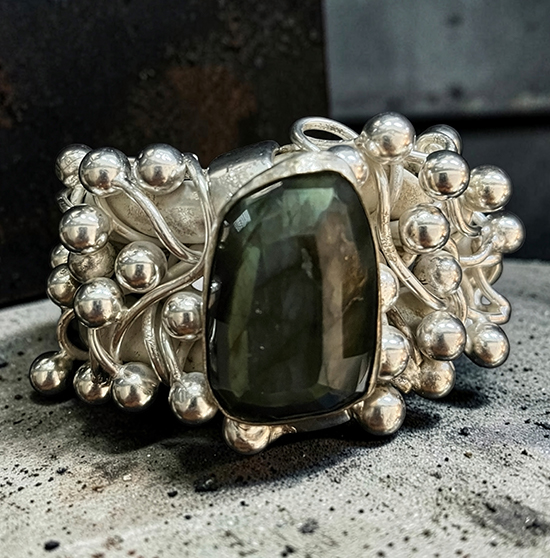
Hand-sculpted and manipulated silver cuff set with a labradorite stone. Photos by Elian Adrada & Ivan Ishii of The Arc & Fin Collective
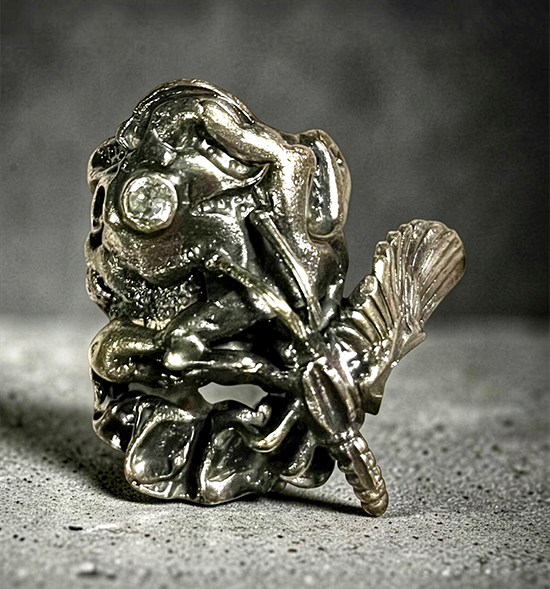
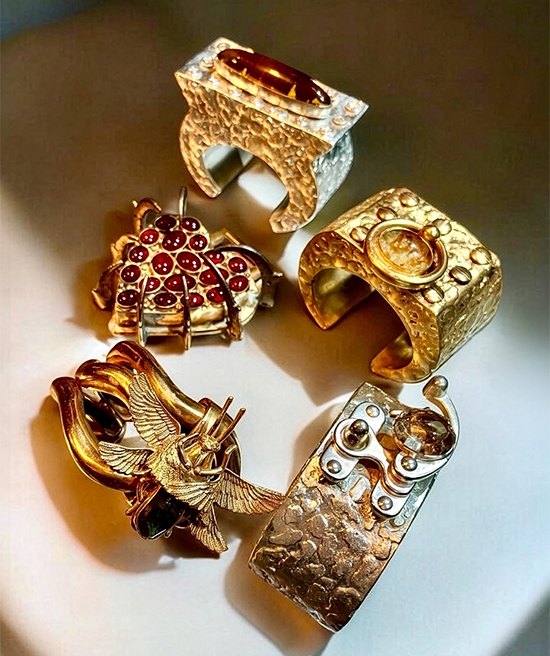
Hand-sculpted and hand-torched ring featuring a cannibalized single- winged insect, finished in oxidized silver. Photos by Elian Adrada & Ivan Ishii of The Arc & Fin Collective
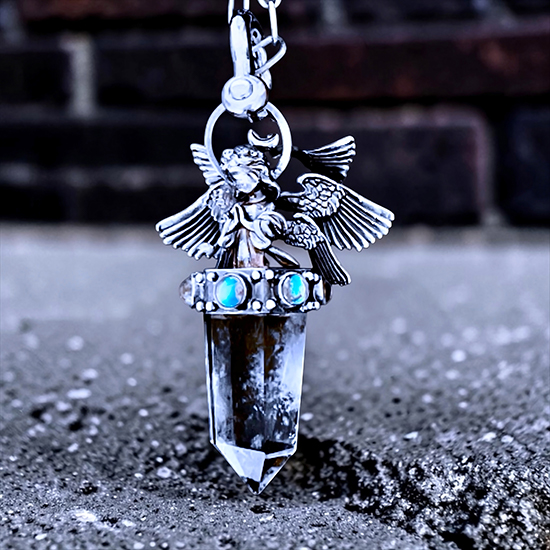
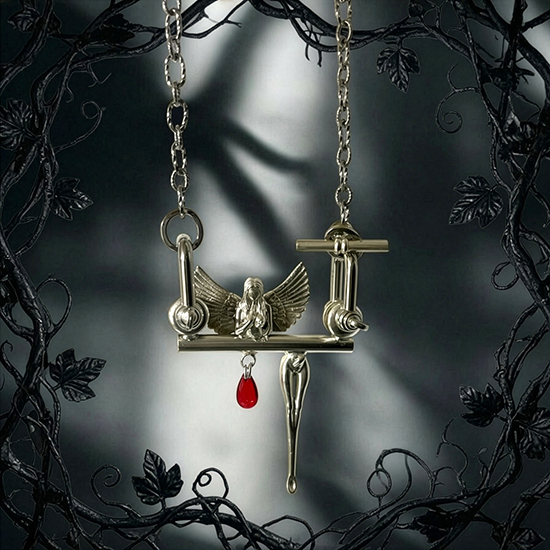
Hand-sculpted crystal pendant featuring a cannibalized and manipulated angel as its focal point, finished in oxidized silver. Photos by Elian Adrada & Ivan Ishii of The Arc & Fin Collective
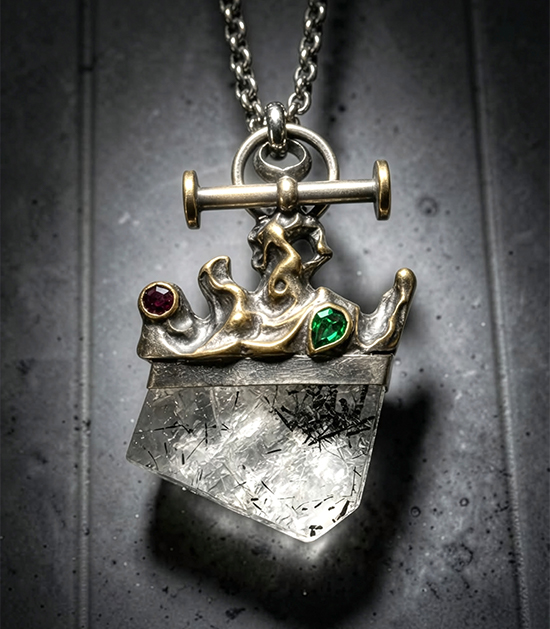
Hand-sculpted neckpiece in oxidized and distressed silver, set with rutilated quartz. Photos by Elian Adrada & Ivan Ishii of The Arc & Fin Collective
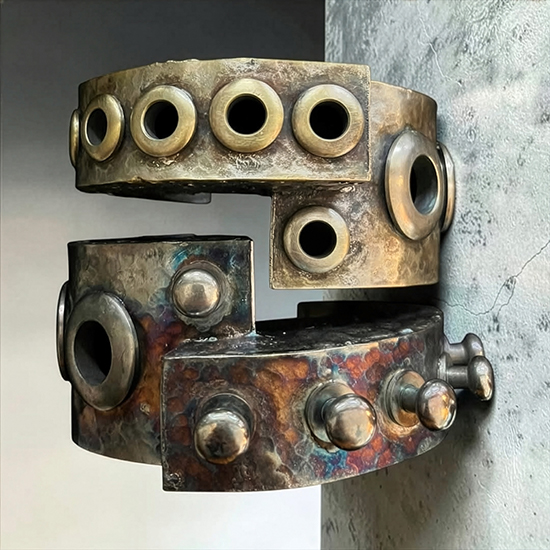
Chunky hand-sculpted modular cuffs finished in oxidized silver and bronze. The pieces interlock when worn together. Photos by Elian Adrada & Ivan Ishii of The Arc & Fin Collective
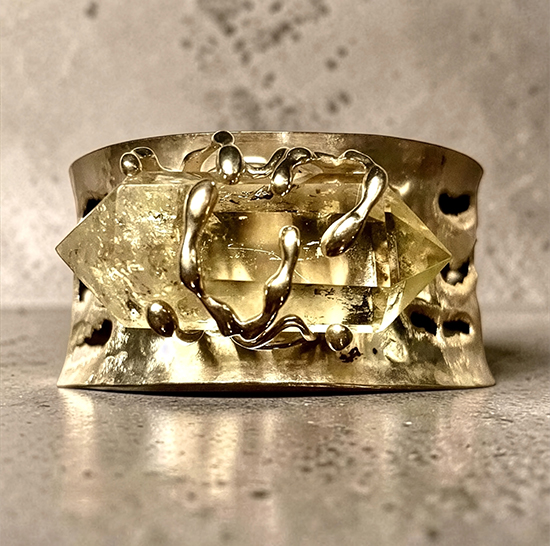
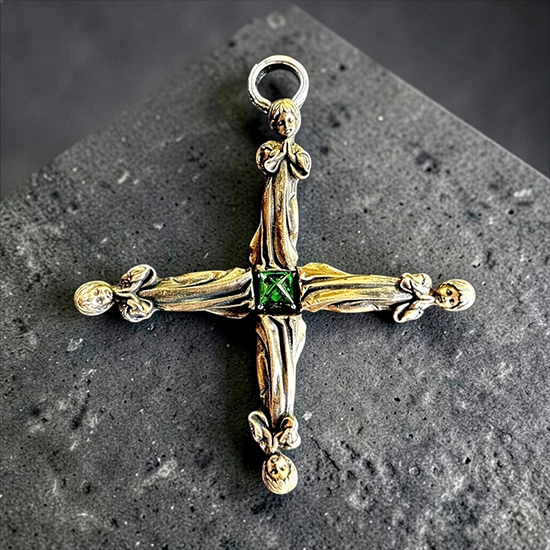
Hand-sculpted and cannibalized pendant finished in gold and set with a quartz crystal. Photos by Elian Adrada & Ivan Ishii of The Arc & Fin Collective
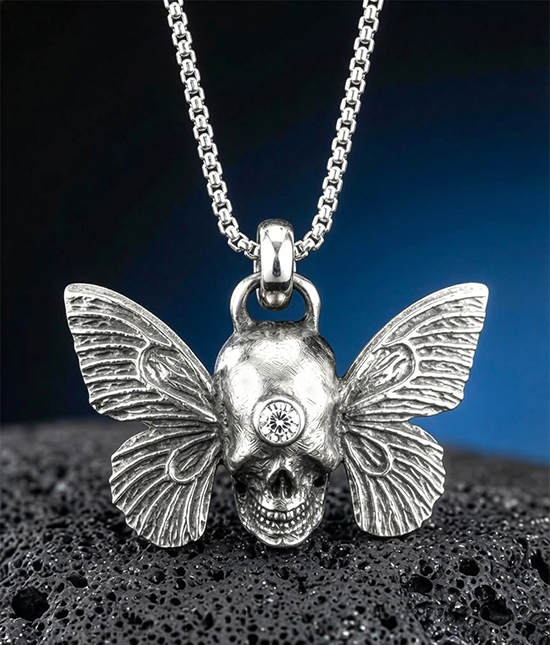
Hand-sculpted skull pendant with cannibalized butterfly wings, finished in oxidized silver. Photos by Elian Adrada & Ivan Ishii of The Arc & Fin Collective
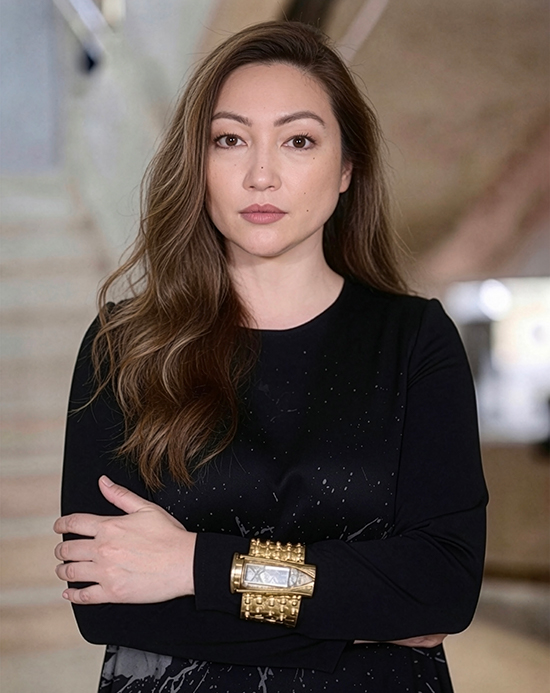
Avant guardian: Michelline Syjuco explains, “I like to believe that even when using disparate objects in my work, I am still keeping the histories of these objects intact. They are merely being assimilated into a bigger body of work that perhaps now has a collective meaning. But every piece having a history of its own, is what makes the whole more meaningful.” Photos by Elian Adrada & Ivan Ishii of The Arc & Fin Collective

Michelline Syjuco with muses — legendary actor Ronnie Lazaro and his son, musician-actor Gabriel Lazaro. Photos by Elian Adrada & Ivan Ishii of The Arc & Fin Collective
“Ever since I was a child, I would find myself dissecting objects in my mind,” Michelline Syjuco says. “Instead of seeing what it is, I like to imagine what it could be.” Photos by Elian Adrada & Ivan Ishii of The Arc & Fin Collective
Hand-sculpted and manipulated silver cuff set with a labradorite stone. Photos by Elian Adrada & Ivan Ishii of The Arc & Fin Collective
Hand-sculpted and hand-torched ring featuring a cannibalized single- winged insect, finished in oxidized silver. Photos by Elian Adrada & Ivan Ishii of The Arc & Fin Collective
Hand-sculpted crystal pendant featuring a cannibalized and manipulated angel as its focal point, finished in oxidized silver. Photos by Elian Adrada & Ivan Ishii of The Arc & Fin Collective
Hand-sculpted neckpiece in oxidized and distressed silver, set with rutilated quartz. Photos by Elian Adrada & Ivan Ishii of The Arc & Fin Collective
Chunky hand-sculpted modular cuffs finished in oxidized silver and bronze. The pieces interlock when worn together. Photos by Elian Adrada & Ivan Ishii of The Arc & Fin Collective
Hand-sculpted and cannibalized pendant finished in gold and set with a quartz crystal. Photos by Elian Adrada & Ivan Ishii of The Arc & Fin Collective
Hand-sculpted skull pendant with cannibalized butterfly wings, finished in oxidized silver. Photos by Elian Adrada & Ivan Ishii of The Arc & Fin Collective
Avant guardian: Michelline Syjuco explains, “I like to believe that even when using disparate objects in my work, I am still keeping the histories of these objects intact. They are merely being assimilated into a bigger body of work that perhaps now has a collective meaning. But every piece having a history of its own, is what makes the whole more meaningful.” Photos by Elian Adrada & Ivan Ishii of The Arc & Fin Collective
Michelline Syjuco with muses — legendary actor Ronnie Lazaro and his son, musician-actor Gabriel Lazaro. Photos by Elian Adrada & Ivan Ishii of The Arc & Fin Collective
CLOSE
The artist concludes by recalling a story her mother—avant-garde artist Jean Marie Syjuco—tells about Michelline as a toddler learning how to walk. Without holding onto something, she would tumble to the ground. Give her a favorite toy, however, and suddenly she could walk.
“It’s not that the object itself had power,” says Michelline. “It’s that I assigned it with that power.”
“Return of the Savant-Garde”—a fully immersive art experience that opens on Sept. 12 at Aphro, The Alley at Karrivin Plaza, 2316 Chino Roces Ave. Ext., Makati City—is curated by Al Sibal. The wearable art pieces will be accompanied by life-sized sculptural forms inspired by creatures of Philippine folklore. Model portraits featuring the artist’s muses—legendary actor Ronnie Lazaro and his son, musician-actor Gabriel Lazaro —will also be showcased alongside the art installation. The musical soundscape of the exhibition is by Award-winning Chicago-based composer, AG Syjuco (Black Leather Birds).

WATCH: Do you still believe in marriage? (Generations Ep. 17)
August 19, 2026