

Rajo Laurel, Lahi, and the long journey
I met Rajo Laurel when he was just starting out, when his atelier was a modest walk-up in Población, Makati. No signage to speak of. Just stairs, fabric, paper patterns taped to the walls, and a young creative already serious about his craft. That was before the stages, before the weight of reputation.
Those were also the years when Margie and I still dressed for events in earnest. Rajo made many of her early pieces—clean, thoughtful clothes that traveled easily from formal functions to quieter dinners. (When she puts one on, we say “vintage Laurel” in jest) Even then, he understood that garments had to work beyond sketches. They had to survive real life.

And then there was me.
At that time, I weighed 360 pounds. Most designers, faced with that reality, become cautious or formulaic. Rajo did not. He approached my body as a design problem worth solving. He built me linen tops that moved with heat and gravity. He gave me drawstring pants that provided comfort without sacrificing structure. He never disguised my size. He respected it. That early experience told me everything I needed to know about his design values: he designs for real people, not imaginary bodies.
That sensibility remains his anchor to this day.
A career built on process, not noise
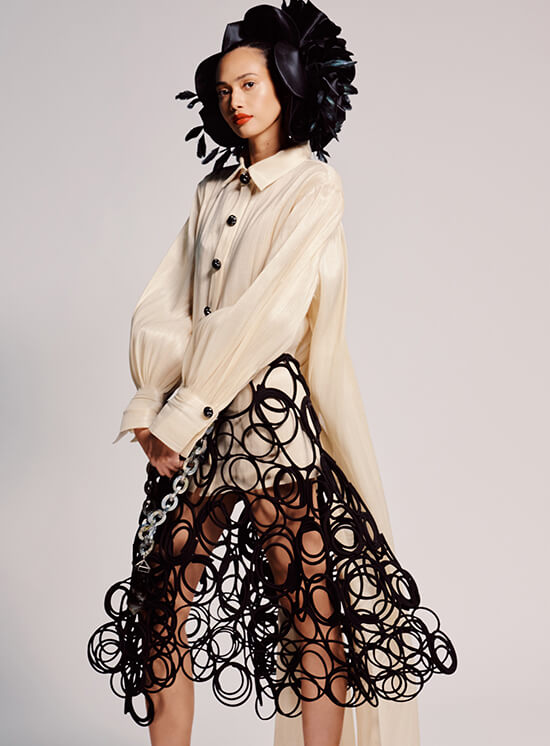
Rajo’s career did not arrive in dramatic leaps. It unfolded through long seasons of work—couture, fittings, experimentation, retreat, and return. Starting young, he crossed multiple eras in Philippine fashion: from the intimacy of atelier culture, through the spectacle of fashion weeks, Metro Wears, through the quieter years when attention thinned, and now into this new age of speed and visibility.
CONTINUE READING BELOW

What stayed constant was his refusal to dilute craft for attention. Trends passed. Platforms changed. The work remained.
This is why Lahi does not feel like a reinvention or a pivot. It feels like accumulation.
The question behind lahi
“Who is the Filipino?”

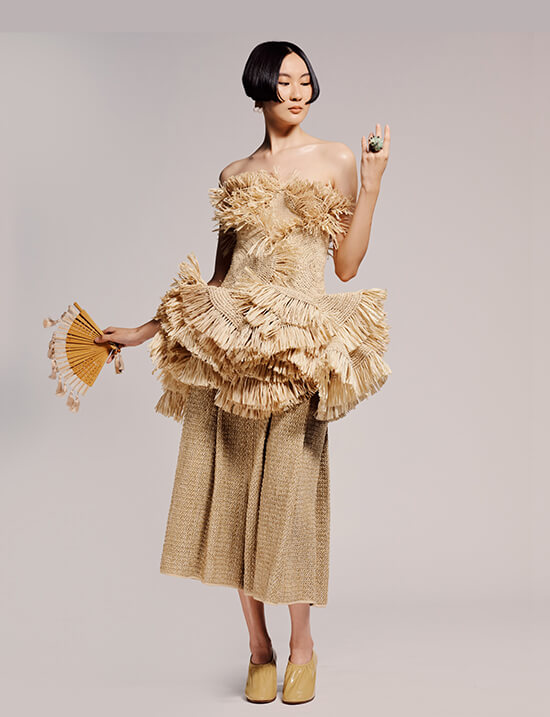
Rajo does not answer this through gimmickry. He will answer it through 30 couture-piece treatises shaped by material, region, and collaboration. Lahi, which will be presented in Bangkok this January, is his meditation on identity as something layered, regional, and constantly moving.
Bangkok is not chosen for scale alone. Southeast Asia is a shared textile region. Thailand and the Philippines speak similar languages of handwork, climate, and ornament shaped by labor. Presenting Lahi there places the work in conversation rather than an export display.
Before the Bangkok presentation, seven looks were previewed at Manila House. A setting he says needs no introduction, and presents the stage for his de file. The seven exits offered a concise view of the collection’s direction.
The collaborators as co-architects
What strengthens Lahi is the way Rajo works with his collaborators—not as suppliers, but as active interpreters of his vision.
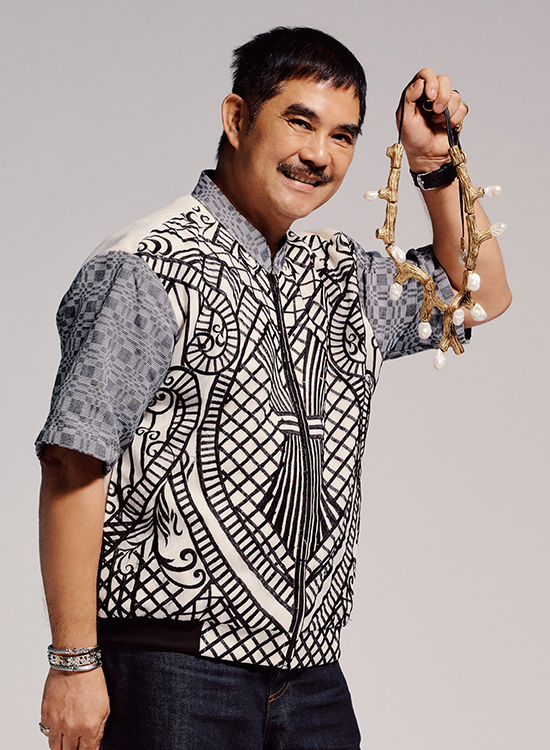
Arnel Papa, jewelry designer, brings weight and punctuation to the collection. His pieces are not mere ornaments. They function as structural accents—objects that anchor the garments and give them gravity. His work understands scale, intimacy, and how metal converses with a moving body.

Celestina Maristela Ocampo, model and fashion icon, brings the lived intelligence of style to Lahi. She is not present merely to wear the clothes, but to inhabit them. Tina carries decades of fashion memory in her posture alone. She understands how garments enter rooms, how they hold silence, how they take light. In this collection, she translates couture into lived presence. This knowledge is transposed to the unique items she creates to complete the looks in the show.
Cholo Ayuyao, costume designer and creator of the headpieces, shapes the collection’s upper register. His headpieces supply rank, ritual, and clarity of presence without tipping the looks into costume. They act as markers of identity rather than decoration.

MX Studios by Maxine Santos Tuaño grounds the collection at floor level. Shoes determine whether couture remains theoretical or becomes fully workable. Her exaggerated designs ensure that these garments move correctly, carry weight, and withstand the discipline of the runway.
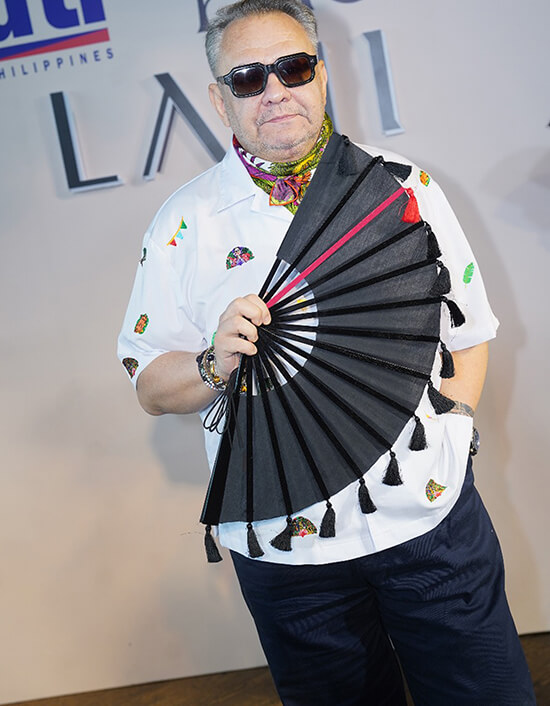
My own participation as a fan-maker is quiet but deliberate. The abanico hangs on a lanyard—an everyday object placed inside couture. The fan is one of our oldest performance tools. It belongs to daily life as much as it does to ceremony. Its presence here reinforces the collection’s grounding in lived experience.
Together, these collaborators form the working architecture of Lahi. The collection stands because many disciplines intersect within it.
What gravitas really is
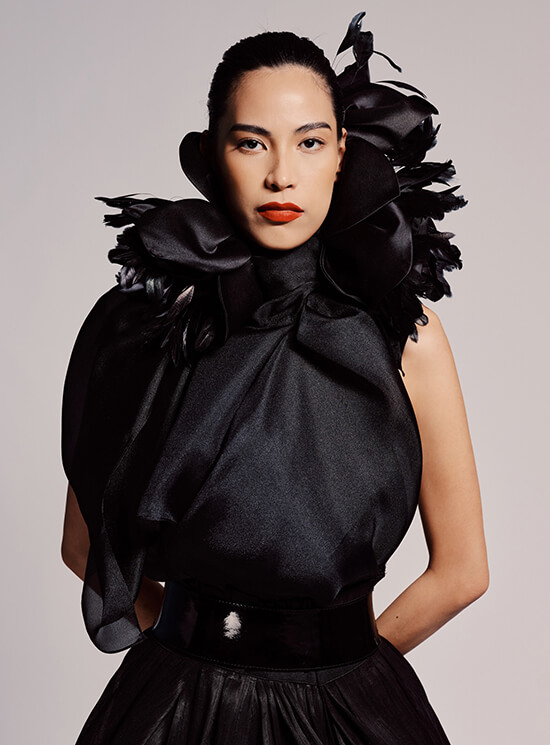
Gravitas is not about scale. It is about duration.
I have seen Rajo after shows when the audience has already moved on. He is still there—checking seams, thanking hands, handling the garments with care. In an industry that rewards visibility, he remains devoted to process and kindness. He ensured that the models were well taken care of, and the photographers, too.

He does not chase relevance.
He sustains meaning.
The long arc
From that narrow staircase in Población to a couture presentation in Bangkok, Rajo’s career has followed a steady arc. He has worked through fashion cycles rather than around them. He has allowed time to refine his language instead of forcing reinvention.
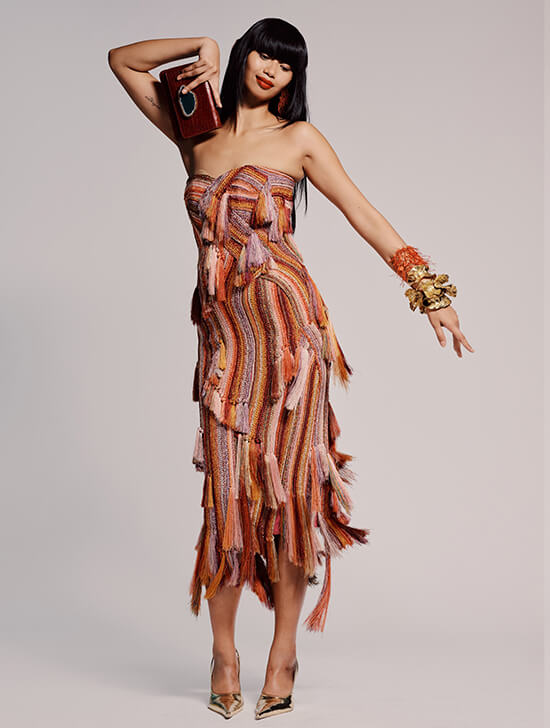
For me, this is not theoretical. I wore his work when he was still solving everyday problems at the cutting table. I experienced firsthand his attention to body and circumstance. I watched his practice expand without losing that attentiveness.
In January, international audiences will see Lahi. What they may not immediately see is the length of the road behind it.
That is where the real weight comes from.
A quiet institutional presence
Toward the edge of this moment is the support of the Department of Trade and Industry, under the banner of Malikhaing Pinoy, backing the Bangkok presentation. The presence is discreet, but historically meaningful.

For some of us (age shows), it recalls the ’70s era of Bagong Anyo, when Philippine fashion stood in public light as national expression rather than private enterprise. That earlier moment was almost perfect and idealistic, and it was brave in its intent. The people in the industry still speak of it as the gold standard of fashion excellence.
To see Lahi now traveling outward with quiet state support feels less like revival than continuity. Not a directive, but a signal of trust in what Philippine design has become.
After the runway
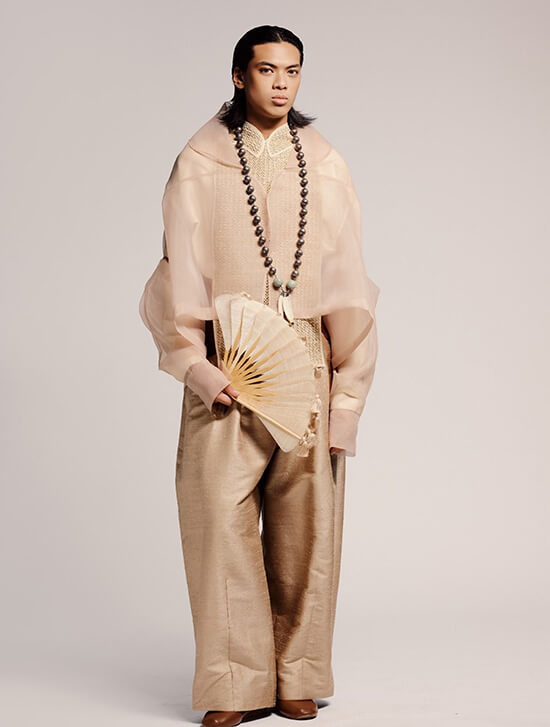
After the last look leaves the runway and Bangkok becomes another city behind us, what remains is the work itself.
A barong rethought.
An abanico used quietly.
A mestiza rewritten.
An island remembered through surface and light.
And behind all of it, a designer who began in a small walk-up atelier, solving real problems for real bodies, now posing a national question through cloth.
That, for me, is Lahi.

WATCH: Is OPM still as good as it used to be? (Generations Ep. 20)
September 9, 2026