

Mai Mai Cojuangco returns—with Demetria
There is something quietly compelling about a handbag made slowly.
It’s a rainy day in Manila, and Mai Mai, still recovering after a recent medical procedure, doesn’t really have much time to rest, with her upcoming trunk show for her bag brand Demetria a few days away. She’s determined to power through, despite feeling a little bit uncomfortable and bloated. And even with all that’s happening, the woman who everyone remembers as the It-girl in the ‘90s is as stylish as ever, in a black dress and a stack of vintage bracelets on her wrist. After her trunk show, she is set to fly back to Florence, where she has been based for the past two decades or so. An assortment of purses, bag straps, and gargantuan green boxes have taken over the dining area of her partner Marcel’s apartment. She shares that her partner is an avid art collector, and the humidifiers in the area are the perfect environment to store the bags in. It’s her first trunk show since 2022 and the first that she will be doing by herself, after previous collaborations with Rica Lorenzo’s now-defunct Idée store and Len Cabili’s Filip+Inna and Silverlens.
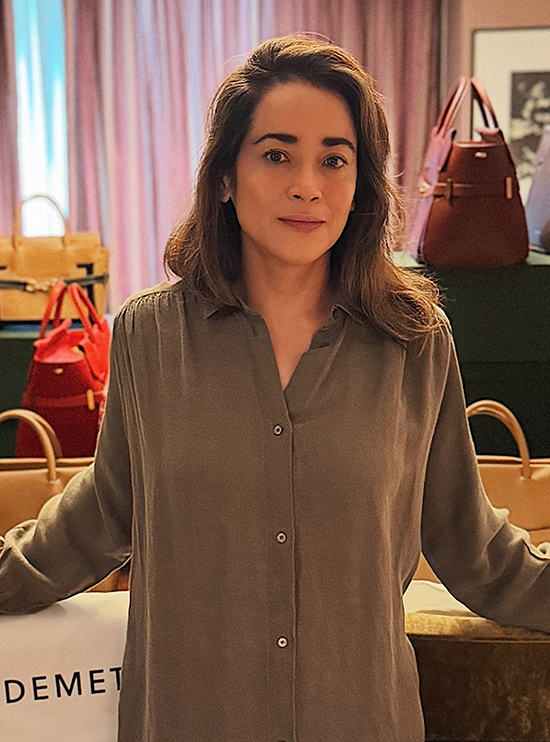
Her trunk show comes at a time when archival and reimagined handbag designs are gaining attention in the fashion industry. Designers and fashion houses have increasingly revisited recognizable styles, updating classic silhouettes with new materials, proportions, and textures.
The designer shares that while most had the impression that she took a hiatus from designing, she never really stopped. It just took her a while to be ready to introduce another “drop” (she prefers this way rather than having seasonal collections). Apart from her business partner Simona dealing with health issues, which affected the production process, taking care of her daughter Demi is her priority. As we are chatting, she pauses briefly to reply to a text message from her daughter, who is studying in Florence.
CONTINUE READING BELOW

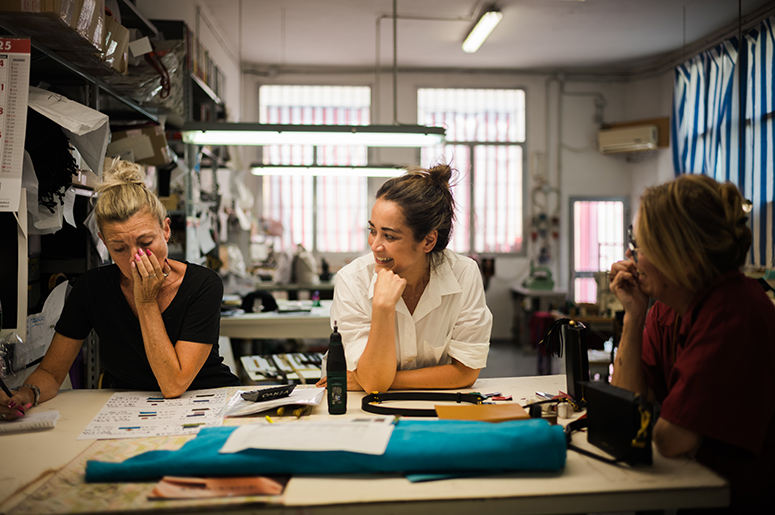
She also explains it took a long time to get her bag prototypes just right. While the decision to have a new drop was inspired by a desire to revisit her original designs while allowing them to evolve, making a scaled-down version of an existing bag design isn’t as easy as it seems. The Semprina, a smaller version of her bestseller Sempre, required three different prototypes because “it wasn’t the right height, the flaps didn’t fall right,” she shares.
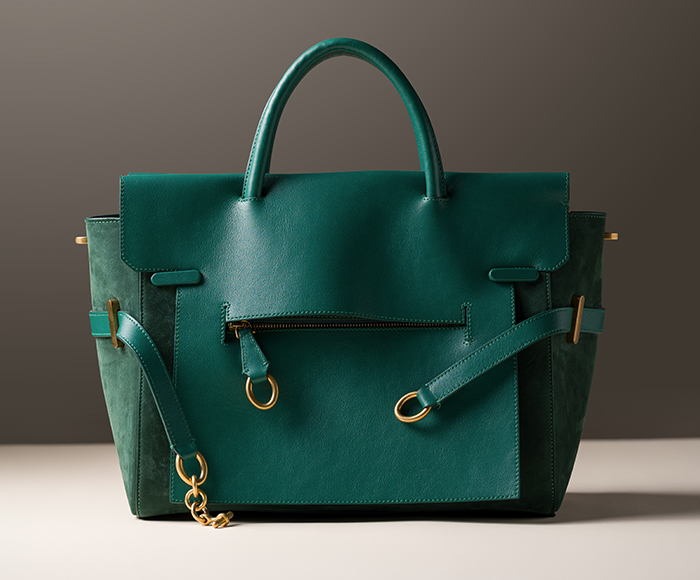
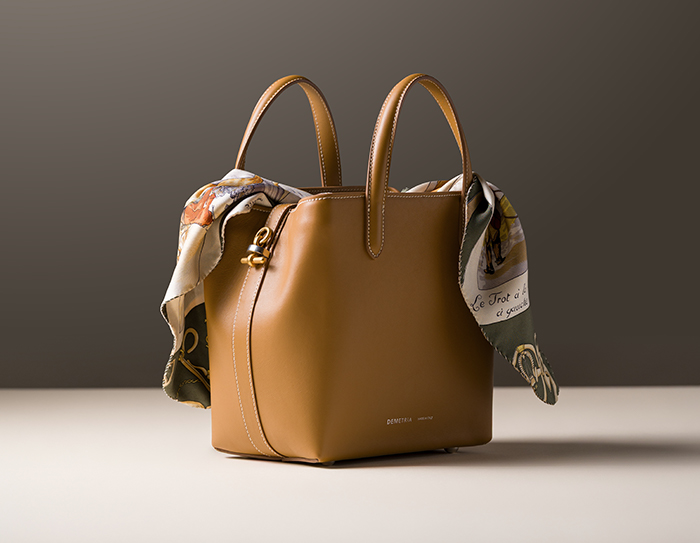
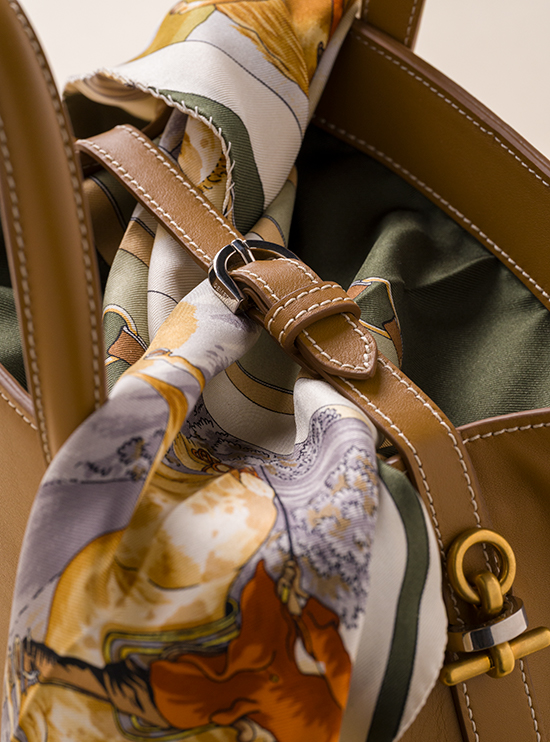
For the creative director, luxury is never about excess. It is found in the small details that may go unnoticed but make a piece feel unmistakably personal. For example, she carefully sources the vintage scarves incorporated in the lining of the line’s Bloom bags. “This print was from an Hermès vintage scarf,” she points out, referring to a burgundy bag with a matching vintage red print scarf as part of its lining, while another used a green print from Gucci, which means no bag will have the exact same foulard detailing. Some details are practically invisible—the Sempre and Semprina designs both have small metal components covered by cut pieces of leather. The brand’s newest style, the Monette, a clutch bag that can also be worn as a crossbody bag, features custom embossing with an animal-print pattern rendered by Mai Mai herself, who also dabbles in graphic design. The said clutch is a response to the requests of her clients for a small bag. It can be used alone, or can fit inside the line’s bigger bags, just like Russian matryoshka dolls. You can carry the bigger bag to work, then take out the clutch and leave the big bag on your desk or inside your car for lunch out or events.
Each of the 44 bags to be sold at her trunk show has elements designed not merely for decoration but for function and longevity, reflecting Mai Mai’s deep understanding of how handbags are constructed. That knowledge comes from years of study in Florence, where she learned bag making and worked closely with artisans. Rather than stopping at design, she trained on the mechanics of the craft itself—working with leather, understanding construction, and experiencing firsthand the knowledge and precision required to turn an idea into a finished bag. It is this hands-on philosophy that gives Demetria its character.
Similar to her philosophy of having bag “drops,” she doesn’t see herself introducing new styles every season. Once one style and color is sold, a customer will have to place an order to get the same style. Each bag can take at least six months to produce, with a small team of artisans involved in the process. This is far removed from outsourcing to factories underpaying their workers and mass production of poorly-made bags: Pieces are made with patience, intention, and an appreciation for the people behind them.
The story of Demetria is also deeply personal. The name belongs to Mai Mai herself, her grandmother, and her daughter. This calling came when she was going through her divorce a few years ago, and she wished to turn her focus to creating things. The designs are similarly rooted in memory. The Sempre (Italian for always), for instance, was inspired by Cojuangco’s experience of losing a phone containing treasured messages from a beloved uncle, leading her to visualize a spacious everyday bag with a secure zip closure.
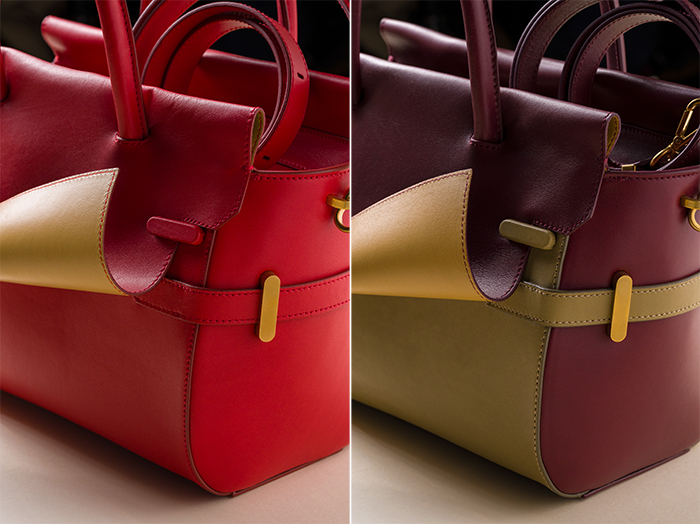
Details on a red/red and tan Semprima bag. Photos courtesy of DEMETRIA
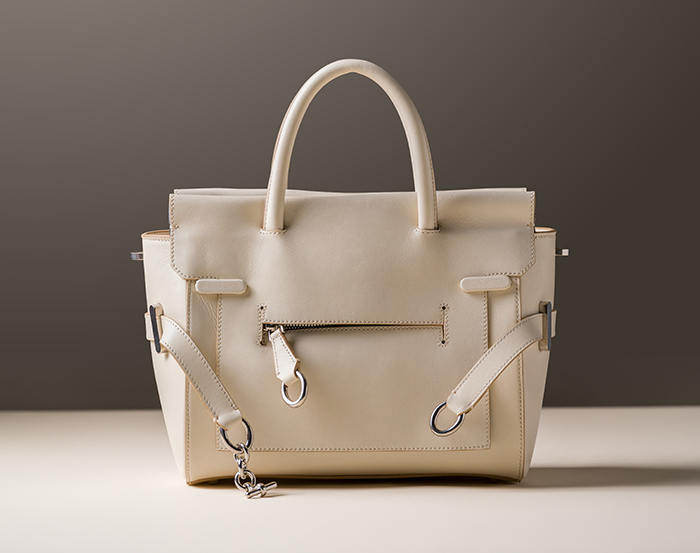
White Semprima bag. Photos courtesy of DEMETRIA
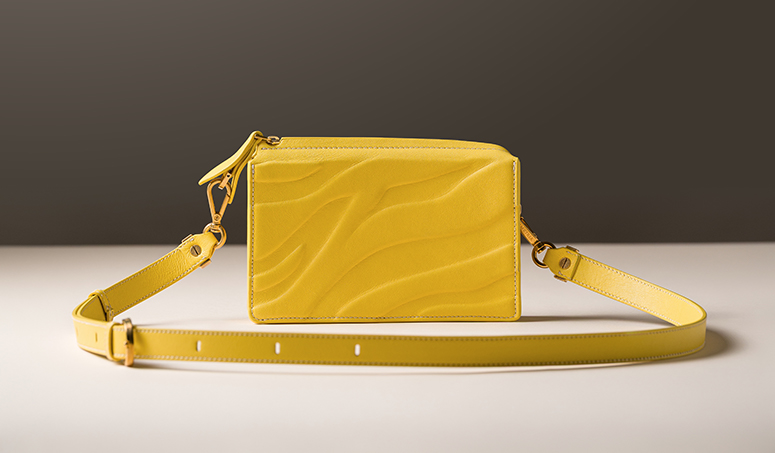
Yellow Monette clutch. Photos courtesy of DEMETRIA
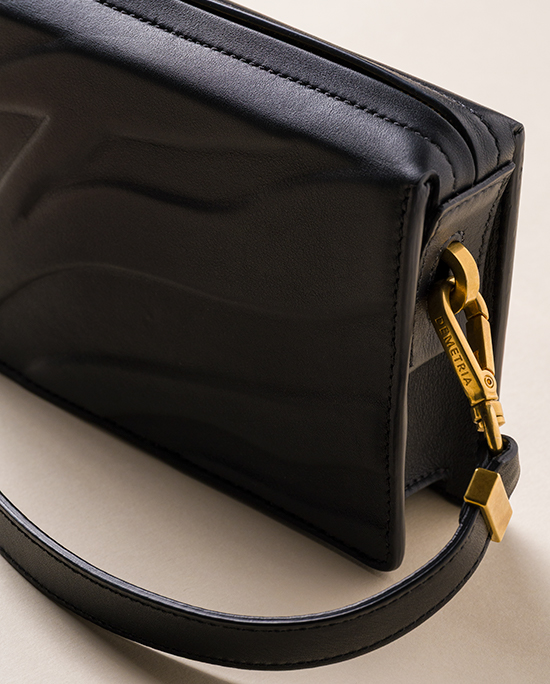
Embossed detailing on the Monette clutch. Photos courtesy of DEMETRIA
Details on a red/red and tan Semprima bag. Photos courtesy of DEMETRIA
White Semprima bag. Photos courtesy of DEMETRIA
Yellow Monette clutch. Photos courtesy of DEMETRIA
Embossed detailing on the Monette clutch. Photos courtesy of DEMETRIA
CLOSE
This latest drop arrives with the kind of confidence that Mai Mai herself feels through the years working on Demetria, that beautiful things do not need to announce their value. She wishes to scale up the business one day, but wants to be able to do so in a way that’s aligned with her brand’s values. “The lesson about this whole journey for me is that if you continue on your path and you don’t fold, eventually the right people will find you,” she adds.

WATCH: Is OPM still as good as it used to be? (Generations Ep. 20)
September 9, 2026