

Drop the beat on the wrist
Time is a stubborn fluid. We build vessels of gold, precious stones, and sapphire to contain it, to measure its flow, yet it always leaks through our fingers.
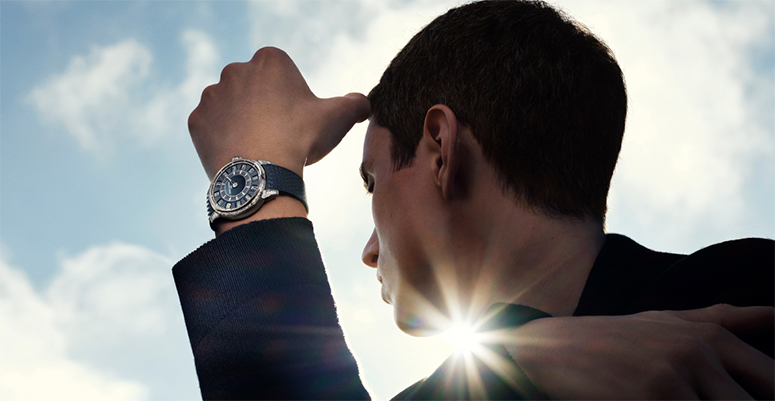
That is why we strap these machines to our wrists. We want something beautifully, unapologetically physical. In a world evaporating into digital smoke, a mechanical watch is an anchor of metal and gears, a tangible companion in our daily wanderings. It is not about tracking the hours; it is about keeping the tempo. And right now, nobody gets that tempo quite like Louis Vuitton. With the brand's high-fashion renaissance echoing across divisions, high watchmaking is no longer a dusty academic exercise. It is a high-fashion remix, a syncopated beat on the wrist where luxury, art and street-level swagger collide.
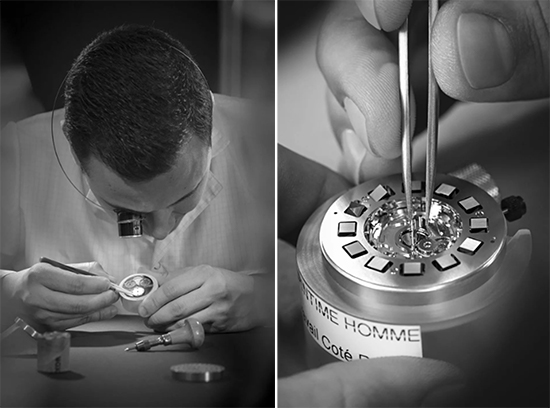
The smartphone has become our shadow. In these sleek glass rectangles, we carry the world and time, holding the past in infinite digital archives, the present in a stream of notifications, and the future in meticulous calendars. We have the universe in our pockets, yet we still feel this deep, instinctive need for a timepiece. Why? Because the smartphone is a portal of distraction, slicing our days into urgent, frantic fragments. A fine watch does the exact opposite. It does not look back at us with demands, nor does it beep with notifications. It simply invites us to look at the face of time as a singular, beautiful flow, making time an intimate companion rather than a digital taskmaster.
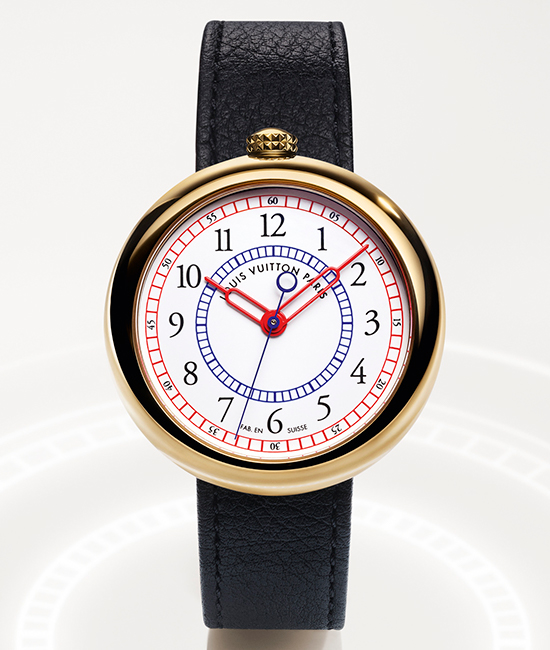
Consider how they remix the classics. The revival of the Monterey, originally designed in the late 1980s by Gae Aulenti, completely flips the script. It is a smooth pebble of yellow gold with the crown sitting proud at 12 o’clock, a deliberate nod to old-school pocket watches. Its dial is a pristine expanse of white Grand Feu enamel, requiring 24 hours of intense heat and human patience to achieve its warm, milky luster. It does not shout for attention. It simply holds your gaze with a clean, graphic layout that feels fresh and modern, thoroughly relevant.
If the Monterey is an exercise in restraint, the Tambour Moon Mystérieuse Flying Tourbillon is pure visual drama. Historically, mysterious movements made the hands look like they were floating in mid-air. Here, Louis Vuitton suspends the entire gear train vertically in a platinum frame, completely unconnected to the crown. It is a visual trick, a beautiful optical illusion where the mechanism simply floats in empty space, letting the sheer vacuum dictate the design.
That same bold spirit turns kinetic in the Vivienne creations. The Tambour Spin Time Air replaces traditional hands with 12 miniature, hand-lacquered versions of the house mascot. They spin and flip to show the hour, turning the march of the day into an elegant game. For those who prefer their luxury with a bit of mystery, the Bijou Secret Vivienne hides its face under a diamond-set flower, letting you check the hour only when you choose to engage.
CONTINUE READING BELOW

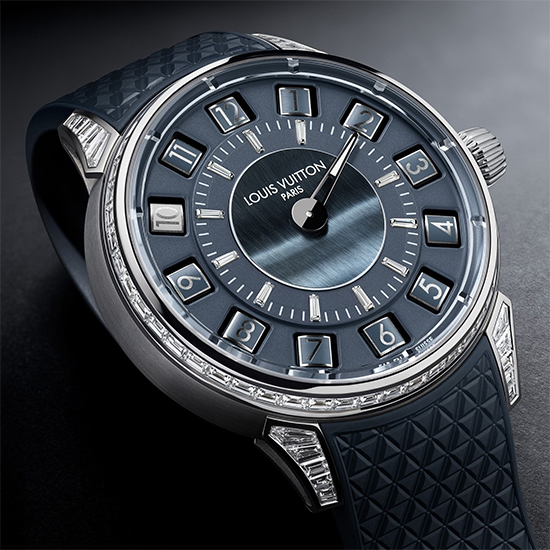
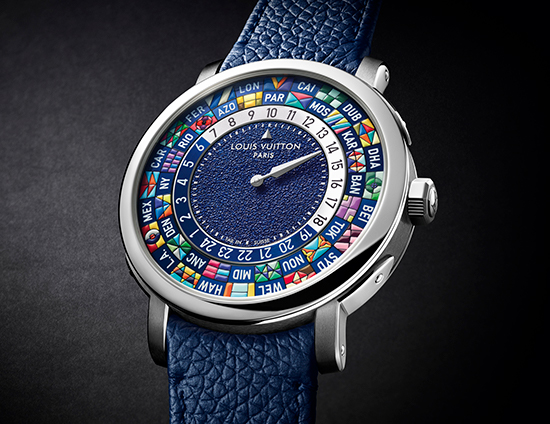
For those who live across borders, the Escale Worldtime Blue brings global style to the wrist. The dial is hand-painted with 38 vibrant colors, taking 40 hours of detail work before it is baked. Three rotating discs display 24 time zones instantly without a single hand. It is a gorgeous nod to the golden age of travel, built for someone who moves fast but still loves the craft.
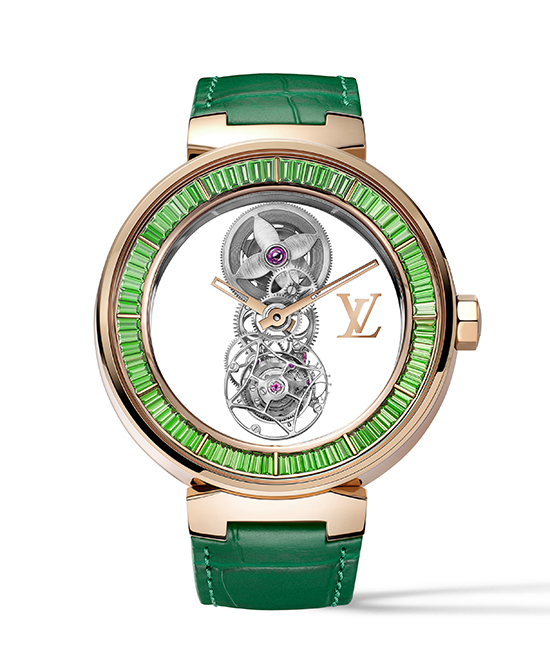
Mysterious mechanism: Encased in concave platinum on an alligator strap, the 45 mm Tambour Moon suspends its manual LV 110 movement on sapphire discs to create a captivating optical illusion backed by an eight-day power reserve.
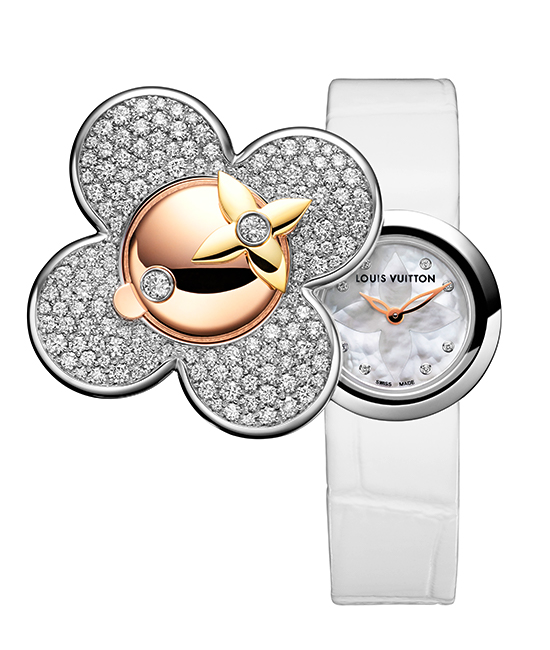
Timeless mascot: Adorned in gold and over 150 snow-set diamonds, the Vivienne Bijou Secret features a twisting flower face that reveals a mother-of- pearl marquetry dial paired with colorful alligator straps.
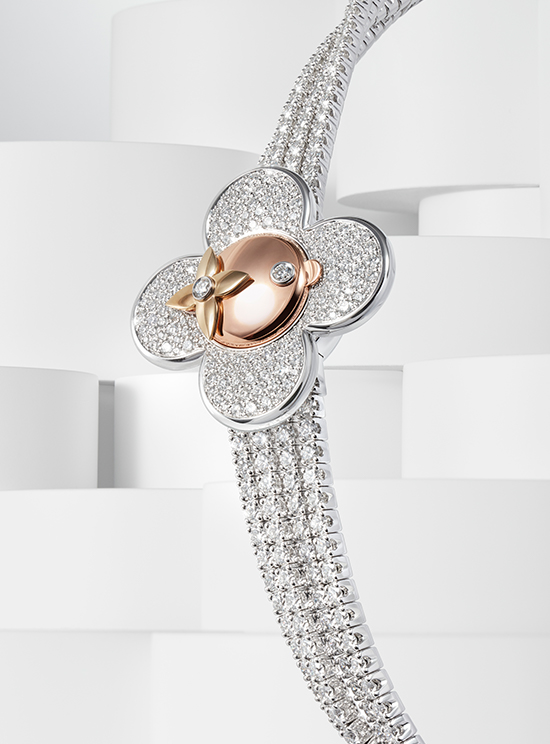
Hidden treasure: The charming Vivienne mascot dresses up in gold and diamonds for the new Bijou Secret, playing an elegant game of hide-and-seek with a movable face that twists to reveal a white gold case.
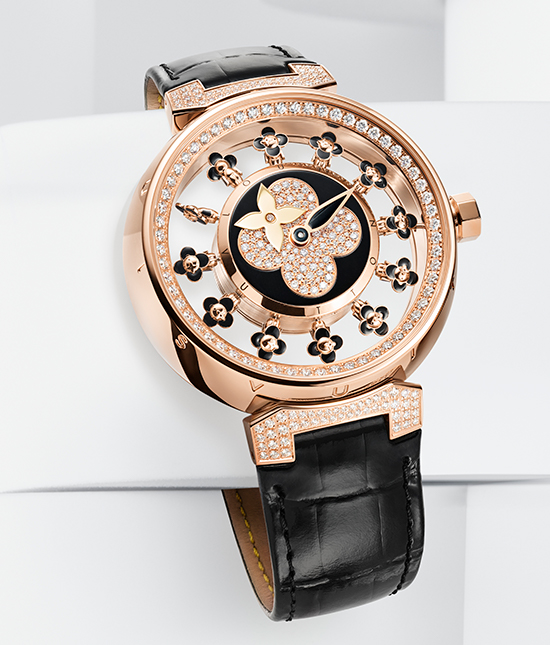
Secret in motion: The Tambour Spin Time Air Vivienne reimagines the jumping hour with 12 rotating mascots, turning the passage of time into a playful game powered by a patented mechanism.
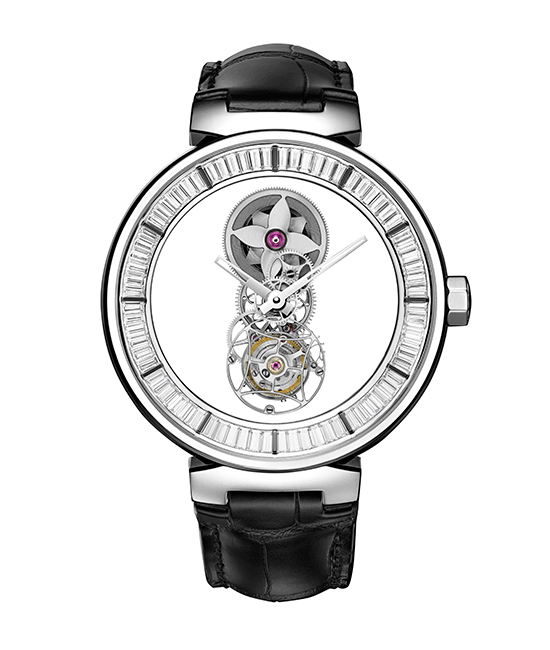
Flying illusion: Encased in concave platinum, the Tambour Moon Mystérieuse floats its manual LV 110 caliber on sapphire discs, delivering a traditional mysterious movement with an eight- day power reserve.
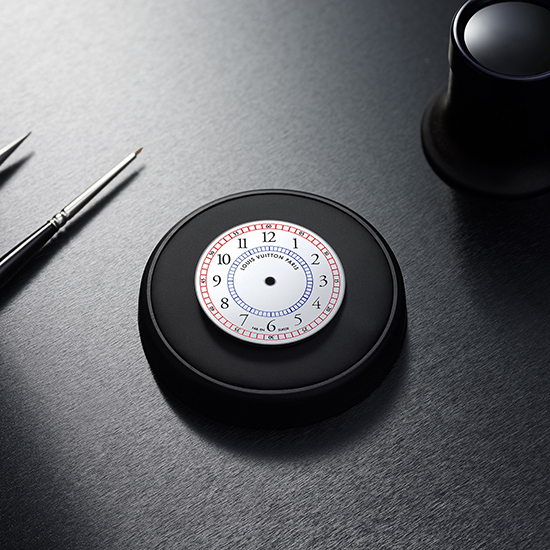
Retro enamel: The Louis Vuitton Monterey in yellow gold features a Grand Feu enamel dial with red and blue twin scales.
Mysterious mechanism: Encased in concave platinum on an alligator strap, the 45 mm Tambour Moon suspends its manual LV 110 movement on sapphire discs to create a captivating optical illusion backed by an eight-day power reserve.
Timeless mascot: Adorned in gold and over 150 snow-set diamonds, the Vivienne Bijou Secret features a twisting flower face that reveals a mother-of- pearl marquetry dial paired with colorful alligator straps.
Hidden treasure: The charming Vivienne mascot dresses up in gold and diamonds for the new Bijou Secret, playing an elegant game of hide-and-seek with a movable face that twists to reveal a white gold case.
Secret in motion: The Tambour Spin Time Air Vivienne reimagines the jumping hour with 12 rotating mascots, turning the passage of time into a playful game powered by a patented mechanism.
Flying illusion: Encased in concave platinum, the Tambour Moon Mystérieuse floats its manual LV 110 caliber on sapphire discs, delivering a traditional mysterious movement with an eight- day power reserve.
Retro enamel: The Louis Vuitton Monterey in yellow gold features a Grand Feu enamel dial with red and blue twin scales.
CLOSE
Ultimately, we do not wear these timepieces just to know the hour. Our phones tell us that with cold, digital precision. We wear them because we want the feel of slow-cooked human craft on our skin. In an increasingly virtual world, a mechanical watch is a solid, ticking anchor. These are not mere time-tellers, but wearable art, a way to keep the past, the present, and the future moving in perfect harmony right on our wrists.

WATCH: Discovering Vietnam in three days
June 9, 2026