The joyful burden of the ‘apos’tolic mission
If there’s one kind of missionary work that requires no ordination, theological degree, or foreign language proficiency, it’s what Filipino grandparents fondly call the apos’tolic mission. It’s a divinely appointed, emotionally fulfilling, and physically exhausting undertaking—one that comes with milk bottles instead of Bibles, lullabies instead of liturgies, and toddler tantrums instead of theological debates.
My wife Becky and I are currently “deployed” abroad for this sacred assignment. Our mission field? The warm, toy-strewn, occasionally chaotic home of our two grandsons—Leon, two years and eight months old, and Elliott Rafael, just two months old and already showing alarming signs of advanced intelligence (he knows exactly when to smile to disarm his weary caretakers).
We call it apos’tolic because, like the apostles, we were “sent”—not to preach though, but to help. And unlike biblical apostles who performed miracles, our miracles involve getting a toddler to nap, burp, or eat a vegetable without launching it like a projectile.
The sweet mischief of Leon, the lion
Leon is an energetic bundle of contradictions: wonderfully mischievous but irresistibly sweet. He can turn a calm morning into an Olympic event —chasing after imaginary monsters one moment, with his toy Superman in hand (to serve as back-up for his “mission”); then running into my arms the next, declaring, “Tatay, hug!”
He has discovered the infinite joy of asking why—an inquiry that begins at dawn and ends only when sleep triumphs. “Why is the sky blue, Tatay? Why does the dog say ‘woof, woof’ and the cat say ‘meow, meow’? Why is Nanay sitting down again?” (Because, my dear boy, Nanay has just done her night shift with Baby Elliott and has reached her anaerobic threshold.)
Yet for all his boundless energy, Leon has the uncanny power to melt fatigue. When he pats my face with his soft hands and whispers, “Good job, Tatay,” after I manage to assemble a Lego sports car (with his “help,” of course), I feel like I’ve just received the Nobel Prize in grandparenthood.
Doctor in training
Leon is sweet mischief wrapped in joy. He speaks like a miniature adult.
If he sees me taking my blood pressure, he immediately fetches his toy stethoscope, plants it on my chest and announces: “You’re okay, Tatay.” Followed by a loud, naughty chuckle that could revive the faint.
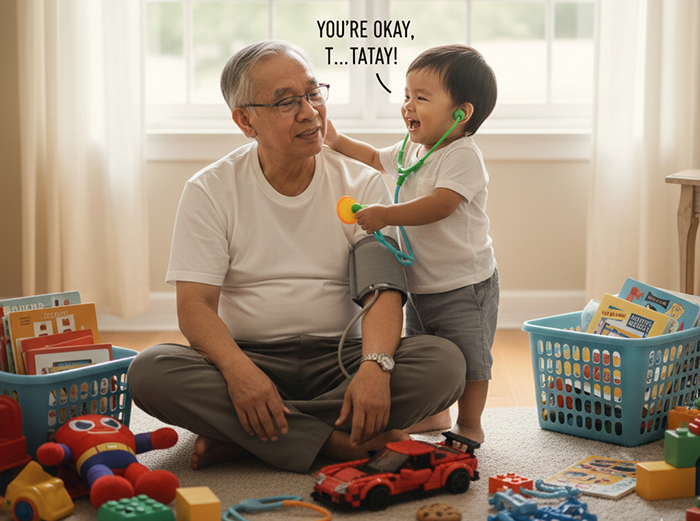
Because he can’t say the letter C, cars are “tars,” cookies are “tooties,” and doctor is “dottor”—which makes every conversation delightfully unpredictable.
And if I look tired, he places his small hand on my cheek and asks: “Are you feeling fine, Tatay?”
Only a toddler can diagnose you and cure you in the same breath.
Elliott the gentle soul
Then there’s Elliott Rafael, our two-month-old cherub who seems to have inherited the calmness his elder brother misplaced. For someone who feeds every two hours, Elliott is surprisingly considerate. He coos instead of cries, as if politely saying, “Excuse me, I believe it’s time for my milk.”
His serene demeanor is a blessing. He watches us with curious, soulful eyes, already hinting at quiet wisdom—as if he’s saying, “Relax, Tatay, you’ll survive this.” Becky and I take turns marveling at how this tiny human can radiate peace amid the clamor of Leon’s daily adventures.
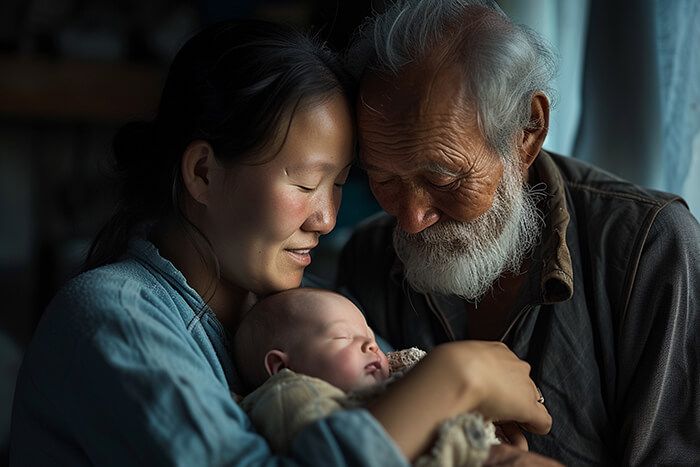
Holding Elliott reminds me of what a miracle life truly is—the heartbeat within my arms echoing the countless heartbeats I’ve listened to through my stethoscope. But this one is different. This one beats not in a patient’s chest, but in my legacy’s future.
Parenting redux: the sequel nobody warned us about
Grandparenting feels like parenting 2.0—with better wisdom, softer hearts, and slightly weaker knees and backs. We thought we had “graduated” from diaper duty decades ago, but here we are again, performing the sacred art of the midnight bottle feed. The difference? We now have bifocals and need to take ample doses of glucosamine to make sure our knees and backs hold.
In medical school, they never taught us that the true test of endurance isn’t a 24-hour duty in the ICU, but a 24-hour babysitting shift for a toddler, who stays awake till midnight asking you to play or read his books with him. You don’t just diagnose and treat; you negotiate, persuade, distract and, occasionally, plead for mercy.

And yet, there’s joy in this return. We rediscover forgotten skills—singing lullabies, telling silly stories, creating “airplane spoon” maneuvers during feeding time. Each act feels redemptive, like reclaiming lost time from when we were too busy building our careers to notice how swiftly our own daughters grew up.
Apos’tolic love, across the family
Becky and I are not alone in this mission.
Our eldest daughter Shelly and her husband Jeff love and steady the home. Jeff’s mom, Connie, is our co-grandparent in sacred duty. She’s the quintessential, doting grandmother who can transform a crying session to a cuddle festival in seconds. She sleeps with Leon in his bedroom, and the world temporarily falls apart when he wakes up without his Lola by his side.
Our younger daughter Abbie travels hours to help in taking care of Leon and Elliott. To Leon, she is Mamay Abbie, his favorite auntie and partner in games, books, and giggles. He cries to high heavens when she leaves to fly back to their place.
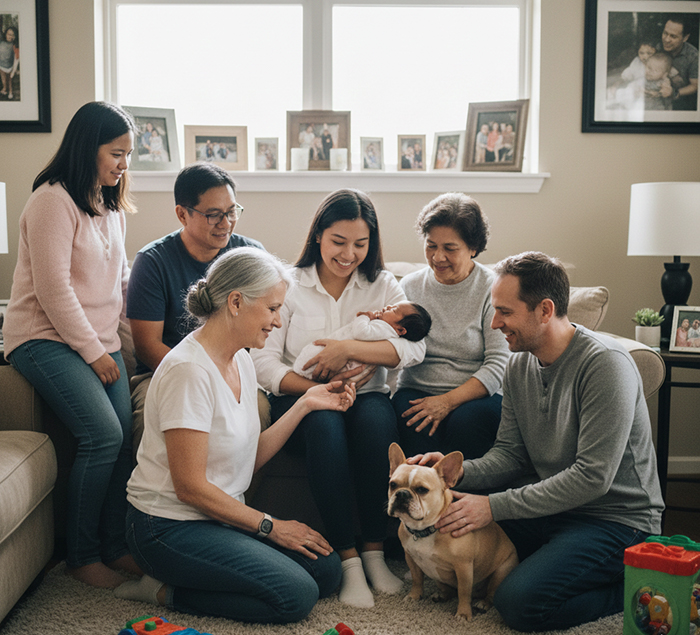
Abbie’s husband Glenn holds the fort when she travels. He stays behind to care for their fur-baby Penny, a French bulldog with the personality of a small human and the heart of a large one.
Penny is our grand-fur-child, and she takes her role very seriously. When we visit Abbie and Glenn, Penny greets us with such unrestrained affection that we feel like celebrities returning from a world tour. Her soulful eyes and warm snuggles speak volumes: “My human grandparents are here!”
So yes, our apos’tolic care extends beyond the human species. Penny demands her own version of grandparental devotion—tummy rubs, treats, and long walks that double as our cardiovascular workouts. She’s a living reminder that love, whether two-legged or four-legged, has no species boundaries.
We’ve learned that grandparenting isn’t about reliving the past — it’s about celebrating the continuation of life’s beautiful story through the next chapters.
The pajamas of love and laughter
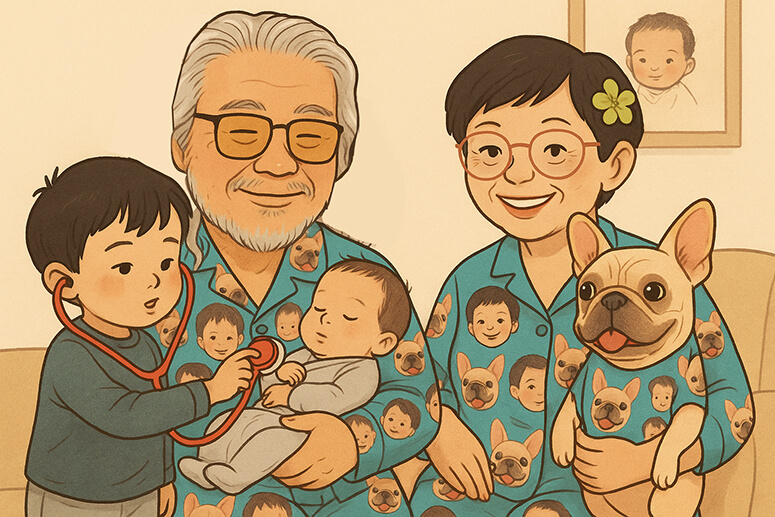
Last Christmas, our children surprised us with matching pajamas printed with the faces of Leon and Penny, whom he proudly calls Ate Penny.
Bright turquoise, covered with smiling faces of Leon and Penny’s perky Frenchie ears—it is now our unofficial uniform. We wear them so often they’ve become a second skin: comfortable, joyful, and slightly ridiculous.
Leon loves it. Every time he sees us, he blurts out with his signature chuckle and proudly points: “That’s me, Tatay! That’s Ate Penny!”
And we tell him: Yes, Leon. This is what joy looks like. Not just kept—but worn close to the heart.
The spiritual anatomy of grandparenthood
As a cardiologist, I’ve spent decades studying the heart, but nothing quite prepares you for the heart work of being a grandparent. The science of the heart meets the art of loving unconditionally.
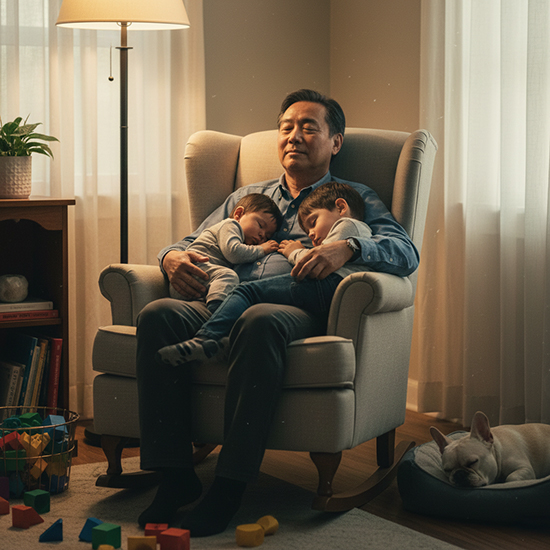
Grandparenthood transforms how you see time. You stop measuring it in years and start measuring it in giggles, first steps, and bedtime stories. It’s a sweet paradox—life slows down just as your grandchildren grow up too fast.
In these quiet moments—rocking Elliott to sleep or watching Leon line up his toy cars in a grand parade formation—I’m reminded that fulfillment doesn’t always roar; sometimes, it coos softly in your arms.
Faith deepens, too. You begin to see God’s humor in the chaos and His wisdom in the small victories. The Lord, it seems, knew that we’d need this gentle reminder of innocence, this daily training in patience and joy.
Lessons from the mission field
Our apos’tolic mission has yielded profound insights:
Children (and dogs) are the best teachers of humility. No medical title or journal publication impresses a toddler—or a French bulldog—who just wants you to play.
Schedules are illusions. You plan around nap times, diaper changes, and walk times, not around meetings and deadlines.
Love expands the heart beyond physiology. It’s a divine hypertrophy—an enlargement of compassion without pathology.
Every giggle and wagging tail is a healing pulse. The laughter of a child and the affection of a pet can cure what medicine cannot.
From duty to delight
At the end of each exhausting day, when the house is finally quiet and the toys are back in their boxes (for a few hours, at least), Becky and I look at each other and smile—the kind of smile that says, “We did it.”
Our backs may ache, our hair may be grayer, but our hearts are undeniably fuller. We’ve learned that grandparenting isn’t about reliving the past—it’s about celebrating the continuation of life’s beautiful story through the next chapters.
And so we embrace this apos’tolic calling with grateful hearts and open arms. It is, after all, the sweetest mission of all—where every bedtime prayer ends not with “Amen,” but with a sleepy “Good night, Tatay”… and a gentle snore from Penny at our feet.