

[OPINION] The equal start we deny our Filipino children
We have failed our children.
From the very beginning, the system in the Philippines abandons them. We live in a society where safety, quality education, and proper healthcare are treated as luxury goods, available only to families who can afford them. When this system cracks, it is the children who suffer the most.
We see this failure in our recent headlines, like the chilling reality of youth violence and underfunded, overcrowded schools that completely lack guidance counselors and mental health support. In the Philippines, there is only one public school guidance counselor for every 25,000 students.
Yet, instead of fixing the environment around these kids, some of our lawmakers are offering a lazy, harsh solution: lower the age of criminal responsibility. They want to penalize and lock up children as young as ten years old.
But locking up a ten-year-old will never fix our woes. Science tells us that a ten-year-old’s brain is nowhere near fully developed, particularly the prefrontal cortex, which controls impulse and reasoning. They do not have the capacity for legal discernment. Punishing them younger does not stop big crime syndicates. It only allows them to exploit younger, more helpless children. This adult cop-out policy will only end up putting poor kids in jail, while wealthy families buy their way out of trouble.
The happiest country in the world may have the solution
The contrast is painful when you see how things work elsewhere. On a recent trip to Finland, I stood in the rain outside a daycare center with Danica Reyes, a Filipino mom who migrated there. Her kids were outside playing in the mud and splashing in puddles. No adults were screaming at them to get inside or worrying about ruined clothes.

When the school day ended, there were no report cards filled with rigid academic metrics. Instead, the teacher spoke with Danica one-on-one, focusing entirely on what her daughters did that day.
"Our system is designed for the children’s welfare," Jennifer De Paola, a Finland-based happiness researcher, said. To someone raised in the Philippines, the statement felt almost foreign.
Finland has ranked as the happiest country in the world for nine consecutive years. De Paola explained that smiling or laughing Finns may not be the everyday norm you see on the streets. Instead, happiness there is about systemic life satisfaction, trust, and unlocking the meaning of life. Finland ranks exceptionally high on social support, healthy life expectancy, freedom to make life choices, and critically, a low perception of corruption.
“Do you know what trust looks like in practice?” De Paola asks. She then shows me a photo of Finnish babies sleeping safely in strollers outside while their parents dine inside restaurants.
In Finland, Danica tells me, the rule is simple: Let kids be kids.
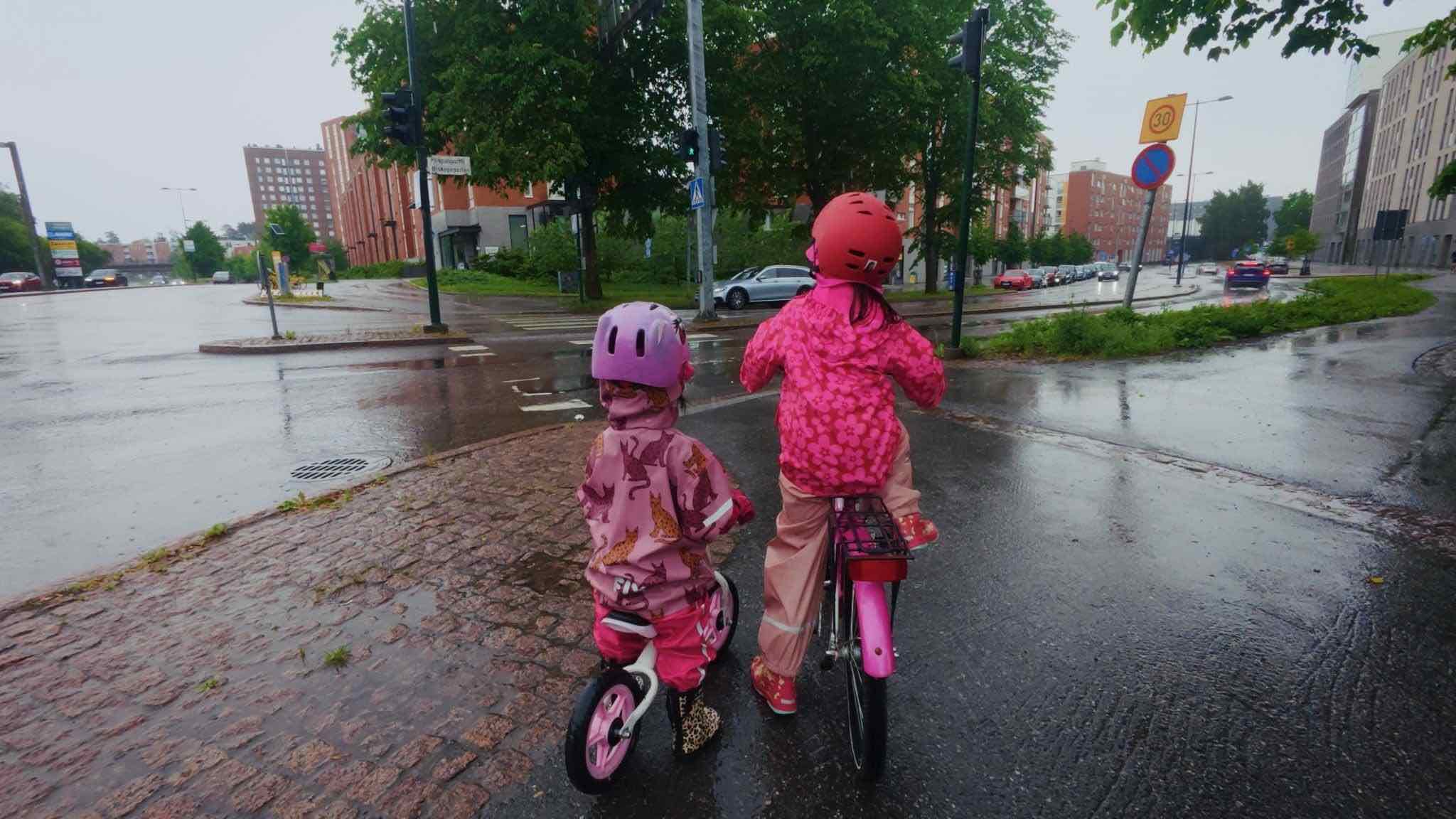
When the day ended, seven-year-old Larissa and three-year-old Priscila hopped on their bicycles and pedaled home down wide, safe sidewalks. I watched Danica remain perfectly calm, offering only a soft reminder in her native tongue: "Green na. Pwede na tumawid."
At home, the girls took off their shoes by themselves. There were no tablets or phones in sight. They drew pictures, ate cookies, and talked with their parents about their day. When I asked Danica what she wished she could bring back to the Philippines, she said immediately: "The kind of care Finland gives to their children."
An equal start is a political choice
Every Finnish child gets an equal start. Since the 1930s, the government has given every expecting mother a “baby box” or äitiyspakkaus filled with newborn essentials. It's filled with 38 practical items for the baby and the mother—from gender-neutral clothes, blankets, a first book, and even bra pads and nipple creams. Parents can choose to receive this package or a tax-free cash grant instead of 210 euros.
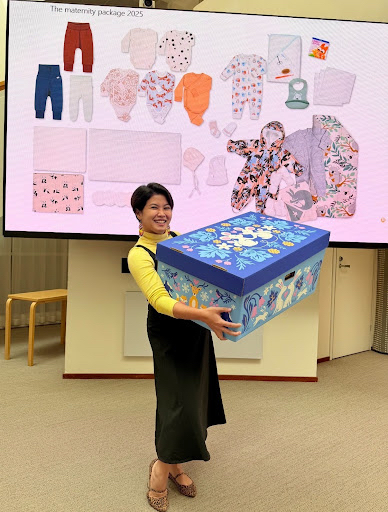
“The contents of the box could still be improved,” said Verneri Aalto, communications specialist for Kela, the Social Insurance Institution of Finland. “Before a child is even born, you enter this world with the exact same care and dignity as everyone else.”
This equality follows them to school. In Finland, the divide between public and private education is nonexistent because every neighborhood school is engineered to be excellent. Choosing schools is based on the one closest to where they live. They don’t have the high-pressure, stressful standardized testing that defines much of Asian education. Instead, they focus on what the child is interested in.
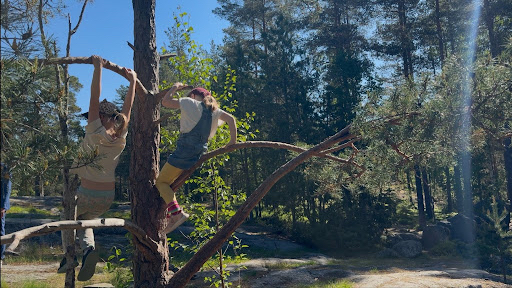
I visited another daycare center, Daycare Kanava, where they were about to walk into a public forest right down the street. The kids climbed trees, explored the forest, and read books under the sun. They were allowed to explore because nature belongs to everyone. There are no environmental fees or warnings like “Kukunin ka ng kapre dyan.”
“Playing outdoors promotes imagination, encourages physicality, improves social development, supports problem-solving skills, and reduces stress,” Mats Andersson, assistant manager of Daycare Kanava, said.
Finland makes a political choice to protect the family. Parents get months of paid leave when a baby is born. Work-life balance is strictly protected, including a mandatory one-month summer vacation to unplug. Even their public libraries are built like massive, free living rooms where families can play and read without needing to spend a single coin.
The cities are built for those who can afford
Meanwhile, back home, a Filipino child in the city is trapped inside concrete walls, cut off from green spaces. According to global urban standards, a healthy city should provide at least nine square meters of green space per person. Metro Manila offers less than one square meter per resident. Our streets are built for cars, not people.
With this kind of environment, we do not let our children just be children—we just ask them to survive. We celebrate viral videos of provincial children climbing mountains or crossing raging rivers on makeshift rafts just to reach school, calling it "resilience," when it is actually a structural failure that should outrage us.
We trap their parents in hours of grueling traffic every day, stealing the evenings meant for family dinners and bedtime stories. Our state offers no robust social safety net for the vulnerable or the elderly; we pass a heavy, generational transactional burden downward. We transform our children into financial backup plans, expecting them to become our retirement funding before they have even discovered their identity.
A society that loves its children does not happen by accident. It requires a deliberate, political choice to put the vulnerable first. It means understanding that the true measure of a nation’s wealth is not its gross domestic product, but the freedom of a child like Priscila to ride her bike through a puddle in the rain—entirely safe, entirely equal, with a mother like Danica who doesn't have to panic.
If our children are failing, it is because our adult systems failed them first. We do not need more crowded detention centers or younger prisoners. We need safe streets, well-funded public schools, mental health professionals, and a society that protects families instead of draining them. Until we shift our mindset from punishing the victim to rebuilding the structure, we will continue to fail the next generation.
Disclaimer: The views expressed in this article are those of the author and do not reflect the opinions of PhilSTAR L!fe, its parent company and affiliates, or its staff.

WATCH: Is Gen Z too soft? (Generations Ep. 23)
September 30, 2026