

Strategic moves push Clark Aviation Capital as a premier global aviation and logistics hub
BrandedUp in partnership with

Clark Aviation Capital (CAC) is steadily taking shape as a key player in the Philippines’ evolving logistics landscape, driven by infrastructure investments, policy support, and growing cargo activity at Clark International Airport (CRK).
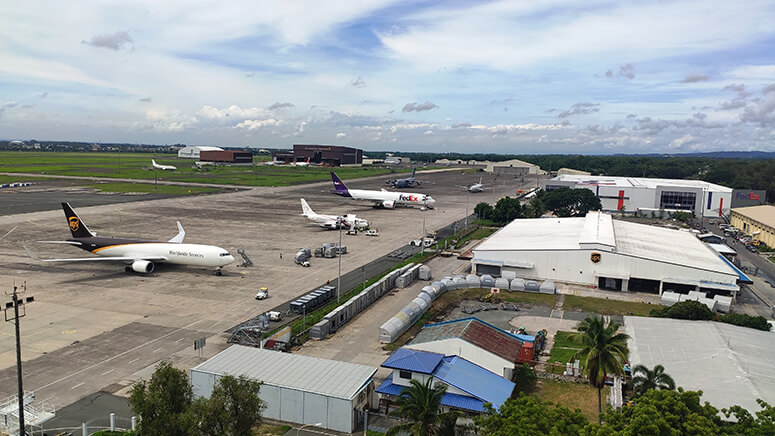
Spanning 2,367 hectares, the Clark Civil Aviation Complex is being repositioned by the Clark International Airport Corporation (CIAC) into an integrated aviation and logistics estate designed to support air cargo, light manufacturing, and related industries.
CIAC president and CEO Joseph P. Alcazar said the agency has refocused its strategy on estate management and airport infrastructure development to support CRK better and unlock the complex’s long-term potential.

This strategic shift comes as Clark builds on a year of steady performance. In 2025, CRK recorded growth in passenger traffic and improved load factors, supported by stronger airline partnerships and the gradual transfer of turboprop operations from Metro Manila. The airport continues to strengthen its role as an alternative international gateway, offering additional capacity outside the capital.
Beyond passenger traffic, however, cargo is increasingly shaping Clark’s trajectory.
CONTINUE READING BELOW

Located in Central Luzon, CAC benefits from proximity to major industrial corridors and direct access to key expressways, including NLEX, SCTEX, and TPLEX. These connections enable efficient movement of goods between Clark, Metro Manila, and nearby seaports, positioning the area as a viable multimodal logistics hub.
Clark’s relatively uncongested airspace also provides operational advantage for time-sensitive shipments such as e-commerce goods, as well as for maintenance, repair, and overhaul activities.
To further strengthen connectivity, major rail projects are in development. The North–South Commuter Railway, expected to be operational by 2028, will link Clark to Metro Manila and Laguna, while the proposed Subic–Clark–Manila–Batangas railway aims to improve freight mobility across Luzon’s major logistics nodes.
Clark is also part of the Luzon Economic Corridor, a trilateral initiative involving the Philippines, the United States, and Japan, which seeks to enhance infrastructure and industrial linkages across Subic, Clark, Manila, and Batangas.
Cargo volumes at CRK have grown strongly. In the first five months of 2025, the airport handled 35,903 tons of cargo across 2,522 flights, reflecting a significant year-on- year increase. The expansion of global logistics firm FedEx’s facility in Clark, following an agreement signed in July 2024, highlights the private sector’s continued interest in the hub.

To support future demand, CIAC is advancing plans for additional logistics infrastructure within the aviation complex. Among these is the proposed Clark National Food Hub, a facility designed to support the storage, processing, and distribution of agricultural products, particularly perishables that require cold-chain logistics. The project is targeted for completion by 2028.
CIAC is also studying the development of a parallel runway in coordination with the Bases Conversion and Development Authority. The proposed runway would serve as a contingency facility to ensure operational continuity during emergencies or disruptions affecting the main runway.
Complementing these efforts is the planned development of a Multimodal Mobility Hub, envisioned as an integrated transport center that will improve passenger and cargo connectivity within the complex and surrounding areas.
While CIAC does not directly operate cargo services, it plays a central role in enabling logistics activity within the estate. The agency is working to streamline lease transactions and improve estate management processes using GIS-based property management systems.
Policy reforms are also expected to support the pace of development. The Public-Private Partnership Code provides a clearer framework for private-sector participation in infrastructure projects, opening opportunities for investments in logistics parks, terminal upgrades, and related facilities.
Sustainability is another area of focus. CIAC is promoting initiatives to attract locators involved in sustainable aviation fuel and incorporating green building standards and efficient land use into its development plans.
As infrastructure projects move forward and cargo volumes continue to rise, Clark Aviation Capital is positioning itself as a complementary logistics hub to Metro Manila—one that offers capacity, connectivity, and room for long-term growth.
* * *
Editor’s Note: This article was provided by Clark International Airport Corporation.

WATCH: Discovering Vietnam in three days
June 9, 2026
WATCH: Can we talk about death and grief? (Generations Ep. 25)
October 14, 2026
WATCH: Is Gen Z too soft? (Generations Ep. 23)
September 30, 2026