

Gadgets and the rules of civility
Life as we know it has changed since we transitioned to the digital age. Gadgets and gizmos are now a vital force in our lifestyles, with social media and continually evolving apps and digital platforms changing the way we work, play, communicate with people, and entertain ourselves. It’s not an exaggeration to say that many of us cannot live without one or more devices such as mobile phones, tablets, laptops and desktop computers allowing us to do practically everything—from checking the time and the weather to doing online shopping to bills payment and bank transactions to ordering food and booking our rides.
Sometimes, I think back to those years when life was slower and unrushed, when we could choose to simply do nothing and not feel shortchanged by it. These days, it seems like one has to be constantly wired or connected in order to accomplish anything, but it is what it is.
This brings us to certain situations where the use of gadgets seems to have transformed the rules of civility and good manners, as in the three questions that we are focusing on this week.
* * *
No to noise in public/private spaces

Q: Each time I travel, whether on a plane, a train, a cruise ship or even on a bus, I bring my own earphones or headphones so I can work on my laptop or even speak to someone on the phone without bothering anyone around me. This works especially when I’m in an airport lounge or a coffee shop while waiting for my flight.
There are times, however, when I come across people who watch movies on their phones or laptops minus the use of headphones, with their gadgets on full volume—a practice that may be extremely annoying to those in their immediate vicinity. For instance, individuals that are seated next to them or right behind them or even across the aisle from them may be bothered by the sound and sight of whatever it is they’re watching.
CONTINUE READING BELOW

What is the proper way of “requesting” people in public places to reduce the volume on their devices so that others can relax or focus on their own thoughts or otherwise have some peace and quiet?
A: I often hear people, both young and the elderly, who complain about folks who are oblivious to the fact that in most public or enclosed spaces—including elevators, coffee shops, hotel lobbies, airport lounges, restaurants and beauty salons—the sound of one’s gadget on full volume is indeed irksome for other occupants. What’s more, it is unquestionably rude to put your device on speakerphone so that everyone gets to be privy to your conversation with the other party.
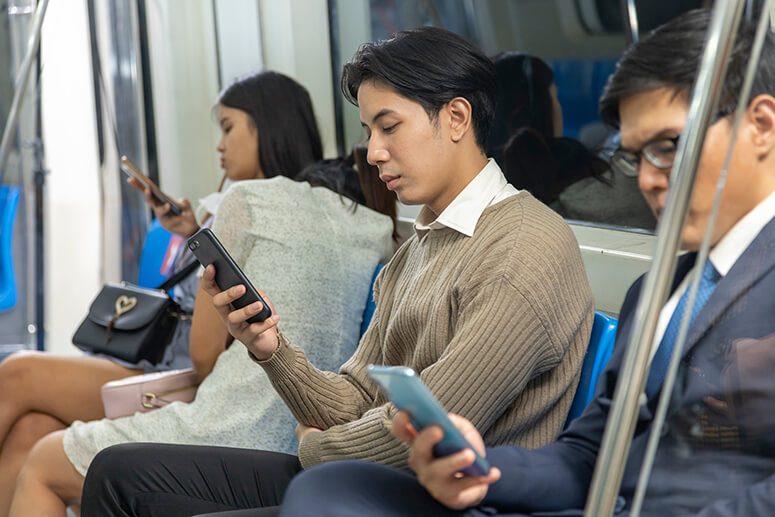
There is absolutely no excuse for anyone—whether you’re a hearing-impaired senior or you’re just having the blues—to inflict on others the background “music” coming from the reels you’re watching or the strident voices of politicians talking on news programs or podcasts. Even worse would be forcing people to hear the canned, throaty laughter on your phone after jokes are cracked.
So how do you politely get the erring person to spare you and others from bearing with the discordant sounds from their movies and videos?
You can say: “Excuse me, Sir or Ma’am (even if they’re your same age) or Brod (if you’re a guy talking to another guy), pardon me for intruding but the sound coming from your (cell phone, iPad or laptop) is definitely bothering me and most likely other people around us. Would you mind turning down the volume of your device or, if it’s not too much to ask, could you use earphones if you intend to watch or view your videos continuously?”
If they are courteous enough to say, “Oh okay, I’m sorry... I’ll turn it off” or if they put their device on silent and use earphones, you can say “Thank you” with a smile or with a gesture that says “Peace” like putting your palms together and slightly bowing. Showing gratitude or just smiling with a slight nod would also suffice.
However, if they are rude and remorselessly ignore you, or worse, retort with “Mind your own business!” you may bring this to the attention of the manager (of the lounge or coffee shop) or to the flight attendant (on the plane) or whoever is in charge.
It takes a strong sense of conviction to call out people, but if we believe in doing what’s right and have the confidence to do it, it could lead to a fair resolution of the issue.
* * *
Let our children be
Q: I’m the father of two young children aged 9 and 5. Whenever our family goes out to eat in restos, we will set up our kids’ gadgets in front of them at the table to make sure that they don’t aimlessly wander around the place. In doing so, I sometimes notice other guests (often older people) looking at me and my wife in a condescending manner or with some kind of disdain. We feel that these people are judging us and so we either ignore them or give them the same looks they throw at us. Are we just being too sensitive or could they be comparing us to how they raised their own children during their time?
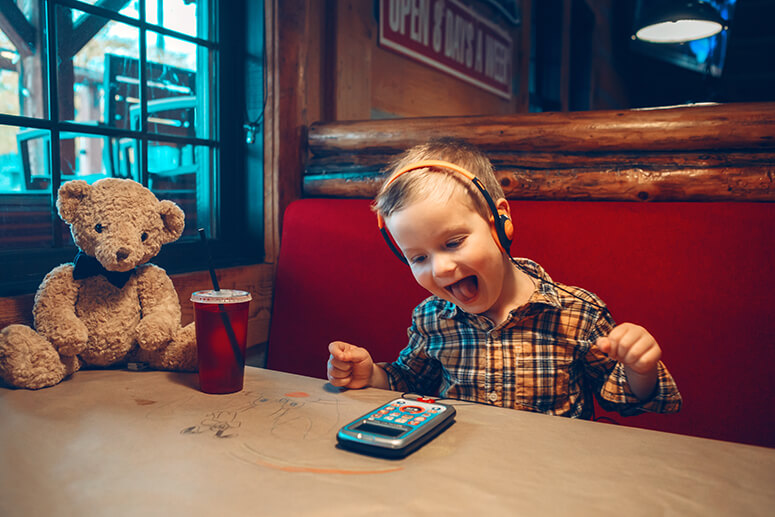
A: The rules of parenting have definitely evolved and adapted to the times across multiple generations. This is why it is rather prejudicial for an individual of any age to pass judgment on how younger parents like yourselves have chosen to raise your children given today’s technology-driven environment.
First of all, as long as you and your kids (and family) are not bothering them and other guests with sounds from your devices, they clearly have no right to give you nasty, disapproving looks. If you have set up your kids to watch movies or shows that will keep them entertained in their seats while you dine, that is your prerogative and nobody should make you feel guilty about it.
Should they even dare to approach you with unsolicited advice regarding your children’s behavior, you may simply say something like this: “Thank you, Sir/Ma’am, for your advice, but with all due respect, we know exactly what we’re doing and wish to continue doing it our own way.”
* * *
Avoid texting toxic emotions
Q: I once accidentally texted a nasty and unpleasant comment about someone to the subject herself, who immediately sent back the offensive text to me—to my utter shame and embarrassment. What should I do to show my remorse for this horrible act and save my friendship with this person?
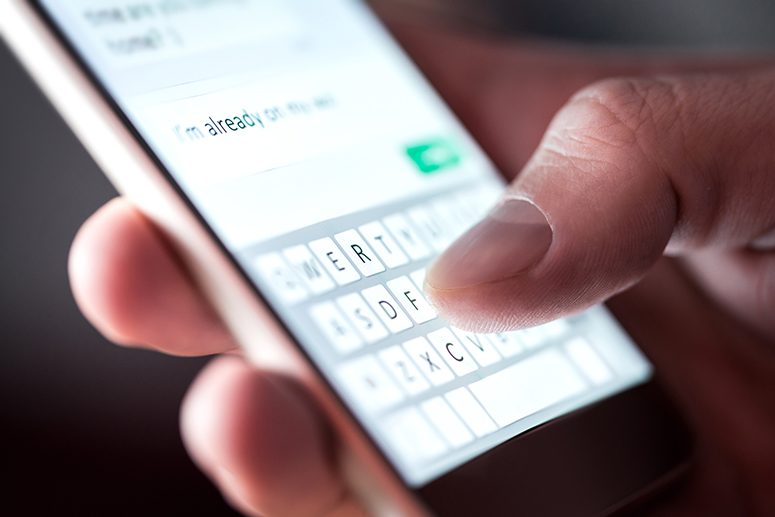
A: It is ironic how digital communications, such as SMS or email, which can convey—in real time—beautiful, heartfelt emotions can also be used, albeit accidentally, to do irreparable damage to friendships and some such personal relationships. The platitude “Sticks and stones...” probably works for hurtful words that are uttered and eventually forgotten with the passage of time, but offensive statements in “black and white” are different altogether.
In your case, the malice in your message was magnified by the subject’s knowing that you had actually intended to relay this to a third party. This “act of betrayal” made the revelation even more excruciating painful than if you had blurted out the nasty remark to her face.
At this point, more important than wanting to pick up the broken pieces of your friendship is your mustering the courage to acknowledge your transgression, and to sincerely apologize and ask her forgiveness for it. If the person refuses to take your call or see you, put all these in writing and send the letter—with a bunch of flowers or another gesture you know she would appreciate—to her. She may still be hurting at this time, so just give her space and pray that she finds it in her heart to forgive you.
One other lesson that may be culled from this episode is this: do refrain from venting toxic emotions through text, Facebook posts and PMs, or even through email. When you’re under severe emotional stress, you may be inclined to use spiteful words that hitting the delete button cannot undo.

WATCH: Is Gen Z too soft? (Generations Ep. 23)
September 30, 2026
WATCH: Pixar Summer Fest adventure at Hong Kong Disneyland
August 10, 2026