

Scrolling on social media doesn’t always have to be mindless
For a long time now, I’ve been experiencing fatigue with how I consume content on social media. It’s impossible not to, when from the time I wake up to moments before I fall asleep, I bombard my brain with so much information without taking the time to actually process it.
As a creative, a part of me has started to become restless and unhappy. I consume so much content that I essentially forget to create. Rather than diving into my many interests, I instead go from app to app, trying to satisfy an insatiable desire to be pleased.
I am so used to never letting my brain go quiet that when I’m doing mundane tasks, I always play something in the background, like how many of us can’t start eating without finding the perfect film or how we can’t start our daily commute until we find the right playlist.
I was cleaning one day when I came across a YouTube video by Anna Howard called “Creating a Digital Garden to End My Doomscrolling.” I clicked it immediately, wanting to know how to stop my continuous scrolling.
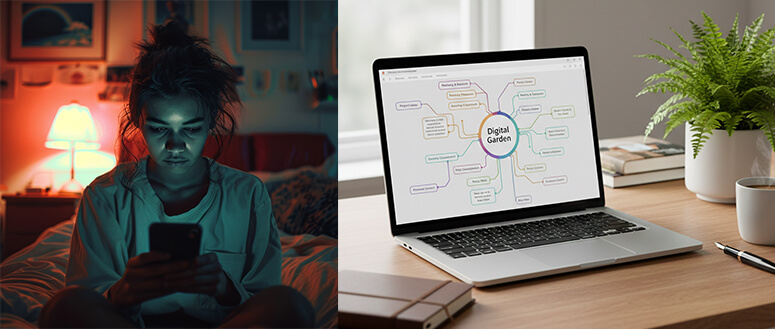
Anna introduced the concept of a digital garden, where you can create connections between everything you’re consuming. It is composed of notes you’ve taken from content that interests you, like your own personal Wikipedia. A lot of us watch shows while we scroll on our phones, but Anna recommends watching a show and taking notes instead. You can take notes when an interesting thought comes or when a moment from the show reminds you of something else.
When you consistently do this kind of note-taking, you eventually create a system that links your ideas together. For instance, Anna pointed out how you can have a note from two months ago that contains similar ideas to a note you took today. And suddenly you have an idea for an essay, a video, or maybe a script. If you didn’t take notes in the first place, you might have simply lost those ideas in the ether.
CONTINUE READING BELOW

The concept, however simple, felt groundbreaking. How have I not thought of it, when I knew I liked to remember what I learn? In her article about the same topic, neuroscientist Anne-Laure Le Cunff writes that while note-taking may be normal for students, many people stop doing it outside of academia. We may bookmark content to revisit later, but we have generally grown comfortable just passively absorbing information.
Every day, we consume an excessive amount of media—yet we do not give our brains the time and space to digest it all. If we want to free ourselves from that pattern, we must learn how to become more intentional in the manner we consume.

But before you can build a garden, you must first plant a seed. The first time I tried taking notes was because of an Instagram reel by the creator Andrea Magdalene, about how modern spaces don’t let us feel time. She discussed how spaces today, called “non-places,” are designed to increase productivity and efficiency, rather than allowing people to pause or dwell. These spaces—like train stations, airport terminals, hotel rooms and shopping malls, among others—do not encourage interaction and are often deemed transitory places.
The reel deeply intrigued me; it brought forth a new idea that I never thought of before but found myself agreeing with. Previously, I would just agree silently in my head, save the post, and end up never going back to it again, like countless posts I’ve saved before.
But this time, I made the effort to take down notes. Writing down the information gave me more time to reflect on the topic, and I found myself adding my own ideas. I wrote about how these non-places are indeed designed for movement and function, but we can still have meaningful experiences in these spaces. I remembered all the intimate conversations I’ve had with my friends in places of transit, or moments of laughter with my family in hotel rooms. We make these passing places meaningful when we share them with each other.
Having a digital garden may not eliminate my screen time, but it helped revive my thirst for learning and encouraged my curiosity.
Taking notes also made the concept of non-places stick longer and encouraged me to research more. It might sound tedious at first, maybe even ridiculous—after all, we’re so used to social media’s instantaneity. But author and educator Jeff Cobb highlights that notes allow us to access information that our brains might not otherwise be able to remember.
Now, I take down notes on every content I find intriguing—be it a video, an article, or even a Tweet. It gives me a better sense of who I am and what I think about certain ideas. I also learn about my patterns of interests, and I retain more knowledge than I usually would.
However, that doesn’t mean that you have to take notes on every piece of content you see. It’s essential that you only do it on things that genuinely interest you. It doesn’t need to be long, perfect, or award-winning writing. It just has to be in a manner that makes the most sense to you.
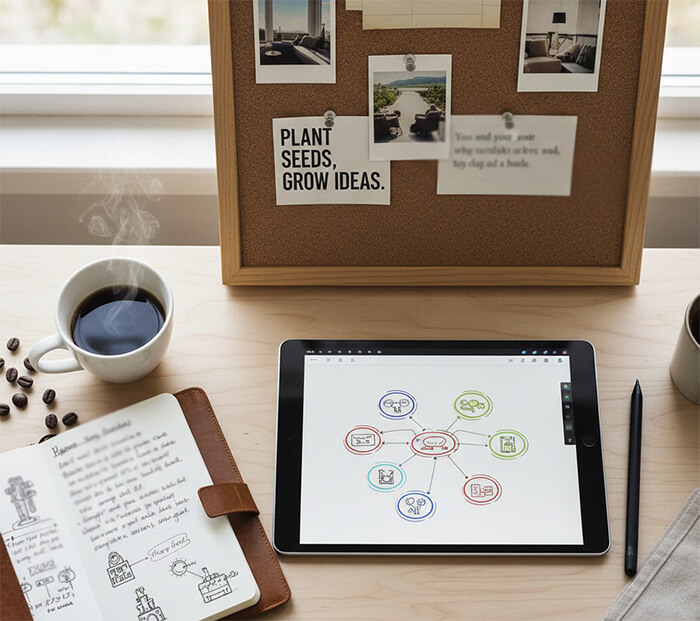
It’s also helpful to try to write your notes in your own words. You can include quotes or excerpts, but it matters to use your own voice, to include your own flavor and character. It may be difficult at first, but I find that it allows for your individuality and creativity to thrive.
Lastly, it’s also important to place your notes in one place. When our notes are scattered across different notebooks or note-taking apps, it’s harder to access and revisit the information. Having it all in one place lets you see the knowledge you already have and what more you need to build on.
Sure, taking notes on content that interests me may not eliminate my screen time. But the practice helped revive my thirst for learning, channeled my curiosity, and made me more mindful of my consumption.

WATCH: Discovering Vietnam in three days
June 9, 2026
WATCH: Why is it so hard to make friends? (Generations Ep. 26)
October 21, 2026
WATCH: Is OPM still as good as it used to be? (Generations Ep. 20)
September 9, 2026