Sacred noise
It’s the Lenten season, and we crashed into it on Ash Wednesday, right after celebrating the Lunar New Year—a sudden pivot from feast to fast, from indulgence to abstinence.
But as we transition from the “world’s surfeit to spiritual hunger,” a loud, rhythmic thread connects these two worlds. Whether it is the clatter of a dragon dance or the thunder of a Lenten procession, humans have always had a penchant for “noisy protection.”
I was doomscrolling one lazy afternoon when I came across this marching band playing Portugal. The Man’s Feel It Still. Specifically, it was the Kyoto Tachibana Senior High School Band. They are known as the “Orange Devils,” and while the name sounds mischievous, their precision is nothing short of divine. In the spirit of our Catholic reflections, you could say they’ve mastered the art of “leading us away from temptation,” the temptation, at least, to look away.
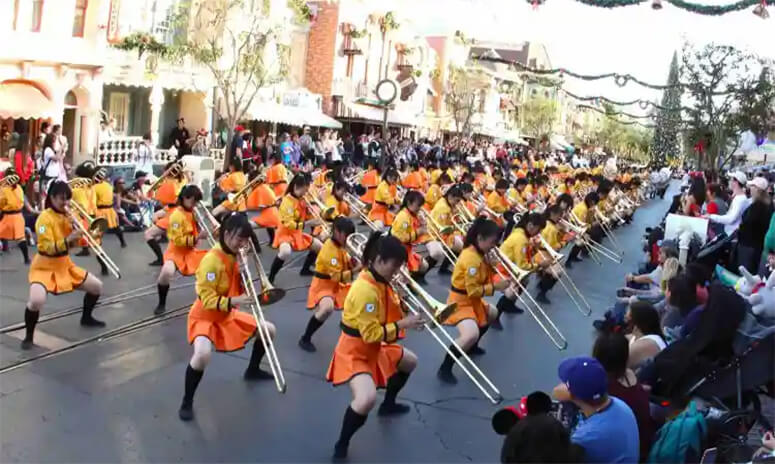
At some point, YouTube stopped being an app and became the Sanctum Sanctorum’s Rotunda of Gateways in Dr. Strange. One minute I was watching these “Devils” moonwalking through brass sections like it was Thriller, the next I was transported into a world where rhythmic noise is used for much more than just a gold medal.
How did we get here? Why does Japan idolize marching bands while we in the Philippines often view them as the “sacred noise” meant to ward off evil?
The history of the beat is rooted in something very un-fun: war. Long before halftime shows, ancient armies used horns and drums to send signals across chaotic battlefields. By the 13th century, the Ottoman Empire’s mehter bands produced a wall of percussion designed to intimidate the enemy—a psychological “warding off” similar to the pre-game haka performances popularized by the New Zealand All Blacks rugby team. Whether on a 13th-century battlefield or a modern pitch, the loud, rhythmic pulse says: “Evil (or the opponent) has no place here.”
In Japan, this military precision evolved into a “monk-level” commitment to art. To be an Orange Devil—an ironic name for a group that radiates such pure, disciplined joy—you must dance like a K-pop idol and play like a virtuoso. They aren’t scaring away demons so much as they are outrunning them with 244 dance steps per minute.
In our part of the Pacific, the “noisy celebration” takes on a more literal spiritual role. While the Japanese band is born in the school, the Filipino band is born in the barangay and the church. We see this in the Diana (the Spanish military reveille) used to wake up a community for a fiesta, signaling that the time for ordinary life has ended and sacred time has begun.
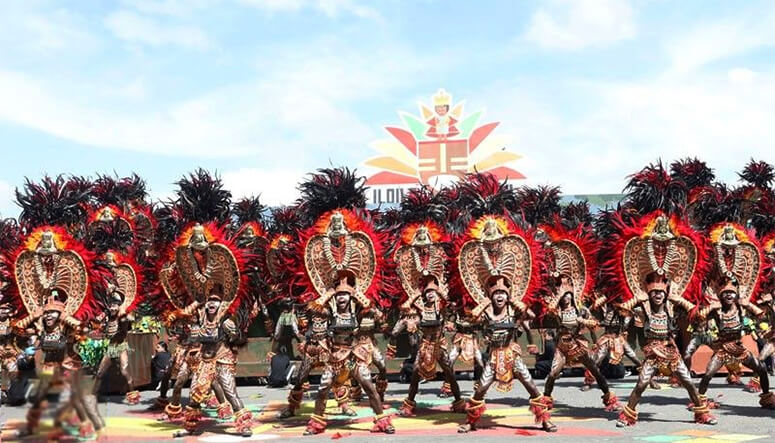
From January 2026 until the start of Lent, the Philippines becomes one long, glorious drum solo. We have the Ati-Atihan in Kalibo, the Sinulog in Cebu, and the Dinagyang in Iloilo as main attractions. While these are ostensibly Catholic festivals honoring the Santo Niño, they function exactly like the Dragon Dance we just saw for Lunar New Year. The soot-smeared faces and the rhythmic sadsad are a communal “war cry.” The loud percussion and firecrackers aren’t just for show but are meant to “scare away” negative forces and purify the air for the coming year.
While these festivals are primarily dominated by local celebrities, they have increasingly attracted international attention. In recent years, Korean performance teams have joined major parades, reflecting both the sizable Korean community and the Philippines’ growing appeal as a cultural destination. Korean organizations have also recognized Sinulog as one of Asia’s premier festivals, further boosting its profile among tourists.
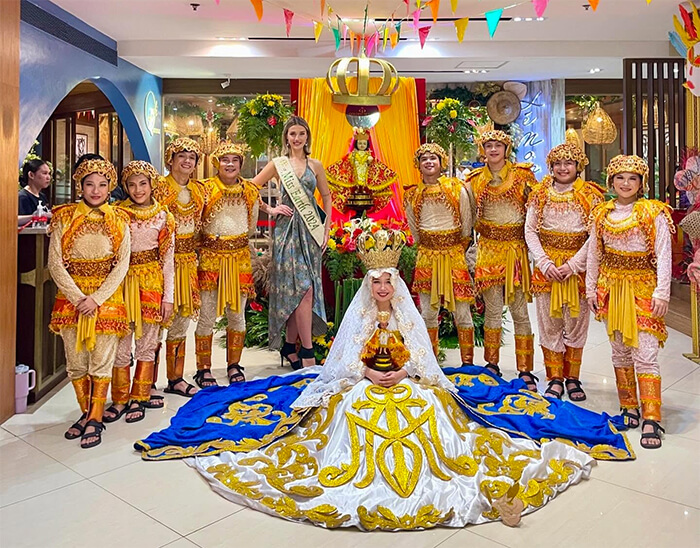
International figures from the pageantry world sometimes appear, as when Miss Earth 2024 titleholder Jessica Lane joined the 2025 Sinulog parade, adding a global sheen without overshadowing the grassroots spirit. Meanwhile, this year’s Dinagyang celebration featured the cast of What Lies Beneath as well as stars from Roja.
In practice, “star power” clusters around two main hubs. Sinulog draws the largest concentration of celebrities, who often appear on floats or in mall shows, including Coco Martin, Regine Velasquez, and Donny Pangilinan. Dinagyang is famous for its “star-studded” caravans featuring top actors such as Kim Chiu and Paulo Avelino. You may not yet spot a Marvel superhero dancing in full body paint at Ati-Atihan, but the sheer volume of international spectators has already turned these fiestas into a global stage.
It is the same human instinct, whether it’s a “Devil” in an orange uniform hitting a high kick in perfect tempo or a soot-covered devotee in Aklan pounding a drum under the sun. We use noise to mark the boundary between the sacred and the profane. We shout “Viva!” or “Hala Bira!” to drown out the “malicious enemy” mentioned in the Anima Christi.
In that sense, the festivals are not merely tourist spectacles or celebrity showcases. Their very “noisiness” is the point—a communal exorcism by percussion, choreography, and color. The presence of foreign visitors only amplifies the effect, as if the entire world were joining in the ancient project of driving darkness away through celebration.
Ultimately, these celebrations remind us that “delivering us from evil” doesn’t always have to be a somber plea whispered in a pew. Sometimes, the best way to avoid the “near occasion of sin” and ward off the darkness is to simply be louder than it—marching through the chaos, sometimes in formation, sometimes barefoot, but always in time.
Now, if we could only use drums at every anti-corruption march, to deliver us from evil—the fun way.