

Why are diesel costs surging more than gasoline, even as fuel price hike softens?
The fuel price hike is softening this week, as the Department of Energy announced that costs are increasing by P2 to P12 this week.
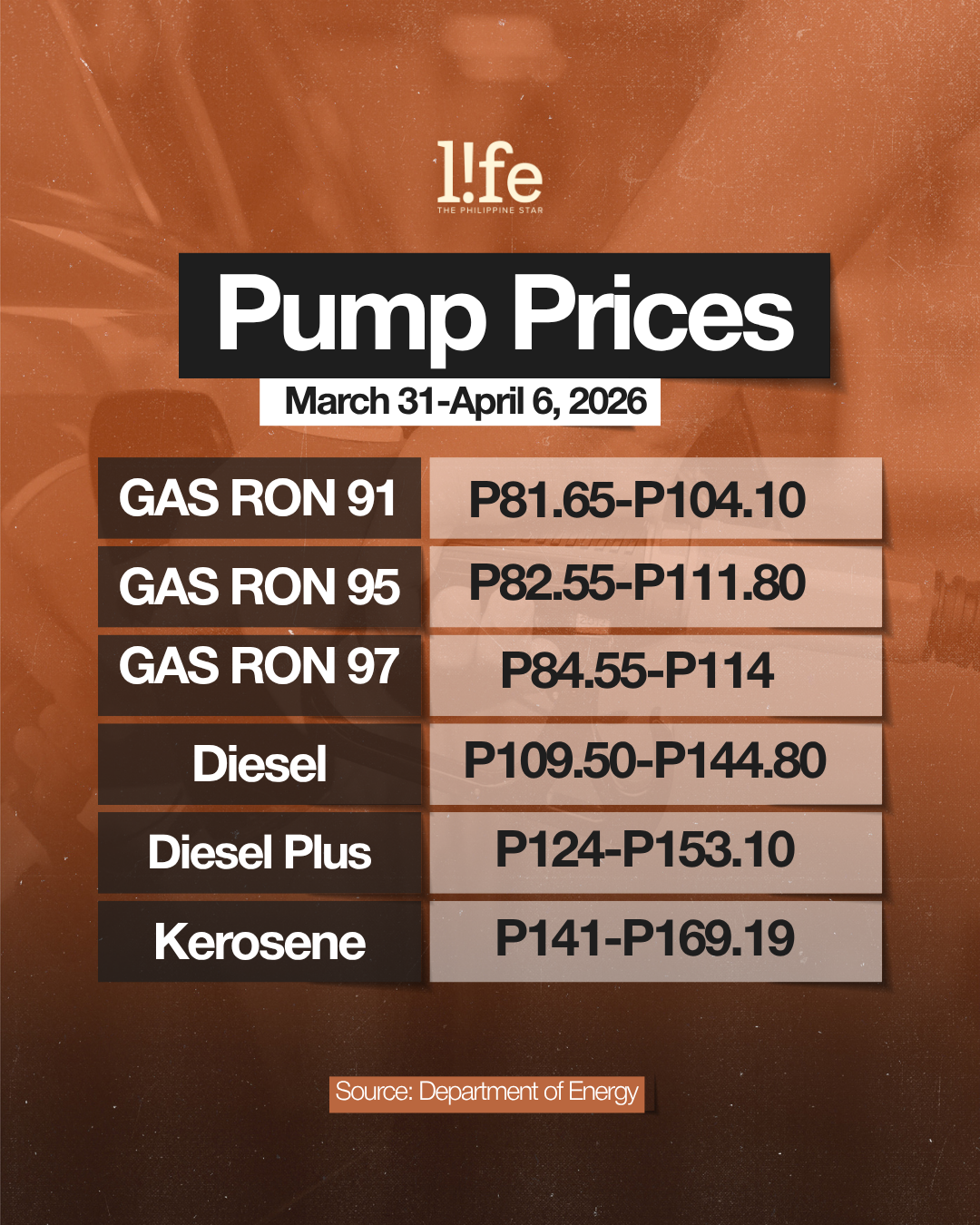
For March 31 to April 6, gasoline prices are expected to roll back by P2.35 and increase by up to P2.90. Meanwhile, diesel costs will still go up by P4.50 to P12.90, bringing the estimated price of premium diesel to P153.10. Kerosene will go up by P1 to P2.40.
Why is diesel more expensive?
DOE Oil Industry Management Bureau Director Rino Abad said in a press conference on March 30 that the decrease in gasoline costs is due to a drop in the Mean of Platts Singapore (MOPS) price for the product.
For her part, Energy Secretary Sharon Garin explained that the demand for diesel is always higher, adding that it's used by public utility vehicles.
"The international market, nag-iba 'yung trending nila in terms of diesel because diesel is most volatile, kaya iba talaga 'yung reaction ng diesel with MOPS price," she said.
CONTINUE READING BELOW

"We follow what the international market, anong level ng presyo niya. That is actually how the prices also we have observed—since PNOC is purchasing— talagang diesel umaakyat siya kahit iba bumababa na."
Garin further noted that diesel prices are now three times higher since the US-Israeli war on Iran began. From Jan. 20 to 26, regular diesel ranged from P47.66 to P64.25, while now it reaches P109.50 to P144.80.
"Talagang malaki pag-increase ng diesel. It’s something not controlled by our government [or] the Philippines. We follow kasi ano yung presyo ng international, and that’s what they’re offering actually today."
Brent North Sea crude, the international benchmark, jumped more than 3% at one point to reach almost $117 (P7,100) per barrel.
Increased oil supply
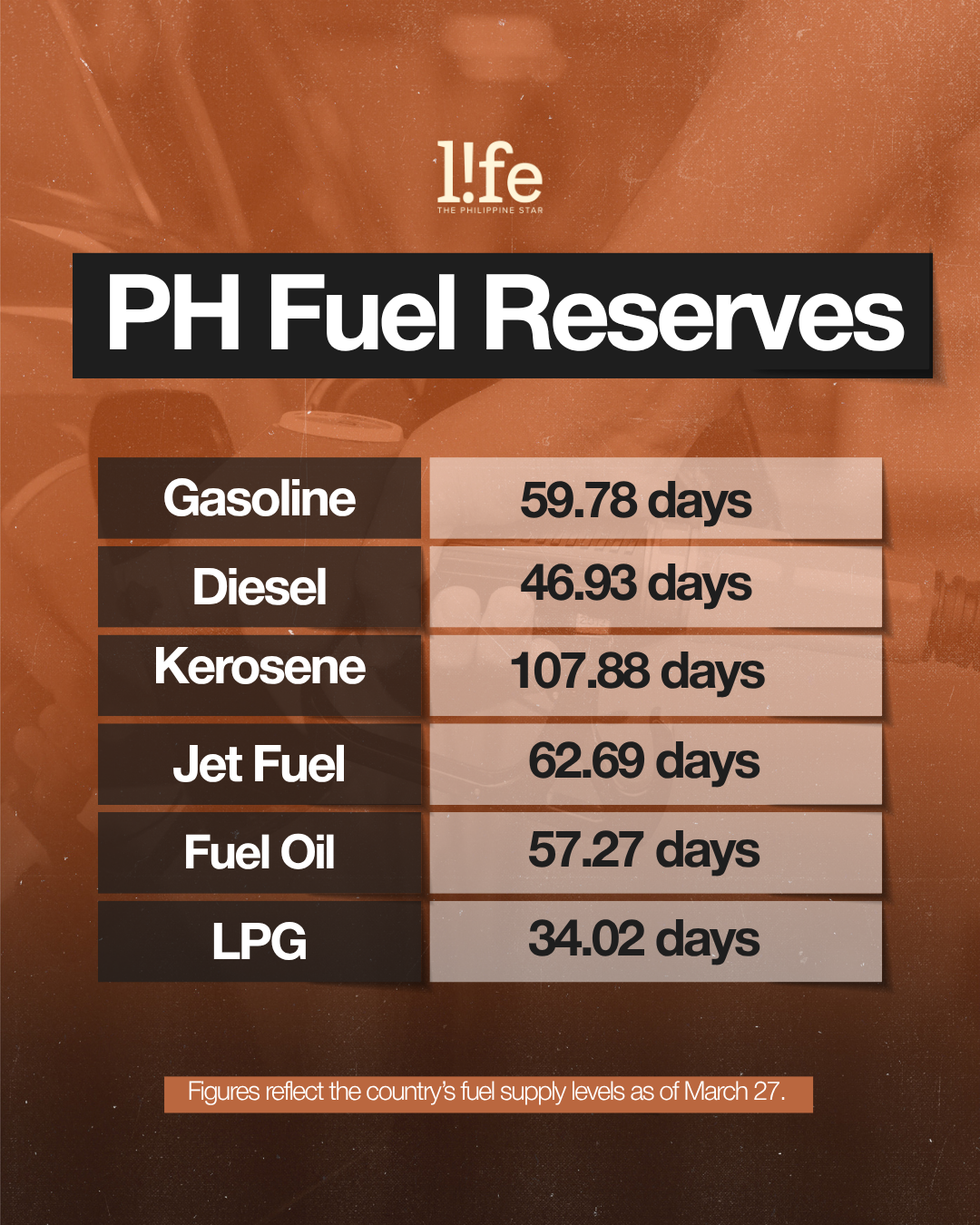
Garin also shared that the country's fuel inventory has increased to an average of 50.94 days as of March 27 from last week's 45 days.
Gasoline supply is estimated to last for 59.78 days, diesel 46.93 days, kerosene 107.88 days, jet fuel 62.69 days, fuel oil 57.27 days, and LPG 34.02 days.
"This reflects that we do have supply," she said. "We have lead time to order for more while we are consuming for the month of April."
The Energy chief added that the Philippines is expecting 900,000 more barrels of finished products to arrive in April from Malaysia and Singapore (300,000), from Oman through Singapore (300,000), and from India (300,000).
She still appealed for Filipinos to conserve electricity and fuel.
On Monday, Petron, the Philippines' sole oil refinery, secured nearly 2.5 million barrels of Russian crude out of "extreme necessity."
In a report to the Philippine stock exchange released Monday, Petron said it had agreed to purchase Russian crude after seeing at least 4 million barrels in shipments cancelled since the start of the Middle East war.
"The purchases were undertaken strictly out of extreme necessity as an extraordinary emergency measure in response to unprecedented geopolitical and supply-chain disruptions and only after exhausting all commercially and operationally viable alternatives," the report reads.
"A refinery shutdown for failure to secure crude would lead to serious nationwide fuel shortages and sharp price spikes," said the company, whose refinery accounts for about 30% of the country's fuel needs.
Garin said that the Russian shipment came amid a trade embargo with the United States and won't affect the country's relationship with other countries.
"The primary concern of our country right now is to make sure that we have enough supply so that our country keeps on, the economy is ongoing, and our daily lives are not disrupted," she said, adding that so far, there aren't any objections from other nations.

WATCH: Do you still believe in marriage? (Generations Ep. 17)
August 19, 2026