

Are we resilient or simply gluttons for punishment?
An elderly member of my chat group recently shared a post where a foreigner complains about the rainy season in the Philippines but praises Filipinos for their creativity. The writer described surviving the monsoon as an “extreme sport” and any survivor a “superhuman.” He talked about our footwear (no boots, just sandals or a plastic bag wrapped around the legs like makeshift galoshes); multi-purpose umbrellas (shield from the rain, the sun, and stray dogs); trigger-happy class and work suspensions; and the imaginative ways to dry the laundry. Traffic and brownouts were mentioned merely as obiter dicta.
While discussing this with some of my much younger friends, they agreed that the one thing they admire about us seniors is our resilience. I was quick to correct them by saying that it is our resourcefulness they should appreciate.
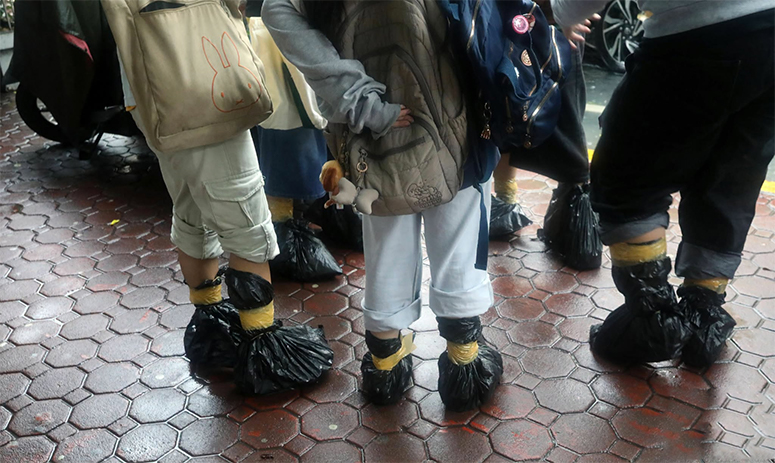
In local parlance, we call it diskarte. It entails channeling your inner MacGyver—a reference to a bygone TV era which could be a head-scratcher for Gen Zs and younger, but for us old fogeys is completely synonymous with resourcefulness. In fact, we have proudly turned his name into a verb whenever outside-of-the-box thinking is necessary to solve a problem: I-MacGyver mo na lang ‘yan (Just MacGyver it). It is the art of looking at a crisis and inventing a solution out of thin air. Take my old carpenter neighbor in Sta. Ana, Manila. Tired of the annual rising waters, he built his own wooden boat from scratch and kept it in his workshop, like a little urban Noah quietly preparing for the inevitable big flood.
When waters reach catastrophic levels, Filipino diskarte can turn even disaster into an impromptu cinematic clip. During Typhoon Ondoy in 2009, actor Jericho Rosales became an unlikely frontline rescuer. Using his surfboard to reach stranded residents in Marikina, he managed to help a grandmother, a boy, and a dog. More than a decade later, he and his former partner Kim Jones rode their surfboards to aid rescuers during Typhoon Ulysses.
Tayong Dalawa’s Gerald Anderson proved he has enough room in his heart for more than two when he swam through deep, fast-moving floodwaters during Typhoon Ondoy to check on and help neighbors, a feat he reprised in 2024 when he went into chest-deep water to rescue a family during the flooding brought by Typhoon Carina and the enhanced southwest monsoon. The Philippine Coast Guard later awarded him a Search and Rescue medal for his efforts. Also during Ondoy, Mulawin lead Richard Gutierrez navigated the flooded streets of Marikina on a speedboat to rescue actress Cristine Reyes and her family, who had spent hours stranded on their rooftop. His character Aguiluz would have just swooped in from the sky.

Seeing a celebrity paddle through a leptospirosis cesspool to pluck you, your grandmother, or your dog from a rooftop is the ultimate Filipino fever dream—and probably the fastest route from disaster victim to lifelong fan.
Even our musical anthems echo this damp reality across generations. Fans of Aegis still birit to the tune of Basang-Basa sa Ulan not as a tragic lament, but as a triumphant, high-pitched anthem of defiance while stranded at a bus stop. And since 2023, indie band Lola Amour has been repeating that very same national mood with their massive hit, Raining in Manila. But given the way the southwest monsoon (habagat) behaves, that track should realistically be titled Raining in the Philippines. Both songs perfectly channel our collective psyche by singing a bright, upbeat, or passionately belted tune while watching the rain fall endlessly outside.
If we pull back the curtain of this celebrated ingenuity, the dark underbelly reveals itself: our deep, unyielding status as martyrs. We are, quite frankly, the ultimate ride-or-die citizens of the tropical world. We tolerate urban planning that turns highways into rivers, treat knee-deep mud like a minor inconvenience, and patiently slog through sewage because “we need to get to work.” In a classic case of life imitating art, we process our real-world hardships by falling back on the very telenovela tropes that dominate our television screens. The weather treats us terribly, breaks our hearts, and ruins our furniture, appliances, and homes; yet, at the first sign of a half-hearted apology from the sun, we run right back, stubbornly convincing ourselves that everything is fine and we are simply born to play the long-suffering protagonist. And yes, we are also very hopeful.
Just as keenly observed by that foreigner complainer/fan of Filipino resilience, one thing is certain: After the rains come not just the sun but the Yuletide.
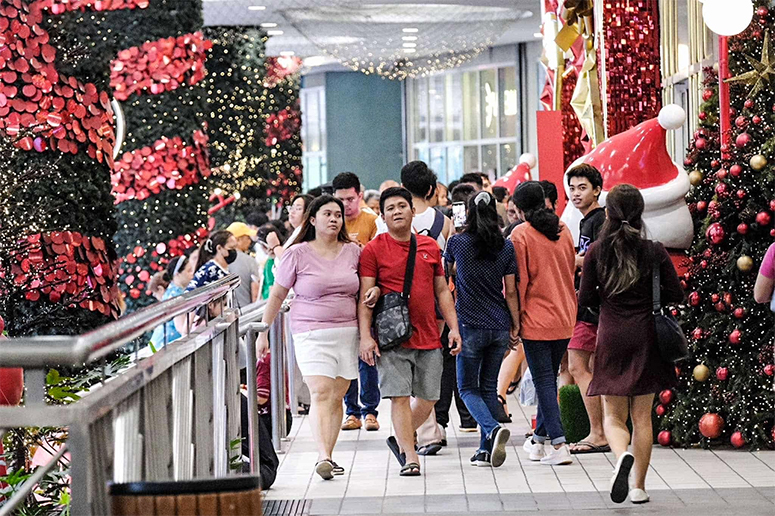
Local TV personality and content creator Bianca Gonzalez-Intal posted on X a photo of a mall escalator bedecked with holiday garland and captioned it, “omgggg bakittt August 27 pa lang.”
The truth is, Ate B, we need that garland. It is our ultimate adaptation against the gloom. In the Philippines, part of being resilient is our ability to aggressively look forward to celebrations. The moment September arrives, we rely on Jose Mari Chan and Mariah Carey to provide the soundtrack for our survival, treating the incoming Christmas season as the light at the end of our flooded tunnel. It is a sacred time for giving and sharing, family gatherings, love, and goodwill to men (and women, but especially to kids looking for their ninongs and ninangs). We endure the long, wet martyrdom of the monsoons precisely because we know the grandest celebration on Earth is just around the corner, and no amount of rain can ever wash away our stubborn joy.

WATCH: Discovering Vietnam in three days
June 9, 2026
WATCH: Save for retirement or enjoy life now? (Generations Ep. 21)
September 16, 2026