Farewell to a beloved literary mother
Last Thursday, Jan. 22, family and friends gathered for a final tribute at the University Chapel of Our Lady of the Assumption, Ateneo de Davao University—“for prayer, shared memories, and eulogies to celebrate a life well-lived,” that of the beloved and eminent writer Aida Rivera Ford. She had passed away on Jan.18, four days short of turning 100.
In their public announcement, her family served accuracy in commending “A Life of Grace and Literary Distinction”: “Aida Rivera Ford’s life was marked by quiet dignity and profound creative spirit. Her literary contributions showcase her insightful exploration of human emotion and complex relationships. Her work reveals her keen understanding of the human heart. Her stories remain a poignant part of the Filipino literary canon, a testament to her enduring voice.”
Born in Jolo, Sulu, she graduated cum laude with Bachelor of Arts degree in English from Silliman University in Dumaguete City in 1949. A year earlier, she had partnered with Cesar Amigo to start the annual publication of the university’s Sands and Coral, said to be Asia’s earliest student-led literary anthology. She led off with one of her memorable short stories, “The Chieftest Mourner,” which became a staple in creative writing classes for over seven decades.
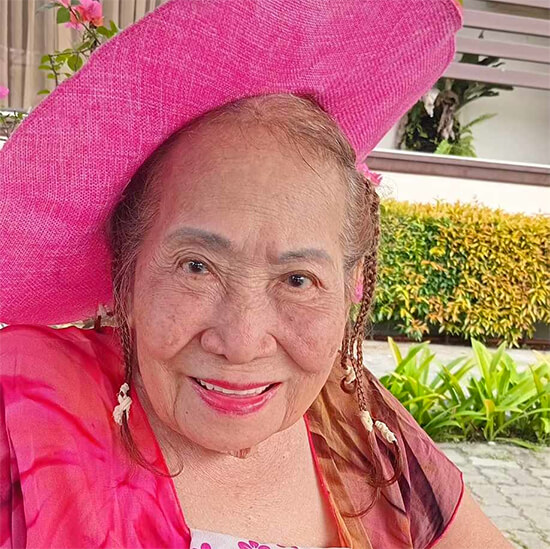
She authored the short story collections Now and at the Hour and Other Stories (1958) and Born in the Year 1900 and Other Stories (1997)—with the title story referring to her mother. Other titles were Oyanguren: Forgotten Founder of Davao (2010), Aida Rivera-Ford: Collected Works (2012), and the drama compilation Heroes in Love: Four Plays (2012). She chaired Ateneo de Davao U.’s Humanities Division from 1969 to 1980. In 1980 she co-founded the Learning Center of the Arts, later renamed Ford Academy of the Arts. While involved with Philippine Theatre Davao, she composed the operetta Datu Bago. The city gave her its highest honor for outstanding individuals, the Datu Bago Award in 1982. In 1999, she helped establish the Davao Writers Guild. She also received the Fr. Theodore Daigler Award for Mindanao Culture and Arts last year.
Other distinctions included a fellowship at University of Hawaii’s East-West Center in 1978, the government’s Parangal for Writers of the Post War Years in 1991, the Outstanding Sillimanian Award for Literature and Creative Writing and a fellowship for fiction from the UP Creative Writing Center in 1993, and the Taboan Literary Award from the NCCA in 2011.
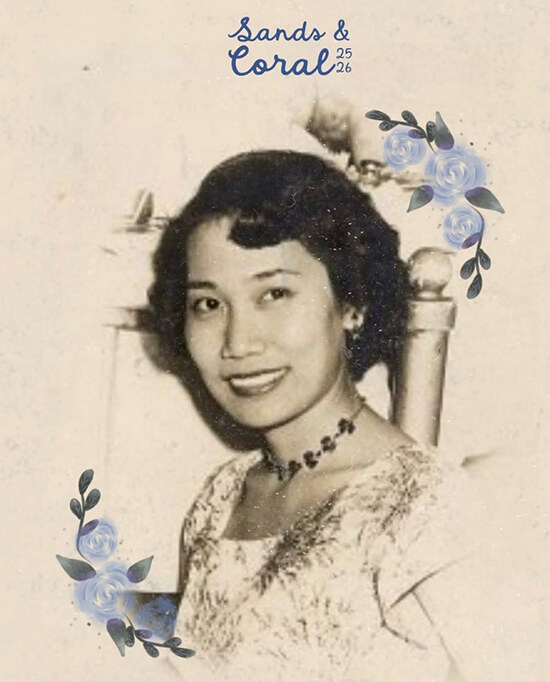
On Facebook, it was Cebuano poet F. Jordan Carnice who broke the sad news. He confided that while in Silliman, he had learned of her breakthrough with Sands & Coral and admired her stories, “I only met her in person years later, during my first Taboan Philippine Writers Festival at Clark Field, Pampanga, on February 9, 2012. She was such a gentle soul, deeply present and gracious.”
When I shared Jordan’s post, numerous writers quickly joined in the chorus of remembrance and adulation. Butch Dalisay commented: “Very sad to hear this. We made many good memories in Davao and Baguio, and I admired and taught her work in class.”
Danton Remoto: “I teach her great short story, ‘Love in the Cornhusks,’ in my creative writing and literature classes. She took her MFA in Creative Writing at the highly rated University of Michigan, where her manuscript of ‘Now and at the Hour and Other Stories’ won the prestigious Avery Hopwood Award for Fiction.”
Condolences were offered by Gene Alcantara from London, our American writer-friend Tim Tomlinson from New York, premier poet Simeon “Jun” Dumdum from Cebu, Jun Cruz Reyes of UP, Edna Zapanta Manlapaz, Gwenn Galvez, Dulce Maria Deriada, former Silliman U. president Ben S. Malayang III, who called her “a highly esteemed writer,” and Amadis Ma. Guerrero, who wrote: “I remember her short stories. One of my inspirations when I was trying to write.”
Beverly Wyco Sy noted that “Ford’s literary work was the first work that physically appeared in the first issue of CCP Ani Literary Journal.” From Antonio Montalvan: “In the Mindanao museum world, she was the keeper of National Artist Victorio Edades’s paintings.” Karma Thutob Jungne (John Labella): “An amazing writer! A month ago, a former colleague and I were just talking online about her story. The very story you mentioned, Danton.” Ceres C. Circe: “Oh no. Another giant gone.”
Posting a photo of Aida swilling from a beer bottle, Susan Lara captioned it: “This is how I’ll always remember you. Taboan at Fontana Resort, Clark Field, Feb. 10, 2012. Tagay!” Of course, the Davao Writers League led by Johanna Cruz and the Mindanao Creative & Cultural Workers Group, Inc. led by Cristine Godinez Ortega posted tributes online, with the last-named sharing particular memories, as did other writer-friends.
Cristina Pantoja Hidalgo recalled that they shared a cottage during the UP National Writers Workshop held in Davao in the ’90s. “She was a gentle woman. But she also had a sly sense of humor.” On a night they were disturbed by a noisy party in the hotel’s pavilion, Aida wrapped herself in her white bedsheet and walked briskly toward the party.
Jing’s story completes itself. “Shortly after, the loud music stopped. And Aida slipped back into our cottage. ‘You stopped them!’ I said with admiration. ‘I didn’t have to say a thing,’ Aida said. ‘They thought I was a ghost and got frightened.’ And, with a little giggle, she climbed back into her bed.”
Mia Tijam wrote of how her sister had shared a photo of Ma’am Aida “in September of 2022; it was taken during one of the traveling exhibits of Ayala Museum in Davao in 2014; I sent it over to Sir Ricky de Ungria in Davao then. She would still sing on her good days,” he said.
“… I first met her on page 222 of the Likhaan Anthology of Philippine Literature in English from 1900 to the Present … Later on, I myself would be published in Sands and Coral, 58 years later. There is a tradition of women, there was a path forged by and for women in the archipelago, that we, as women writers, should be at the very least aware of, and honor. … I have not met her in person, intending to be accompanied by Sir Ricky when I finally got around to going back to Mindanao. … In the end, only the stories would remain of these women whose voices sung mine into my own.”
In my own personal anthology, The Word on Paradise: Essays 1991-2000 on Writers and Writing, the title piece reported on that 35th UP workshop in 1999 that Jing Hidalgo recalled.
“The affable UP Mindanao Chancellor Rogelio Cuyno welcomed us in Davao City for lunch arranged by Aida Rivera Ford and hosted by the College Assurance Plan… The unsinkable Aida kept us entertained with her memories of a shipboard romance. She also showed us photos of her farm—a river runs through it!—which she’s developing into an art and environmental park. Trust a writer to come up with an associative name like Rivera Ford Nature Park to ensure personal legacy.”
Sometime in 2010, another visit to Davao took me back to that Paradise Beach resort. Ricky brought Aida along for a threesome lunch. It was our regret that again we couldn’t honor Aida’s invite to her nature park, where she had more than life-size statues of Nick Joaquin, NVM Gonzalez, and a Datu Udang standing in the grounds among the trees, as her pics showed. That was the last time we got together. And as always, it had been a hearty engagement.
Last year, at about this time, Ricky sent me some pics of her being feted on her 99th birthday. This year, he said his gift for her would have been a “Born in Sulu” T-shirt. But his preparation was rendered moot a mere four days before her centennial milestone.
Here’s an excerpt from “Love in the Cornhusks,” her early story about young love and regret:
“She laughed when a Bagobo with two hectares of land asked her to marry him. It was only Amado, the tractor driver, who could look at her and make her lower her eyes. He was very dark and wore filthy and torn clothes on the farm but on Saturdays when he came up to the house for his week’s salary, his hair was slicked down and he would be dressed as well as Mr. Jacinto, the schoolteacher. Once he told her he would study in the city night-schools and take up mechanical engineering someday. He had not said much more to her but one afternoon when she was bidden to take some bolts and tools to him in the field, a great excitement came over her. The shadows moved fitfully in the bamboo groves she passed and the cool November air edged into her nostrils sharply. He stood unmoving beside the tractor with tools and parts scattered on the ground around him. His eyes were a black glow as he watched her draw near. When she held out the bolts, he seized her wrist and said: ‘Come,’ pulling her to the screen of trees beyond. She resisted but his arms were strong. He embraced her roughly and awkwardly, and she trembled and gasped and clung to him. ...”
The full story may be found in Shortsonline at https://xpressenglish.com.