

Ninoy Aquino Remembered
Remembering Ninoy Aquino: ‘Para sa kanya, talagang una parati ang bayan’
It’s been 43 years since former Sen. Benigno S. “Ninoy” Aquino Jr. was shot at high noon on Aug. 21, 1983 on the tarmac of the Manila International Airport, which now bears his name.
So what has changed since 1983 aside from the doubling of the Philippine population?
There is surely a litany of what remains wrong with the Philippines since then. But there is also a longer scroll of what has been right—and righted—since then.
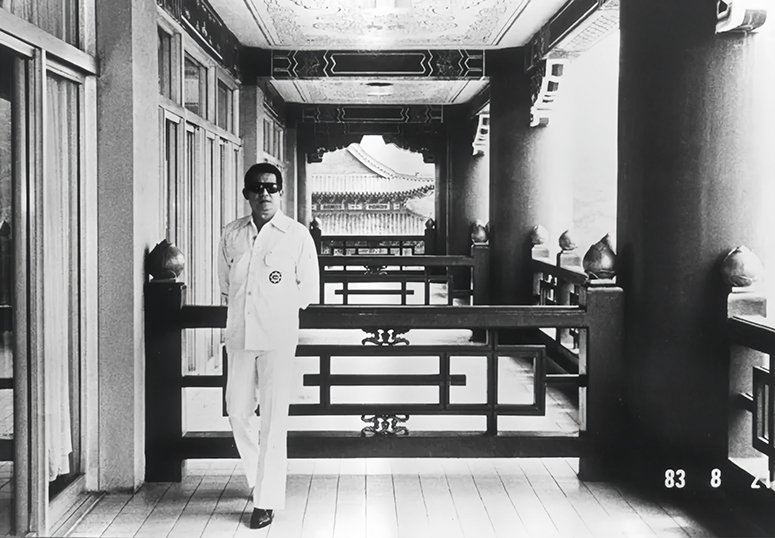
Among them, not just a free press but robust social media (sometimes too robust) as well, a greater demand for accountability from erring public officials and a more acute awareness of civil rights and liberties, to name a few rights. You disrespect a server, and social media will take up the cudgels for him—in the past, there were accounts of people being maltreated by uniformed officials and the people couldn’t care less.
Ninoy’s assassination ignited the restoration of democracy in the Philippines, which led to the 1986 people power revolution.
So let not it be forgotten that one man dared dream the impossible dream—giving up his own life in the process.
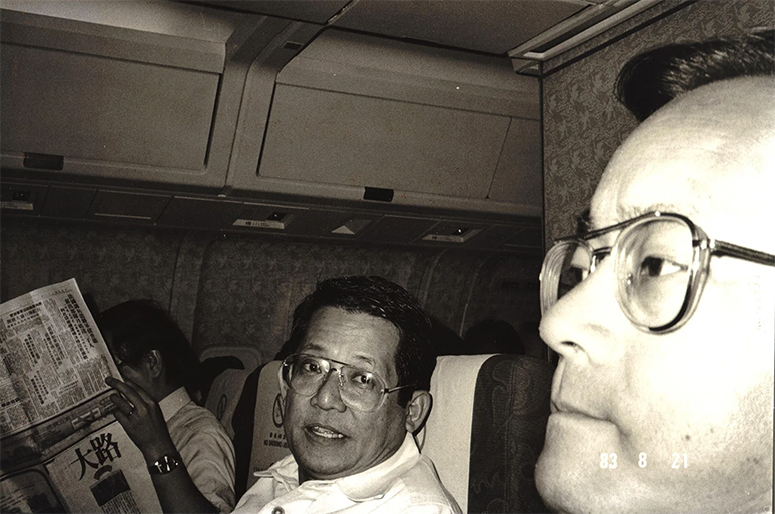

As he wrote in his undelivered arrival speech:
“I return voluntarily armed only with a clear conscience and fortified in the faith that in the end justice will emerge triumphant. According to Gandhi, the willing sacrifice of the innocent is the most powerful answer to insolent tyranny that has yet been conceived by God and man.”
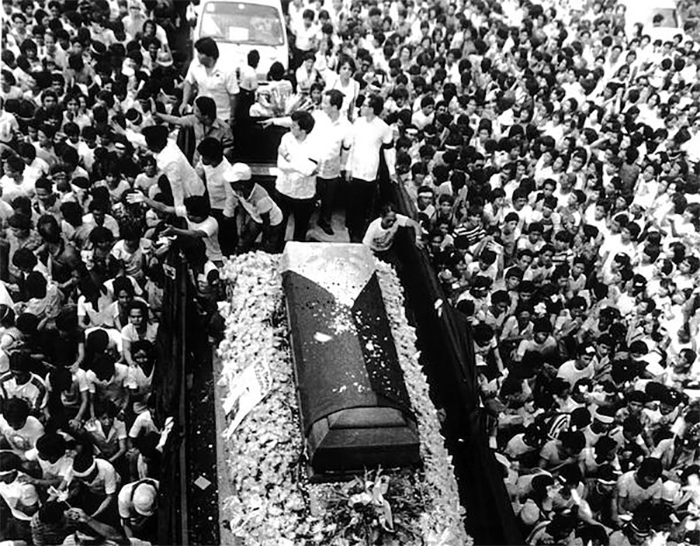
***
A Death Foretold, published in 2023 by Good Intentions Books Inc. with Aurora Oreta as publisher, is a collection of memoirs of Aug. 21, 1983, the days preceding and after it. Some of the memories are quite jolting. Most of all, they bear witness to “the shot that rang across the world.”
Some of the photos in the book are truly graphic, especially those showing Ninoy’s bruised and bloodied body after it was carried out of the AVSECOM van and into the Fort Bonifacio Hospital. According to the book, “Some allegations surface that Ninoy died not on the tarmac, but in the van headed for the military hospital. In an interview, heritage expert architect Manolo Noche, who knew the network of Manila traffic in the 1980s, would question why it took one hour for the AVSECOM van to travel from the tarmac to Fort Bonifacio Hospital—a trip that would normally take 15 minutes.”
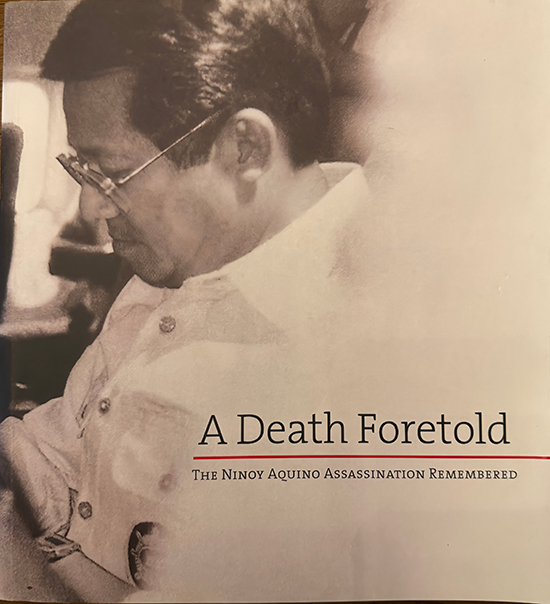
Ninoy and Cory’s (former President Corazon Aquino’s) eldest child Ballsy Aquino Cruz, shared in A Death Foretold:
“The day that he left Boston, a couple, pareho silang doctors, took us to lunch. Mom hardly ate. We were also getting ready to go home — ‘pag nakauwi na siya, sabi ng Dad, pwede na kaming sumunod. And then, most likely, we felt makukulong siya uli. We didn’t think he’d come home and be free. We thought being killed was a possibility pero ‘di naman siguro siya papatayin, grabe naman, lantaran naman kung ganun. Bleak scenarios lahat, pero ang Dad, ‘pag may naisipan siyang gagawin, wala na kaming magagawa. Eh ‘yun ang gusto niya. It took more than a week from the time he left to the time he was supposed to land, every day was really tension-filled. But he would call each time, ‘So okay Mom, nandito na ‘ko sa LA.’
“Doon ko nakita kung gaano niya kamahal ang bayan. But then again, at that age, it was really difficult for us to accept. Okay, yeah, we should love our country, ano naman ang sama na unahin mo ang pamilya mo? Pero sa kanya, talagang una parati ang bayan.”
Aug. 21, 1983
Rapa Lopa, nephew of Cory and now with the Ninoy and Cory Foundation recalled of that fateful day: “I was at the airport with the family expecting to welcome Uncle Ninoy back home. We were brought to the VIP lounge at the airport, opposite the gate where the China Airlines that Uncle Ninoy rode was parked.
“While waiting, Ken Kashiwahara came in and told my dad and the other elders that Uncle Ninoy was shot in the head.” Ken is the husband of Ninoy’s sister Lupita.
Fluellen Ortigas, Ninoy’s aide, recalled the former senator was adamant that he return to Philippine soil by the front door, so to speak, instead of in Mindanao, which had been suggested by some well-meaning relatives.
“Gusto niya talaga dumaan sa harap. Ayaw niya sa likod manggaling. Parang si Rizal, gusto niya haharapin niya ang firing squad. Dapat harapin mo ang destiny mo.”
Ninoy’s brother Paul Aquino, father of Sen. Bam Aquino, recalled: “By 4 p.m., I got a call to go to Fort Bonfacio to get the body…Hindi morgue eh. It was just only the top of a bench. Still bleeding. Pinapahid ko pa ‘yung mga bleeding from the ears…”
I separately interviewed Vergel Santos (my boss at the News and Information Bureau of Malacañang during the Cory Aquino presidency) then with the People’s Journal, about how his paper bannered the death of Ninoy in a special edition on the very day it happened—and its consequences.
“I had begun to put together the story for an extra edition of the daily tabloid People’s Journal even as the chief of reporters, with increasingly rising tone and insistent language—‘If we can’t put this out, we might as well quit being reporters’—continued to press the editor to publish the story, in defiance of the press secretary’s order to kill it, issued to the editor in a personal phone call. In the end, the editor chose to defy, and the story went out as the only published report of Ninoy Aquino’s assassination on the very same day it happened.
“The story went under the byline of the staff reporter at the airport, where it happened, with secondary credits to colleagues of his who had contributed to it. Although I had been picked to write it, to put it in its publishable form, my name was kept out of it. That was precautionary, although otherwise it would have made no difference, not to me, not to my employers…
“The edition, now a collector’s item, had totaled 90,000 copies and had not reached beyond Metro Manila. All the same, my contract was abruptly ended, and I was jobless again—until asked to revive, before the snap election of 1986, and edit the preeminent daily that martial law had killed, The Manila Times.”
Yes, those were the days, indeed.

WATCH: Is Gen Z too soft? (Generations Ep. 23)
September 30, 2026