

Save the children and save the world
‘The Child is the father of the Man’ - William Wordsworth
Curbing, if not totally eliminating, violence among children begins in infancy.
“Prevention starts in infancy, not adolescence,” says developmental and behavioral pediatrician Dr. Francis Xavier Dimalanta.

The recent, jolting incidents of campus violence in the Philippines involving children have wrought unspeakable grief and gripping fear among parents, teachers and students alike.
“By preschool, children need explicit coaching in naming feelings and tolerating frustration; by grade school, they need structured outlets and clear house rules around conflict,” says Dr. Dimalanta, the chairman of the Philippine Pediatric Society Committee on Mental Health for Children and Youth.

CONTINUE READING BELOW

For Sara Soliven de Guzman, president of O.B. Montessori Center, a progressive pre-K to 12 co-educational school, “(School) security goes beyond what we can screen at the school gate.”
“I believe that when children are nurtured in healthy, supportive, and peaceful environments both at school and at home, they are more likely to grow into compassionate, responsible and peace-loving citizens,” stresses De Guzman. “Creating safe spaces, therefore, is a shared responsibility. It requires the school and the home to work closely together. As part of our safety and security measures, we have strengthened our systems by adding security scanners and bag-checking procedures. But while these measures are important, security goes beyond what we can screen at the school gate.”
Tere Tabuena del Rosario, principal and founder of The Bridge School, for her part, says “First of all—no app, filter, rule or school policy can replace present and involved adults.”
‘Violence prevention starts in infancy, not adolescence,’ Dr. Francis Xavier Dimalanta
“Parents need to be completely engaged in what their kids are doing, are playing, are reading, are saying!” Del Rosario emphasizes. Her school in Parañaque City educates children ages three to 13.
“When home and school stay connected, communicate and pay attention, we create a stronger safety net around a child,” she says.
Hybrid security
Last Aug. 18 at the Ateneo de Zamboanga, a 14-year-old student brought two pistols to campus, fatally shot a fellow student, and died by suicide. On June 22, this year, at the San Jose National High School, Tacloban, two student minors opened fire inside the campus, killing three students and wounding at least 20 others during the shooting and ensuing panic.
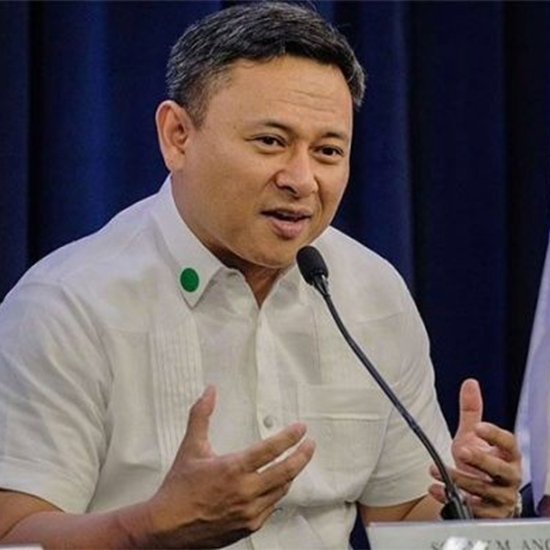
Education Secretary Sonny Angara, a father of three, said the Department of Education (DepEd) is eyeing a hybrid security framework to further enhance school safety amid the shortage of campus guards nationwide.
The framework seeks to address security guard shortages by allocating guards according to a school’s enrolment and security requirements, with village watchmen providing support during arrival and dismissal periods.
“Ultimately, creating a culture of peace begins not only with stronger security measures, but with stronger relationships,” stresses De Guzman, whose OBMC recently celebrated its 60th year and has five main campuses under its umbrella. “When home and school work together, we create the healthy and safe environment our children need to grow, learn and thrive.”
“Open communication and strong partnerships between home and school allow us to understand our children better, guide them appropriately, and address concerns before they become bigger problems,” she adds.
Del Rosario advises, “Know what your children are watching and playing, and know who they are really talking to. Read and check in—kids tend to repeat what they see online. Listen—have them show you what they have seen; keep the conversation going; ask what they’re watching and what their friends are saying. Find out if anything they’ve seen online has made them uncomfortable, scared, angry or confused.”.
Prevention is always key.
“Keep potentially harmful things away from your children and please don’t be afraid or embarrassed to reach out if you see your child act out or say things a bit off—anything that concerns you. There is help out there. Call the school, call other parents as they may be seeing it,” Del Rosario says.
Dr. Dimalanta wholeheartedly agrees. “That’s why schools need functioning, non-punitive reporting channels, and why restricting weapon access at home matters as much as monitoring what a child says online.”
Call for help, when you need it.
“Adults, parents don’t be afraid. (We) need to take control of the situation and help our kids keep safe!” Del Rosario stresses anew.
Signs to heed

Dr. Dimalanta, who practices both at St. Luke’s Global and Quezon City and is the founder and medical director of A Child’s DREAM Foundation, says we can spot the warning signs of a troubled child.
“Watch for sustained changes, not single incidents: withdrawal from friends, disrupted sleep or appetite, fascination with weapons or violent content, expressed grievance or hopelessness, self-harm marks, giving away possessions,” he enumerates.
Citing a US Secret Service study on averted and completed school attacks, Dr. Dimalanta said the research found that the students displayed behavior warranting concern well before acting, and that “leakage”—communicating intent to others—was one of the “strongest predictors of an attack in motion.”
“Bullying-related grievances were the most common motive,” Dimalanta points out.
Ordinary childhood conflict is developmentally normal, says the pediatrician. “The danger is when a child has no trusted adult to bring a grievance to.”
His thoughts on children and social media?
“I’m cautious about unrestricted access, especially before high school,” says Dr. Dimalanta.
“I’d favor delayed onboarding, active parental co-use, and school-based digital literacy over screen-time limits alone,” Dr. Dimalanta clarifies.
Indeed, it takes a village to raise a child; and it takes a village to support parents in their quest to raise happy and law-abiding children.

WATCH: LGBTQIA+ people with unlikely professions
June 28, 2026
WATCH: Can you still trust someone who betrayed you? (Generations Ep. 22)
September 23, 2026