

EXPLAINER: What's habagat and how is it different from a typhoon?
If you've been keeping an eye on the weather lately, chances are you've heard “habagat” mentioned quite a few times in the news.
An enhanced southwest monsoon, or habagat, intensified by Typhoon Dolphin, has brought heavy rains and flooding to several communities in Metro Manila and other parts of the Philippines in the past few days. It also prompted the suspension of classes as well as work in government offices in affected areas.
A recent study led by scientists from Ateneo de Manila University’s VORTEX Research Lab showed that extreme southwest monsoon rains "are driven not by a single weather event but by a combination of atmospheric conditions that come together across thousands of kilometers."
After looking into different instances of heavy habagat rains, the researchers identified a recurring pattern involving "a strengthened habagat, a tropical cyclone northeast of the Philippines, and other atmospheric conditions that allow large amounts of moisture to flow toward the country." When combined, these form a "moisture conveyor belt" that carries water vapor from the Indian Ocean across Southeast Asia to the Philippines, resulting in "prolonged periods of intense rainfall."
Habagat and typhoons can both bring heavy rain and strong winds, but they're not one and the same. What makes them different and how dangerous can each one be?
Habagat vs typhoon
Geologist and Project NOAH executive director Mahar Lagmay told PhilSTAR L!fe that a typhoon is a "swirling tropical cyclone characterized by its organized circulation, powerful winds, and typically heavy rainfall that tends to cluster around its center." It's a relatively compact system that travels across the country.
CONTINUE READING BELOW

Habagat, meanwhile, is a seasonal wind system that brings moist air toward the Philippines. Unlike a typhoon, it doesn't have the same organized circulation.
Glenn Banaguas, an award-winning scientist who is an expert in environmental stewardship and disaster risk, put it simply: "A typhoon is like a spinning top—it's a single, compact storm that moves along a specific path, smashing into a few towns with howling winds and heavy rain before leaving after two or three days," he told L!fe. "The habagat is not a single storm at all; it's a whole weather season. It doesn't spin, it doesn't have an 'eye,' and it doesn't follow a specific track. It's simply a massive cloud system parked over the entire country for months."
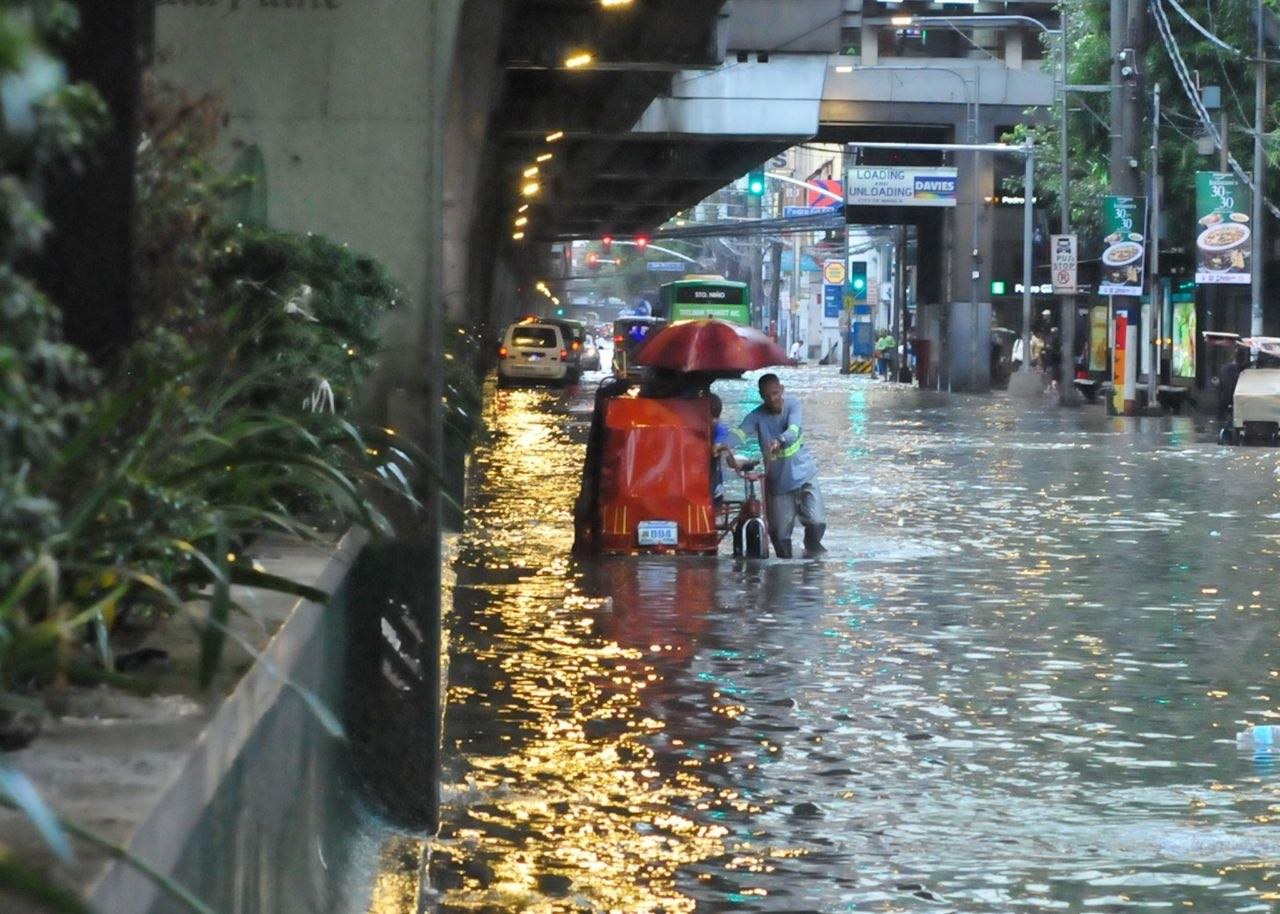
According to Banaguas, one can think of the habagat as a giant ocean wind blowing toward us like an industrial fan. "During the rainy season, the huge landmass of Asia gets very hot, acting like an invisible magnet that sucks in cold, wet air from the ocean far below the equator," he said. "As this continuous wave of moist ocean air hits the mountains of the Philippines, it gets squeezed out like a soaked towel, leading to weeks of gray skies and non-stop rain."
Both the habagat and typhoon can produce heavy rainfall and flooding. Lagmay, however, noted that their interaction can make conditions worse. "When a typhoon boosts the habagat, the resulting downpours can be incredibly intense," he said.
Can a monsoon be as dangerous as a typhoon?
A severe habagat can be just as dangerous as a typhoon, although the hazards may develop differently.
Per Banaguas, the danger of the monsoon comes largely from “cumulative water volume rather than peak wind velocity.” While a typhoon can cause immediate destruction through powerful winds, the habagat can cause damage through prolonged and sometimes relentless rainfall.
When the ground becomes saturated after days of rain, slopes can become unstable, increasing the risk of landslides. Rivers and drainage systems can also become overwhelmed, resulting in widespread flooding.
Banaguas also pointed to “coincident flooding,” which can occur when heavy rainfall coincides with high tides. When water levels outside the drainage system are already elevated, rainwater may have difficulty flowing out, leaving floodwaters trapped in streets and low-lying communities.
The consequences can extend beyond flooded roads and homes. Flooding can disrupt transportation, force businesses and schools to close, and expose communities to contaminated water and diseases.
“The biggest impact is that our entire environment gets waterlogged and paralyzed,” Banaguas said.
Habagat a 'double-edged sword'
According to Banaguas, the Philippines needs to move away from a largely reactive approach to disasters and toward proactive disaster preparedness and climate resilience.
For individuals and families, that means acting before flooding or landslides become dangerous. "We have to stop waiting until the water reaches our knees before we decide to act," he stressed. "If you live near a riverbank or a steep hillside, pack your emergency bags and evacuate before the landslides or floods begin."
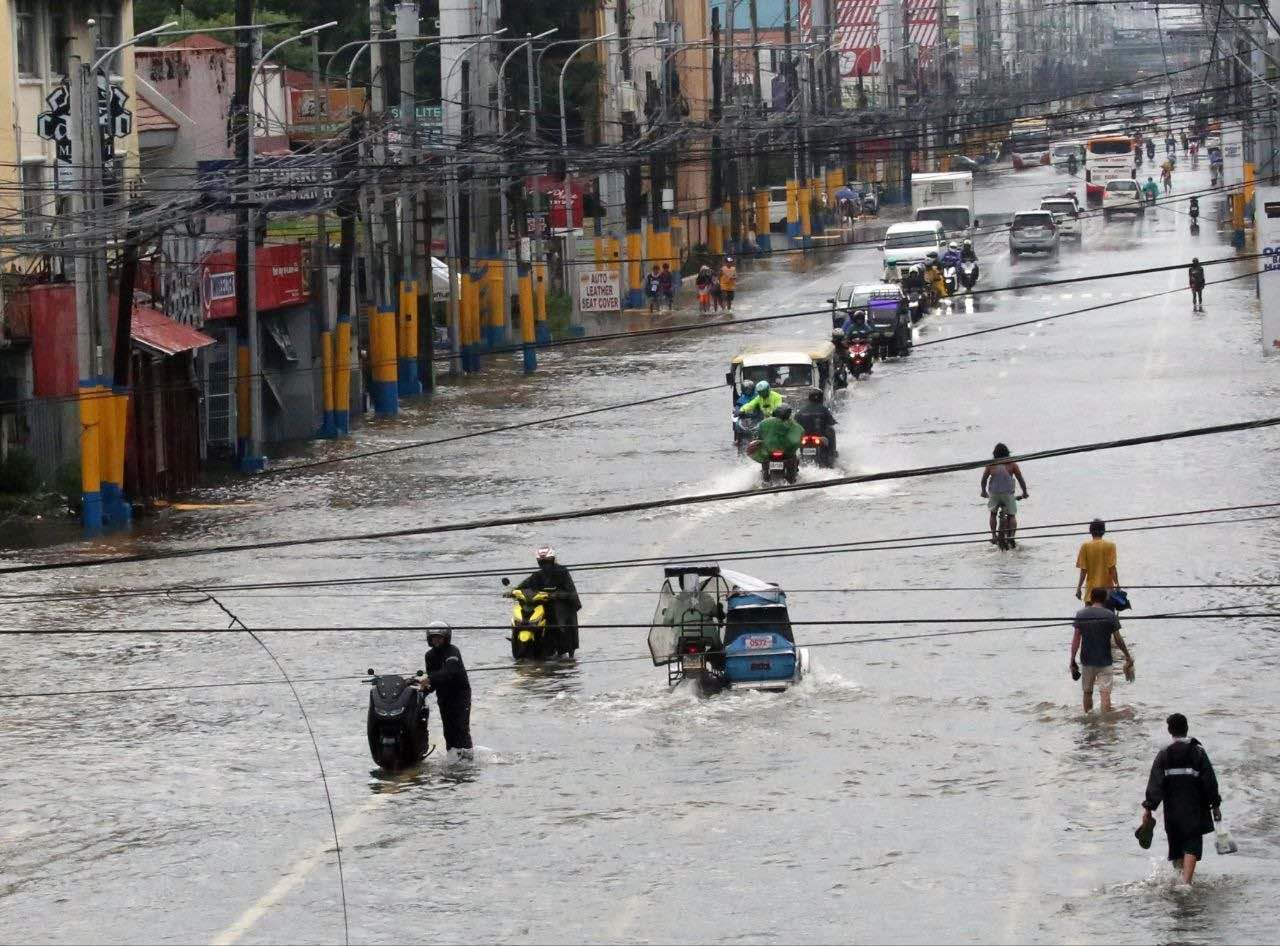
At the government level, Banaguas called for stricter land-use policies to prevent developments from being built in floodplains and natural catchment areas that are meant to hold overflow water.
Banaguas described the habagat as "a double-edged sword that our country actually cannot live without."
"We need its heavy rains to fill our drinking dams and supply water to our fields so farmers can grow the rice we eat. The rain itself is not our enemy—our concrete cities are," he said, arguing that preparing for monsoons should go beyond simply building more flood-control structures.
"Instead of wasting billions trying to block water with concrete walls, we need to adapt by expanding our green spaces and restoring our mountain forests so nature can help us manage this annual water cycle safely," he said.

WATCH: Save for retirement or enjoy life now? (Generations Ep. 21)
September 16, 2026
WATCH: Is Philippine cinema still thriving? (Generations Ep. 19)
September 2, 2026
WATCH: Do you still believe in marriage? (Generations Ep. 17)
August 19, 2026