

Outstanding leader in Asia
BrandedUp in partnership with

Honored at the ACES 2026 Asia’s Most Outstanding Leaders Awards, Michael “Mikee” Romero’s career spans enterprise-building, public service, international sports, arts patronage, and community service.
Romero has built a career that crosses professional boundaries, from developing major infrastructure enterprises and investing in power generation to competing in international polo, collecting Philippine art, and supporting communities in some of the country’s most remote areas.
At 53, the businessman and former House Deputy Speaker continues to pursue new opportunities with the energy of someone who has little inclination to slow down.
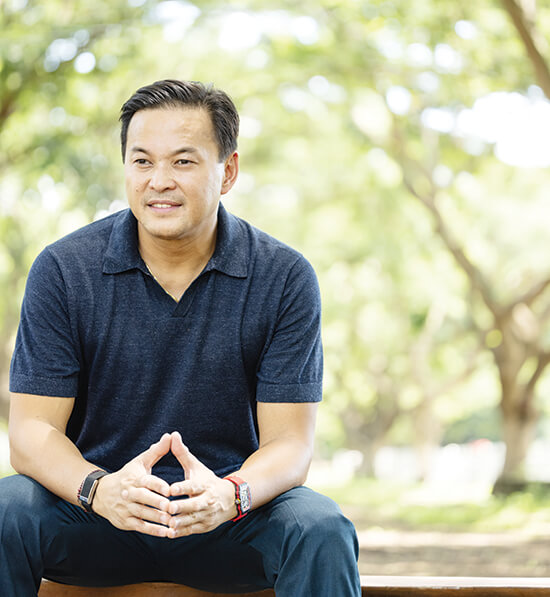
His interests are diverse, but they share a recurring theme: a determination to achieve, a willingness to take on challenges, and an instinct for recognizing opportunities that others may overlook.
His recognition as one of Asia’s Most Outstanding Leaders at the Asia Corporate Excellence & Sustainability (ACES) Awards 2026, held in Kuala Lumpur, Malaysia, brings international attention to this multifaceted career.
CONTINUE READING BELOW

Organized by Malaysia-based MORS Group, the ACES Awards recognize leadership, innovation, sustainability, and contributions to society. The recognition places Romero’s work across business, public service, sports and humanitarian initiatives within a broader Asian leadership context.
The entrepreneur: Building enterprises and exploring new frontiers
Romero’s business career has been marked by a willingness to enter industries that require substantial investment, long-term planning and the ability to manage complex operations.
In 2003, he developed the Harbour Centre Port Terminal into a major facility for non-containerized cargo. Seven years later, after securing a 25-year concession for Manila North Harbour, he spearheaded a ₱23-billion modernization program that transformed the port into a leading hub for domestic maritime trade.
He subsequently sold his interests in Harbour Centre and Manila North Harbour in 2018.
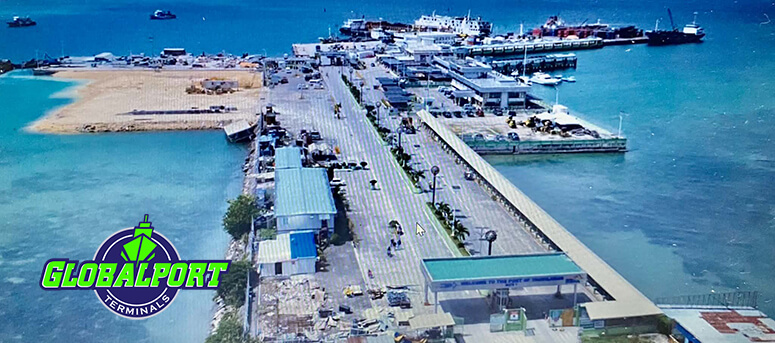
Through GlobalPort, Romero developed a network serving the Visayas and Mindanao. The investments reflected the importance of maritime connectivity in an archipelago where efficient transport of goods is essential to commerce and regional development.
His business extended to aviation.
He helped establish AirAsia Philippines in 2010 and became its largest shareholder in 2016. The airline expanded its domestic operations before he sold his stake to its Malaysian partners in 2023, following the severe disruption the COVID-19 pandemic brought to the aviation industry.
Romero also pursued opportunities in real estate, mining, infrastructure, and strategic investments through Mikro-Tech Capital Inc.
More recently, power generation has become an important part of his business portfolio. His group's energy interests include the operation of Zamboanga Electric Company, or ZAMCELCO, placing him in an industry directly connected to the country's growing electricity requirements.
For Romero, it is a logical extension of his involvement in infrastructure: electricity, like ports and transport, is fundamental to Philippine and regional development.
His business achievements have also brought him national recognition. Forbes included Romero in its Philippines 50 Richest list, ranking him No. 46 in 2020 with an estimated net worth of US$135 million. He was also identified as the country's richest congressman during his years in the House of Representatives.
The legislator: Business experience meets public service
Romero served three consecutive terms as a representative of the 1-PACMAN Party-list from June 2016 to June 2025. During his congressional career, he served as Deputy Speaker of the House of Representatives and headed the party-list representatives sector.

His work covered poverty alleviation, healthcare, education, labor protection, sports development, and national defense.
Romero authored and co-authored 148 Republic Acts, including measures related to the Universal Health Care Act, the Free College Tuition Law, the Pantawid Pamilyang Pilipino Program Act, the Eddie Garcia Law, and the Philippine National Sports Training Center Act.
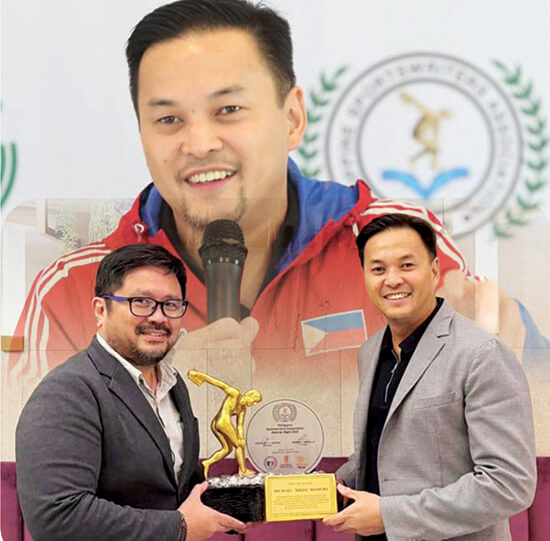
Romero's roles in Congress gave him opportunities to participate in the House's broader legislative and political processes.
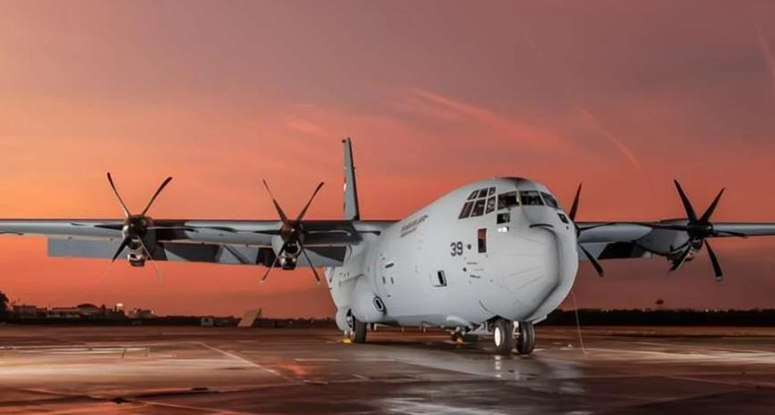
He also supported defense modernization, including funding for the Philippine Air Force's acquisition of three Lockheed Martin C-130J Super Hercules transport aircraft. The aircraft were intended to enhance airlift capacity for military operations, humanitarian assistance, disaster response, and logistics.
His congressional career added a public-policy dimension to a business background built around infrastructure, investment, and enterprise development.
Humanitarian work: Reaching communities in need
Beyond business and politics, Romero has supported humanitarian initiatives aimed at communities that often receive limited access to healthcare, education, infrastructure, and emergency assistance.
His involvement with military reservist organizations and the Association of Reservists and Reservist Administrators of the Philippines provided a platform for coordinating outreach with military units, local governments, medical professionals, and private-sector partners.
The focus of these initiatives has been practical: bringing medical services to remote communities, distributing food and medicines, helping rebuild schools, and providing assistance to families affected by disasters.
His outreach has extended from Batanes to island communities in Tawi-Tawi, Sulu, Basilan, Zamboanga, and Palawan, as well as areas in Central Luzon and Mindanao.
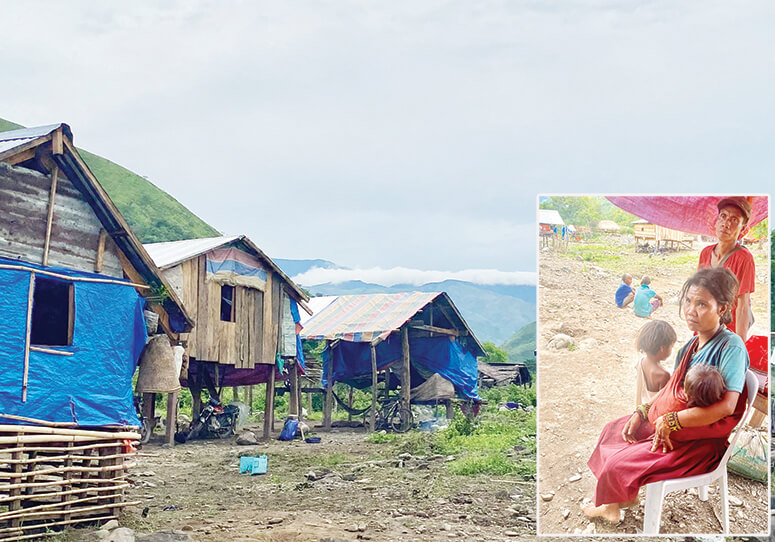
One notable project is the Miguel Romero Foundation Community in Sitio Kapauhan, Santa Cruz, Occidental Mindoro. Following a fire that displaced Alangan Mangyan families, partners mobilized to provide 40 permanent homes, supported by water supply, electrification, irrigation, and other essential utilities.
The initiative went beyond immediate relief, offering displaced families a more secure foundation for rebuilding their lives.
Education has also been a recurring priority. Romero has supported the construction and rehabilitation of school facilities in underserved communities, including Basco in Batanes, Isabela City in Basilan, Jolo in Sulu, Occidental Mindoro, Bongao in Tawi-Tawi, Carmen in North Cotabato, and Kalayaan Island in Palawan. His educational assistance has also included support for 23 Manobo scholars.
In healthcare, his initiatives have included medical missions, medicine distribution, and donations of equipment to remote facilities. Through partnerships, he helped mobilize approximately ₱12 million worth of medical equipment and assistance for healthcare needs, including underserved communities.
Other projects have addressed basic infrastructure and mobility, including the construction of the Barangay Mariki Bridge in Zamboanga City.
The significance of such work lies not simply in the value of donations but in whether assistance reaches people who need it and helps improve their circumstances. Medical services, functioning classrooms, permanent housing and access to community facilities can make a lasting difference in places where public resources are stretched.
The sportsman: Competition, discipline, and team building
Sports have been a constant in Romero's life, both as a competitor and as an investor in teams and athletic development.
A former De La Salle University varsity basketball player, he went on to establish the Harbour Centre basketball team, which won seven consecutive Philippine Basketball League championships. He later brought the GlobalPort Batang Pier franchise into the Philippine Basketball Association.
His sporting background, however, extends well beyond basketball.
Romero was a member of the Philippine national trap shooting team, combining technical precision with the concentration required in competitive shooting. He has also pursued martial arts and holds a third-degree black belt in arnis, the Philippines' national martial art.
These disciplines demand different abilities: the tactical awareness of a team sport, the composure of a precision event, and the discipline and control required in martial arts.
Polo has become another major focus of his sporting life. Through the GlobalPort Polo Team, Romero has competed in international tournaments, including events in Wellington, Florida, a major center of the sport.
In 2025, he reached No. 24 in the World Polo Tour amateur rankings, becoming the first Filipino to enter the top 25 in that category, according to published profiles. His team also defeated defending champion Park Place in the C.V. Whitney Cup in Wellington that year.
Romero's involvement in sports combines personal competition with team ownership and support for Filipino athletes. His participation in shooting, basketball, martial arts and polo reflects a longstanding interest in testing himself across different disciplines.
An eye for beauty: Art, culture, and an award-winning koi
There is another side to Romero that is less visible in business reports and political profiles: his appreciation of art, aesthetics, and living things of exceptional quality.
He and his wife, Sheila Bermudes Romero, have assembled a substantial collection of Philippine art, including works associated with important Filipino artists. His interest has extended beyond acquiring paintings to exploring the country's artistic heritage and helping preserve works of cultural significance.
That appreciation for beauty takes a more unusual form in one memorable episode involving a prized koi.
In 2007, Romero's koi, named High Note, won the grand championship at the 37th All-Japan National Fish Show, earning the prestigious Kokugyo Award. The fish reportedly prevailed over more than 3,000 entries, making it the first non-Japanese recipient of the distinction.
It is an amusing and revealing vignette. A man accustomed to competing in business and sports had entered a world in which beauty, breeding, symmetry, color, and refinement determined the winner—and emerged with the top prize.
The story offers a glimpse of Romero's competitive instinct outside the usual arenas of commerce and sport. It also suggests an appreciation for detail and quality that extends from paintings and sporting pursuits to an unexpectedly specialized hobby.
Romero's career resists a single definition. He has built infrastructure enterprises, entered the power sector, served in Congress, competed in international sports, collected Philippine art, and supported humanitarian programs in communities across the country.
His ACES 2026 recognition brings together these different dimensions of his professional and personal life.
* * *
Editor’s Note: This article was provided by Mikrotech Capital Inc.

WATCH: Is OPM still as good as it used to be? (Generations Ep. 20)
September 9, 2026
WATCH: LGBTQIA+ people with unlikely professions
June 28, 2026
WATCH: How to experience Bangkok and Kanchanaburi in one trip
October 21, 2026